
The bison is today a symbol of Polish nature, but a hundred years ago it faced complete extinction. The species survived thanks to a small number of animals kept in captivity. One of the places where breeding continued without a break from the 19th century was the Pszczyna forests in Upper Silesia.
Four bison for twenty deer
The beginning of the breeding was an exchange made in 1865 between the Prince of Pszczyna, John Henry XI Hochberg, and Tsar Alexander II. The prince gave twenty deer caught in the Pszczyna forests and received four bison from the Białowieża Forest: a bull and three cows. In April the animals arrived by rail at the goods station of the Emanuelssegen mine in Murcki. From there they went to the Wygorzele forestry, to an enclosure of two hectares, where they were fed oats and hay.
A year later they were moved to the fenced Oberfosten game park of 600 hectares. Around 1891 the breeding moved to the Niederforsten game park in the Pszczyna forest district. In semi-wild breeding the bison could move freely over more than 11,000 hectares of forest between Jankowice and Cielmice, and in winter they were fed periodically. The herd grew from four animals in 1865 to seventeen in 1893.
The bison were also a hunting attraction of the princely court. Emperor Wilhelm II came to Pszczyna in 1885-1911 to hunt bison and deer. On the wall of the corridor in front of the imperial apartment in Pszczyna Castle hangs the head of a bison shot by Hans Heinrich XI in the Białowieża Forest.
The first bison in the pedigree book
The Pszczyna bison of that time were not entered in the European Bison Pedigree Book, with one exception. This was a bull numbered M 1 named Planet, the first bison entered in that book. He was born around 1881, in 1888 he was taken to the zoological garden in Berlin, and on 30 December 1899 to Hagenbeck's breeding centre in Hamburg, where he died around 1900.
When Białowieża ran out of bison
The First World War changed the picture. The bison in the Białowieża Forest were killed off by the retreating German troops, Russian partisans and poachers. The last free-living lowland bison died in April 1919 or, according to other sources, on 9 February 1921. In 1923, on the initiative of Professor Jan Sztolcman, the International Society for the Protection of the European Bison was founded. Its first task was to count the pure-blooded bison living in captivity: 54 individuals were counted.
In 1919 there were still 42 lowland bison in the Lower Pszczyna Forests. When restitution began in Białowieża in 1929, the Pszczyna herd numbered only seven animals, which had survived the war and the Silesian Uprisings. The first two bison released into freedom in the Białowieża Forest were put there in the autumn of 1929, and in 1939 there were 16 of them.
The entry on the Murcki bison judges that the release of the Białowieża bison in the Murcki forests in 1865 was the world's first attempt at restitution of this species in a forest ecosystem in modern times, eighty-seven years before the one in the Białowieża Forest. This is the opinion of the entry's authors, not a finding given in many independent sources.
Figures from the Pszczyna forests
In 1865-2014 685 bison were born in the Pszczyna forests, 52 were brought in, 379 died, and 317 were sent to other centres in Poland and abroad. On the 150th anniversary of the bison being brought to Murcki a commemorative plaque was unveiled and the book U źródeł. Żubry murckowskie (“At the sources. The Murcki bison”) was published.
Today: the reserve and the enclosure
The herd from the Pszczyna Forest lives in the Żubrowisko nature reserve near Jankowice. It was established by an order of 31 October 1996, covers 744.77 hectares (the founding act gave 742.56 ha) and protects a population of about 30 individuals. It is the only faunal reserve in the Silesian Voivodeship and also the largest reserve in the voivodeship. The area is closed and fenced.
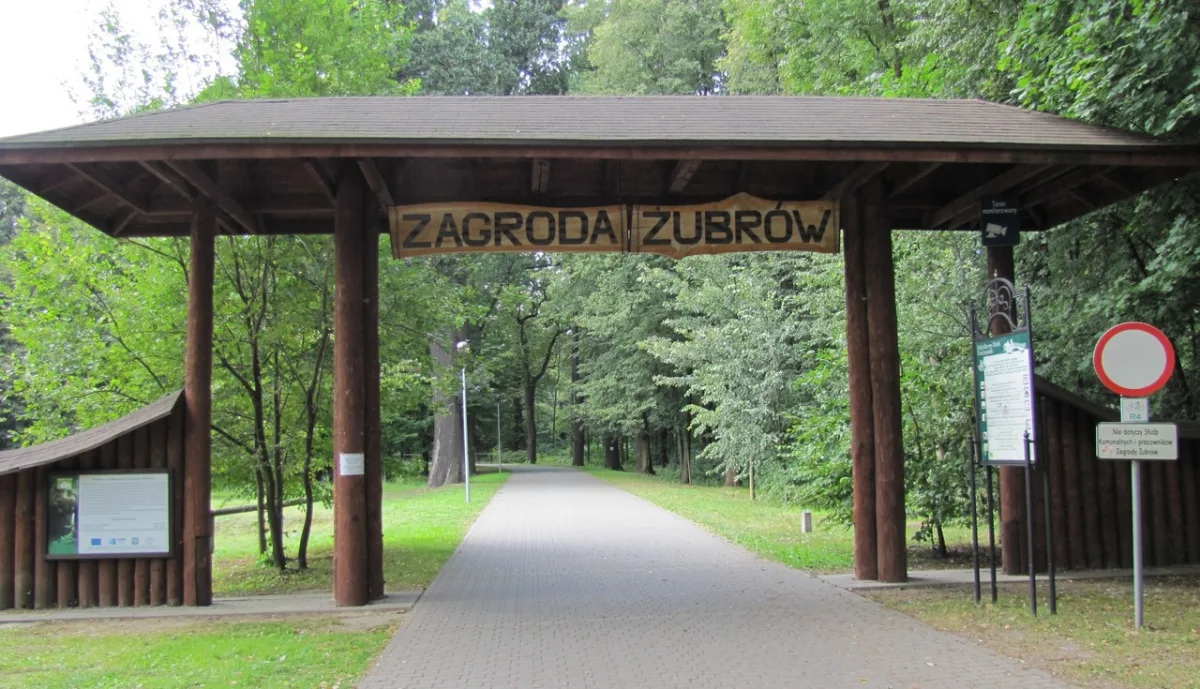
Bison can be seen in the Bison Show Enclosure in Pszczyna Park. It was created in 2008, the two enclosures together cover about 10 hectares, and alongside the bison live mouflon, red deer, fallow deer and roe deer.
Be the first! Add a comment.
You need to log in to add a comment.
Log in