
The dispute over Cieszyn Silesia after 1918
When the Austro-Hungarian monarchy collapsed in 1918, Cieszyn and the whole of Cieszyn Silesia became disputed territory between a reborn Poland and Czechoslovakia. In October 1918 the National Council of the Duchy of Cieszyn, representing the Polish side, was formed in the town, while the Czech side was represented by the provincial national committee for Silesia. On 5 November 1918 the local authorities of both sides had already agreed on a provisional division of administration along ethnic lines. It was to remain in force until the governments in Warsaw and Prague settled the dispute.
The agreement did not last long. In January 1919 the Polish-Czechoslovak war broke out, in which the Czechoslovak army pushed the Polish forces back to the Vistula line within a week. The dispute went to the international forum. The Entente forced a ceasefire and set a demarcation line along the Košice-Bohumín Railway. A plebiscite was also announced, but because of growing hostility between Poles and Czechs it was abandoned.
The background to the dispute had an economic dimension. It concerned the railway line from Bohumín to Košice, which was strategic for Czechoslovakia, as well as the hard coal deposits and industry of the Karviná Basin. For Poland the national argument counted: in the Austrian census of 1910, about 55 per cent of the region's inhabitants declared Polish as their language.
The decision of 28 July 1920
In the summer of 1920, during the Polish-Soviet war, the Polish delegation agreed to have the dispute settled by the Allied powers without a plebiscite. The consent was conditional on Czechoslovakia's neutrality and on the passage of transports with equipment for Poland. On 28 July 1920 the Conference of Ambassadors, on the basis of the arrangements made at the Spa conference, divided the disputed territories itself. Poland protested against the decision almost immediately, and neither side was satisfied with the division.
The region was divided between the two states. Poland received 44 per cent of the area, that is 1002 km2 with 139,600 inhabitants, and Czechoslovakia the larger part, 1280 km2 with 295,200 inhabitants.
A border through the middle of the town
The border also cut through the town itself. It was drawn along the Olza river, regardless of ethnic criteria. The former left-bank suburbs, such as Brandys, Kamieniec and Saska Kępa, ended up in Czechoslovakia and gave rise to Český Těšín, which lies outside our voivodeship. The right-bank part kept the name Cieszyn.
The division was not symmetrical in terms of urban functions. On the left side of the river were the railway station, the waterworks headquarters and the gasworks. The Polish part kept the historic old town with its market square and castle, the power station, the theatre, official buildings, schools and places of worship. The station was opened on 1 February 1869, when the Košice-Bohumín Railway was brought to the town, and until 1920 it was the main station of the whole of Cieszyn.
A trace of the division can also be seen in the history of transport. An electric tram ran in Cieszyn from 12 February 1911, from the station over the bridge on the Olza to the other part of the town. After the division, the station to which the line led found itself on the other side of the border.
The effects of the division on both parts
The division was a brake on the development of the Polish part of the town: Cieszyn was cut off from the station and the industrial areas, and its inhabitants from workplaces on the other side of the river. Český Těšín, in turn, lost access to the cultural and educational institutions and offices that remained in the Polish part. That is why in the 1920s the Czech side deliberately built up its own centre, between the Olza and the station. The development was carried out in the Modernist style, and a new town hall was built there in 1928.
Polish Cieszyn gradually grew, incorporating neighbouring villages: Błogocice in 1923 and Bobrek in 1932, and after the Second World War further localities.
Two towns, one border
In 1938-1945 the two Cieszyns were for a time joined into one town again, but after the war ended the border of 1920 was restored. The bridges over the Olza later became an important border crossing. It disappeared from the landscape after the Schengen area was extended to Poland and the Czech Republic in 2007, since when the border can be crossed anywhere. Today a walk around Polish Cieszyn is largely a stroll through the part of the town that kept the old centre after 1920.
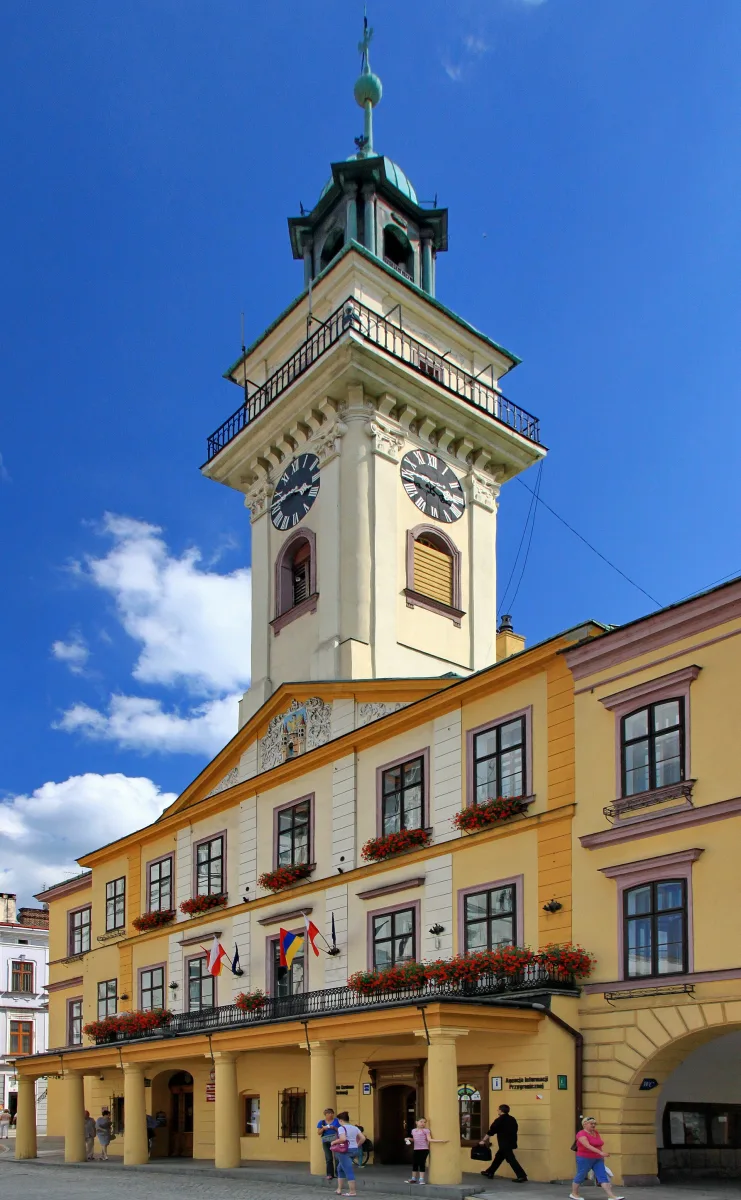
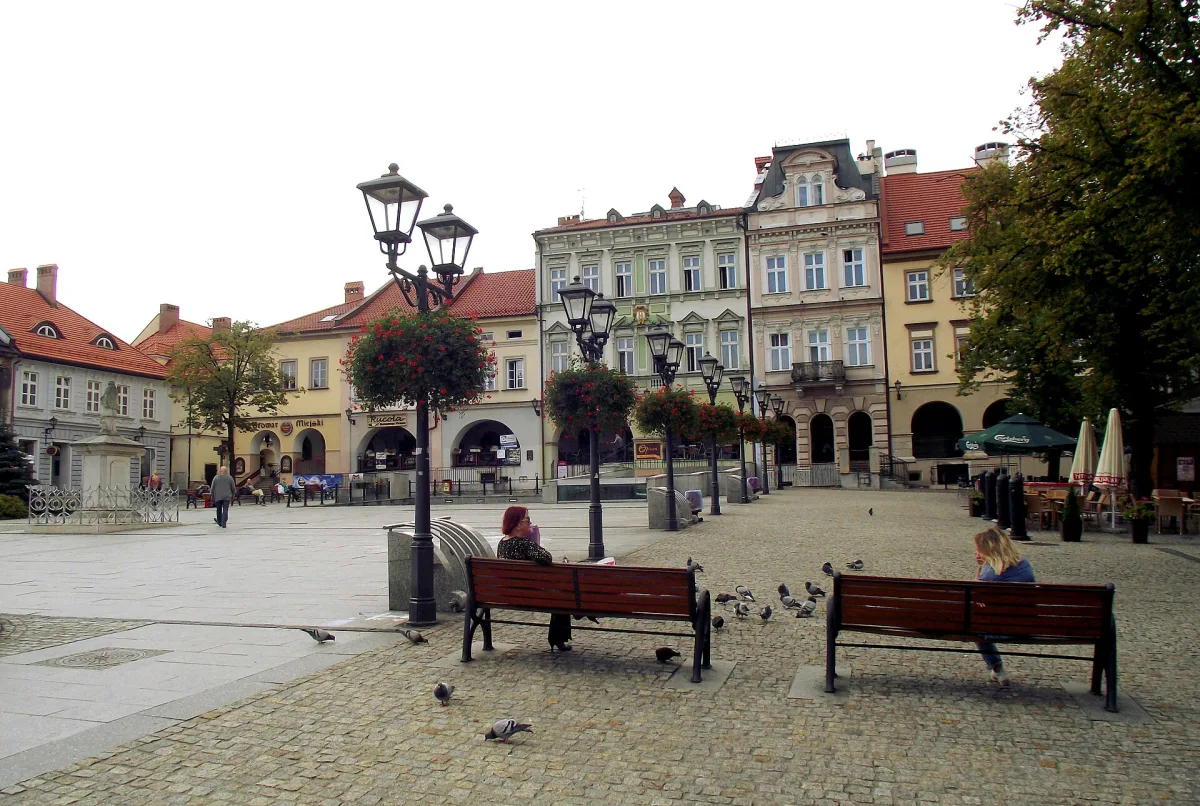
It is best to start at the Market Square (Rynek), laid out in 1496 and surrounded by Renaissance and Baroque townhouses. On the square stands the town hall, the seat of the town authorities, rebuilt after the fire of 1836. The monument of the Cieszyn Nike, which commemorates the Silesian Legion and the soldiers killed in the Polish-Czechoslovak war of 1919-1920, is also linked with the history of the dispute over the region.
Be the first! Add a comment.
You need to log in to add a comment.
Log in