
How the vote went
The plebiscite in Upper Silesia took place on Sunday 20 March 1921. It was provided for by the Treaty of Versailles of 1919 and carried out by the Inter-Allied Government and Plebiscite Commission, based in Opole and made up of representatives of France, Great Britain and Italy. The commission announced the date of the vote on 23 February 1921.
The right to vote belonged to people who had turned twenty by the beginning of 1921, and about 1.22 million were eligible. The plebiscite area covered almost the whole of the Opole Regency, including the cities of Bytom, Gliwice, Katowice, Królewska Huta (today's Chorzów), Opole and Racibórz. Each voter received an envelope with two ballot papers, labelled "Polska - Polen" and "Deutschland - Niemcy", and put the chosen one into the ballot box.
The vote passed in a calm atmosphere, although the campaign before it was at times violent. Turnout was very high: some studies give 97.5 per cent, while the Institute of National Remembrance (IPN) writes of turnout close to one hundred per cent.
The result in numbers and the differences between sources
1,190,637 people took part in the vote. 59.4 per cent of voters were in favour of Upper Silesia remaining in Germany and 40.3 per cent in favour of joining Poland. IPN publications and other sources give these percentages consistently.
The absolute numbers of votes, however, differ depending on the source. Mirosław Węcki of the IPN gives 707,605 votes for Germany and 479,359 for Poland. An IPN booklet on streets named after the Silesian insurgents gives 707,393 and 479,365. The difference is small, but it is worth knowing about when quoting exact figures. In this text we use percentages, because they are the same in both sources.
In the area that ultimately became part of the Silesian Voivodeship of the Second Polish Republic, the result was the reverse: 279,993 people, or 55.7 per cent, voted there for Poland and 222,502 people, or 44.3 per cent, for Germany.
Towns and villages
Historians describe a clear divide. According to the IPN, the population of the larger Upper Silesian towns voted mostly for Germany, while the inhabitants of rural areas voted for Poland. Almost all towns voted for Germany, the exceptions being three small towns: Bieruń, Miasteczko Śląskie and Woźniki. In the villages of the eastern part of the area, votes for Poland predominated, and the further west, the more favourable the result of the rural municipalities was for Germany.
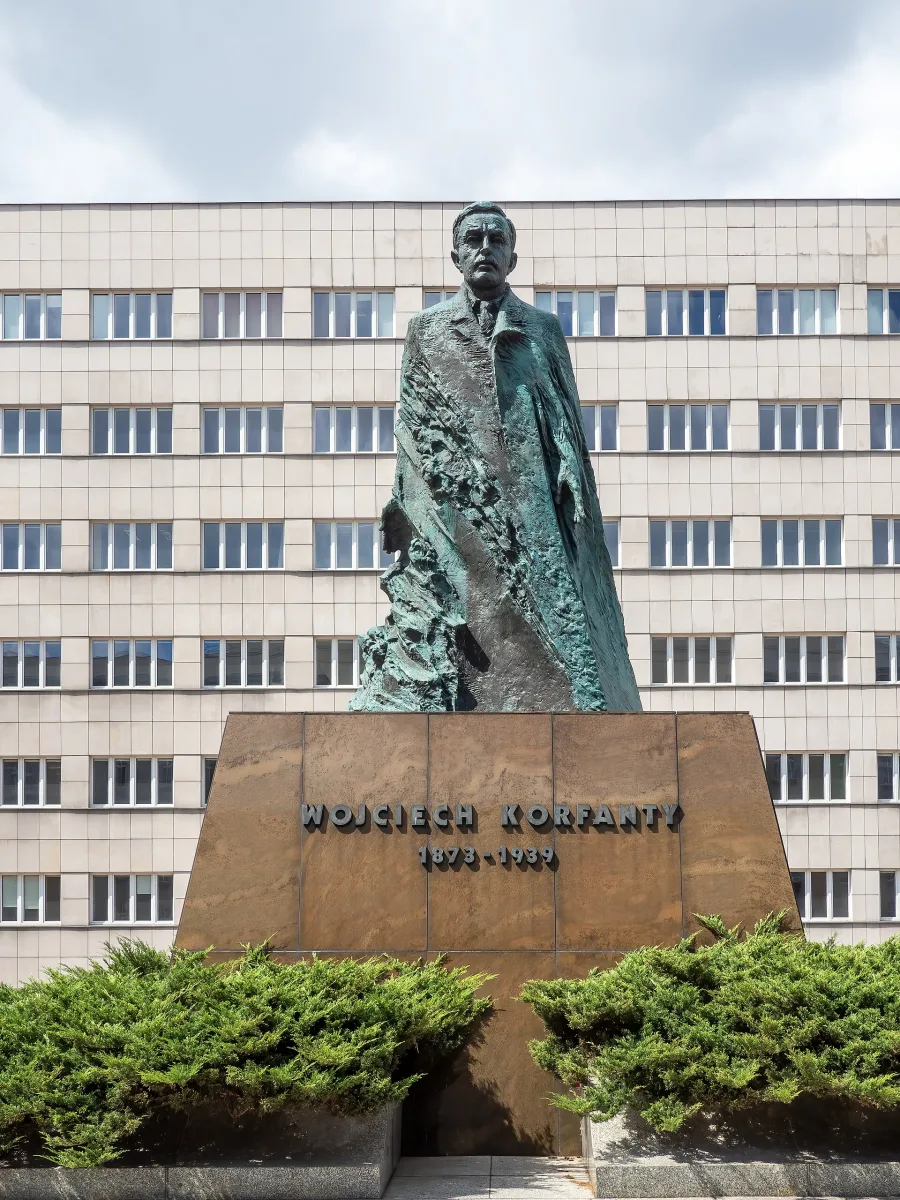
The language used in everyday life did not decide how a person voted. About 40 per cent of people recorded as Polish-speaking in the Prussian census of 1910 voted for Germany in 1921. According to historians, a large part of the Upper Silesians had a strong sense of regional identity and did not identify clearly with either side. Wojciech Korfanty called them "Polish Alsatians", and both campaigns competed for their votes.
Votes of emigrants
The Treaty of Versailles allowed people who had been born in Upper Silesia but lived outside the region, mainly in western Germany, to vote. The request to admit emigrants was put forward by the Polish side, which then tried to withdraw from this solution, without success. The IPN booklet recalls that their participation came about at the request of the Polish side.
The figures given in the sources differ. The IPN booklet speaks of about 180 thousand emigrants, and Mirosław Węcki of about 200 thousand people brought in by the German side. According to another study, emigrants made up 19.3 per cent of voters and about 90 per cent of them voted for Germany. According to this source, their votes influenced the result but did not decide it, although in two counties, Lubliniec and Zabrze, they reversed the outcome.
Two ways of counting and the announcement of 22 March
According to Mirosław Węcki, the provision of the Treaty of Versailles on counting the results was rather imprecise and referred to municipalities, not to the absolute number of votes. The regulations provided, in the event of a division of the region, for taking into account results at municipality level, with regard to geographical and economic conditions.
On this basis, Korfanty declared a victory for the Polish option as early as 22 March 1921. According to the IPN, 903 municipalities, or 77.5 per cent, voted for Poland. The German side, in turn, declared its own victory, relying on the total number of votes.
The figures on municipalities should not be set side by side uncritically. In terms of voting districts the result was: 836 districts for Germany and 672 for Poland, with two ties, in Kotórz Wielki and Rudziniec. According to this statistic, the German victory at municipality level stood at 55.3 per cent. The sources therefore count different units and group them differently, which is why they give a different picture.
How historians write about the result
In interwar German publications the plebiscite and the division of the region were presented as a symbol of the injustice of the Treaty of Versailles, while in Polish literature the result is sometimes judged to have been distorted by conditions of the vote that Polish historians consider unfair. Among other things, attention is drawn to the organisational and financial advantage of the German plebiscite commissariat and the inclusion in the plebiscite area of the surroundings of Prudnik, Głubczyce, Namysłów and Kluczbork, which were known to be likely to vote for Germany. These are opinions, not a resolution of the dispute.
The result did not close the matter. Conflicting interpretations of the figures led to a dispute among the Allies over the border, and that in turn to the Third Silesian Uprising in May 1921. We write about the course of the dispute over the division of the region in a separate article on the Korfanty Line.
Be the first! Add a comment.
You need to log in to add a comment.
Log in