
In 1945, tens of thousands of civilians were taken from Upper Silesia to forced labour in the Soviet Union. Most of them were men, miners, steelworkers and other skilled workers, but women were also among those detained. The deportations are part of the events known as the Upper Silesian Tragedy. Until 1989 it was forbidden to write or speak about them publicly, and the memory was passed down within families.
Upper Silesia in January 1945
From 1922 Upper Silesia was divided by a border between Poland and Germany. After the outbreak of war Germany incorporated the Polish part of the region into the Reich as well and placed its inhabitants on the German National List (Deutsche Volksliste). Dariusz Węgrzyn, a historian associated with the Institute of National Remembrance (IPN), states in his study of the deportations that by the autumn of 1943 1.29 million people had been entered on it, that is 95 per cent of the inhabitants of the Polish part of Upper Silesia, and over 70 per cent were assigned to the third group of the list.
At the end of January 1945 Red Army units entered Upper Silesia. According to Węgrzyn the soldiers believed they were entering German lands, and the Soviet authorities treated the region's inhabitants as Germans, regardless of how they themselves defined their affiliation. The deportations are described as a form of war reparations: people were to replace the labour resources destroyed in the USSR.
The order and the detentions
According to Węgrzyn and the Centre for the Documentation of Deportations in Radzionków, on 3 February 1945 the State Defence Committee of the USSR instructed front commanders to mobilise for work in the USSR persons considered to be Germans, aged 17 to 50. The term “mobilisation” meant that the detainees were not presented with any charges. Other sources give 6 February as the date of the order.
The detentions lasted from February, according to the Centre until May. People were detained at home according to lists, after denunciations, at workplaces and in the street. Węgrzyn stresses that what counted was professional qualifications and age, not actual guilt. In the area of the pre-war Silesian Voivodeship the militia and local administration were also forced to take part in the detentions. People were taken to transit camps in, among other places, Bytom, Knurów and Łabędy, and in Bytom, according to accounts cited by Węgrzyn, about 1,650 internees were held in the prison.
Transports set off east only after the railway tracks had been adapted to the Russian gauge. Most Upper Silesians ended up, as the Centre states, in labour battalions in the Donets Basin, in Belarus and in the Caucasus. Many deportees did not survive the transport or the work.
How many were deported: differing estimates
The number of deportees has not been established, and different studies give different figures. The most important of them:
- Centre for the Documentation of Deportations in Radzionków: according to Soviet documents, about 40 thousand people were interned in the operation in the rear of the 1st Ukrainian Front,
- Dariusz Węgrzyn: it is assumed that about 25-30 thousand Upper Silesians considered to be Poles were taken away, and it was mainly for their return that efforts were made,
- Henryk Stańczyk, on the basis of Soviet sources, cited by Węgrzyn: as many as 90 thousand people in total, regardless of national option,
- the dzieje.pl portal, citing various studies: from 20 to 90 thousand,
- the Ministry of the Recovered Territories in February 1947: 59,350 inhabitants of Silesia staying abroad, mostly in the USSR,
- IPN Katowice: a name-by-name list of those deported and held in camps, in which, according to Węgrzyn cited by PAP, biographical entries for 46,200 people have been documented.
Węgrzyn points out that some of the people on the detention lists may have remained in camps locally, and that the lists drawn up after the war covered mainly people considered to be Poles and have not survived for all counties.
The same applies to the number of victims. According to Węgrzyn cited by PAP, 25 per cent of the deportees died, that is about 12 thousand people. Another PAP dispatch says that the number of those who did not return is hard to estimate and may have been several thousand. Węgrzyn writes that among deportees from Eastern Pomerania the mortality was about 15 per cent, and for Upper Silesians it was considerably higher.
Returns and consequences for the region
The first came back from mid-1945, mainly older people and those unfit for work. The Polish authorities made efforts to secure the return only of those considered to be Poles, and the Soviet side long refused to agree. According to summaries by the Central Board of the Coal Industry, by 30 September 1949 5,603 miners had returned, and in mid-1949 the Polish embassy in Moscow was still requesting the release of 8,328 people. The last deportees returned in early 1950.
The deportation deprived the region of skilled workers. Węgrzyn states that staffing of the mines and steelworks in the pre-war Polish part of Upper Silesia in March 1945 reached about half of the pre-war workforce. At the mine in Bytom-Miechowice 800 people were working in May 1945, of whom 75 per cent were women. The families of deportees were left without income and often lost their company housing as well. The historian Dariusz Węgrzyn points out that the memory of these events is strong also because it was kept by the children, on whom fell the burden of supporting the household.
The IPN investigation into the deportations was discontinued in 2006, among other reasons because the Soviet leaders responsible had died. The IPN found that the deportations were a communist crime and a crime against humanity.
The Documentation Centre in Radzionków
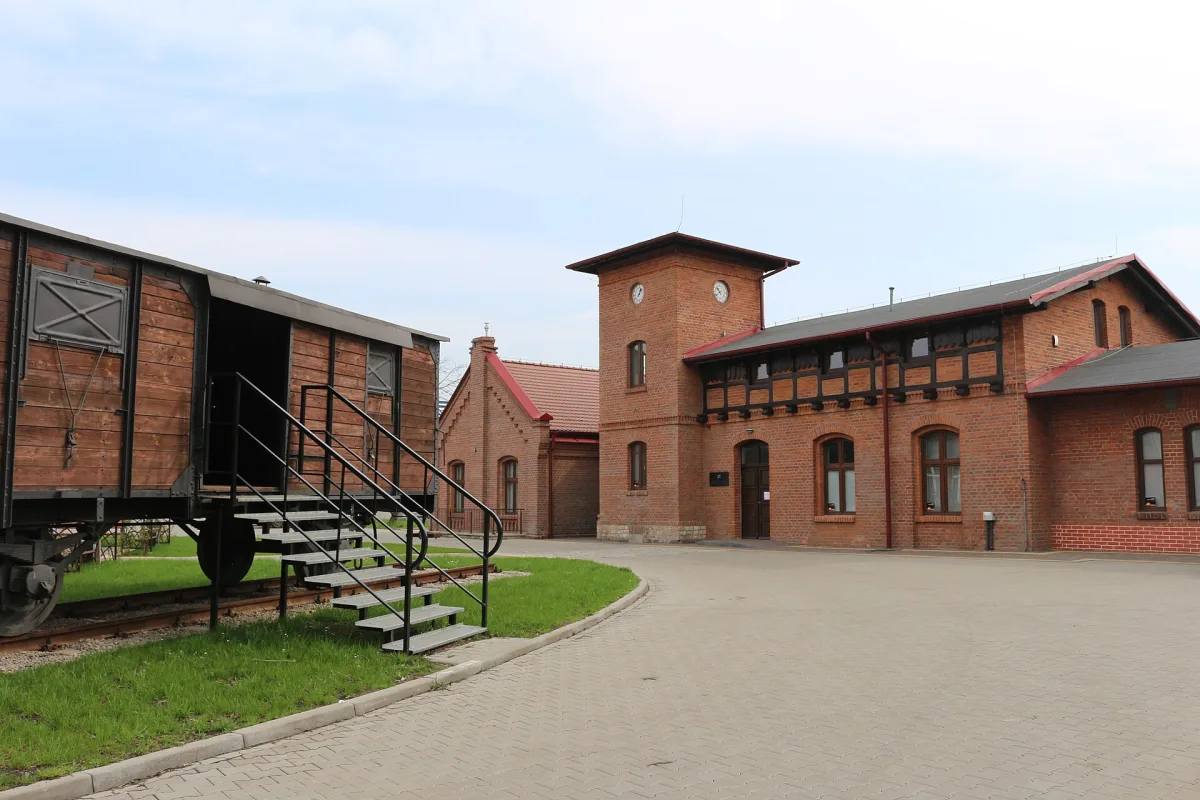
The memory of the deportations is maintained by the Centre for the Documentation of the Deportations of Upper Silesians to the USSR in 1945, housed in the former railway station building in Radzionków. The idea of a permanent exhibition arose in 2007 and drew on the exhibition about the deportations that the Katowice branch of the IPN organised in 2003 at the Upper Silesian Museum in Bytom. The Centre was opened on 14 February 2015, and the Katowice branch of the IPN oversaw the factual accuracy of the exhibition. The institution was supported financially by 29 Silesian local governments.
The exhibition shows above all objects brought back from exile, such as a spoon, a razor, a cut-throat razor and a suitcase, as well as written sources. The Centre also collects documents and publications, among them certificates of the State Repatriation Office, death certificates and diaries written in exile. Visiting rules are given by the institution.
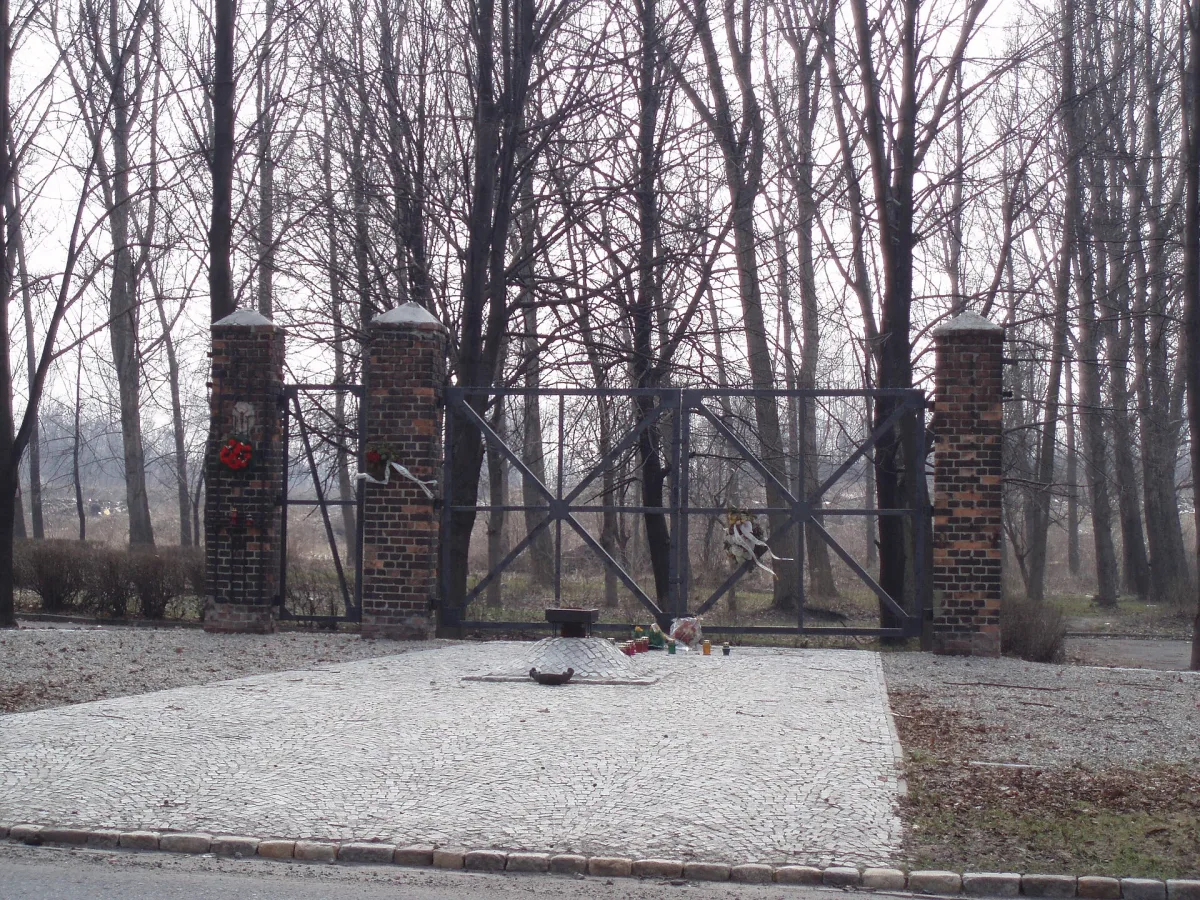
The further fate of the region's inhabitants in 1945, including the camp in Świętochłowice-Zgoda, is covered by the memorial site entry Zgoda camp.
Be the first! Add a comment.
You need to log in to add a comment.
Log in