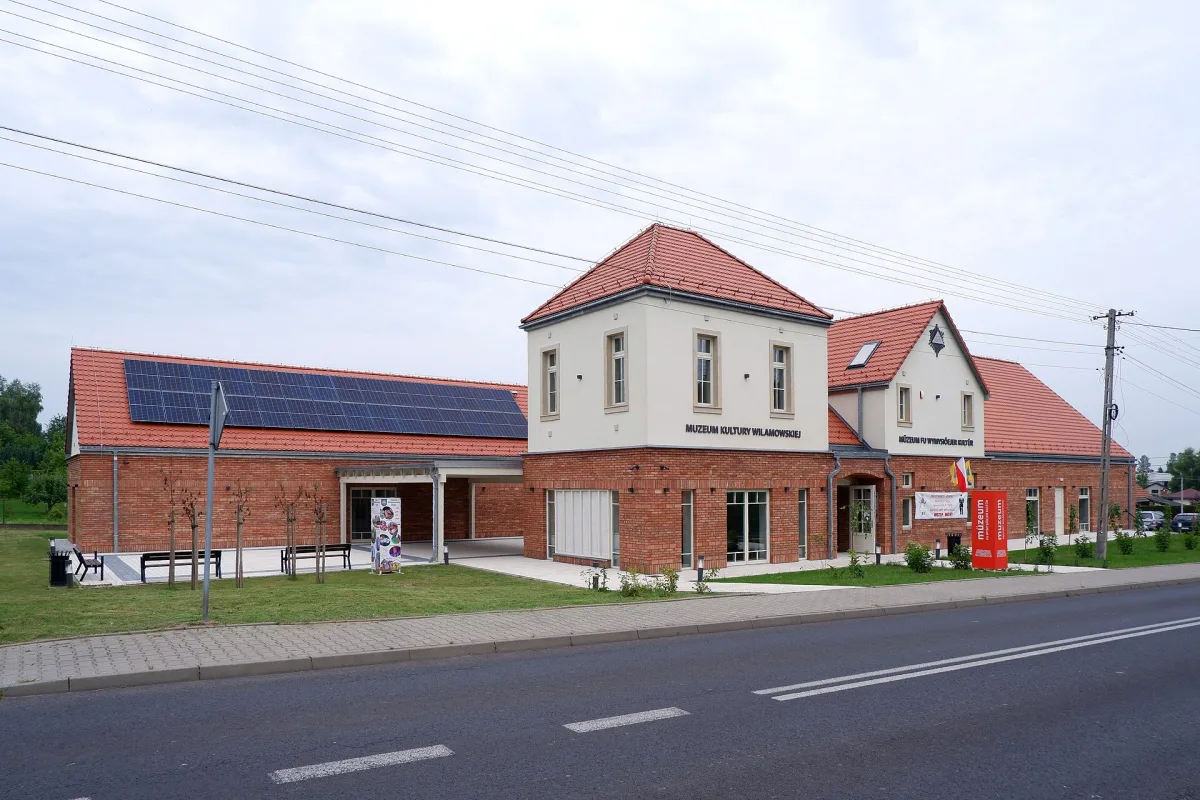
A municipal museum opened in 2024 in Wilamowice, with an exhibition on the history and culture of the Wilamowice people and their Wymysorys language.
The Museum of Wilamowice Culture in Wilamowice presents collections related to the Wymysorys language and the culture and history of the Wilamowice people, an ethnic group whose ancestors, according to the museum, settled on the border of Silesia and Lesser Poland in the 13th century. The museum is a municipal cultural institution, and in Wymysorys it is called Müzeum fu Wymysiöejer Kultür. The official opening took place on 2 July 2024.
The building was constructed to a design by a team led by Piotr Puszczewicz and has a usable floor area of 803.74 m2. Its form refers to the houses of wealthy Wilamowice farmers, and the corner tower to the work of the local architect Józef Nikiel from the turn of the 19th and 20th centuries. The brick finish of the ground floor is meant to recall both Flanders, from where according to a popular legend the Wilamowice people came, and the former brickworks in the town. On one of the walls the embroidery pattern of the jypła, the traditional Wilamowice shirt, has been reproduced. In 2024 the building took second place in the public vote in the competition for the Best Public Space of the Silesian Voivodeship.
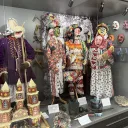
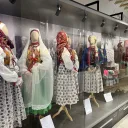
The permanent exhibition has four parts in chronological order. The first, At the Dawn of History, Development and the Period of Prosperity, deals with the narrative of the Wilamowice people's origins and everyday life before the Second World War: there is a staged market scene, a model of a well and a reconstruction of part of a facade with an entrance and a fine room of a wooden house. The second, The Richness of Costume, the Splendour of Folklore, compares the Wilamowice costume with the Cieszyn and western Lesser Poland ones, that is the Lachian costume.
The third part, Difficult Times, covers three rooms on the Polish and German narratives about the Wilamowice people, the fate of the community during the Second World War and post-war persecution, including the ban on using a distinct language and wearing the costume. Profiles of well-known Wilamowice people are also presented here, among them Józef Bilczewski. The exhibition ends with a part on revitalisation, that is the revival of the language and culture since the end of the 20th century.
The museum runs classes, workshops and guided tours, also in Wymysorys. The museum's website states that visits are also possible in English, German, Spanish, Czech and Silesian, by prior arrangement.

Be the first! Add a comment.
You need to log in to add a comment.
Log in