
A museum in the rock-cut lagering cellars of the Żywiec brewery, opened in 2006, with 18 rooms covering about 1,600 m².
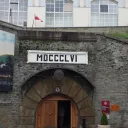
The Żywiec Brewery Museum is housed in the rock-cut lagering cellars of the oldest part of the Żywiec brewery. It opened on 9 September 2006 to mark the brewery's 150th anniversary. The exhibition has 18 rooms covering about 1,600 m² and tells the history of the brewery and of the Żywiec brand from the 19th century to the present day.
The Żywiec brewery was founded in 1856 by Archduke Albrecht Friedrich Habsburg. For 93 years it belonged to the Żywiec Habsburgs, and after him the owner was Karl Stefan, then Karl Albrecht, who managed the brewery until 1939 and was arrested on 9 November 1939. The Habsburgs finally lost their estates in 1945. The Old Castle in Żywiec is also linked to the history of the family.
In 2016 the museum underwent a six-month renovation that added interactive and multimedia displays. In 2018 it welcomed its millionth visitor.
The interiors were designed by a team of architects from the Modulor studio together with the Pirus MTL graphic design studio, and the multimedia was prepared by a multimedia agency. The rooms follow the process of making beer.
The visit begins in the Room of the Three Elements, where you can see the ingredients of beer and a detailed model of the brewery. Further on, a "time machine" takes you to 19th-century Żywiec: an architect's studio, a cooperage, a print shop, a colonial goods shop and a Galician inn. The 20th-century part includes an Art Deco room with a bowling alley, rooms showing beer production from the old days to the present, and the socialist period. The visit ends with a maze of photographs from which you have to find the way out. Along the way there are presentations with photographs, film, sound and projection.
At the end is a tasting room, where you can drink a beer or a juice.
The museum tells, among other things, of the label with a dancing couple in Kraków costumes. From 1956 the brewery produced the export beer Żywiec Jasne Pełne, and the label, registered in 1959, became the first trademark of Polish brewing after the Second World War. Among other stories: until the 1880s the basic packaging was wooden barrels, and after a railway siding was built in 1891 the brewery gained a direct connection to the European railways.
The museum belongs to the Industrial Monuments Route of the Silesian Voivodeship and holds the title of Star of Technology. Since 2010 it has been an anchor point of the European Route of Industrial Heritage.

Be the first! Add a comment.
You need to log in to add a comment.
Log in