
A copy from Częstochowa and a painting that grew lighter
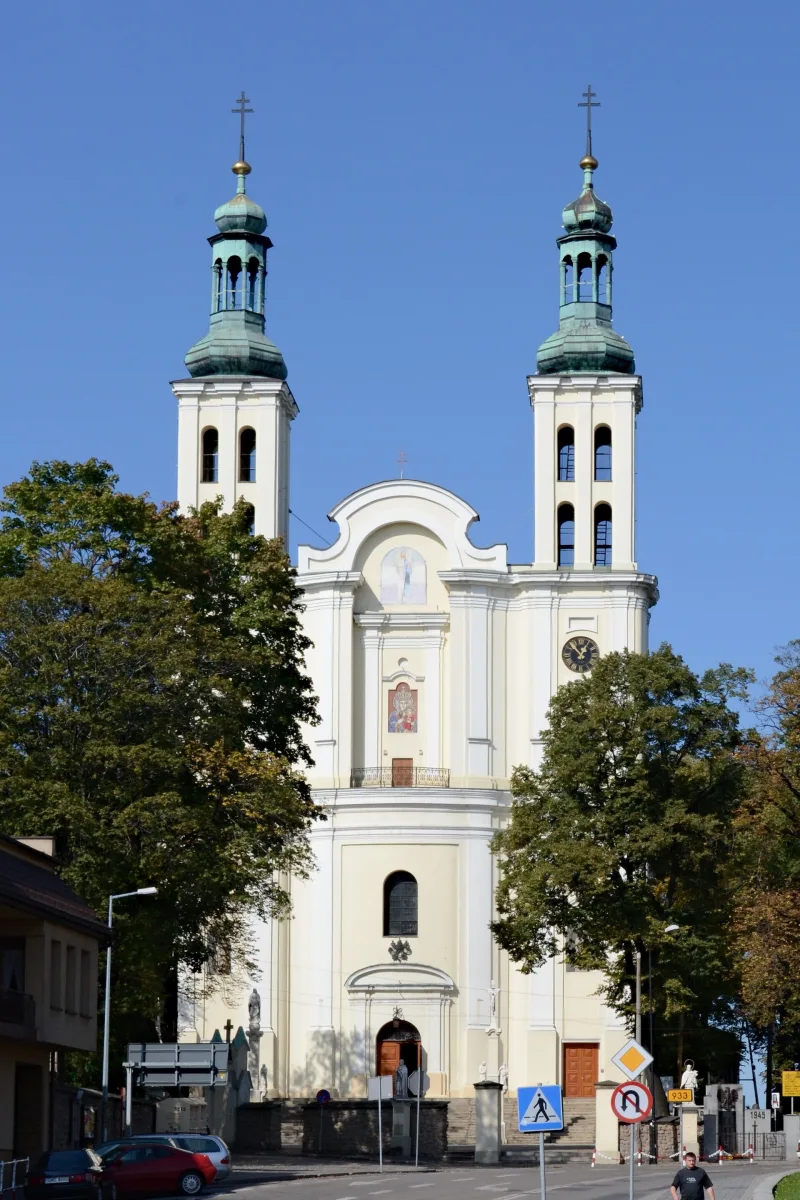
Since the 18th century Pszów has been one of the main pilgrimage centres of Upper Silesia. Its heart is the Basilica of the Nativity of the Blessed Virgin Mary with the image of Our Lady of Pszów, known as Our Smiling Lady (Pani Uśmiechnięta).
The history of the painting begins in 1722. Pilgrims from Pszów, led by the curate Jan Franciszek Niemczyk, bought in Częstochowa a copy of the image of Our Lady of Częstochowa, venerated at Jasna Góra Monastery. The canvas was blessed, in keeping with the custom of the time, by being rubbed against the original, then rolled up and carried home. When it was unrolled, the canvas turned out to be badly damaged. It was given for restoration to the Wodzisław painter Fryderyk Siedlecki. The artist lightened the face of the Madonna and gave her somewhat Slavic beauty, so that the painting ceased to resemble its Częstochowa model.
In 1723 the painting was blessed and carried in procession into the church in Pszów. During a joint procession of the inhabitants of Wodzisław and Pszów, at the boundary of the two places in Kokoszyce, a vow was made: the people of Wodzisław would come to Pszów for the feast of the Nativity of the Blessed Virgin Mary, and the people of Pszów to Wodzisław for the indulgence feast of Our Lady of Mount Carmel. In remembrance, a brick wayside chapel was put up in Kokoszyce in 1726. The Kokoszyce Church of the Immaculate Heart of Mary was built by the residents only in 1948-1950, as voluntary work, and before it had its own parish Kokoszyce belonged to Pszów.
Pilgrims from three countries
The cult developed quickly. In 1727-1728 the painting was known throughout the area from accounts of healings. According to the parish archive, from Easter to 14 May 1728 it was visited by 4,000 pilgrims from Lower and Upper Silesia, Poland and Moravia. Low Sunday 1728 is regarded as a turning point in the development of the cult. In 1729-1730 a bishop's commission from Wrocław held three hearings, at which the faithful gave testimony about graces received. Permission was given to hang the painting on a side altar, for the time being without declaring it miraculous. In 1732 a private coronation with golden crowns took place, performed by the abbot of the Cistercians from Rudy Raciborskie. The memory of the Cistercians of this area is preserved by the Basilica of the Assumption of the Blessed Virgin Mary in Rudy, today a shrine and minor basilica.
There were so many votive offerings that the Prussian authorities confiscated most of them in 1809. In 1976 thieves took further votive offerings and the golden crowns. The painting was crowned again on 9 September 1979 with crowns blessed by John Paul II during his first pilgrimage to Poland. About 10 thousand of the faithful took part. Another coronation took place in 2002 on behalf of the pope, and in the same year Archbishop Damian Zimoń established the shrine of Our Smiling Lady. The church received the title of minor basilica in 1997.
During the German occupation pilgrimages and sermons in Polish were forbidden. After the war, at the indulgence feast of the Nativity of the Blessed Virgin Mary in 1945, about 50 thousand pilgrims came to Pszów. In 1968 Cardinal Karol Wojtyła paid homage to the painting, which a plaque in the church recalls.
A basilica built for pilgrims
The old All Saints' Church could not hold the pilgrims, so in 1743 it was decided to build a new one, to a design by the master mason Georg Friedrich Gans of Karniów. The brick Baroque church was completed around 1747, and the high altar was consecrated in 1750 by Bishop Philipp Gotthard von Schaffgotsch. There were as yet no towers: the first was raised in 1847-1848, the second in 1849-1850, and the spires were installed in 1908 and 1909. The whole church was consecrated on 14 September 1862. The towers and furnishings came about thanks to the generosity of pilgrims, parishioners and the temperance movement.
In 1928 the firm of Paul Berschdorf of Nysa built an organ with 41 stops in the basilica. The instrument was meant to have three manuals, but because of financial difficulties it was delivered with a temporary console, which stayed permanently.
Indulgence festivals fall on the second Sunday of September, the feast of the Nativity of the Blessed Virgin Mary, and on the last Sunday of June, the feast of Saints Peter and Paul. Besides the basilica, Pszów also has the Church of the Sacred Heart of Jesus in the Krzyżkowice district, and in neighbouring Rydułtowy the neo-Gothic St George's Church with a penitential cross with double arms.
The calvary in the forest
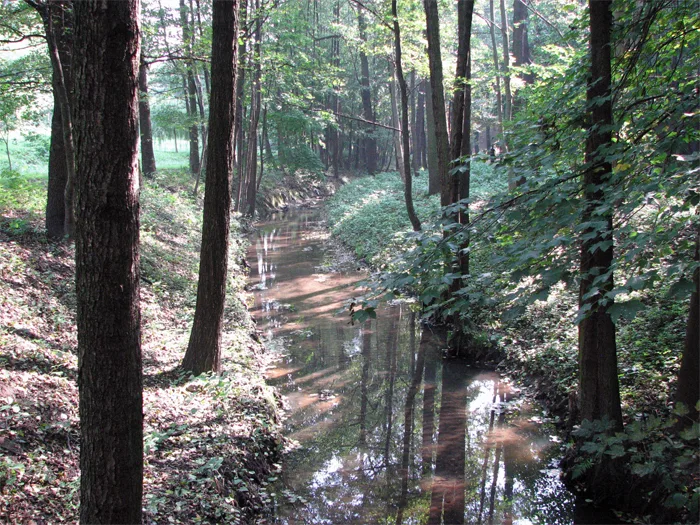
For pilgrims, the Stations of the Cross were set up in the churchyard in 1855. About two kilometres from the basilica, in the forest, lies the Pszów Calvary with fourteen chapels. Sources give different dates for its construction. Some speak of the years 1915-1929, while according to others in 1907 the parish priest Bruno Laska decided to build a complex of chapels, and by 1911 three of them stood. The chapels were designed and built by Walenty Maciejek. The outbreak of the First World War interrupted the work, and part of the furnishings was destroyed by fire. The construction was completed in the 1920s by Father Mikołaj Knosala. Each chapel has a different decor, and the sculptures of the stations were made by the Poznań firm Panka. The solemn blessing took place on 1 September 1929.
In the 1980s, as the pilgrimage movement grew, the calvary church was rebuilt, and a bell tower and a chapel of Our Lady of Schönstatt were added. The parish at the calvary was erected in 1987. Another calvary of Upper Silesia, in a Katowice park on the Kłodnica, is described under Panewniki Calvary.
Pszów also had its industry. The town was home to the Anna mine, founded in 1832 and closed in 2012, with the surviving complex of the Chrobry I shaft designed by Hans Poelzig.
Be the first! Add a comment.
You need to log in to add a comment.
Log in