
How many people died: estimates and their limits
The number of those killed in the Silesian Uprisings is still difficult to establish. The Institute of National Remembrance, in a booklet from the series Patrons of Our Streets, presents its estimates cautiously and says outright that establishing complete data remains difficult. According to this study, about 500 people were killed on the Polish side in the First Uprising in August 1919. German reprisals after its suppression claimed many more victims, including among the civilian population: in total, about 2,500 Poles lost their lives in 1919. The immediate start of those events was the massacre of 15 August 1919 at the Mysłowice mine, where soldiers opened fire on workers demanding unpaid wages. Seven miners, two women and a thirteen-year-old boy were killed.
The Second Uprising of August 1920 had the character of a demonstration and claimed relatively few victims. The IPN writes that various sources speak of 100-180 insurgents killed. The Third Uprising of 1921 was the bloodiest, owing to the scale of operations. A special place here is taken by the battles for Kędzierzyn and Góra Świętej Anny (St Anne's Mountain), which today lie in the Opole Voivodeship. The IPN estimates the number of insurgents killed in 1921 at about 2,000. In total, Polish losses in the three uprisings are assessed in this study at about 2,700 people.
It is worth paying attention to the way of counting. Two thousand from 1921, one hundred to one hundred and eighty from 1920 and five hundred from 1919 add up to somewhat less than 2,700, so it is an approximate value, not a sum of certain numbers. The 1919 data have an additional discrepancy: 500 killed in fighting and about 2,500 victims including reprisals are two different quantities, which should not be added together. For the Third Uprising it is given that in the first phase of fighting about a hundred insurgents were killed and four hundred wounded, and of the battle for Kędzierzyn that losses on both sides came to about 200 killed and wounded. These are only fragments of the overall picture, which do not give a total for the whole uprising. In texts about the uprisings it is therefore worth reading every number together with its source and with what exactly it covers.
The Union of Silesian Insurgents and its split
In the Silesian Voivodeship, established in 1922 from the part of Upper Silesia awarded to Poland, former insurgents became a distinct element of social and political life. In 1923 the Union of Silesian Insurgents was formed, which brought together most of the veterans. At first it dealt mainly with social assistance. This was especially needed by those who, fearing reprisals, had moved from Germany to the Polish part of the region and were left without means of support. The situation of the insurgents was also affected by the economic crisis of the early 1920s, which increased discontent with the government. Criticism also fell on Wojciech Korfanty, from whom a better life for the former soldiers had been expected.
Many veterans looked more and more favourably on the camp of Józef Piłsudski. In 1925 the union split: supporters of Korfanty formed the Union of Insurgents and Former Soldiers. Most veterans, however, stayed in the Union of Silesian Insurgents, which in 1926 supported the May Coup and until 1939 supported the Sanation government. The main representative of the Sanation in the region was Michał Grażyński, Silesian voivode in 1926-1939. In the Third Uprising he was chief of staff of the East group and spoke out against Korfanty in the mutiny of June 1921. The dispute between the two politicians lasted until 1939. In 1927 the Insurgent Youth Units were formed, the union's paramilitary youth organisation.
September 1939 and the destroyed monuments
In 1939 former insurgents took part in preparations for defence: they joined the National Defence Battalions and the Volunteer Insurgent Units. The Polish Army left Upper Silesia on the night of 2 to 3 September. Some insurgents stayed and defended themselves independently. The IPN states that on 4 September they put up resistance in Katowice, defending the seat of the Union of Silesian Insurgents, known as the Insurgent House, on what is today Matejki Street.
The Germans shot insurgents captured with weapons immediately. Behind the army came groups of the security police with lists of Poles to be arrested, and among them were very many insurgents. According to the IPN, by the end of 1939 the Germans had murdered more than 900 insurgents, and during the whole war about 1,700. Some veterans, especially police officers of the Silesian Voivodeship Police, ended up in Soviet captivity and were murdered in spring 1940, in Katyn and other places. Among those killed was Karol Grzesik, one of the commanders of the Third Uprising. The occupiers also took care over memory: as early as September 1939 all the interwar monuments and plaques honouring the insurgents in occupied Upper Silesia were destroyed.
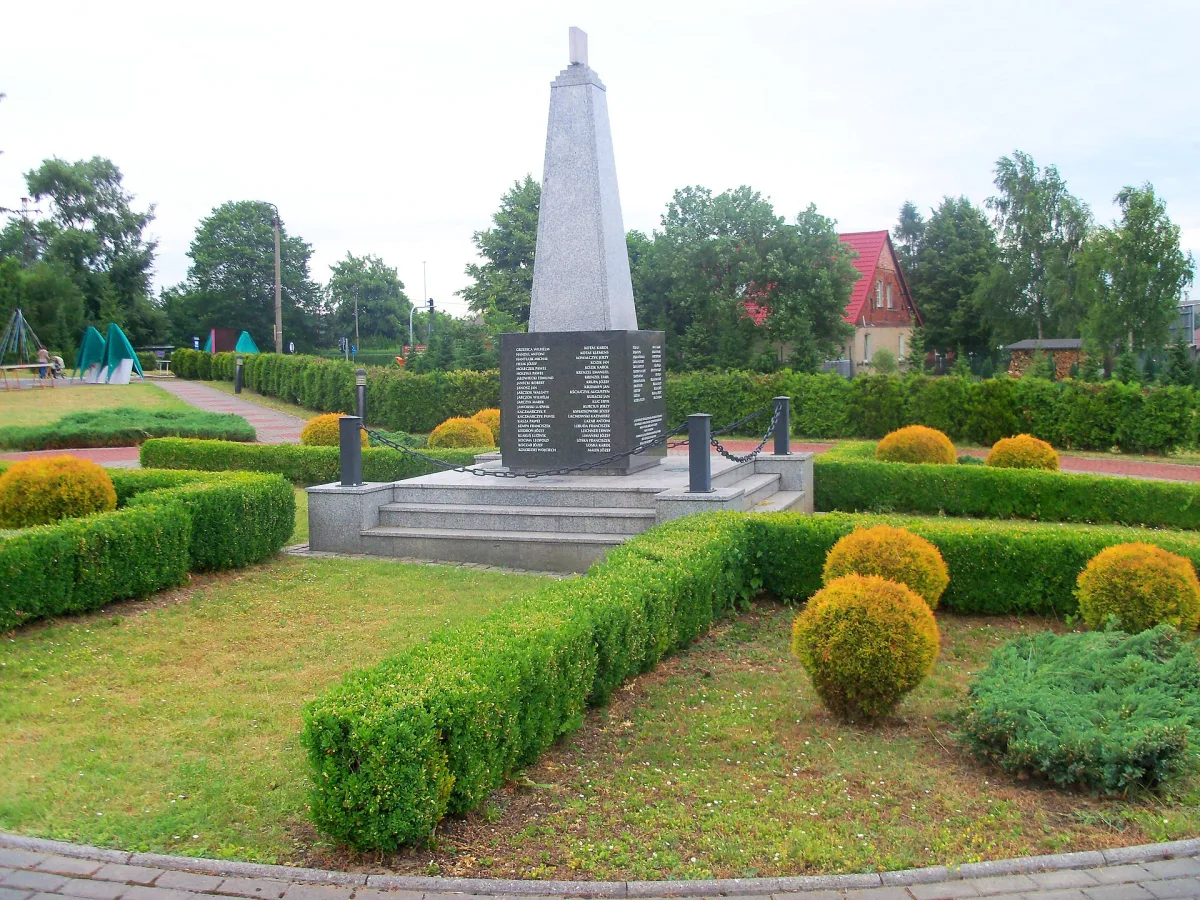
Traces of this destruction are visible today in many districts. The monument in Kostuchna was put up in 1922, destroyed by the Germans in 1939, and the present obelisk, a faithful replica of the old design, was unveiled in 2002 with the names of 85 insurgents from the district. Details are given in the entry: Monument to the Silesian Insurgents in Kostuchna. The monument in Stara Ligota, unveiled in 1922, was destroyed during the war and the boulder was hidden in the ground; it was recreated in 1962 (Stara Ligota). In Knurów the monument of 1923, commemorating two insurgents, was demolished by the Germans at the start of the war, rebuilt after the war as the Monument of Gratitude to the Red Army, and in 1995 its original appearance was restored (Knurów). In Świętochłowice-Piaśniki, the obelisk of 1937 dedicated to nine insurgents shot in August 1919 was demolished in September 1939 and rebuilt in the 1970s in a new form (monument in Heiloo Park).
Memory after 1945
After the war the insurgents did not have an easy time. According to the IPN, the communist authorities stressed the plebeian character of the uprisings, wishing to link them with revolutionary aspirations, and fought against people associated with the prewar centre-right parties, with which most of the insurgents were connected. The prewar union was not allowed to be revived. In April 1945 the Union of Veterans of the Silesian Uprisings was formed, which was dissolved in 1949 and incorporated into the Union of Fighters for Freedom and Democracy. After the breakthrough of 1956 many monuments were put up, often on successive anniversaries, and many of those destroyed by the Germans were recreated. In 1964 the Museum of the Insurgent Deed in Leśnica was opened, and in 1955 the Monument to the Insurgent Deed on Góra Świętej Anny was unveiled, both in the Opole Voivodeship.
The largest monument in the region is the Monument to the Silesian Insurgents in Katowice, unveiled on 1 September 1967. The three bronze wings symbolise the three uprisings, and the structure weighs 60 tonnes. It was placed on the site of a cemetery of Red Army soldiers, whose graves were exhumed and moved to Kościuszko Park. In 2024 the monument complex was entered in the heritage register. The memory of the uprisings is also cultivated by the Silesian Uprisings Museum in Świętochłowice, which was established in 2012 and opened to visitors in October 2014.
Be the first! Add a comment.
You need to log in to add a comment.
Log in