
At first glance Giszowiec looks like a combination of two different towns. In one part of the district stand prefabricated concrete-panel blocks, in the other low houses with steep roofs and a green square in the middle. Those houses are what remains of a settlement built in 1907-1910 for the miners of the Giesche mine. It was designed not as a barracks-like estate by the shaft, but according to the idea of a garden city.
Why the concern built a village
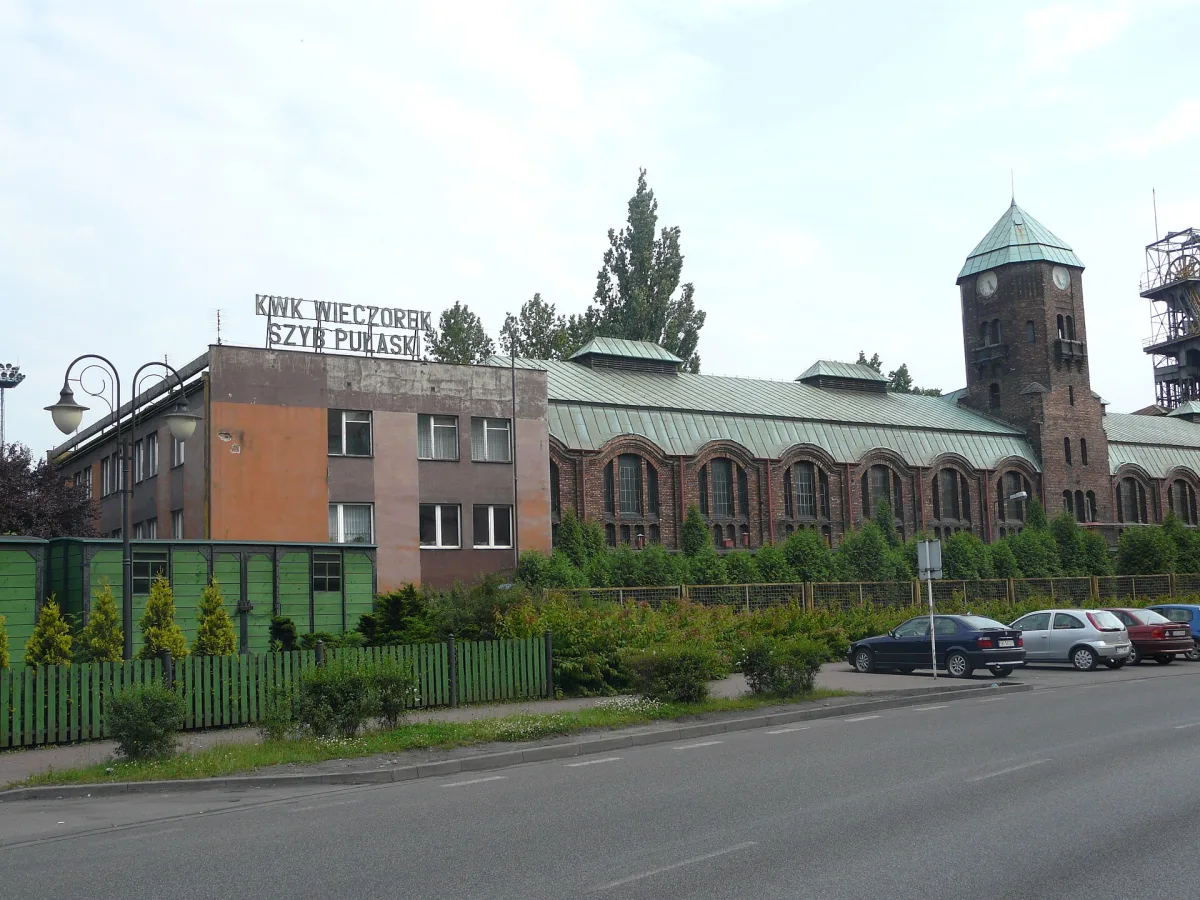
In 1899 the Georg von Giesches Erben concern bought a mining field together with the adjoining forests from Count Franz Hubert von Tiele-Winckler. After a few years it began sinking the double Carmer shaft, today known as the Pułaski shaft complex of the Wieczorek mine. About 1,500 workers were needed, and all around there were forests. The company therefore had to build housing for them.
The decision was made to build low houses, even though they cost more than tenement buildings. The reason was practical: under an estate of low buildings the mine could extract coal using caving, without the more expensive hydraulic backfilling. The project was prepared by the Berlin architects Georg and Emil Zillmann at the initiative of the company director Anton Uthemann. The leaflet of the Katowice City Hall calls him Anthon Uthemann, because the spelling of the surname varies in the sources. The model was the garden city concept of the English urban planner Ebenezer Howard.
The Giszowiec manor district was established on 1 July 1907, and the first residents moved in on 1 October 1908. The estate was planned for 642 families, mainly of workers, but also of clerks and teachers. Besides the houses, there were schools, a post office, an inn, a bathhouse with a laundry and an administration building, and the estate was run by a chief forester. The old German name of the settlement was Gieschewald.
What survived and what disappeared
The houses were built in 42 types. Most were for two families, less often for three or four, and still more rarely for one. The city leaflet states that 30 per cent of the old buildings survived, while according to other sources two thirds of the estate was demolished in the 1970s. The demolitions made way for multi-storey prefabricated blocks for the workers of the Staszic mine. These events became the background of Kazimierz Kutz's film "Paciorki jednego różańca" (Beads of One Rosary). In 1979-1990 the estate officially bore the name of Stanisław Staszic, but the residents stuck to the old name.
The estate is regarded as unique on a European scale. You will find more about the district itself in the description of Giszowiec. The layout of the square, streets and greenery is still clearly legible, so the estate is explored simply by walking around the district.
A walk around the estate
The route is set by the city leaflet and begins at Plac Pod Lipami. It used to be a market square, today it is a small green square, in the middle of which grows a beech more than a hundred years old, named Anthon. The building on the eastern side housed a bakery, a butcher and shops, and the concern made sure that prices were as low as possible. Next to it stands the former school from 1908 and the former forestry office building, which to this day is decorated with a stag's head and a small clock tower.
Giszowiec Park has old trees, a concert shell and a petanque court. Next to it stands the former Silesian Inn (Karczma Śląska), which contained a café, two club rooms, a ballroom and a theatre hall, and in the adjoining buildings a laundry, a mangle room and stables. Today it houses the Szopienice-Giszowiec Municipal Culture Centre. In the former stable a Silesian Room (Izba Śląska), known as Gawlikówka, was set up, with furniture and equipment of an old Silesian room and paintings by Ewald Gawlik, an amateur painter from the Janów Group. A square in Giszowiec bears his name.
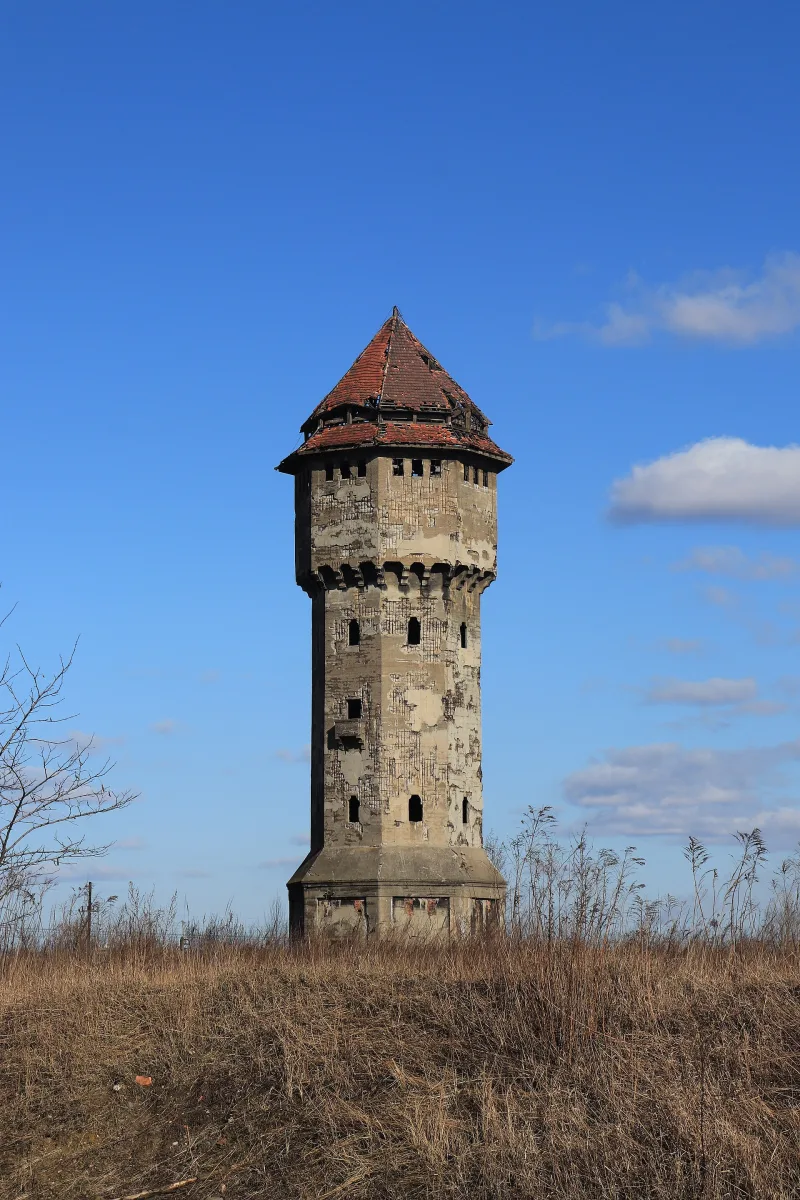
At the highest point of the area stands the water tower, 33 m high. Pipelines carried water from it to the estate, and every 100 m there were pump-cranes from which residents drew water. Next to it stands the so-called American colony, six imposing villas referring to Anglo-Saxon architecture. They were built for the new residents from America, after the Giesche concern was bought in 1926 by the American company Silesian-American Corporation.
At Pszczyńska 10 stands the villa of the director of the Giesche mine. The leaflet mentions that during the Second World War it was the home of Fritz Bracht, the Gauleiter and Oberpräsident of Upper Silesia. The youngest of the larger buildings of the estate is the Church of St Barbara, built in the 1980s and 1990s largely by the residents themselves.
Further from the square
The leaflet ends the walk at the Barbara-Janina recreation centre, whose name comes from two ponds in the Bolina valley. From Giszowiec to the shaft in Szopienice a narrow-gauge railway known as Balkan once ran: passenger service was permitted in 1914, and it operated until the end of 1977. The area can be combined into one day: Bolina Park lies by the ponds in the Bolina valley, Katowice Forest Park is the largest area of landscaped greenery in the city, and the Walcownia, Zinc Metallurgy Museum shows another branch of Silesian industry.
The same architects, the Zillmanns, also designed the second workers' housing estate, Nikiszowiec, located about 2.6 km further on. They are remembered by the square at its heart, Skwer Emila i Georga Zillmannów. Nikiszowiec will be described in a separate article.
Be the first! Add a comment.
You need to log in to add a comment.
Log in