
The first smelting in Wesoła
The beginnings of zinc metallurgy in Upper Silesia go back to 1792. At the glassworks in Wesoła, which belonged to the estates of the princes of Pszczyna, the first successful smelting of zinc was carried out by Johann Christian Ruhberg. This is reported by the dzieje.pl portal on the basis of a statement by a representative of the zinc museum. The technology developed by Ruhberg was later used in Germany, Belgium and France.
The region had natural foundations for this: some of the largest Polish deposits of zinc ores occur together with lead ores in the north and north-east of the Upper Silesian Coal Basin. Zinc also drove neighbouring industries for years. As a representative of the Katowice rolling mill said, zinc metallurgy was the main buyer of coal from Upper Silesian mines, and its products were among the first Upper Silesian goods to win distant markets.
What was this metal used for? The most important technological use is coating steel sheets, that is galvanised steel resistant to corrosion, as well as being a component of alloys such as brass. Zinc was also rolled into sheets, strips and wires, and it was in rolling mills that the metal took the form of a finished product.
Szopienice: from Wilhelmina to the rolling mill
Szopienice, today a district of Katowice, was an agricultural village until the first half of the 19th century. In 1834 the company Georg von Giesches Erben started the "Wilhelmina" zinc smelter here, later the "Szopienice" Non-Ferrous Metals Works. Workers' colonies grew up around it, and in 1906-1908, in the area of what is now ks. mjr. Karola Woźniaka Street, a complex of modern "Uthemann" zinc works was built. It was designed by Emil and Georg Zillmann, and the first hall was brought into operation on 1 January 1912.
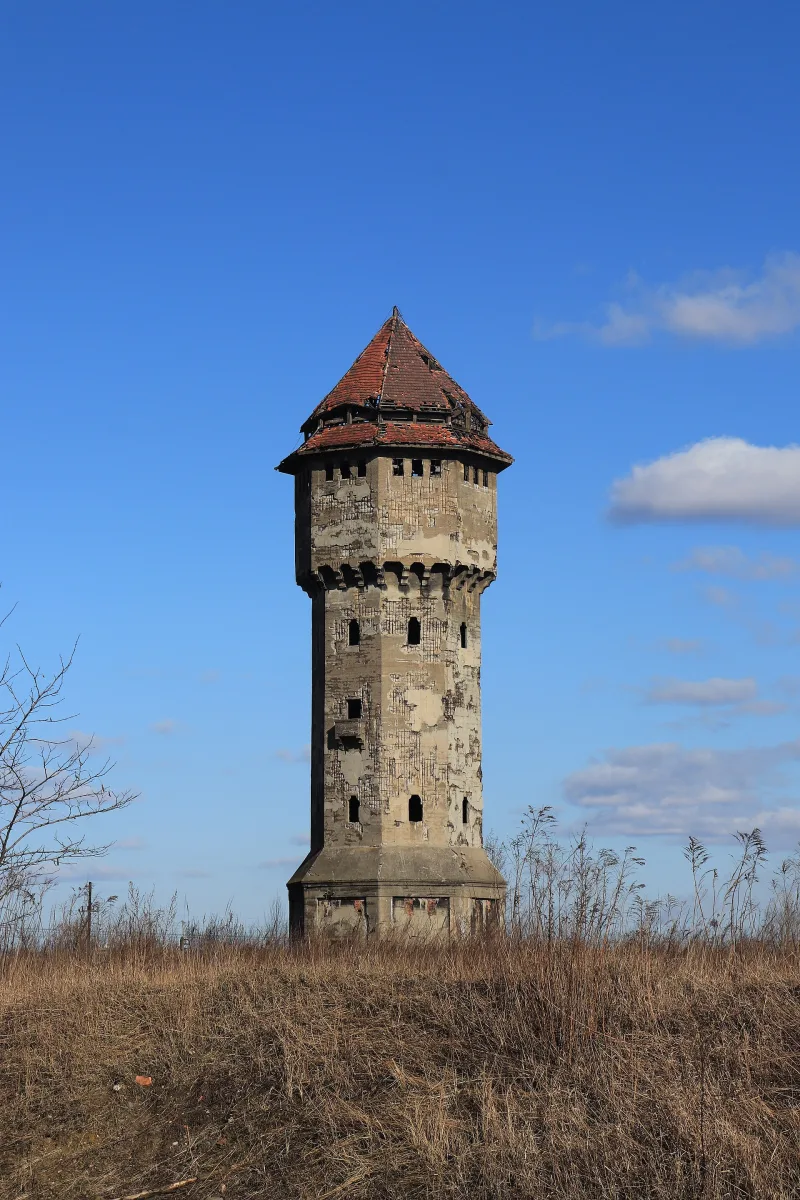
Several buildings of this complex have survived. The water tower of 1912 is a 35-metre reinforced concrete structure on an octagonal plan, which supplied industrial water to the works around it. According to the portal's card, the Zinc Department of the Non-Ferrous Metals Works ceased work on 30 June 1976, and the remains of the Saeger smelter produced until 2002. The building is disused and can be seen only from the outside. In 2008 the "Szopienice" Non-Ferrous Metals Works was put into liquidation.
The rolling mill of 1903
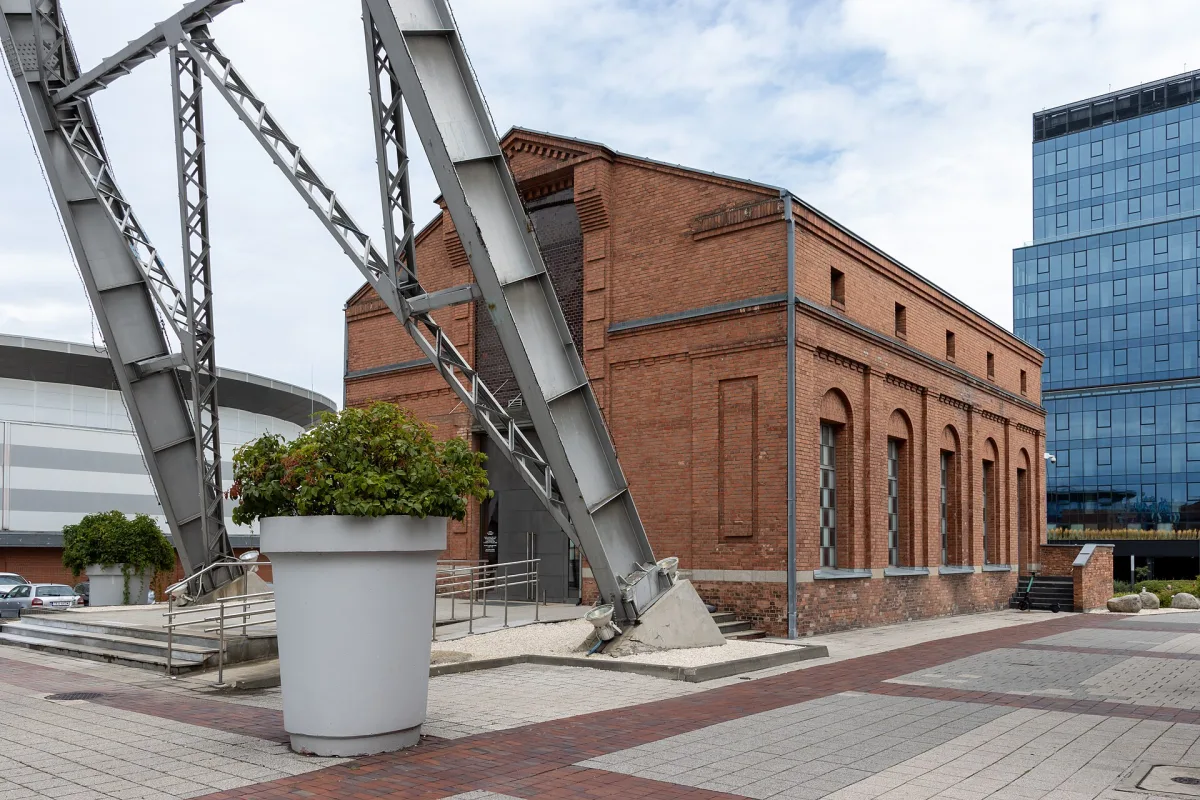
The best preserved witness of zinc processing is the Rolling Mill - Zinc Metallurgy Museum. The building was erected in 1903 by the concern of the heirs of Georg von Giesche. According to the museum, the concern was among the three largest producers of raw zinc in the world, but had no department that would process it into finished products. The main hall was originally 91 metres long and 20 metres wide. Production started in 1904, when 144 people were employed, and output was close to 10,000 tonnes.
During the First World War the hall was extended by a further 91 metres, and besides sheet metal the production of battery cups, zinc strips, wires and rails began. Production ended in 2002. The rolling mill was then the only historic building of the former complex of Szopienice smelters in which part of the original equipment had survived. Today the hall holds melting furnaces, a casting carousel with 24 water-cooled moulds, rolling mills and four steam engines. The rolling equipment was entered in the heritage register in 2003, and the whole building in 2010. The museum was opened on 11 June 2015.
The story of the smelter is complemented by the Metallurgical Traditions Room in the former laboratory of 1897. It has operated since 4 May 1984, and guided tours are given by former smelter workers.
Other zinc rolling mills
Szopienice was not the only place where zinc was rolled. In Lipiny, a district of Świętochłowice, the Silesia Works operated, founded in 1847 as the Konstancja Works. In 1859 a steam-powered zinc rolling mill was started there, and the zinc sheet rolling mill of 1885-1895 was regarded before the First World War as the largest such plant on the European continent. The western part of the complex has survived, that is the group of rolling mill buildings with equipment, entered in the heritage register.
The Sławków rolling mill on the Biała Przemsza is of older date. It was built in 1825-1826 as a government investment in the Kingdom of Poland, was driven by water wheels, and in 1841 processed a third of the zinc from the Kingdom's government smelters. It was closed in 1888, because rolling moved close to the smelters, to the area of today's Dąbrowa Górnicza and Będzin. From Ruhberg's smelting to the Szopienice rolling mill, then, more than a hundred years of technological development pass, and traces of each of these stages can still be seen on the ground.
Be the first! Add a comment.
You need to log in to add a comment.
Log in