
Raków, 1896: a steelworks built under Russian partition
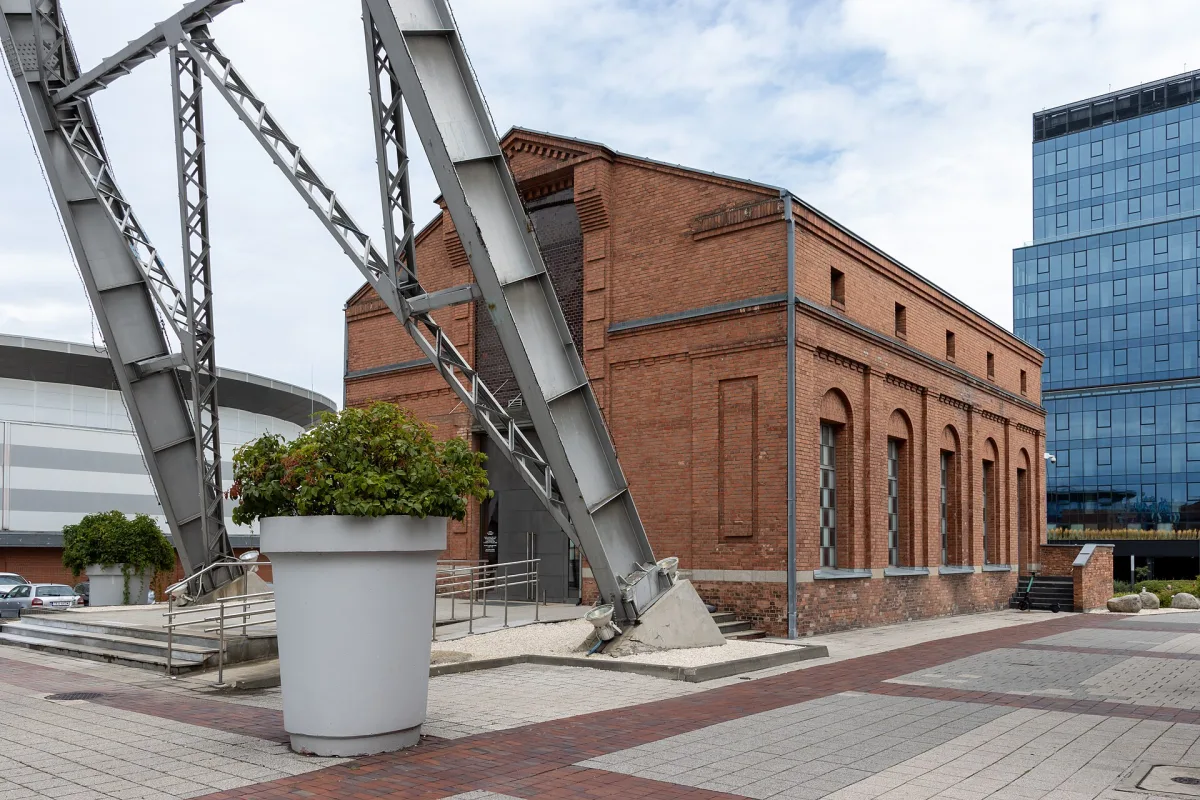
Today's Częstochowa Steelworks lies in the Raków district, but in 1896 this was still the land of a village on the left bank of the Warta. It was there that the Bernard Hantke Metalworks Company began to build a plant that was meant to be the raw-material base for its factories. Construction lasted until 1902, and the plant covered 64 hectares. The location was decided by resources: in the area there were iron ores and limestone, there was water useful for industry, and the Warsaw-Vienna Railway ran through the city, that is, a route for raw material and products. This line is recalled by the Railway History Museum in the Stradom station building.
It was regarded as one of the most modern plants of its kind in the Kingdom of Poland and the second largest, after the Bank Steelworks (Huta Bankowa). It comprised two blast furnaces (from 1899 and 1901), a steelworks with five open-hearth furnaces, a rolling mill from 1904, mechanical workshops, a power station and a laboratory. Next to it a workers' housing estate was built for 280 families, along with houses for the engineering and technical staff. The technical documentation was prepared by the engineers Józef Chlebowski, Józef Chmurski and Leopold Sobański. At first the raw material came all the way from Kryvyi Rih in present-day Ukraine, and soon ore from nearby mines belonging to the company began to be used.
From debt to prosperity
The first years brought growth in production, but the construction had been financed by loans from German banks, and the outbreak of an economic crisis deepened the debt. The main creditor became a company from Gliwice, which by 1904 held 30 per cent of the company's shares, and three years later already 95 per cent. Strikes during the revolution of 1905 lowered profitability, and in 1908 the plant stood idle for a time for lack of demand. Modernisation carried out in 1909-1910 brought an increase in orders.
The good run continued until the First World War. In 1913 the blast furnaces produced 114 thousand tonnes of pig iron, the steelworks 87 thousand tonnes of crude steel and the rolling mill 82 thousand tonnes of rolled steel. The steelworks then employed about 1,800 workers. The value of production reached 90 to 100 per cent of the capacity of individual departments.
Two wars and interwar stagnation
After German troops entered the city, the steelworks was shut down for two years, and until the end of the war it mainly produced wire for the army. After independence was regained, the workforce demanded nationalisation of the plant to protect it from bankruptcy, and in the end the steelworks came under state management thanks to state loans. It was one of the few steelworks in the area of the former Kingdom of Poland that suffered no destruction of infrastructure. Production nevertheless remained low for a long time: in 1919 it reached at most 20 per cent of the pre-war level, and in 1931, at the bottom of the crisis, about 5 per cent. In 1928 Raków was incorporated into Częstochowa as a new district. The Hantke Company went bankrupt in 1934 and merged with the Modrzejów Works.
During the Second World War the steelworks became part of the German HASAG concern and worked for the needs of the war industry. Already in October 1939 blast furnace no. 1 was started. After the liquidation of the ghetto, Jews from Częstochowa also worked here by force. The history of the Częstochowa ghetto and the HASAG camps requires a separate, factual treatment and has its own text in this section. The retreating Germans did not manage to destroy the plant, so in 1945 the steelworks survived without major losses.
The Bierut Steelworks and the heavy plate mill
As early as February 1945 the plant was placed under the Central Administration of the Steel Industry, and by a ministerial order of 30 August 1946 it was among the nationalised enterprises. The first expansion plan, with a new open-hearth steelworks and a tube mill, was drawn up in 1947 and carried out by April 1952. After the expansion was completed, the steelworks was given the name of Bolesław Bierut, and the plant consisted of two territorial divisions: Raków and Mirów. The start-up of the first open-hearth furnace was broadcast by Polish Radio. The steelworks gave up the name of its communist patron on 19 April 1989.
The Six-Year Plan added a coking plant (1960-1962), a sinter plant (1956) and further blast furnaces, and in 1959-1960 a coke-chemical plant and works making refractory materials. The peak of this expansion was the heavy plate mill commissioned in 1972, built partly on the site of the former airfield at Kucelin. It was regarded as one of the largest in Europe at the time. The Częstochowa plates were made into ship plates, tank plates and boiler plates, as well as structural plates used in the construction of Warsaw's Świętokrzyski Bridge.
Blowing out the furnaces and traces in the city
A plan for thorough modernisation from the mid-1980s was abandoned after 1989, when demand for steel fell. In 1994 a continuous steel casting line was started, but at the same time further departments began to be closed: four coke oven batteries, two sinter strands, blast furnace A (1994) and blast furnace B (2001), as well as the open-hearth furnaces, the last of which was blown out in 2001. In 1998 the enterprise was transformed into a joint-stock company, and further services and departments were separated from the plant as independent firms.
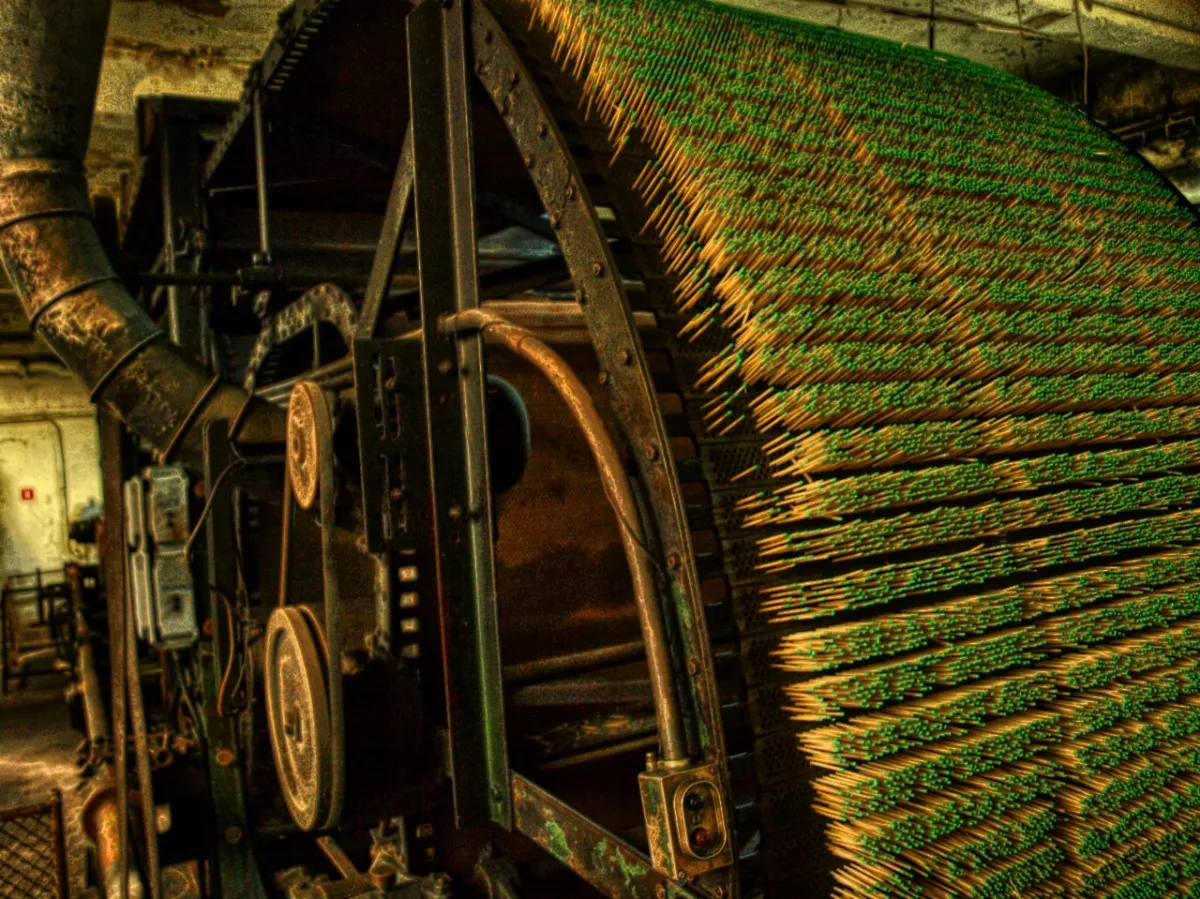
Traces of the city's industrial history need not be sought only in Raków. The Match Production Museum is housed in a former factory whose beginnings go back to 1881, and production started in 1882 as the first such factory on Polish lands. The Iron Ore Mining Museum, in turn, shows in its underground corridors the equipment of the mines of the region, that is, the raw material from which steelmaking in the area came in the first place. Both sites belong to the Industrial Monuments Route of the Silesian Voivodeship.
Be the first! Add a comment.
You need to log in to add a comment.
Log in