
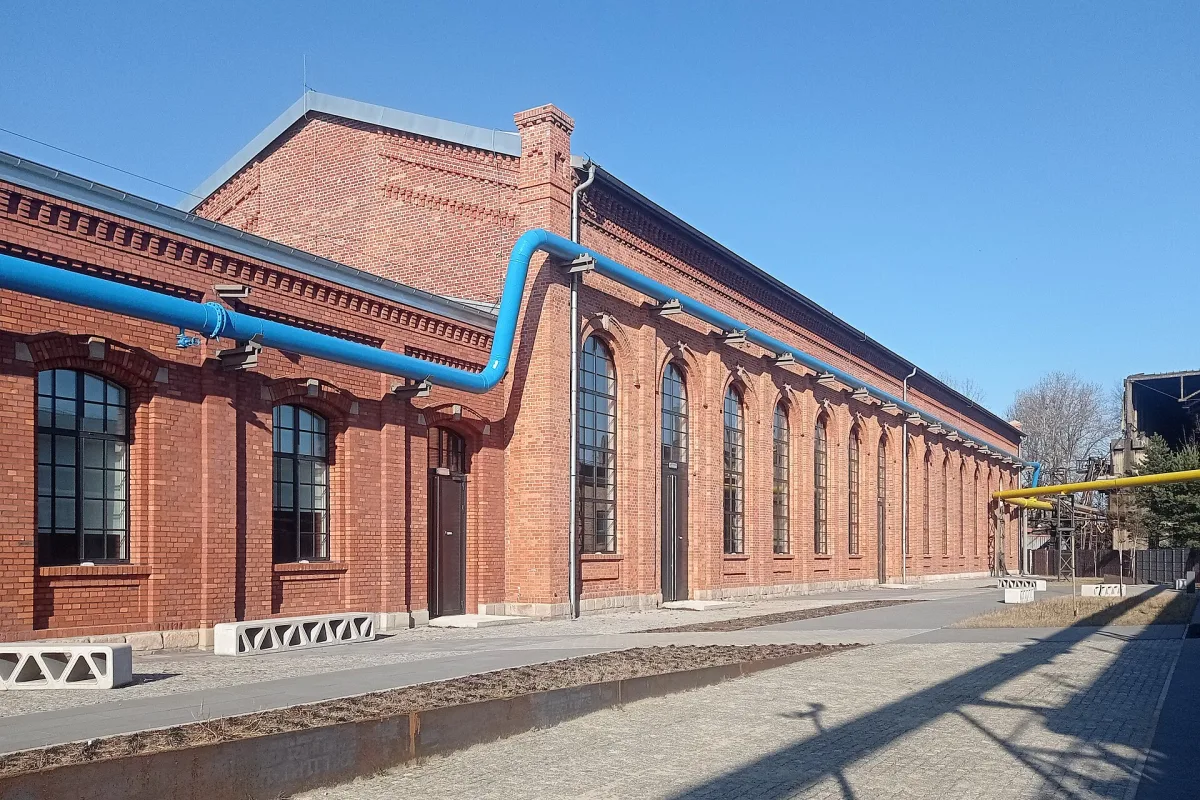
Chorzów has two names for its steelworks, which are confusing at first encounter. The plant was founded as Königshütte, that is the Royal Ironworks (Huta Królewska), after 1945 it bore the name of Tadeusz Kościuszko, and in 1935-1939 it was called the Piłsudski Steelworks. It is one of the oldest Polish iron works, and a town grew up around it. Today its history is told by a museum in the brick hall of the former power station.
The plan of 1799 and the first blast furnace
The idea of the ironworks came from Friedrich Wilhelm von Reden, and it was designed by the Scottish engineer John Baildon. The first preliminary works began in 1797. In 1799 the decision was taken on the name Königshütte, in honour of the Prussian king, and Frederick William III allocated 40 thousand thalers to the construction. The total cost of the two blast furnaces with their outbuildings finally came to 57,439 thalers.
The first blast furnace, named "Reden", was started in 1802. In December of the same year the second, "Heinitz", began operation, and further ones were added in 1806 and 1818. The fiftieth anniversary of the first furnace was marked in 1852 with a monument to Reden on the hill that is still called Reden Hill (Góra Redena). Reden himself and the beginnings of Silesian industry are covered in a separate article on his steam engine and the Gliwice blast furnace.
Rails, steel and the town
In 1843 a puddling shop, a rolling mill and a hammer shop were built, and the ironworks began to produce finished rolled products, specialising in railway rails. In 1862 a rail rolling department was opened, and in 1865 a Bessemer steelworks. Between 1853 and 1860 four more blast furnaces were added.
In 1868 the ironworks was bought by Count von Donnersmarck, and on 18 July of that year the town of Królewska Huta was established, formally from 1869, after the king's decree. The industrial settlement received town rights, and in 1871 the plant was incorporated into the United Königs- and Laurahütte concern. Further departments gave rise to other factories: in 1895 a wagon factory, the seed of the future Konstal, was created on the ironworks site.
Menzel at the ironworks
In 1872 the Berlin painter Adolph von Menzel spent several weeks at the ironworks. Sketches were made there for the painting Eisenwalzwerk, also known as Moderne Cyklopen (The Iron Rolling Mill), completed in 1875. It is one of the most famous paintings of 19th-century industry, and the sketches were made precisely at the Königshütte.
From Piłsudski to Kościuszko
In 1935 the name of the ironworks was changed to the Piłsudski Steelworks, and in 1937 a new blast furnace "A" was built. During the occupation the plant worked for the occupier under the restored name Königshütte, and after the war it was given the name of Tadeusz Kościuszko. In 1998 the state enterprise was transformed into a joint-stock company, and in 2000 the company Huta Królewska was formed on the basis of its assets, retaining the blooming mill and the large rolling mill. In 2007 Huta Kościuszko sold its 48 per cent stake to ArcelorMittal Poland.
A museum in the power station hall
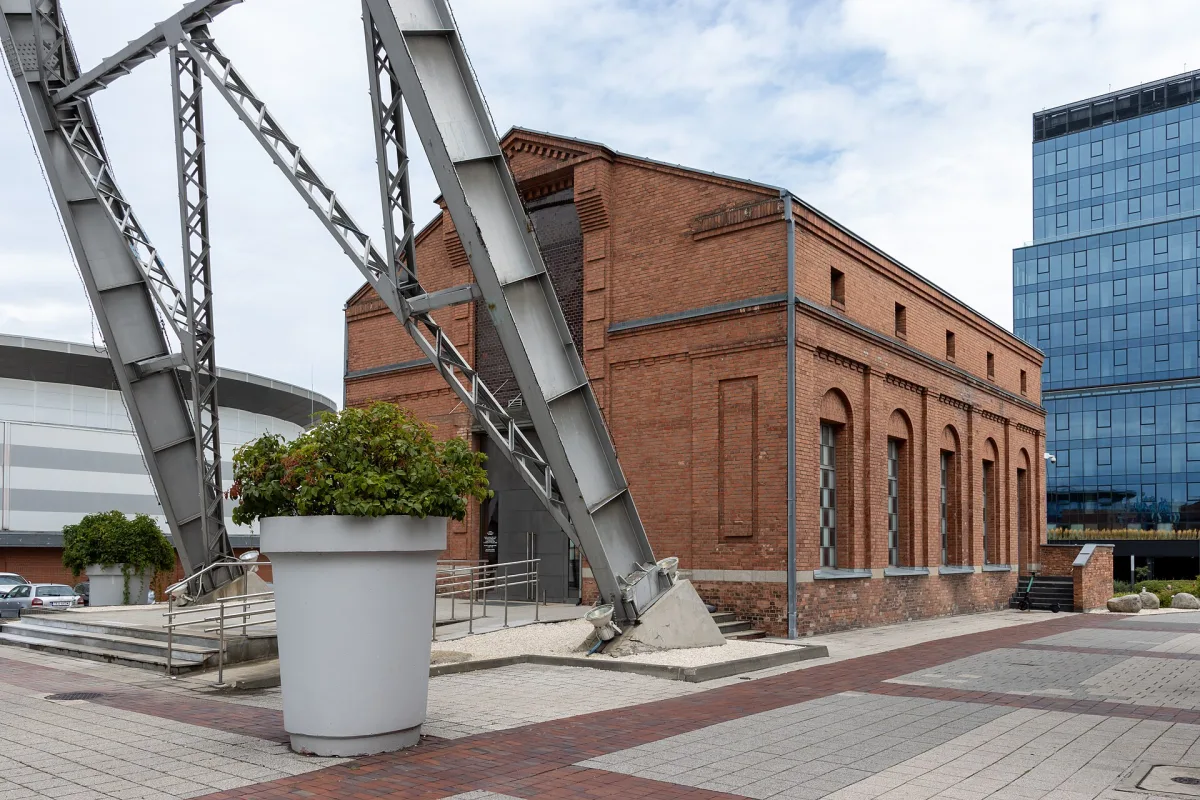
The heritage of the ironworks is preserved by the Metallurgy Museum in Chorzów. It is housed in the brick hall of the former power station of the Kościuszko Steelworks from 1891, entered in the heritage register in 2013. The city bought it in 2010 from a bank, secured it and repaired the roof. Before the museum started, the hall hosted exhibitions, among others World Press Photo, and Industriada, the festival of the Industrial Monuments Route. The museum was established in 2019, and the official opening took place on 26 November 2021. It is regarded as the first museum in Poland devoted entirely to the heritage of iron and steel metallurgy. Since 2023 it has been on the Industrial Monuments Route of the Silesian Voivodeship.
The permanent exhibition is based on mementoes of steelworkers from the Kościuszko and Batory steelworks and on machines. Among them is a stamp straightening press from 1897, which worked at the Royal Ironworks until 2015, and a steam hammer from 1898 from the forge of the Batory Steelworks, weighing 34,000 kg and striking 145 blows per minute. There are also a bridge hammer from 1907 with a rotating crane, an eccentric press from 1955 and a fragment of a rolling train from 1874. Since 2020 the project "Mów mi huto" ("Call me steelworks") has been under way, in which the memories of former steelworkers are recorded.
Be the first! Add a comment.
You need to log in to add a comment.
Log in