
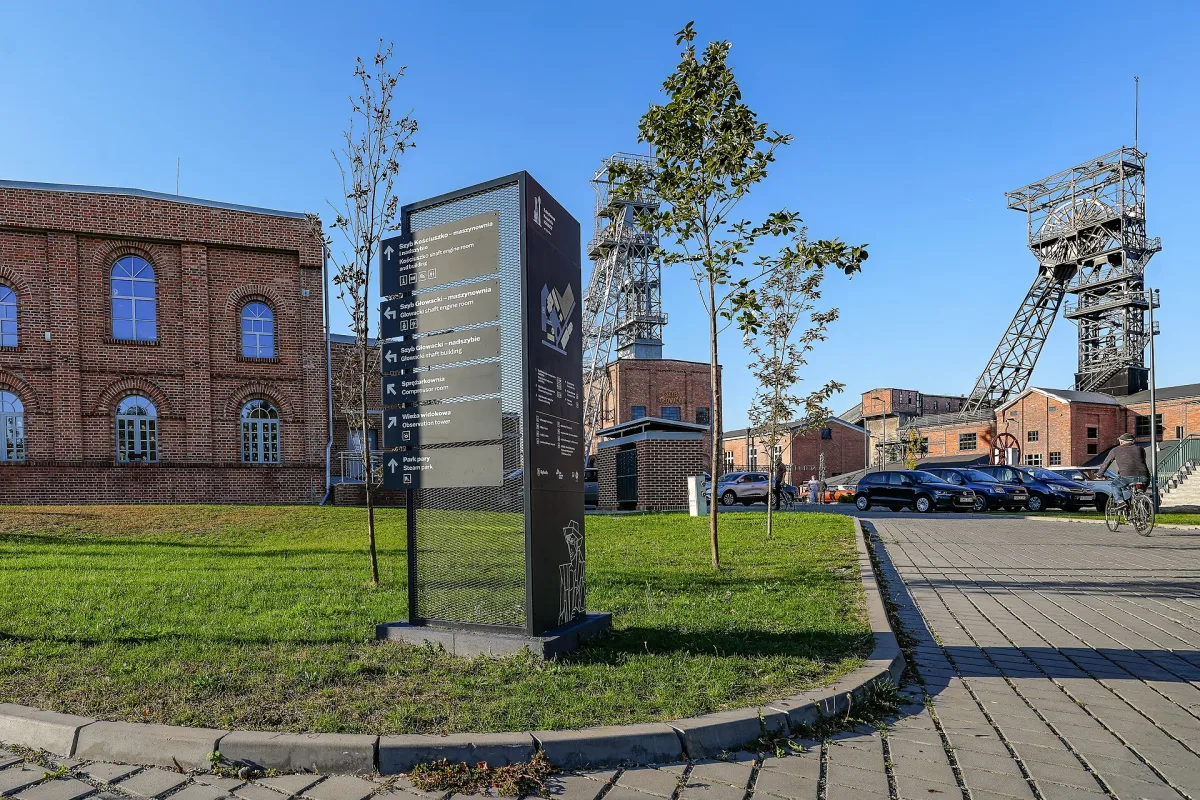
The Rybnik district of Niewiadom has a mine that for more than two centuries changed names, owners and machines, and after closure was saved as a technology museum. The first coal extraction under the name Hoym goes back to 1792. Today the surviving surface buildings serve as the Ignacy Historic Mine, and its main exhibits are the preserved steam winding engines.
From a trial mine to Hoym-Laura
According to the mine's website in Biertułtowy, a coal seam was found on the land of a royal estate and a trial mine, "Versuch Kohlengrube", was founded there. It was soon named "Hoym", in honour of Karl Georg von Hoym, the Prussian minister for the province of Silesia. According to other sources the mine was established in 1792 on the initiative of this minister.
As early as 1806 a steam drainage engine was brought to it from Zaborze, today a district of Zabrze. Earlier it had worked on driving the Great Hereditary Adit, which led to the "Królowa Luiza" mine, today one of the attractions of the Queen Louise Adit. Coal required drainage, so steam appeared here very early, even before the mine passed into private hands.
In 1834 the Prussian treasury sold the mine to private individuals, and in the same year it was merged with the "Sylvester" mine from Niedobczyce. In 1871 the "Hoym-Laura" plant was formed, after the "Laura" mine from the Niewiadom area was added. In 1890 the mine was bought by Prince Hugo Hohenlohe-Oehringen, and in 1913 it was taken over by the Czernice Coal Company. The name "Ignacy" was given in September 1936, in honour of President Ignacy Mościcki. In 1968 the plant was incorporated into the "Rydułtowy" mine as one of its units.
A note on names: the sources differ slightly here. The mine's website states that after 1922 the name "Hoymgrube" was used, and from 1925 "Kopalnia Hoym". Other sources put it more generally: "Hoym-Laura" in 1871-1922, and "Hoym" in 1922-1936 and 1939-1945.
Two winding engines
In the historic mine the main attraction is two steam engines: the first, from 1900, served the Głowacki shaft, and the second, from 1920, works at the Kościuszko shaft. The Kościuszko shaft has its own, longer history: sinking of the shaft in the "Laura" field began in 1874, and in 1879 it was put into service for extraction and drainage.
The end of these engines' work did not come together with the end of extraction. The mine's website describes how on 10 September 2008 Kompania Węglowa cut off the steam supply to the winding engines, which immobilised the two steam engines still operating in Poland. Earlier, from 2004, an event called "Święto Pary" (Steam Festival) was held, meant to popularise the protection of technical heritage. Three editions of it took place.
Rescue and revitalisation
In 1999 the mine's employees founded an association that was to convince the company's management and the Rybnik authorities that the heritage of several generations of Rybnik miners must be preserved. At the end of that year the mine was opened to tourists. In 2005 the building complex was entered in the heritage register: it covered the buildings of the "Głowacki" and "Kościuszko" shafts together with the winding engines, and the power station building with two compressors. In 2006 the mine became part of the Industrial Monuments Route.
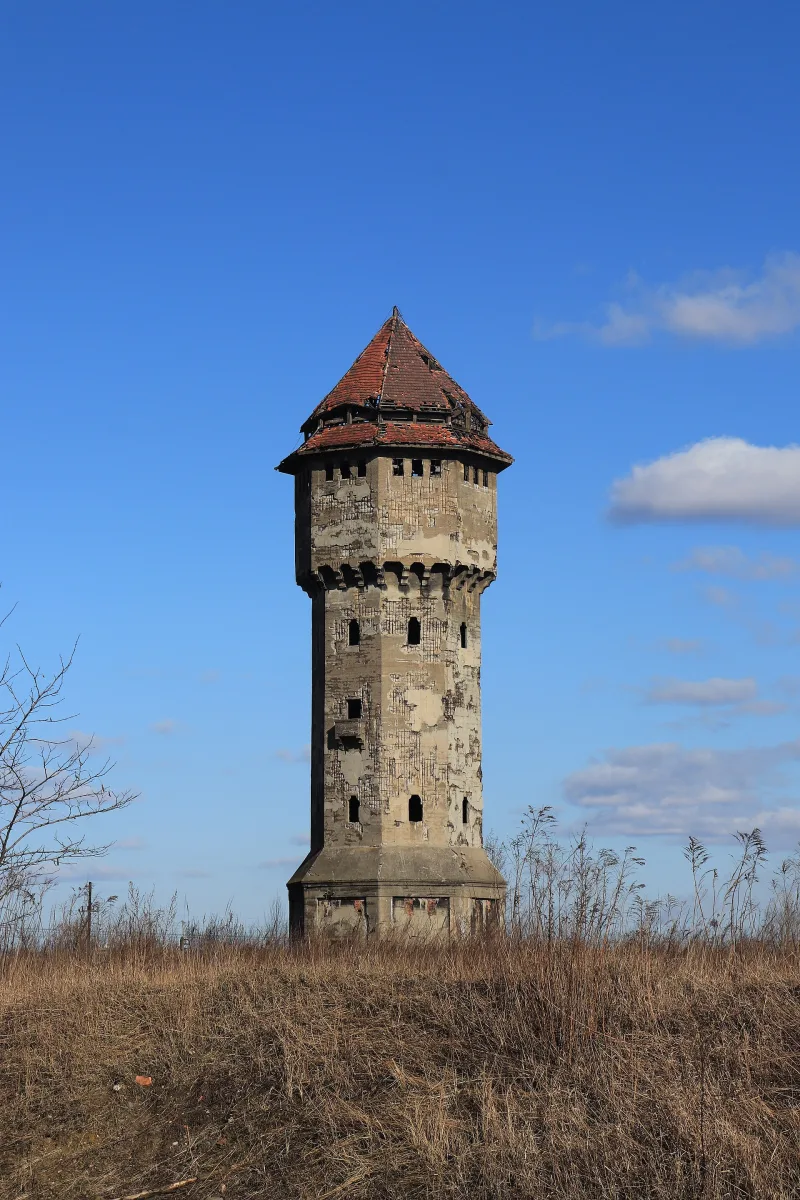
The water tower on the mine's grounds was turned into a viewpoint, opened on 1 January 2008. The tower is 46 metres tall, and according to the mine's website the viewing terrace lies at a height of about 46 metres. In good weather, as the mine states, the Sudetes and the Tatras can be seen from here.
A thorough revitalisation lasted from 2018 to 2022. It included conservation of the historic buildings, renovation and restarting of a steam winding engine more than a hundred years old, and infrastructure for visitors. The engine is the key exhibit of the interactive exhibition "Wiek Pary" (The Age of Steam), devoted to the Industrial Revolution. For its comprehensive approach to revitalisation the mine received in 2024 the Europa Nostra European Heritage Award in the Conservation and Adaptive Reuse category.
A science centre, a power station and greenery
On the mine's grounds there is also a small science centre, SOWA, with interactive exhibits and workshops for children. The former power station serves, after renovation, as a meeting place for local groups, and the reclaimed wasteland next to the mine has been turned into a green recreation space for the residents of Niewiadom. It is not possible to go underground: descents for visitors were suspended in 2002 for safety reasons, and today only the surface buildings are visited.
Be the first! Add a comment.
You need to log in to add a comment.
Log in