
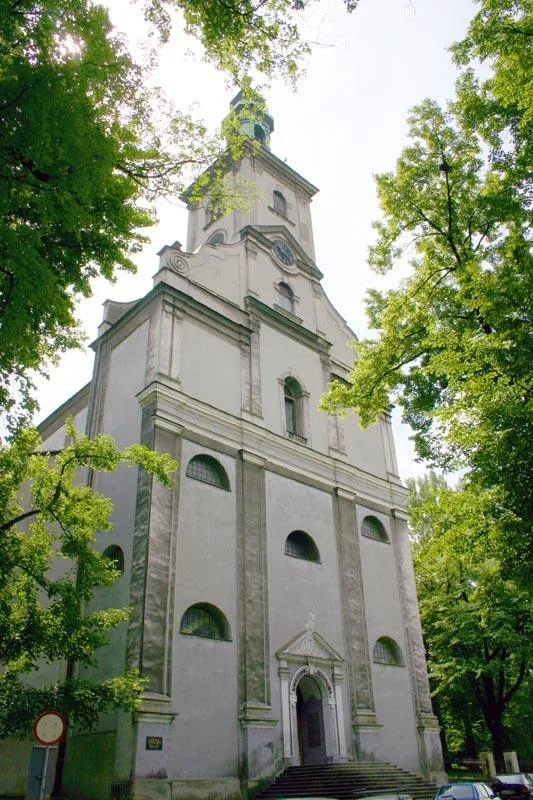
The Treaty of Altranstädt and permission for six churches
After the Thirty Years' War Protestants in Catholic Silesia lost their churches. In 1648-1654, 656 churches were taken from them there, and in the Duchy of Cieszyn in the first period of Habsburg rule, from 1654 to 1709, all churches were taken from the Lutherans and services were forbidden. The faith survived because services were held in secret in the Beskids, including on Równica and Mała Czantoria, and some of the faithful fled to the more tolerant Bielsko and to the Żywiec lands.
The breakthrough came on 1 September 1707 with the treaty concluded at Altranstädt in Saxony between the Lutheran King of Sweden Charles XII and the Catholic Emperor Joseph I of Habsburg. It obliged the emperor to return 121 churches to Silesian Protestants, although in practice 104 churches were returned. The treaty also guaranteed freedom of private services at home and of sending children to Protestant schools. Permission to build new churches came only with the additional execution recess, proclaimed on 27 January 1709 in Wrocław. The Protestants had to pay 700,000 guldens for this.
The recess permitted six so-called churches of grace, in Żagań, Kożuchów, Jelenia Góra, Kamienna Góra, Milicz and Cieszyn. Only the one in Cieszyn has survived as a Protestant church to this day. The three churches in Jelenia Góra, Kamienna Góra and Milicz were taken over by Catholics after the Second World War, and in Żagań and Kożuchów the churches were demolished and only the towers survived.
Building the church in Cieszyn
The Lutherans of Cieszyn looked for a site to build on and chose the suburban gardens near the Upper Gate (Wyższa Brama). The final consent was given on 24 May 1709 by the imperial envoy Count Georg Zinzendorf. Among the relics of this event an imperial eagle with the image of Joseph I has survived, from the so-called staff of grace with which the site for the church was marked out. Today it is shown by the Museum of Protestantism, opened in 2009 on the church's gallery.
The foundation stone was laid on 13 October 1710. First a quickly built wooden church was erected, which served for another thirteen years, and then the brick one, under the direction of the Opava architect Jan Haüsrucker. Construction lasted over a dozen years, and the tower, after a special permit was obtained, was added in 1772. It was then that the Jesus Church took the shape preserved almost unchanged to this day. Descriptions give the tower as 72 or 75 metres tall, because even in a single description both figures appear.
The founders were Erdmann II Promnitz of Pszczyna, Julius Gottlieb Sunnegh of Bielsko and Wenceslas Louis von Henckel of Bogumin. The Cieszyn congregation numbered, at its founding, an estimated 50,000 of the faithful, and for several decades it was the only Lutheran church within a radius of more than seventy kilometres. Hence the name "Mother Church": Protestants came here from Moravia, Opava Silesia and other parts of Upper Silesia.
The largest Protestant church in Poland
It is one of the largest Protestant churches in the Cieszyn diocese and in Poland. It has 3,500 seats and can hold about 7,000 people in all. The building is an example of late Austrian Baroque: a five-aisled basilica on a Greek cross plan with a semicircular chancel. Above the side aisles rise three tiers of galleries, called pawłacze in Cieszyn. The pews are arranged centripetally around the pulpit, because in a Protestant service the most important thing is the proclamation of the Word.
The Baroque altar of 1767 and the pulpit were made by the Cieszyn sculptor Józef Pracker. The altar holds a painting of the "Last Supper" of 1766, a copy of a 16th-century work. On the right stands a copy of a bust of Charles XII, a gift from Swedish Protestants in 1935, which recalls his intercession with the emperor. The organ by Oscar Walcker of Frankfurt, from 1923, has more than 2,000 pipes and according to its description is the largest in Cieszyn Silesia.
The surroundings and the memory of the Pietists
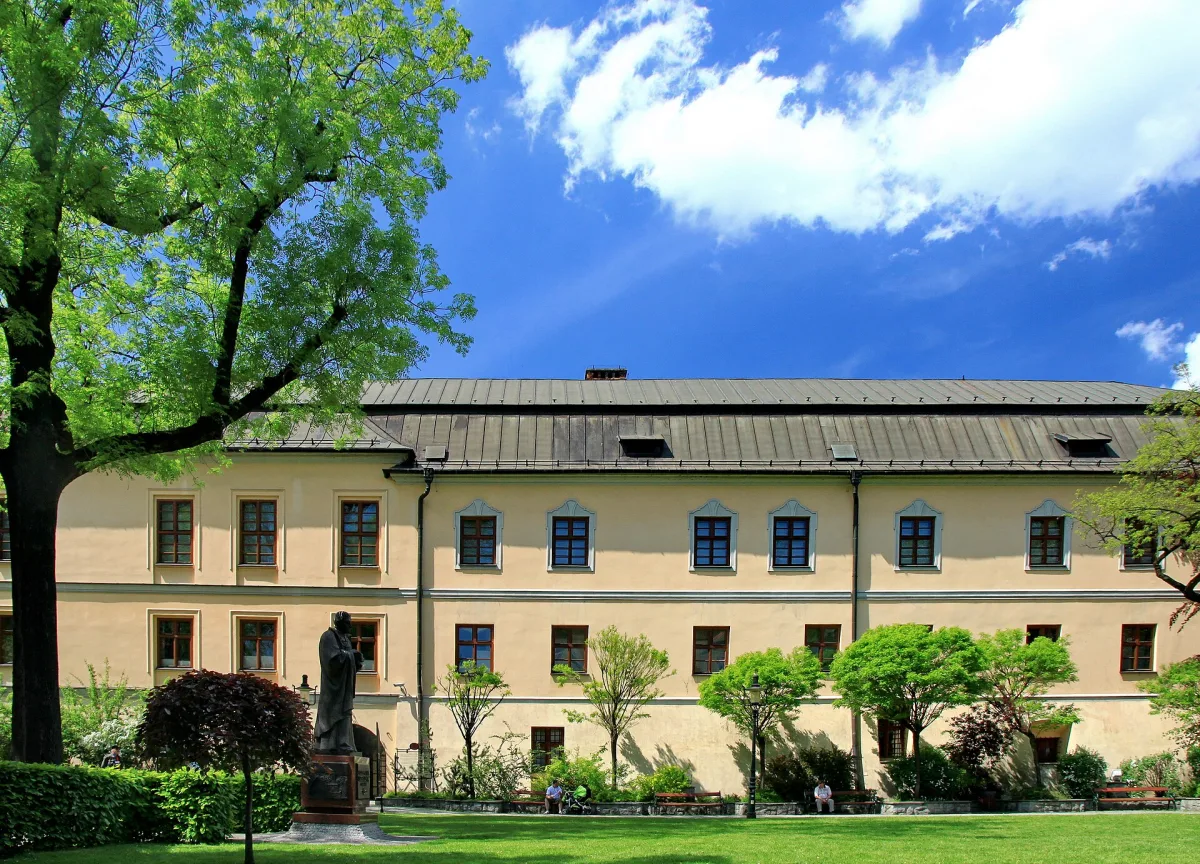
Next to the church lies the former Protestant cemetery, which serves as a park, with old trees protected as natural monuments. Here stands the "stara pajta" (old barn), a former Protestant school of 1725, and the Tschammer Library. Some sources state that it has more than 17,000 volumes, while the museum's description speaks of more than 23,000, so the figure depends on what is counted as part of the collections.
In 1709-1730 the church was an important centre of Pietism, which influenced the religious life of the churches of many nations. Associated with it were the pastors Jan Muthmann, author of the first Polish book in Cieszyn Silesia, and Johann Adam Steinmetz. Further legal changes came with Emperor Joseph II's Patent of Toleration in 1781 and the Protestant Patent of 1861.
Be the first! Add a comment.
You need to log in to add a comment.
Log in