
Between 17 and 21 January 1945 the Germans evacuated the German Nazi concentration and extermination camp Auschwitz and its subcamps. According to PAP, in a dzieje.pl publication, about 56 thousand prisoners were then marched out, directed mainly to camps in the interior of the Reich. Many columns passed through what is today the Silesian Voivodeship. The Auschwitz-Birkenau camp itself lies in Lesser Poland and is not the subject of this text. The subcamps that operated in Silesia are described in a separate article on the Auschwitz subcamps in the Silesian Voivodeship.
The evacuation of the camp and its scale
The evacuation was prepared at the end of 1944, as the Soviet army approached. According to IPN information cited by PAP, the columns were supposed to consist of healthy and strong people, but among those evacuated were many sick prisoners who feared that staying in the camp meant death. Children were also evacuated. The columns were escorted by armed SS men.
The first columns left on 17 January 1945 from the subcamps of Neu-Dachs in Jaworzno and Sosnowitz, the last on 21 January from the Blechhammer subcamp. During the marches at least 9 thousand prisoners died. The same PAP text from 2017 adds that the figure may have reached as many as 15 thousand, with victims dying of cold and exhaustion or being shot. About 7 thousand extremely exhausted prisoners remained in the camp, and were liberated by the Red Army on 27 January 1945.
Routes through the present Silesian Voivodeship
According to dzieje.pl, the main routes led to Wodzisław Śląski and to Gliwice. There the columns of prisoners on foot were directed to railway stations, from where they were taken in open wagons to the Mauthausen and Buchenwald camps, despite severe frost. Many of those who survived the marches died later in camps in the interior of the Reich.
According to these accounts, one of the routes led through Brzeszcze, Miedźna, Pszczyna, Studzionka and Jastrzębie-Zdrój to Wodzisław. Pszczyna was an important point on the route: the IPN describes how the columns split up there, with some going on to Poręba and Jastrzębie-Zdrój, others to Żory and Świerklany. The columns also moved along another road, through Branica, Suszec and Rudziczka. The longest route, 250 kilometres, was covered by more than 3.2 thousand prisoners from the Jaworzno subcamp, who were marched to KL Gross-Rosen in Lower Silesia.
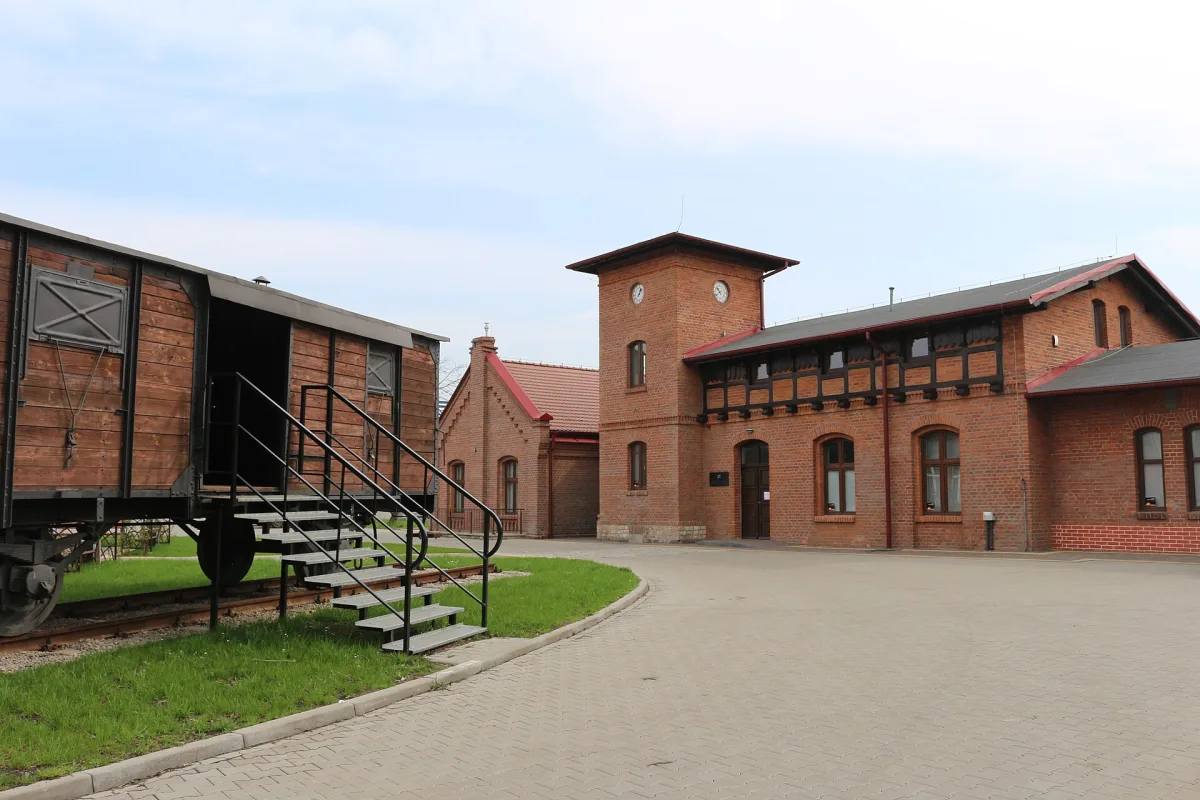
In the night of 21 to 22 January 1945 a train from Gliwice carrying about 2.5 thousand prisoners was stopped at the station in Leszczyny near Rybnik. According to dzieje.pl, some of them were too weakened to leave the wagons, and the guards opened fire at the open doors. More than 300 people were killed, and the survivors were driven west.
Help from residents
According to PAP, residents of the places along the route, Poles and Czechs, helped prisoners who managed to escape from the march: they hid and fed them. Victims were buried on the spot, often in graves by the roadside, and in some places, such as Suszec, the remains were later exhumed to a cemetery.
Graves and memorials
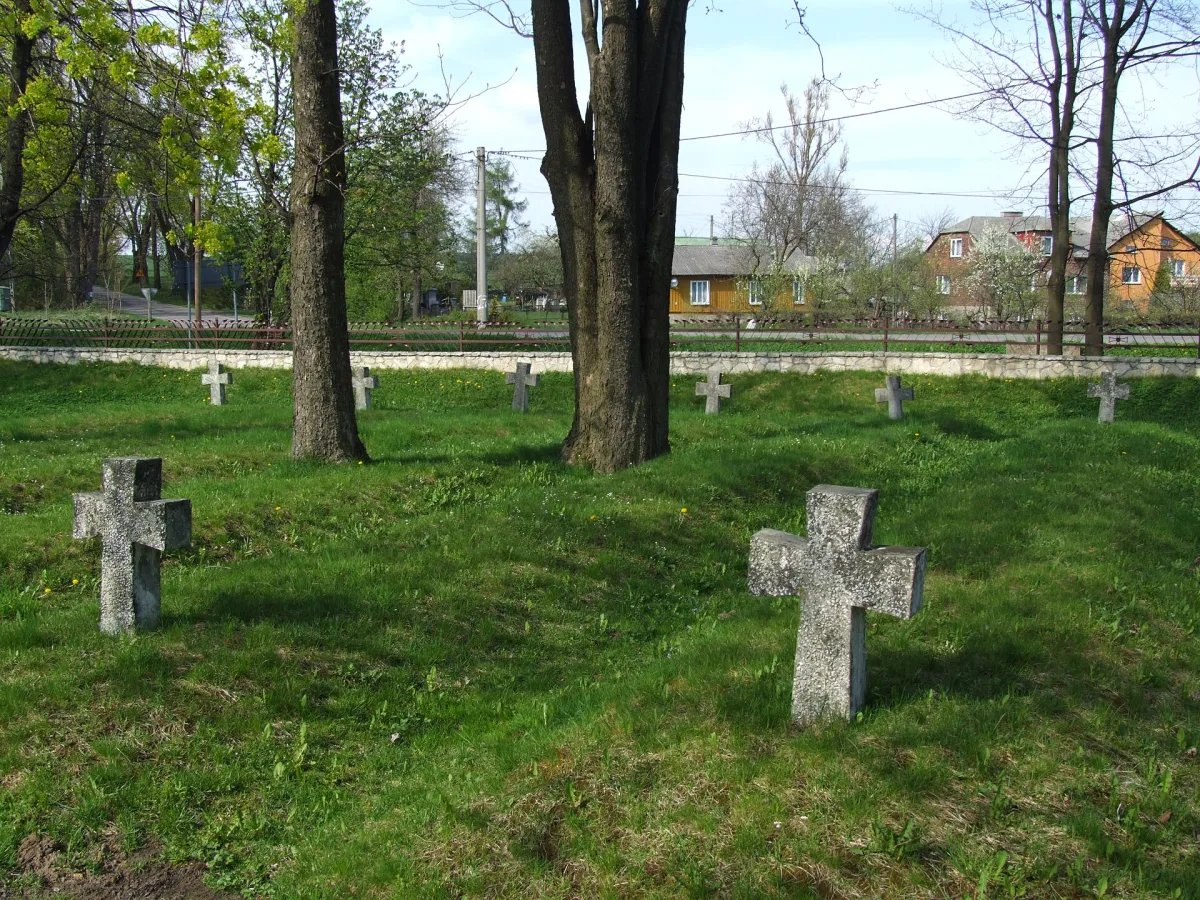
The Katowice branch of the IPN, in an account cited by dzieje.pl, lists war graves in Pszczyna, Suszec, Żory, Świerklany, Marklowice and Wodzisław Śląski:
- in Pszczyna a mass grave of victims lies in the Holy Cross parish cemetery,
- in Suszec a monument with an urn containing the ashes of prisoners was funded in the 1960s; according to the IPN, the bodies of about 30 people were left there in 1945 and exhumed to Pszczyna in 1947,
- in Żory 23 prisoners were buried in a mass grave in the cemetery on Nowa Street, and in the Rój district stands a boulder with a plaque in honour of the 24 murdered,
- in Świerklany the bodies of 13 people were buried by the local population, and a monument was funded in 1948,
- in Marklowice, on Wyzwolenia Street, lie 7 participants of the march, and the grave was made in 1945,
- in Wodzisław Śląski there is a mass grave of 43 prisoners murdered on 17 January 1945, including those killed at the railway station.
Dzieje.pl also lists a wartime mass grave of 446 prisoners in Rybnik. In the Central Municipal Cemetery in Gliwice, according to the cemetery's page, eight mass graves were created in 1948 for those who died during the march and had earlier been buried along the route.
The course of the march is commemorated by the Trail of the Evacuation of Auschwitz Prisoners, a blue walking trail linking Oświęcim with Wodzisław Śląski. The trail's page gives its length as 91 kilometres, while the PAP report on the annual March of Remembrance speaks of more than 70 kilometres. The sources therefore give different lengths.
Be the first! Add a comment.
You need to log in to add a comment.
Log in