
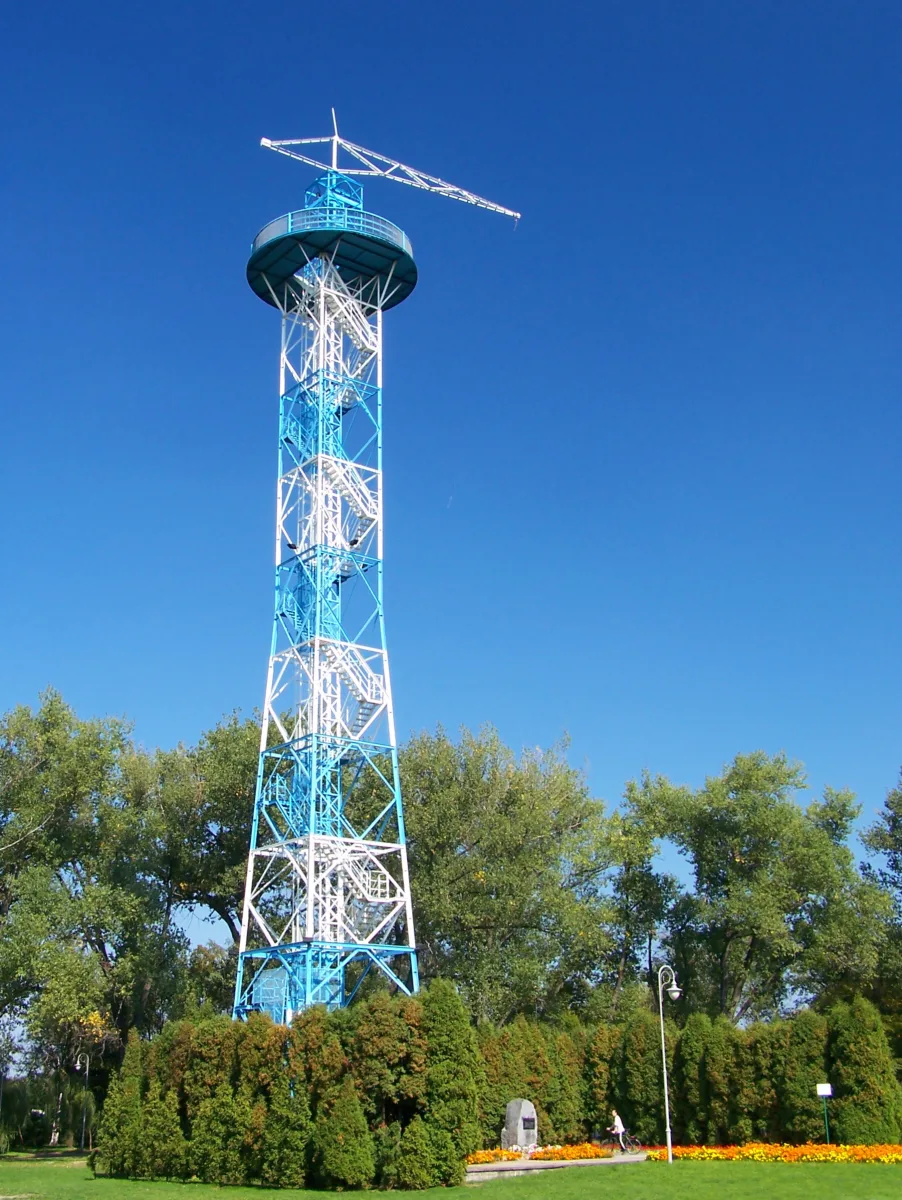
The first days of September 1939 in Polish Upper Silesia were several different events: air raids and the actions of German paramilitaries just after crossing the border, the battle of Wyry and Mikołów, and then a short, unequal defence of Katowice. The most legends have grown up around the Parachute Tower. Below, the findings of historians are separated from the versions that have become established on this matter.
The Silesia Fortified Area and the battle of Wyry
On the morning of 1 September 1939 German aviation bombed, among other targets, the airfield in Katowice, and Freikorps units and Wehrmacht infantry crossed the border. South of the industrial district, in the area of Mikołów and Pszczyna, German divisions struck. The Polish fortifications in this direction belonged to the Silesia Fortified Area, in which the sub-sectors of Mikołów, Śmiłowice, Mokre and Wyry were distinguished. Some of the bunkers have survived: the Wyry sub-sector and other elements of the area were entered in the heritage register in 2021.
The fighting lasted from 1 to 3 September in the area of Wyry, Gostyń and Mikołów and is called the battle of Wyry or the battle of Mikołów. Hill 341, known as Sośnia Góra, was defended by Capt. Tytus Wikarski. Armoured train no. 54 Groźny took part in the counterattacks, and the whole of the Polish forces in this sector were commanded by Gen. Jan Jagmin-Sadowski of the Silesia Operational Group. In the night of 2 to 3 September a retreat from Upper Silesia was ordered, after the neighbouring 6th Infantry Division had withdrawn from near Pszczyna. Historians assess that its defeat was not so deep as to make further fighting impossible, but this assessment remains a matter of discussion.
The losses are given on the basis of one press article: on the Polish side 150 killed and more than 380 wounded, on the German side 170 killed. These are data from a single source and we treat them as indicative.
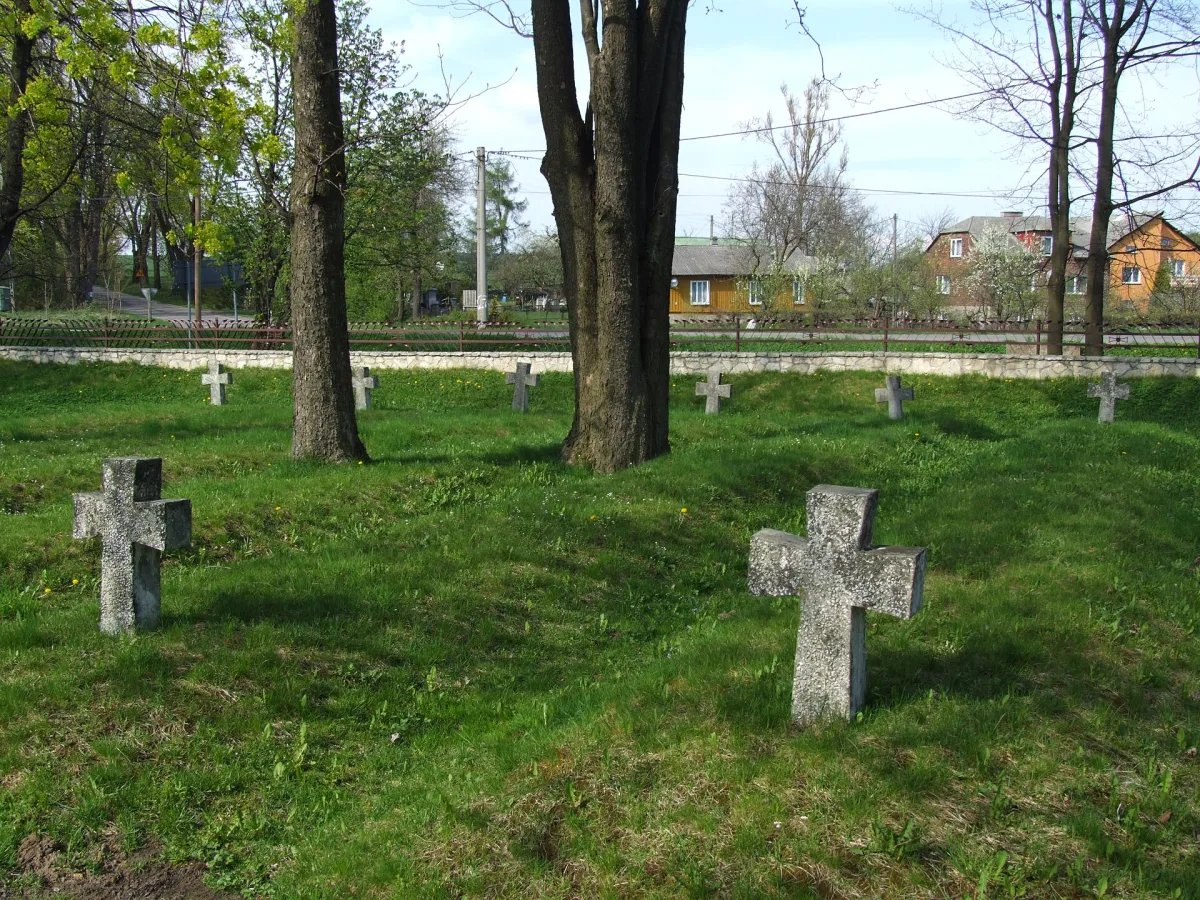
In the battle Lt Col. Władysław Kiełbasa, commander of a battalion of the 73rd Infantry Regiment, was mortally wounded. Earlier decorated with the Virtuti Militari order, he died on 2 September in the hospital in Mikołów and was buried at the cemetery by the Church of St Adalbert. Posthumously he received a further military rank and a higher class of the order.
Katowice on 3 and 4 September
The Supreme Command decided that Katowice should not be defended. By 2 September officials, police and regular army units had withdrawn, and some of the self-defence units left the following day. Small groups of this self-defence remained in the city, made up mainly of former Silesian insurgents and scouts. The commander of the militia from 1 September was Jan Faska. Rearguard soldiers or stragglers from the 73rd Infantry Regiment also took part in the fighting.
On 4 September the German 239th Infantry Division of Gen. Ferdinand Neuling entered the city together with Grenzschutz units and the Freikorps Ebbinghaus formation. The largest clashes took place at the Silesian Insurgents' House and at the Parachute Tower, and the points of resistance also included the Skyscraper, the Silesian Theatre, the Silesian Museum and church towers. German soldiers reported about 15 losses. The city was taken within a few hours.
The Parachute Tower: two versions
The Parachute Tower in Kościuszko Park was built in 1937 on the initiative of the Air and Anti-Gas Defence League, and in the first days of the war it served as an observation and reporting post. It is known that on 4 September German soldiers entering the city were fired on from its platform. The further course of events is described in the literature in two ways.
The version widespread since the 1950s is linked with the book by Kazimierz Gołba. It speaks of a defence of the tower lasting over ten hours by scouts, of the shooting down of a German aircraft, of fire from heavy artillery and of the bodies of the defenders being thrown from the platform. To this day it is not confirmed by documents. It arose from accounts of residents collected after the war, and its aim, as is assessed, was to counter the claim that Silesians had surrendered without a fight.
The findings from German archives are different. The war diary of the 3rd Sector of the Grenzschutz was found in the 1980s by Prof. Andrzej Szefer, and in 2003 the historian Ryszard Kaczmarek reached the report of Gen. Neuling. According to it, the division staff was fired at with a machine gun from the tower on the morning of 4 September, the fire was inaccurate, and the tower fell silent after shots from a German anti-tank gun. At around 11 o'clock Neuling drove into the city centre. Historians of the Katowice branch of the Institute of National Remembrance reached similar conclusions in 2004, and Dr Grzegorz Bębnik described this in a book published in 2006. The fighting at the tower therefore lasted considerably shorter than in the literary version.
It has not been established who defended the tower. Witnesses, giving testimony many years after the war, spoke of scouts, but there is no other evidence, and there is also information about secondary-school pupils. We do not know the number or the names of the defenders. On the basis of witness accounts an estimate of at least ten killed is given. Most probably their remains lie together with other defenders of the city at the cemetery in Ligota.
After the city was taken
Soon after taking Katowice the Germans shot more than 80 prisoners, mainly people in insurgent or scout uniforms. The total number of Polish victims of the fighting and executions of 4 September is estimated at about 150. The number of those arrested is not known, and further executions were carried out in the following weeks. On the building at Jagiellońska 17 a plaque was unveiled in 2007 commemorating those shot at this place. By that time the names of only three of them had been established.
Commemoration
The Monument to the Defenders of Katowice stands at the cemetery on Panewnicka Street in Ligota. It was unveiled in 1961 and, after reconstruction, re-consecrated in 2000. 105 people are buried in the common grave. On Defenders of Katowice Square in the city centre stands the Monument to the Scouts of September, unveiled on 4 September 1983 and moved by several dozen metres in 2015. The sites of the fighting are linked by the red Trail of the Heroes of the Parachute Tower, leading from Katowice to Chudów through the Panewniki forests and Mikołów. A ZHP (Polish Scouting Association) troop in Katowice bears the name of the Heroes of the Parachute Tower. Wyry and Mikołów commemorate Lt Col. Kiełbasa with street names. The defence of Węgierska Górka in the Żywiec region is described in a separate text.
Be the first! Add a comment.
You need to log in to add a comment.
Log in