
The Central Labour Camp in Świętochłowice-Zgoda, also called in the sources the Labour Camp in Świętochłowice, operated in 1945 in the Zgoda district. It was subordinate to the Ministry of Public Security and was one of the camps to which, after the end of the war, residents of Upper Silesia were sent without a court sentence. The sources agree that nearly six thousand people passed through the camp, and that of these, according to various estimates, from about 1,900 to about 2,500 died.
The earlier German subcamp
In 1945 the camp took over a site and buildings that had previously served the Germans. The camp's website, run by the town of Świętochłowice, describes how the Eintrachthütte subcamp grew up on the site of a forced labour camp for Jews. In 1943 prisoners sent from Auschwitz expanded it and surrounded it with a double electrified wire fence and four towers. The Auschwitz concentration camp subcamp worked for the nearby Eintrachthütte works, where anti-aircraft gun parts were produced. According to the town, the number of prisoners rose from about 400 in 1943 to 1,374 in August 1944. The Germans evacuated the camp in December 1944 and on 23 January 1945, and several hundred people died during its German period.
The establishment of the camp in 1945
After the evacuation the buildings and the fence remained untouched. The town's website notes that the exact date on which the communist authorities started the camp is not known, and it is presumed to have been in February 1945. Other sources give the end of February. At first the facility was called the Penal Camp in Świętochłowice, and from mid-April the Labour Camp in Świętochłowice. It was subordinate to the Department of Prisons and Camps of the Ministry of Public Security, and the guards were officers of the Security Office. It was initially run by Aleksy Krut and Salomon Morel, and from June 1945 by Morel alone.
People were sent to the camp on the basis of decrees of 1944, among others the decree on measures against traitors of the nation. They were detained by the security organs, the militia and the NKVD. The accusations concerned above all having signed the Volksliste, the German national register, and also hostility towards the new authorities. According to the town's website, the great majority of inmates were Silesians, and besides them there were Germans, Poles from central Poland and nearly 40 foreigners. Among the Poles were people connected with the independence underground, including the Home Army and the National Armed Forces. In August 1945 the largest group were Germans, 1,733 people, or one third of all the prisoners. The camp also held young people under 13, two children under eighteen months and several hundred people over sixty. Some of the prisoners worked at the Zgoda steelworks opposite the camp or in other plants.
Conditions and the epidemic
According to a study by Adam Dziurok published by the IPN in 2002, small food rations caused hunger and the spread of infectious diseases. Parcels from families were stolen, and sanitary conditions were described as catastrophic. In summer 1945 a typhus epidemic broke out in the camp. It began on 26 July, and at its peak up to 38 deaths a day were recorded. After a medical commission arrived from Warsaw, the prisoners were vaccinated, the barracks disinfected, and the epidemic was stopped. The harshest repression fell on the prisoners of barrack no. 7, intended for people suspected of belonging to Nazi organisations. An unknown number of people were shot by guards during escape attempts or died as a result of beatings.
The closure of the camp
The closure was linked to an order of minister Stanisław Radkiewicz of 15 September 1945, which regulated the cases of people held in detention, prisons and labour camps who were not subject to prosecution. At the turn of October and November a three-member commission headed by prosecutor Jerzy Rybakiewicz worked in the camp. It reviewed the files, questioned the prisoners and released almost all of them. Those released had to sign an undertaking to remain silent about what had happened in the camp. People against whom there was evidence or reasonable suspicion of collaboration with the occupier were transferred to the Central Labour Camp in Jaworzno. The town's website gives the closing date: 16 November 1945. Another place of remembrance of this kind is presented in the entry Monument to the Prisoners of the Camp in Jaworzno.
The number of victims: differing estimates
The figures given in the literature and by institutions differ, and the sources do not lead to a single value.
- The town of Świętochłowice writes that nearly 6,000 people passed through the camp and that one in three prisoners died.
- At least 5,764 people were held, of whom almost one third did not survive their stay.
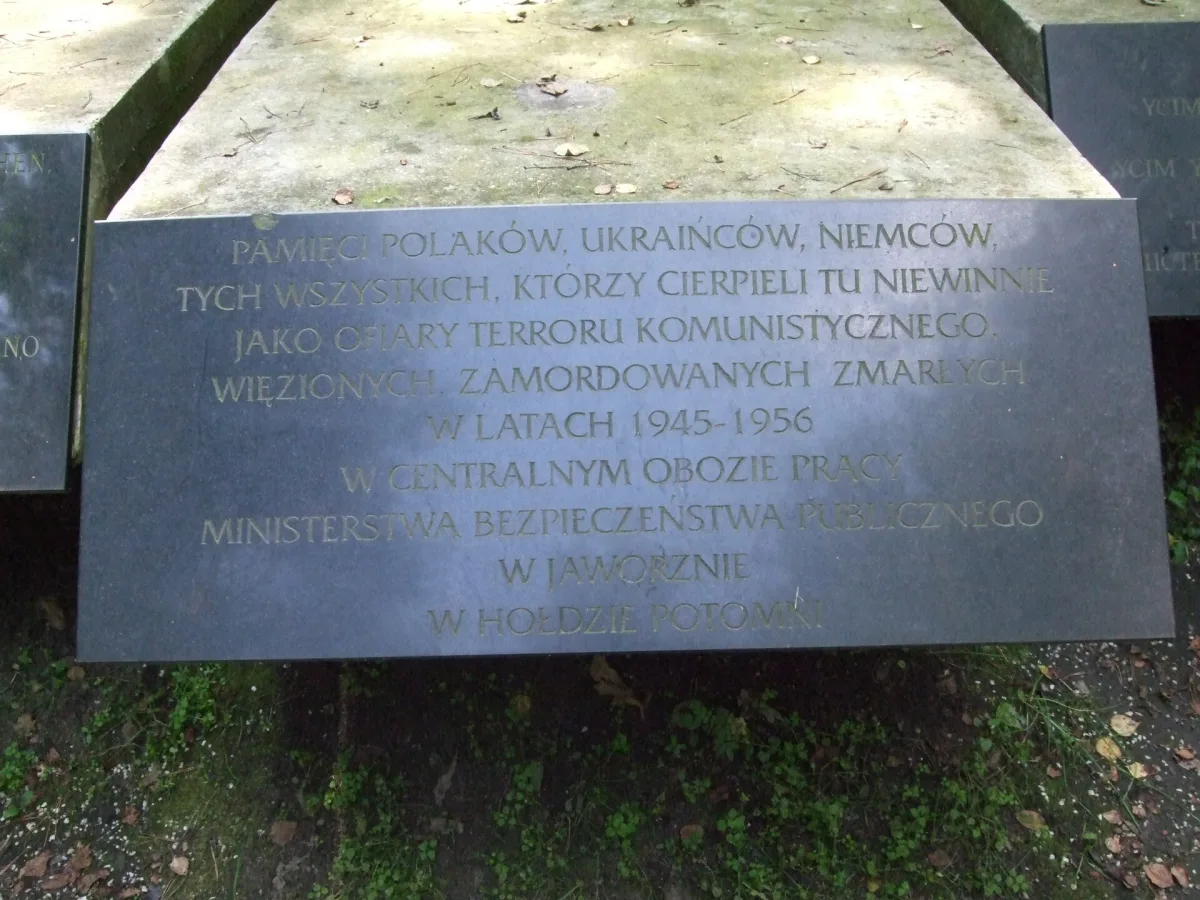
- The Institute of National Remembrance has documented 1,855 deaths.
- The regional press recalls an estimate of about 2,500 victims in the period from February to November 1945.
Salomon Morel, the camp commandant, was charged in 1996, among other things with crimes against humanity. In 2005 Israel, where he had emigrated, refused to extradite him to the Polish authorities. He died in 2007 in Tel Aviv and was never tried.
The site today
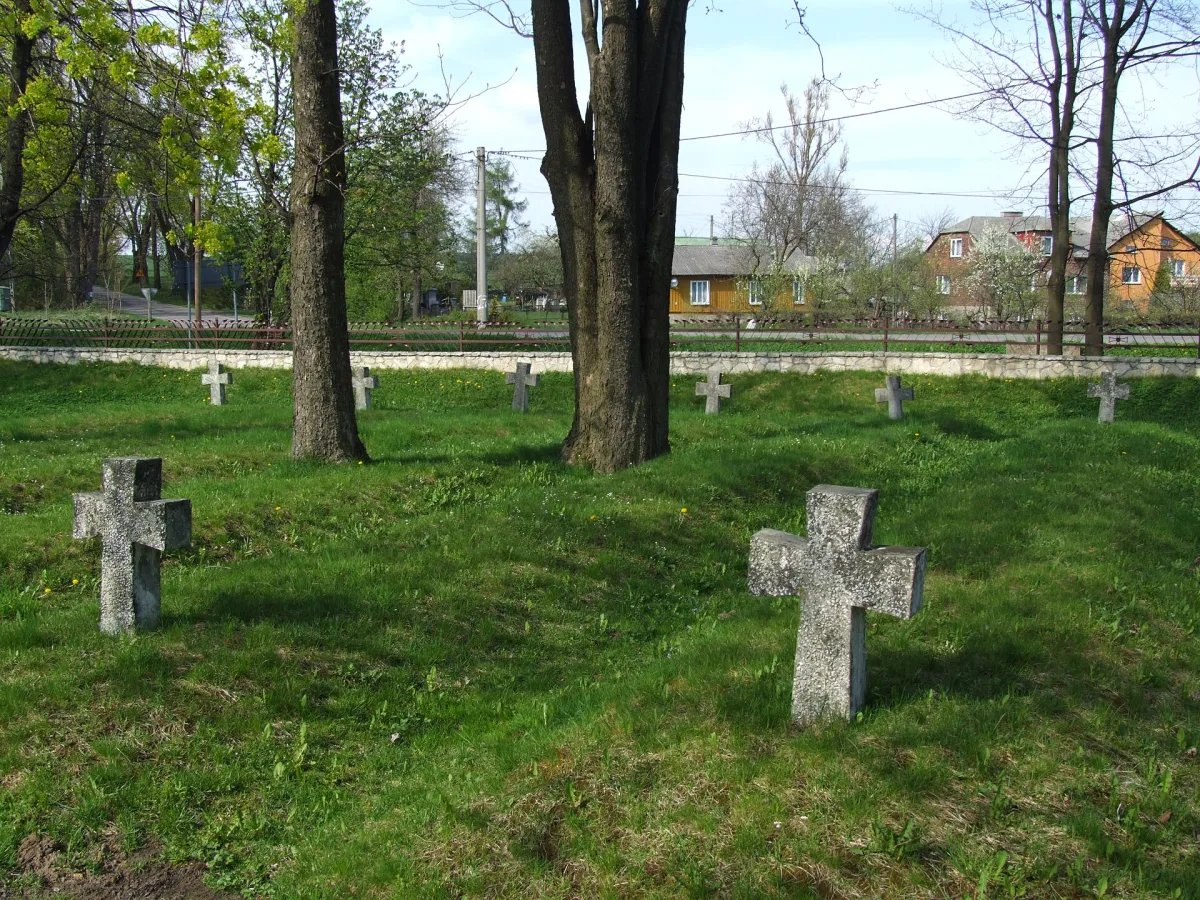
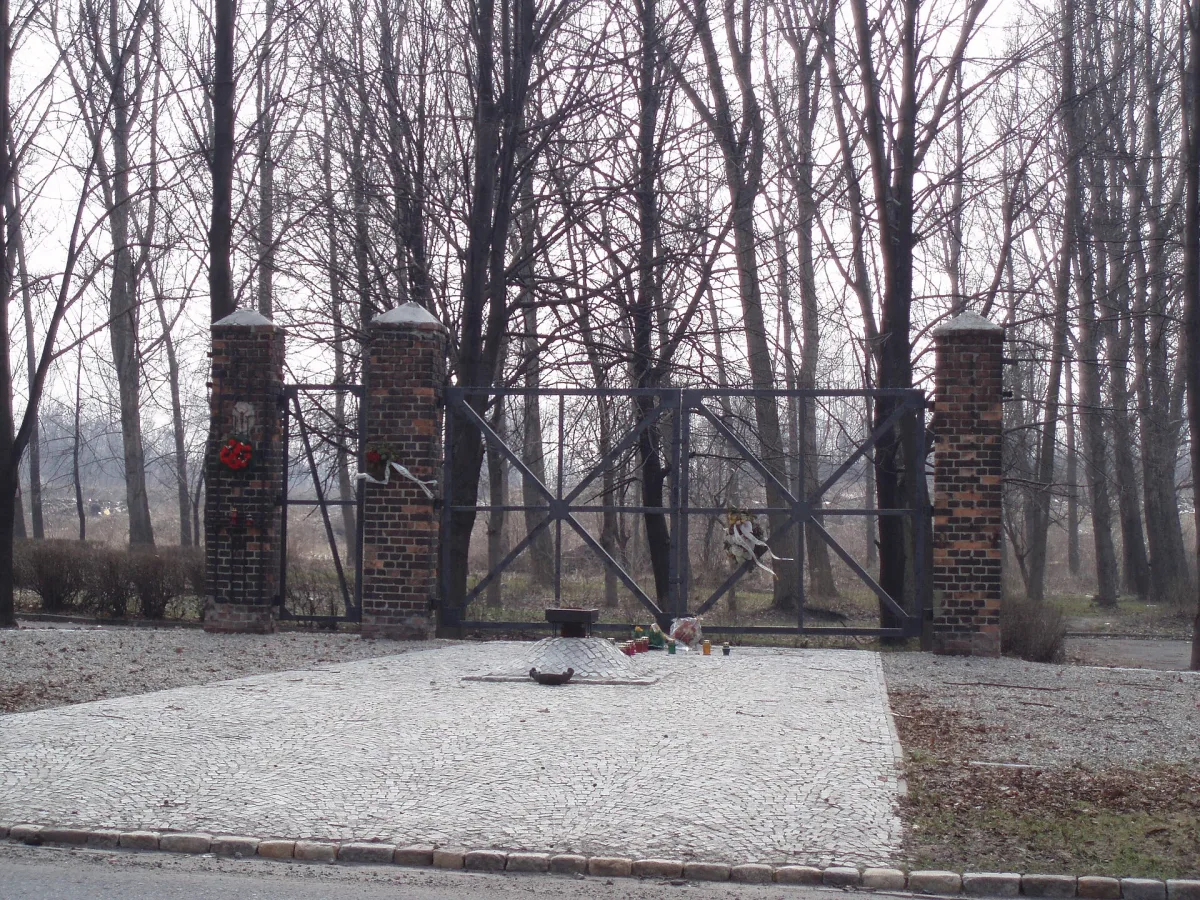
The gate of the former camp has survived and is entered in the heritage register of the Silesian Voivodeship. A monument to the victims stands beside it, and the area around has been laid out as a space of commemoration. Dead prisoners were buried in mass graves in Catholic cemeteries and in the Evangelical cemetery. In the Evangelical-Augsburg cemetery in Świętochłowice there is a mass grave and a Wall of Remembrance with name plaques, and another mass grave is in the municipal cemetery in Nowy Bytom. The town runs a separate website with documents and witness accounts. The site remains in the town's care, and the character of the place is described in the entry Zgoda Camp. The camp is also the subject of the feature film “Zgoda”, which is a work of art and not a historical source.
Be the first! Add a comment.
You need to log in to add a comment.
Log in