
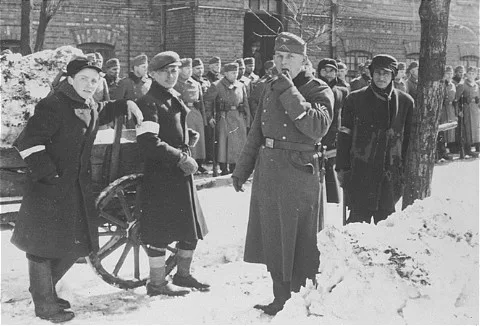
The Częstochowa ghetto was established in April 1941 in the eastern part of the city centre. Over more than two years, several tens of thousands of people passed through it, and most of them were deported to the German Nazi extermination camp at Treblinka. Some of the survivors were sent to the armaments factories of the HASAG concern, where they worked until January 1945. Below are facts from historical studies, stating who gives which figure.
Establishment and boundaries of the ghetto
The ghetto was established on 9 April 1941 under a decree issued two days earlier by the Stadthauptmann, Richard Wendler. A study by the World Society of Częstochowa Jews describes the same order: the Jewish quarter was to be ready by 9 April, and all Jews living outside it had to move into it by 17 April 1941 at the latest. Poles living in the area had to leave it.
The boundaries ran along Kawia, Kiedrzyńska and Jaskrowska streets in the north, Fabryczna (today Mielczarskiego), Narutowicza (today Krakowska) and Strażacka in the south, the Warta river in the east and the railway tracks in the west. The area included Daszyńskiego Square, the Old Market Square (Stary Rynek) and the Warsaw Market Square (Rynek Warszawski). To a large extent it coincided with the pre-war Jewish quarter. A description of the site can be found on the page Getto w Częstochowie.
The ghetto received Jews from Częstochowa itself and from nearby towns, among them Krzepice, Olsztyn, Mstów, Janów and Przyrów, as well as people expelled from the territories incorporated into the Reich, mainly from Płock and Łódź. The exact number of inhabitants cannot be established. According to some sources there were nearly 40 thousand at the start and 48 thousand at the peak before liquidation. The study by the World Society of Częstochowa Jews speaks of official figures of around 40 thousand and of more than 50 thousand in the summer of 1942, after an influx of people from the surrounding area.
Liquidation of the large ghetto in September and October 1942
The liquidation began on 22 September 1942, according to some sources the day after Yom Kippur. The study by the World Society of Częstochowa Jews states that the operation began early in the morning of 22 September, that is on the holy day itself, and lists the following days of deportations: 25 and 28 September and 1 and 7 October. The end of the operation is taken to be the night of 7 to 8 October. Daszyńskiego Square was the place of concentration and selection. The operation was carried out by the Germans together with auxiliary units under the command of Captain Paul Degenhardt of the Order Police.
The sources agree that around 40 thousand people were deported to the Treblinka extermination camp. About 2 thousand people were also shot on the spot and buried in mass graves on Kawia Street. These figures are estimates, and the study by the World Society of Częstochowa Jews notes that the number of those killed on the spot has never been established precisely.
The small ghetto, 1942-1943
After the deportations, the Jews who remained alive were gathered in the so-called small ghetto, in the north-eastern part of the former quarter, fenced with barbed wire. Estimates speak of 5-6 thousand people, and the World Society of Częstochowa Jews gives about 5,200. German documents called the place a forced labour camp. Its inhabitants worked in armaments factories and workshops, and in January and March 1943 further selections and executions were carried out, among other places in the Warsaw Market Square, today the Ghetto Heroes Square, and at the Jewish cemetery.
A resistance organisation operated in the small ghetto. It was led by Dr Adam Wolberg and Mordechaj Zylberberg. The decisive German attack came on 23-26 June 1943; the resistance of those hiding in the bunkers on Nadrzeczna Street is described as self-defence, also referred to as the Częstochowa ghetto uprising. By the end of June 1943 the small ghetto had ceased to exist. The World Society of Częstochowa Jews states that between 8 October 1942 and 25 June 1943 about 1,300 of its inhabitants were murdered, and about 3,900 people remained alive.
The HASAG factories
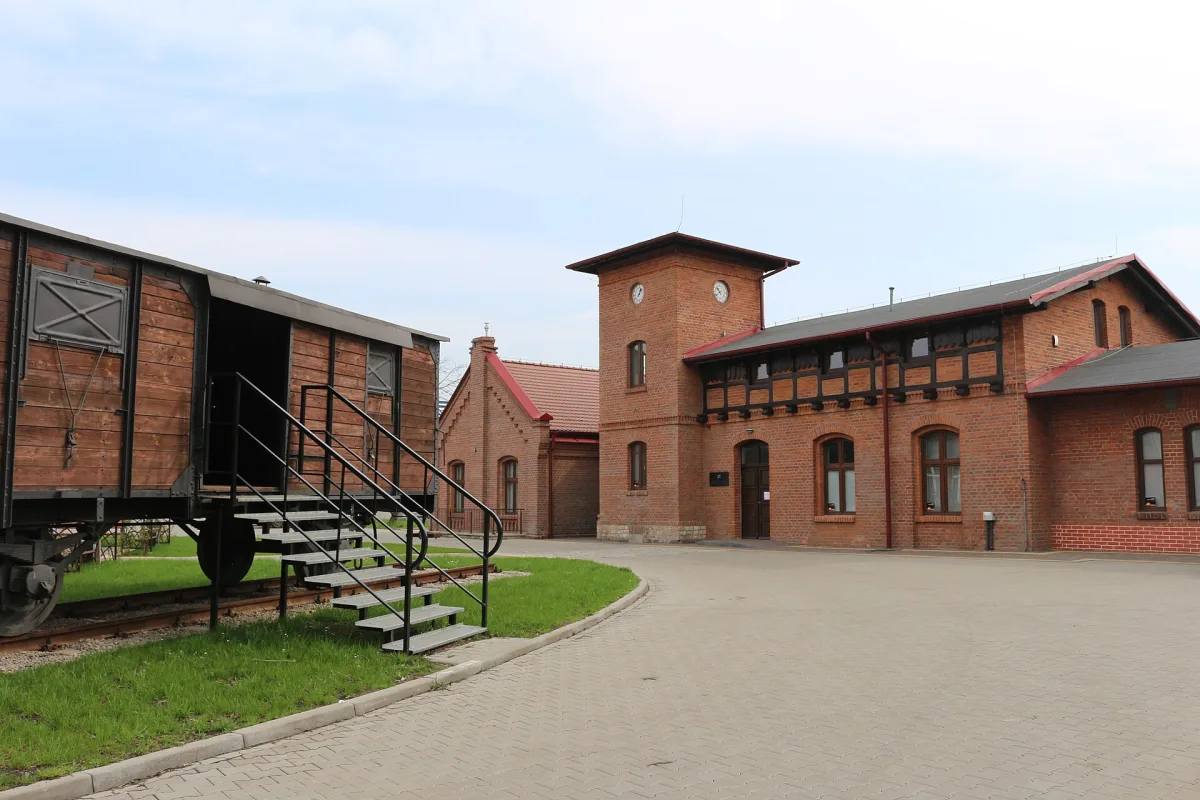
These roughly 3.9 thousand Jews were placed in the Częstochowa factories of the HASAG concern (Hugo Schneider AG) of Leipzig. There were three plants: Apparatebau (the former Peltzer factory), Warthewerk (the Warta factory) and Eisenhütte, that is the Częstochowa Steelworks, which is covered in a separate article on the portal. The largest was the first of these, where rules similar to those of a camp were introduced. According to Dr Felicja Karay, author of a monograph on this camp, the concern took over the Peltzer factory in the second half of 1942 and turned it into an ammunition plant.
In the last months of the war, the number of Jewish prisoners in the HASAG factories rose to 10 thousand, because people were brought here from the Łódź ghetto and from labour camps in the Kielce and Radom areas. In the first half of January 1945 about half of the prisoners were taken to concentration camps in the Reich. The HASAG camps were liberated on 17 January 1945 and 5,200 Jews survived them, including 1,518 from Częstochowa. This figure should be treated as an estimate.
Traces and commemoration
A monument to the victims of the ghetto, designed by Samuel Willenberg, was unveiled on Strażacka Street in October 2009.
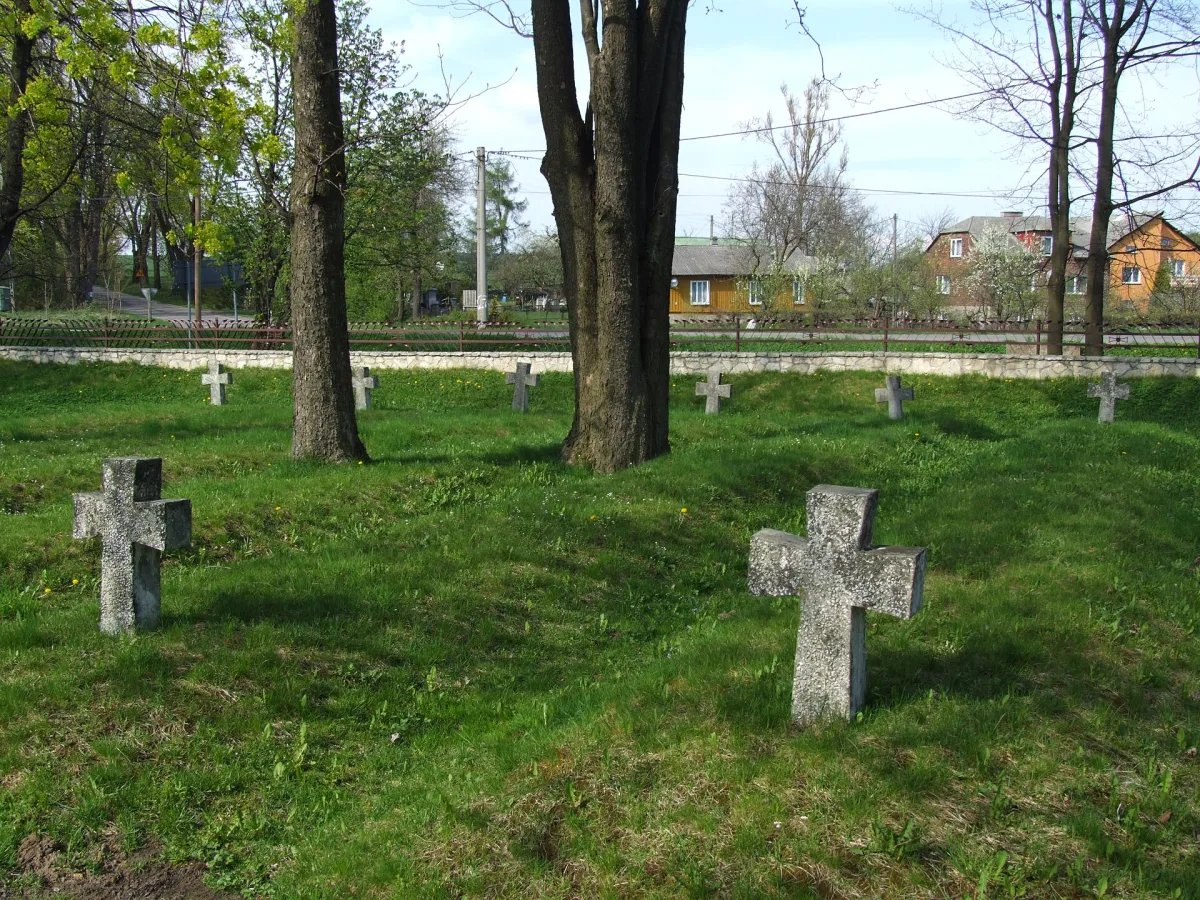
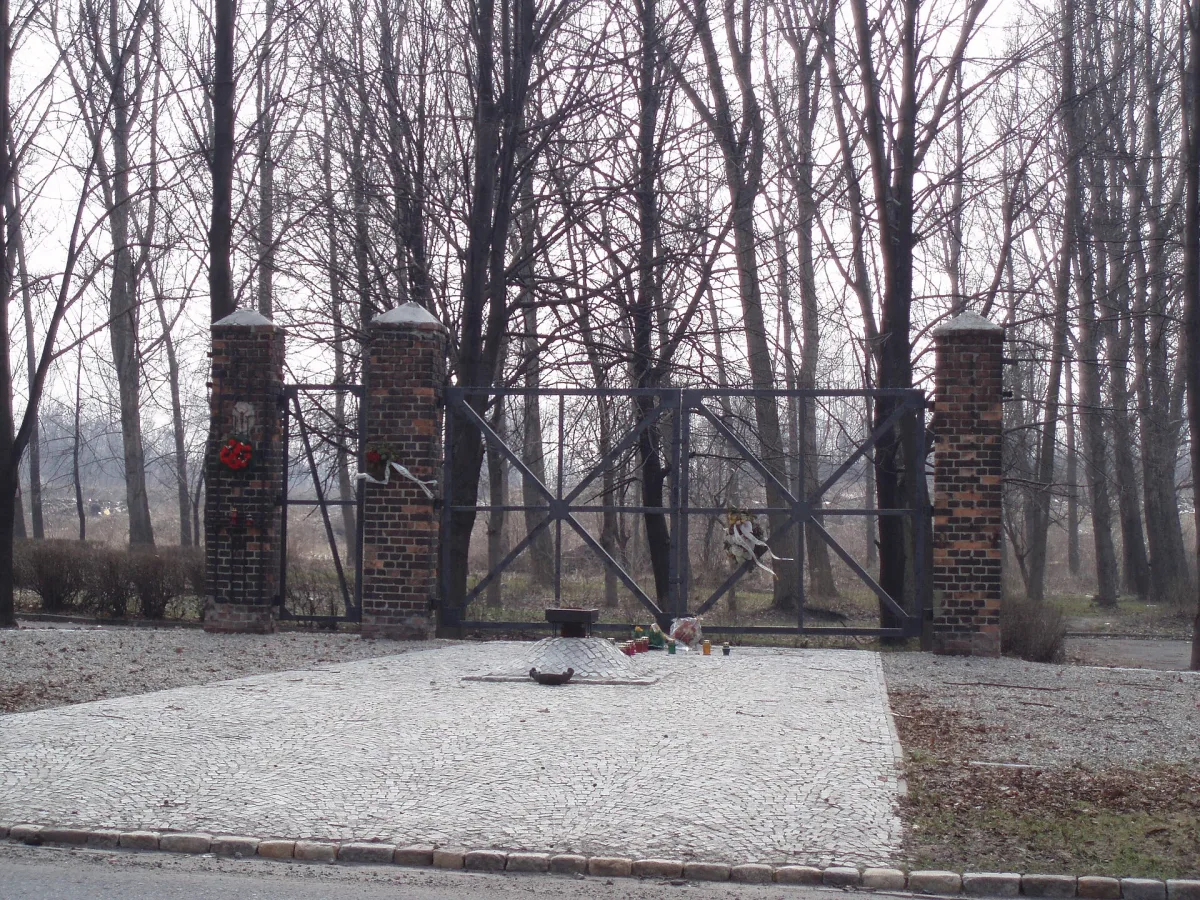
The victims are also commemorated by the Jewish cemetery in Częstochowa. The inhabitants of surrounding towns, who were shut in the ghetto, have their own places of remembrance, such as the synagogue in Krzepice and the Jewish cemetery in Mstów. The fate of the Jews of Kłobuck is described in a separate article on Kłobuck, the starosty, the Pauline monks and the ghetto. The rules for visiting places of remembrance are set by their administrators.
Be the first! Add a comment.
You need to log in to add a comment.
Log in