
A museum without a single building
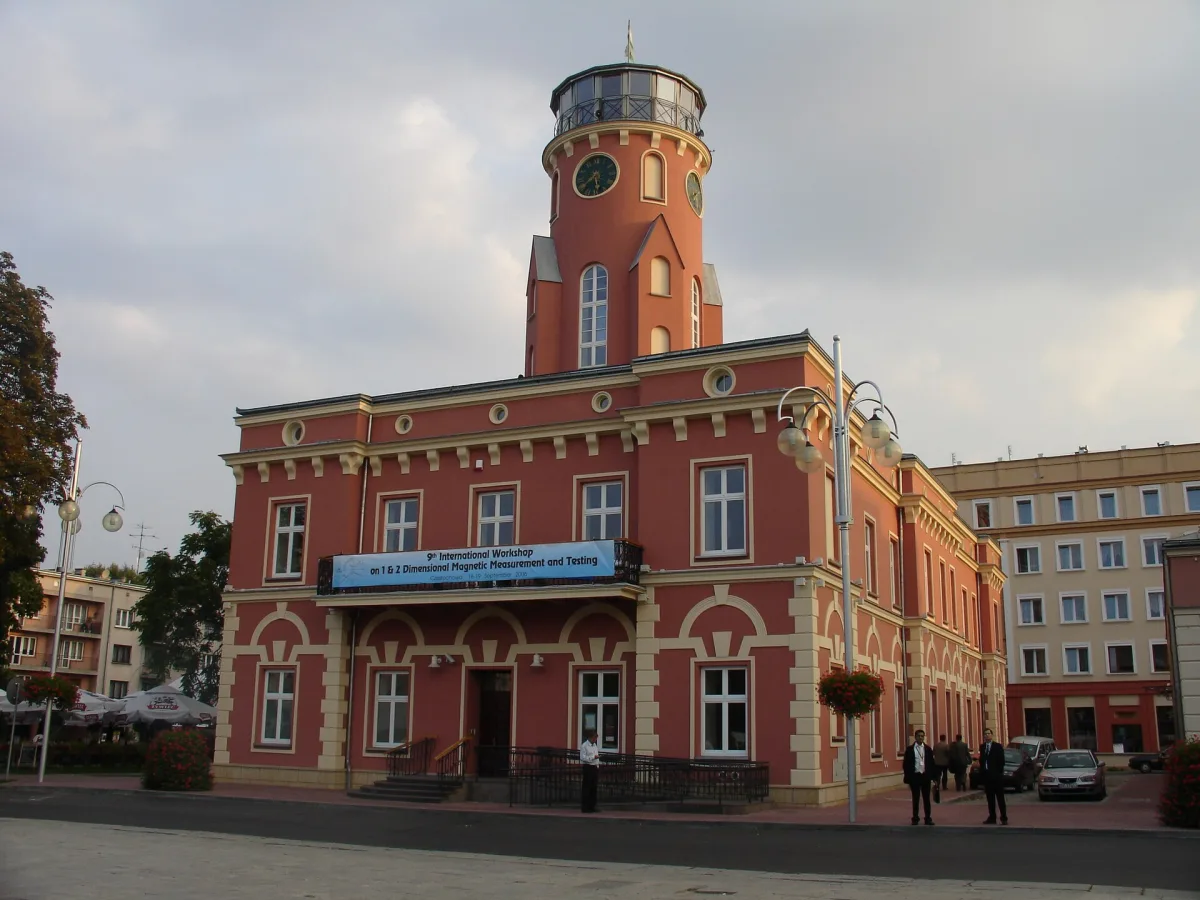
The Częstochowa Museum, regarded as the oldest cultural institution of the region, has no single seat. Its branches are scattered around the town, so a walk from one to another shows several layers of Częstochowa. The main seat is the Częstochowa Museum in the town hall of 1828, built in the late Neoclassical style on a square plan. The museum has occupied it since 1967. After renovation the town hall has a viewing tower with a panorama of the town, and the permanent exhibition tells the history of Częstochowa.
On Aleja Najświętszej Maryi Panny stands a townhouse of 1875, formerly called the popówka, because it was originally home to Orthodox clergy. In the interwar period it housed the command of the 7th Infantry Division, and since 1973 the building has belonged to the museum. Today it is the Good Art Gallery with a permanent exhibition of Polish art of the 19th and 20th centuries.
A cemetery from two and a half thousand years ago
In Raków, not far from the steelworks, a cemetery of people of the Lusatian culture was discovered in 1955. Archaeological research was carried out in 1955 and in 1960-1961. In 1965 a pavilion was built over part of the site, rebuilt and modernised in 2001-2004. The Archaeological Reserve of the Lusatian Culture has preserved a fragment of the cemetery where it was found. It dates from about 750-550 BC, and 85 burials were uncovered there, including 44 skeleton graves and 25 cremation pit graves. Pottery, ornaments, tools and weapons were found in the graves. The permanent exhibition is titled "Z mroku dziejów" ("From the Darkness of History"), and the modernisation of 2014 adapted the site to the needs of blind and partially sighted people, among other things thanks to a tactile model of the cemetery.
Staszic Park and the pavilions of the 1909 exhibition
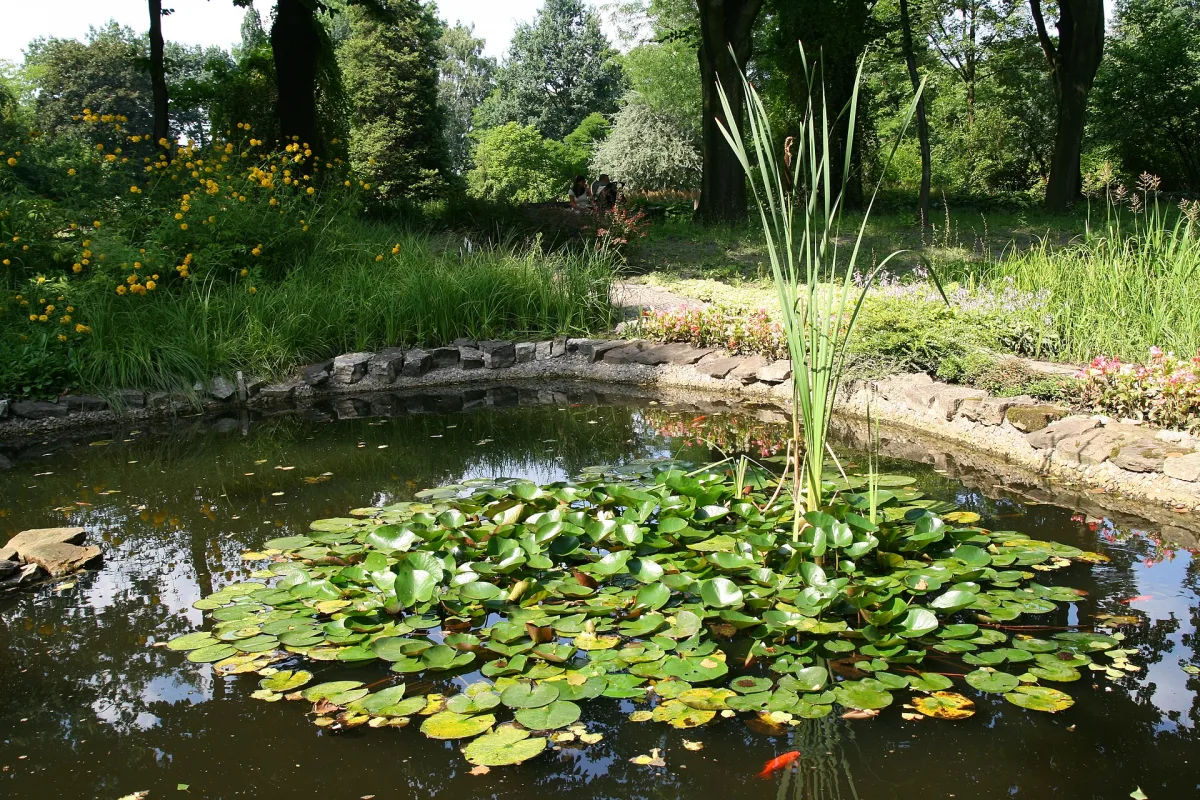
Below the monastery hill stretch two town parks: Stanisław Staszic Park and 3 May Park, which together with Sienkiewicza Avenue cover 11.8 hectares. The complex, known as the parks beneath Jasna Góra, has been recognised as a Historic Monument. Staszic Park has about 1300 trees, most often between 100 and 150 years old, and about 1600 trees grow in 3 May Park. The garden was laid out in 1844-1847, and the current plan refers to a design by the Warsaw gardener Franciszek Szanior from 1908, prepared before the National Industry and Agriculture Exhibition.
From that exhibition in 1909 come the pavilions that now serve the museum. The Peasant Farmstead (Zagroda Włościańska), designed by Zdzisław Kalinowski and Czesław Przybylski, was a model village farmstead. The Exhibition Pavilion was built for the Hygiene Museum. The round domed building, designed by Władysław Jabłoński, houses the Zodiak Multicentre: in the interwar period it held an astronomical observatory, and since 2010 an interactive science centre. Under the park, in corridors driven in 1974-1976, is the Iron Ore Mining Museum with workings and machinery of iron ore mines.
Poetry, music and locomotives
At 23 Jasnogórska Street the poet Halina Poświatowska lived with her family after the war. After renovation the house was handed over to the Częstochowa Museum, and on 9 May 2007 the House of Poetry - Halina Poświatowska Museum was opened in it. The exhibition is based on keepsakes: photographs, letters and books.
On Wilsona Street stands the Bronisław Huberman Częstochowa Philharmonic. The building of 1955-1965 was designed by Józef Tadeusz Gawłowski and stands on the foundations of the New Synagogue, burned on 25 December 1939. The main hall seats 825 and the acoustics of both halls were designed by Witold Straszewicz. The institution took the violinist's name in 2012 and has organised the Huberman International Violin Festival since 1997.
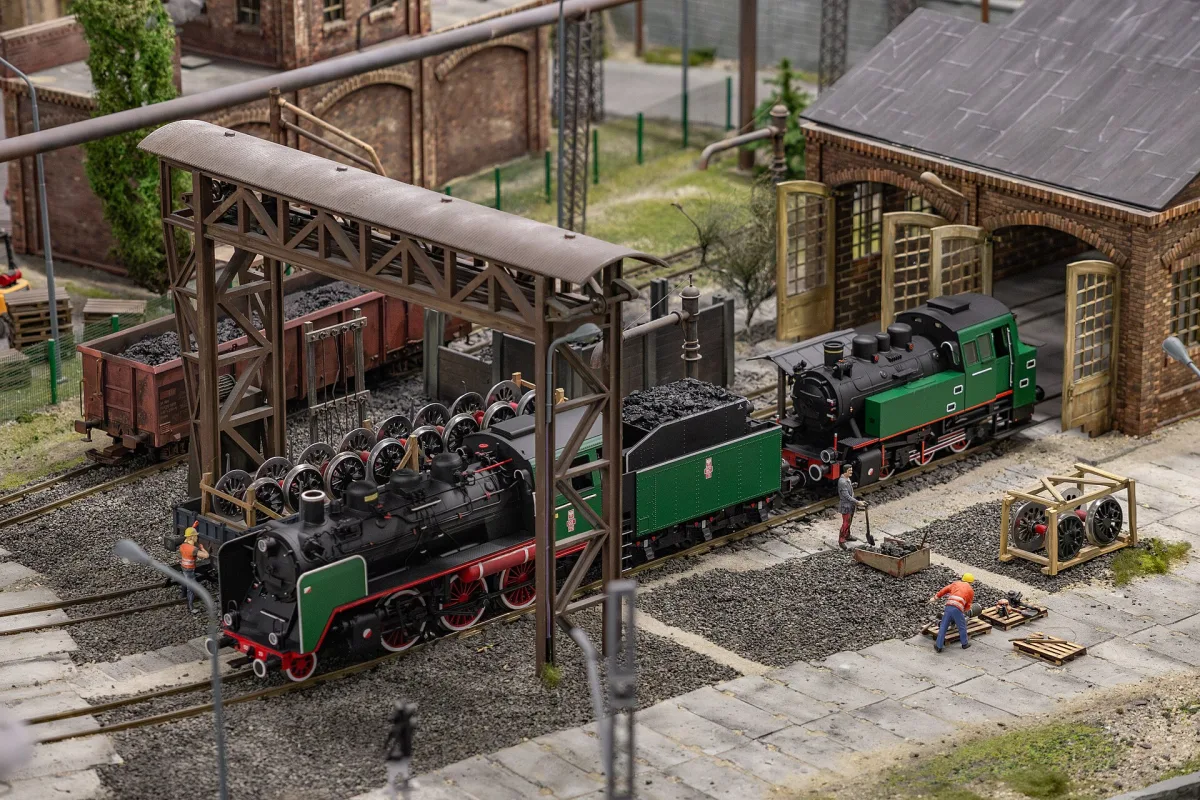
Those interested in technology will find two industrial museums in the town. The Match Production Museum is housed in a former factory on Ogrodowa Street and shows a production line from the 1930s and a collection of match labels. The trademark of Częstochowa matches was a box with a black cat. The Railway History Museum in the Stradom station building was founded in 2001, and it looks after the steam locomotives TKt48-151 and Ol49-20.
Water, greenery and an Orthodox church
Outside the centre it is worth looking in at Lisiniec Park, laid out in the 1970s on 41 hectares. Its three reservoirs, popularly called the Adriatic, the Baltic and the Pacific, were created by flooding clay pits. There is a bathing area, a rope park and a rental of water equipment, and after revitalisation also a beach and a skate park.
Częstochowa is a town of many faiths. At the junction of Kopernika and Śląska streets stands the Orthodox Church of the Częstochowa Icon of the Mother of God, an Orthodox church to a design by Michał Bałasz of Białystok. The foundation stone was consecrated in 1998 by Ecumenical Patriarch Bartholomew I, and inside there is a modern iconostasis. The earlier church of Saints Cyril and Methodius on Biegański Square was taken over by Catholics after 1918.

Be the first! Add a comment.
You need to log in to add a comment.
Log in