
Tension in Upper Silesia after 1918
After the end of the First World War Upper Silesia still belonged to Germany, and its future was to be decided by the peace conference. Among the Polish population, People's Councils and trade organisations quickly sprang up, and the German authorities tried to restrict their activity. In January 1919 a state of siege was declared in Upper Silesia, giving the army the right to carry out searches and arrests. The region was policed by Grenzschutz units, that is border guard units, and volunteer corps known as Freikorps.
The Polish Military Organisation of Upper Silesia (POW), a clandestine armed organisation, was preparing to act, but there was no unified position in the Polish camp. Wojciech Korfanty was against an uprising: he feared the reaction of the Western powers, and the Polish state was then fighting in the east and could not provide support. In June 1919 a short-lived Olesno uprising also broke out and was quickly suppressed, and in August arrests hit several couriers and leaders of the organisation.
From 11 to 14 August 1919 a strike by miners and steelworkers took place. The workers demanded, among other things, that members of German paramilitary groups not be allowed to work, that the state of siege be lifted, and that wages be raised. On 14 August, 140 thousand people were on strike.
15 August 1919 in front of the Mysłowice mine
On that day workers who had come for back pay gathered in front of the mine gate. There were about three thousand of them, together with wives and children. The management kept postponing the date of payment, and at about 1 p.m. groups of around thirty people began to be admitted to the site. The crowd, agitated by the long wait, burst into the mine yard, and the German soldiers guarding it opened fire.
The Institute of National Remembrance states that seven miners, two women and a thirteen-year-old boy were killed. The number of wounded could not be established. The perpetrators were German soldiers; according to some sources it was a Grenzschutz unit, while the IPN writes generally of soldiers protecting the mine.
The event is described as the immediate cause that radicalised moods on the Polish side. It is worth separating this, however, from the sequence of events: the uprising was not triggered by a single order issued in response to the massacre, as explained below.
Where the order for the uprising came from
There was confusion over decision-making in the command of the POW of Upper Silesia. The command was based in Strumień in Cieszyn Silesia, and the county commanders demanded that the fight begin. The Germans arrested several leaders and couriers, and the organisation's commander Alfons Zgrzebniok was absent. A group of refugees from the camp in Piotrowice, led by Maksymilian Iksal, issued an order to begin the uprising on 17 August at 2 a.m. It is not known whose order reached Pszczyna around noon on 16 August. Some sources point to the command in Strumień, others to Iksal's group. The first armed actions around Tychy began in the night of 16 to 17 August.
Zgrzebniok returned from Warsaw during the fighting. He opposed the outbreak of the uprising at that moment, but took command of it.
The course of the fighting and the strength of the sides
The uprising covered the counties of Pszczyna, Katowice, Rybnik, Tarnowskie Góry and Lubliniec and part of Racibórz County. The troop numbers are given differently. The IPN writes of about 20 thousand poorly armed POW members against 70-80 thousand German soldiers stationed in Upper Silesia. Other sources give about 23 thousand insurgents against about 35 thousand Grenzschutz soldiers. The sources do not explain the reason for this difference, so we give both versions.
The insurgents took, among others, Tychy and Bieruń Stary, fought for Bogucice, Dąbrówka Mała, Szopienice and Nikiszowiec, and in Godów and Gołkowice struck from the camp in Piotrowice. They did not capture larger towns, such as Pszczyna, Mikołów, Bytom or Tarnowskie Góry. The Germans used armoured trains, armoured cars and aircraft. The Polish government could not help the uprising because since February 1919 it had been at war with Soviet Russia.
On 18 August the Germans issued a regulation under which anyone captured with a weapon in hand was shot on the spot. On this basis Józef Tytko, commander of the local insurgents, was shot in Pszów.
The fighting in Mysłowice itself
In Mysłowice, from 20 to 23 August, an insurgent battalion under the command of Ryszard Mańka fought. It occupied the southern part of the town, including the railway station. Grenzschutz shot two men by the market square and two more at the mine. As a result of the fighting 56 houses were damaged and 20 people who were not taking part in the fighting were killed. These are data from a single study, so we treat them as approximate. When the insurgents ran out of ammunition, they withdrew to the Polish side of the border.
The end of the uprising and its consequences
On 24 August 1919 Zgrzebniok issued an order to cease fighting. There was no chance of obtaining ammunition, help from Poland was not coming, and the Germans were bringing in reinforcements. According to the IPN, after the suppression of the uprising more than 9 thousand POW members fled to Poland. Camps were set up for the refugees: the IPN writes of fifteen, among others in Czeladź, Sosnowiec and Jaworzno, while other sources list Sosnowiec, Grodziec, Szczakowa, Oświęcim, Jaworzno and Zawiercie. Together with their families, the refugees numbered about 22 thousand according to other sources. A Polish-German agreement of 1 October 1919 allowed most of them to return home.
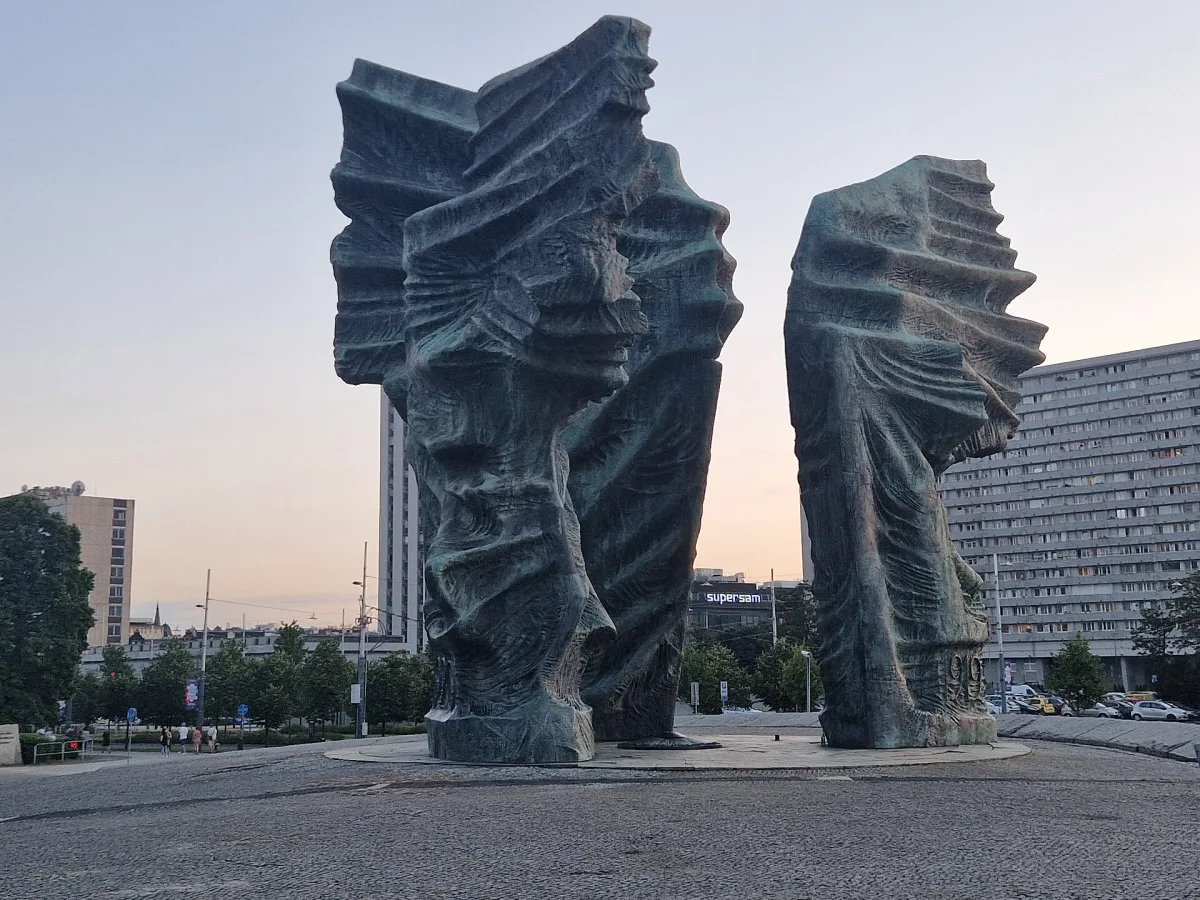
The uprising, although lost militarily, brought favourable results for the Polish cause. In the elections to municipal and town councils in Opole Regency in November 1919 the Polish camp won 6,822 seats out of 11,255. The memory of all three uprisings is preserved by the Monument to the Silesian Insurgents in Katowice and the monument in Wodzisław Śląski, and local obelisks stand in Szopienice and Nikiszowiec. The history of the uprisings is told by the Museum of the Silesian Uprisings in Świętochłowice.
The next action, in August 1920, is described in a separate article on the Second Silesian Uprising. The plebiscite and the Third Uprising have their own studies.
Be the first! Add a comment.
You need to log in to add a comment.
Log in