
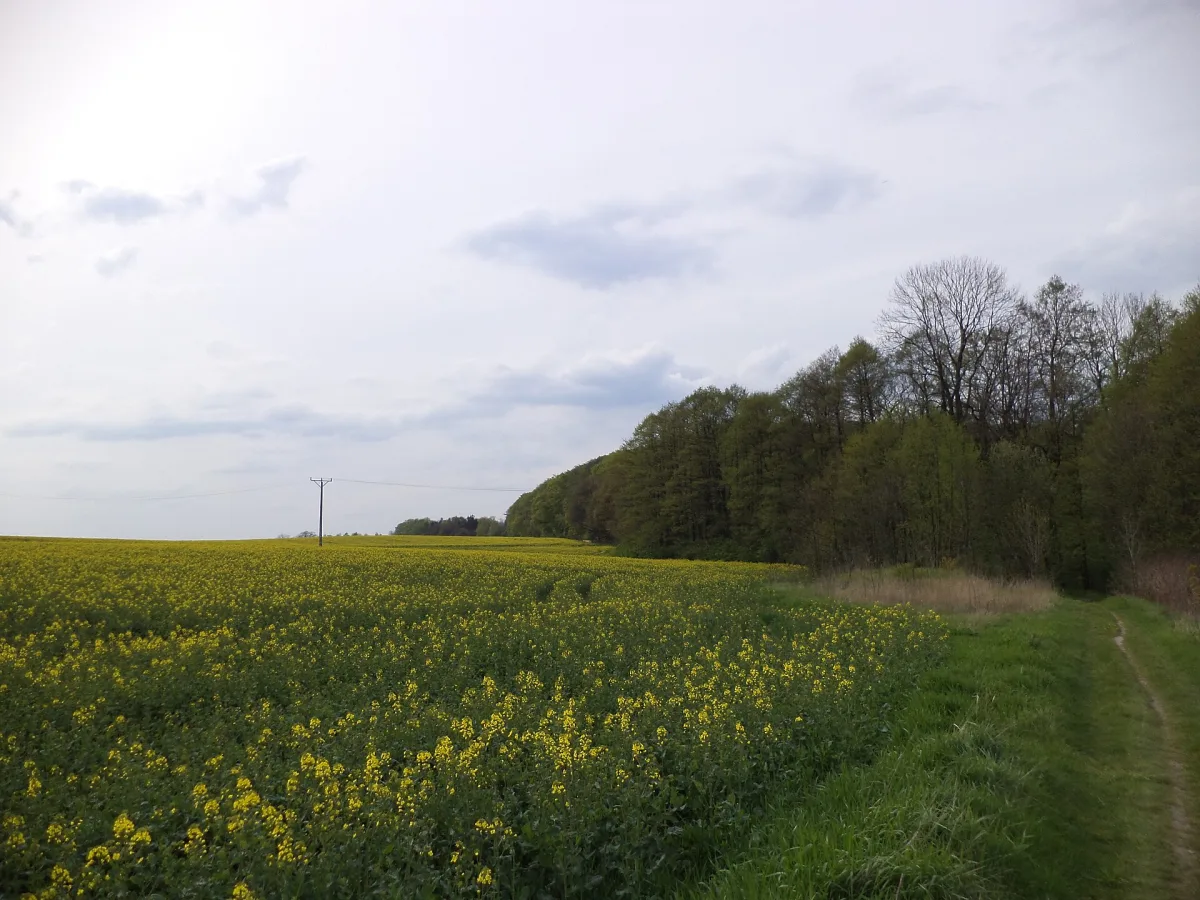
West of Stare Tarnowice, in the district of Repty Śląskie, stretches a forest that did not arise naturally, although it looks as if it did. It is a landscape park from the late 19th century, laid out on the site of a former game park of the Henckel von Donnersmarck family. It covers about 200 hectares and is part of a larger protected area: the “Park w Reptach and the Drama River Valley” nature and landscape complex.
A game park behind a stone wall
Beech-oak forests and hornbeam woods covered the area around Repty as early as the Middle Ages. In 1824 the Repty estate was bought by Count Karl Lazarus Henckel von Donnersmarck of Świerklaniec. The card for the nature and landscape complex in our portal states more broadly that the estate belonged to the family in 1820-1945, so the start of ownership is dated differently in different places.
In the 1840s the count built a small hunting lodge on the eastern edge of the forest and turned the forest into hunting grounds. A game park was created, surrounded by a limestone wall, in which fallow deer and pheasants were kept. To make hunting easier, the middle and part of the northern area of the forest were cleared, and a wide cut was made allowing shooting directly from the lodge. Fragments of the wall have survived to this day. The lodge did not: it fell into ruin and was demolished in 1971, and a car park was laid out on its site.
Guido's English park
In 1893 Karl's son Guido began building a palace in the German Neo-Renaissance style in the middle of the game park, to a design by the Munich architect Gabriel von Seidl. At the same time it was decided to turn the game park into a residential park in the English style. The work lasted until 1898. Hundreds of thousands of cubic metres of earth were brought in and moved, hills were rounded off, uneven ground in the valleys was filled in and differences in level were evened out. A section of forest by the Drama was cleared, creating meadows that are still kept up by regular mowing.
About 10,000 trees, mainly beeches and oaks, were added to the existing stand. Alongside them appeared exotic species, chiefly from North America and the Far East: eastern hemlock, Douglas fir, Weymouth pine, northern red oak, sugar maple, tulip tree and cucumber tree. The whole was designed so that, with increasing distance from the palace, the impression grows of a smooth transition from park to natural forest and meadows.
The palace that is no longer there
After Guido's death in 1916 the estate was inherited by his younger son Kraft. In 1922 the German-Polish border was drawn along the western edge of the park, and the park ended up on the Polish side. Towards the end of the Second World War the palace burned down, and in the 1960s its ruins were demolished. The park was nationalised and taken over by the State Forests. In 1966-1975 the building of the Upper Silesian Rehabilitation Centre was erected in the clearing next to the former palace. The former stables and adjoining buildings have belonged since 1999 to the Salesians and Salesian Sisters, who run a school complex and a healthcare facility there. The building-up of the former clearing meant that the central part of the park partly lost its original form, but the layout of the paths, including the chestnut avenue, has survived.
Two parts divided by the Drama
The Drama river, also called the Repty Ditch (Rów Repecki) on this stretch, divides the park into two parts. On the right bank lies the north-eastern part, that is the actual late 19th-century landscape park. On the left bank remain the remnants of the former game park around Góra Mikołaja (318 m above sea level). The Mikołuszka also flows here, a small tributary of the Drama in a deep ravine, which begins near the Neo-Gothic Church of St Nicholas. According to our card, the church, dating from 1867-1871, was funded by Guido Henckel von Donnersmarck.
Beech woods predominate, complemented by hornbeam woods and alluvial forests along the streams. According to natural-history studies, this is the largest concentration of monumental trees in Upper Silesia: it is estimated that about 110 specimens could attain that status, although in 2019 seven trees had it. Among the animals are roe deer, wild boar, foxes and martens, as well as rare bats and numerous breeding birds, including the black woodpecker and the collared flycatcher.
A park above an adit
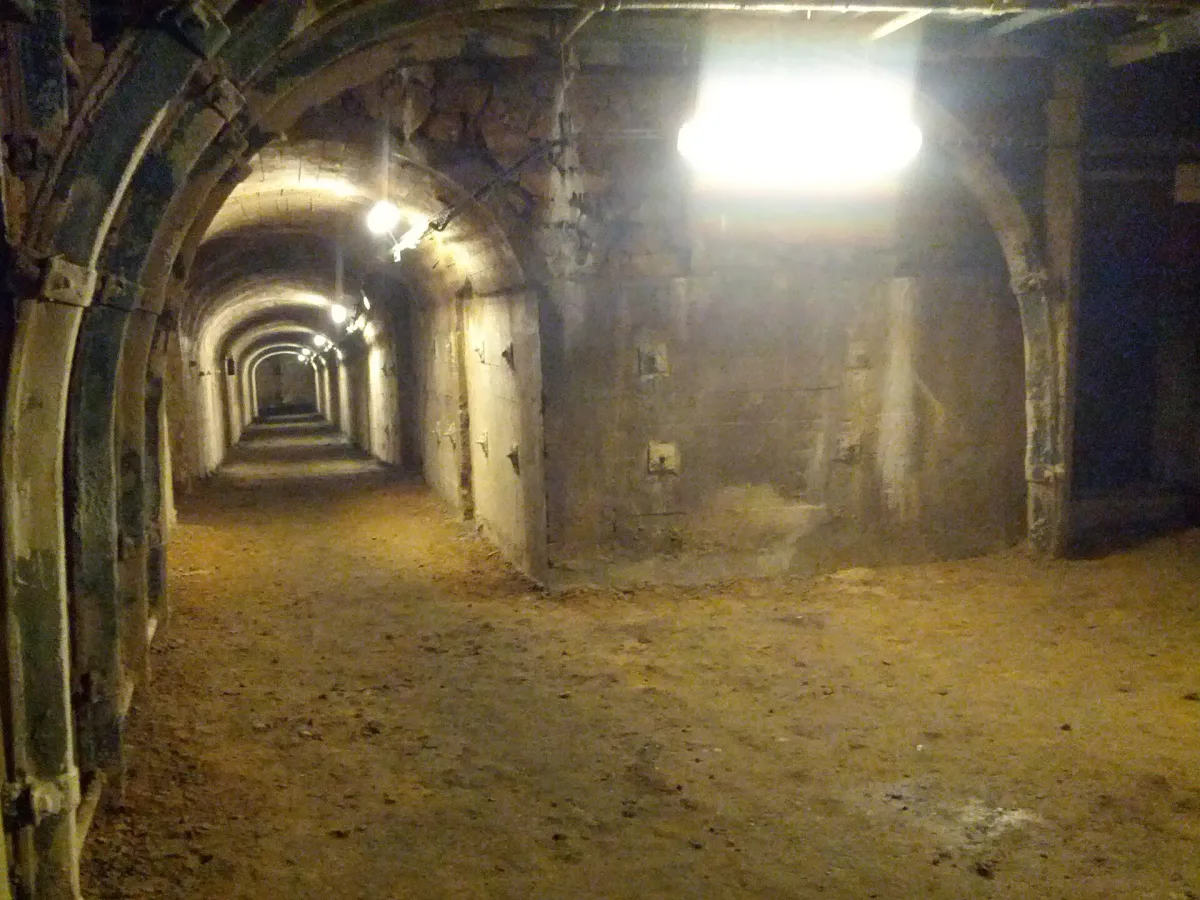
Under the park runs the Fryderyk Deep Adit (Sztolnia Głęboka Fryderyk), driven in 1821-1834. Its 600-metre section has been opened to tourists as the Black Trout Adit (Sztolnia Czarnego Pstrąga), which we write about separately in the article on mine drainage. Within the park there are two shafts leading into the adit: Sylwester, 30 metres deep, and Ewa, 20 metres deep. Bats live in it, and according to the adit's card it is a site inscribed on the UNESCO list together with the whole Tarnowskie Góry mine drainage system.
The park has been entered in the heritage register since December 1966. In 2004-2006 a nature education trail with eighteen boards was laid out in it. If you are combining a walk in Repty with a day in Tarnowskie Góry, a few kilometres away await the Silver Mine in Tarnowskie Góry and the castle in Stare Tarnowice.

Be the first! Add a comment.
You need to log in to add a comment.
Log in