
Many places in Silesia hold the title of Historic Monument, but only a few have made it onto the UNESCO World Heritage List. Tarnowskie Góry was inscribed on it in 2017, and one of the gateways to that inscription is the Silver Mine in Tarnowskie Góry, that is, an underground route in the workings of a former lead and silver mine. Below we explain what exactly was inscribed, what the route itself is, and what is worth seeing on the surface.
What the UNESCO inscription covers
The inscription was made on 9 July 2017 at the 41st session of the World Heritage Committee in Kraków. The full name is: Tarnowskie Góry Lead-Silver-Zinc Mine and its Underground Water Management System. The property has the number 1539 and comprises 28 components located in Tarnowskie Góry and partly in Bytom and the municipality of Zbrosławice. These are underground workings, galleries, shafts and adits, as well as above-ground monuments, including a park from the early 20th century.
The word “system” is important. The inscription does not concern one mine or one tourist route, but a whole mining layout with an extensive underground drainage system, developed from the 18th to the 20th century. The nomination took eight years to prepare: the application ran to about a thousand pages and was submitted at UNESCO's Paris headquarters on 28 January 2016. The application was put forward by the Ministry of Culture and National Heritage at the request of the Society of Friends of the Tarnowskie Góry Land, which to this day manages the Silver Mine and the Black Trout Adit.
Where the mine came from
The tourist route lies in the workings of the Royal Frederick Mine, which operated from 1784 until 1911 or 1912, as sources give both dates. It is part of an underground labyrinth of galleries, workings and drainage adits whose length exceeds 150 km. The section accessible to tourists was opened in 1976. The underground complex, together with the neighbouring adit in Ptakowice, was recognised as a Historic Monument by a regulation of the President of Poland of 14 April 2004. It was also placed on the Industrial Monuments Route of the Silesian Voivodeship, and since 2014 the mine has been an anchor point of the European Route of Industrial Heritage.
The route underground
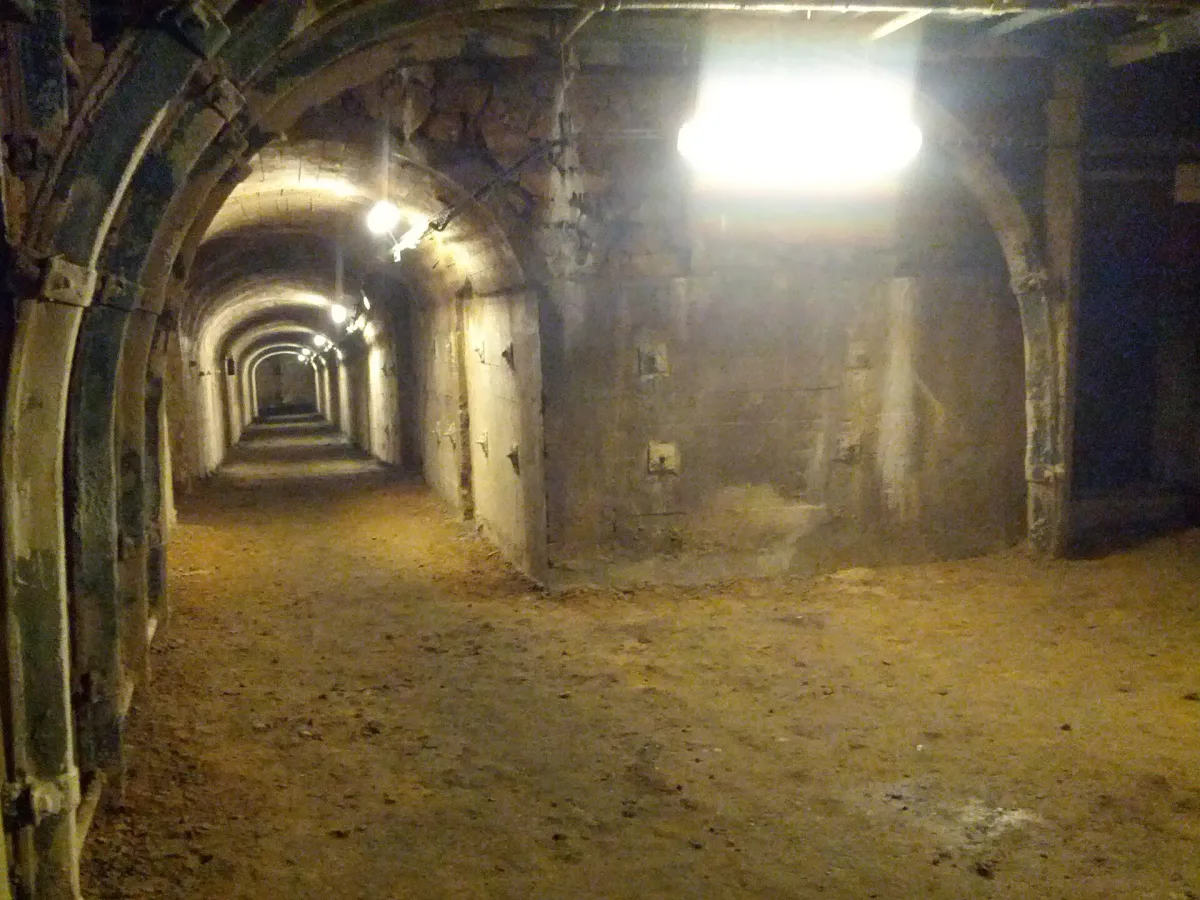
The route is 1740 m long and runs at a depth of 40 metres. It is triangular in shape and links three shafts: Anioł, Żmija and Szczęść Boże. Visitors see mining faces from the 18th and 19th centuries, former workplaces and tools. Almost 300 metres of the route is covered by boat. Along the route there are three chambers with an area of 500 to 2000 m². Underground the temperature is a constant 10 degrees or so.
In 2012 sound was added to the route, with the noises of the miners' hard work, a roof fall, trundling carts and blasting. In the shaft building a multimedia exhibition was opened at that time on history, geology, and the techniques of extraction and drainage. It shows tools, a washing apparatus, lamps and buckets for hauling ore. Among the exhibits is also a steam engine installed in 1788, regarded as the first in Upper Silesia.
On the surface, around the mine
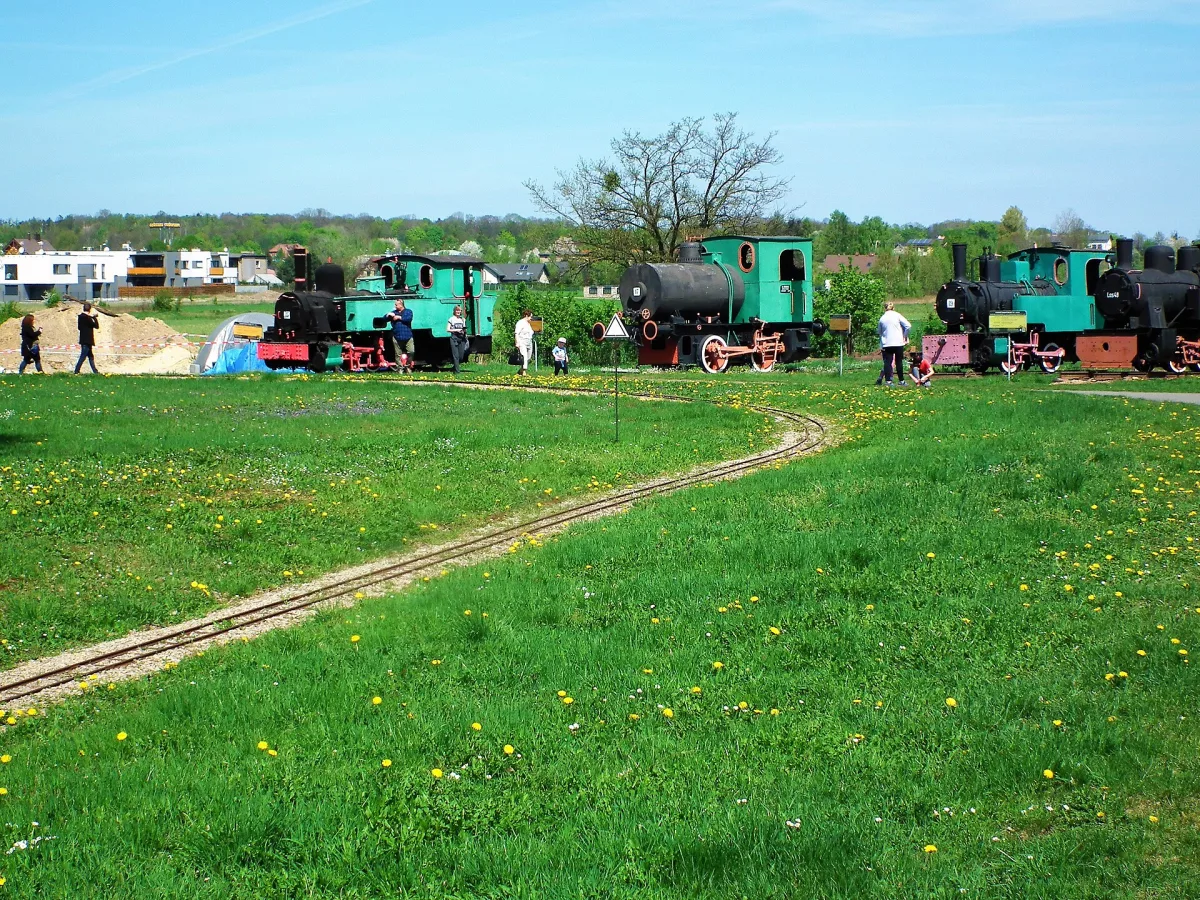
By the mine building stands the Steam Engine Open-Air Museum, with a portable steam engine, steam locomotives, steam pumps and winding engines, and a 500-metre Small Open-Air Railway runs around the site. In the southern part of the town lies the washing waste heap, heaped up from dolomite waste after the washing of ores. It is L-shaped and about 17 metres high, and since 2006 it has been part of a cultural park. Calamine grasslands grow on it, a community of plants resistant to a high concentration of zinc and lead in the soil.
The discovery with which the Frederick mine began is commemorated by Kunszt Park, around the shaft in which ore was found in 1784. An old adit mouth from the end of the 18th century can be seen in the portal of the Boże Wspomóż adit.
The second part of the inscription: the adit and the town
To a visit underground it is worth adding a second route: the boat in the Black Trout Adit, discussed in a separate article on the drainage of the mines. The town that grew out of mining is best explored in the Museum in Tarnowskie Góry and on the Market Square (Rynek). Opening hours, conditions of entry and rules for visiting should be checked with the manager before a visit.

Be the first! Add a comment.
You need to log in to add a comment.
Log in