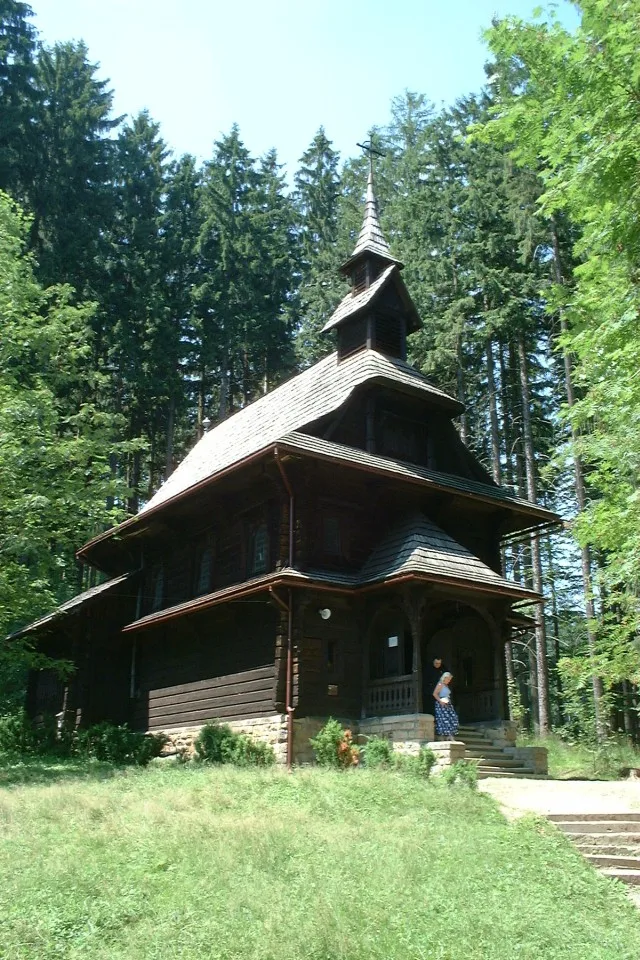
A wooden Tyrolean-style chapel from 1909 on the grounds of the Polish president's residence in Wisła-Czarne, with a 17th-century altar.
The Chapel of St Hedwig of Silesia stands on Zadni Groń in Wisła, on the grounds of the Polish president's residence in Czarne. It was built in the Tyrolean style in 1909 on the initiative of Archduke Frederick of Habsburg and belongs to the Wooden Architecture Trail of the Silesian Voivodeship.
The building is covered with shingles, and a small tower stands on the chapel's axis. The church is oriented, meaning the chancel faces east, and there is a small sacristy on the left side. The separate bell tower in the form of a campanile dates from 2004, is 10 metres high and has three bells from the Felczyński bell foundry.
In the chancel stands an altar from the first half of the 17th century in the Mannerist style. At its centre is a painting, “The Way of the Cross”, from 1683, and above it a painting of the Assumption and Coronation of the Blessed Virgin Mary. The altar comes from the no longer existing Church of the Exaltation of the Holy Cross in Bystrzyca, in what is now Zaolzie. After the church was pulled down in 1897 it went to a museum in Cieszyn, and Archduke Frederick bought it from the General Vicariate to complete the chapel's furnishings.
The chapel holds gifts from successive presidents and their wives, among them a figure of St Hedwig of Silesia, a baptismal font and a crucifix with relics from the Holy Land. There is also a brass tabernacle with silver ornament and a bas-relief, “The Lady of Szczyrk and St James”. An ecumenical service was held here after the Smolensk air disaster.

Be the first! Add a comment.
You need to log in to add a comment.
Log in