
A village by the ponds and the document of 1223
The oldest known mention of Rybnik comes from a document issued on 25 May 1223. In it Bishop Lawrence of Wrocław, at the request of Duke Casimir of Opole and Racibórz, endows the Norbertine convent in Rybnik with tithes from a dozen or so villages in the Cieszyn castellany. The year 1223 is therefore the first surviving mention, not the date of the settlement's foundation. The document recalls earlier donations to the Rybnik parish from Bishop Żyrosław II, who died in 1198, so the place must have existed already at the end of the 12th century. This is how the monograph "Dzieje miasta i jego dzielnic" describes it.
13th-century Rybnik was a village lying most probably on the slopes of a hill, on the trade route from Racibórz to Kraków. The inhabitants lived mainly from fishing, and the name of the place is linked with the numerous fish ponds.
A town with a castle, but without walls
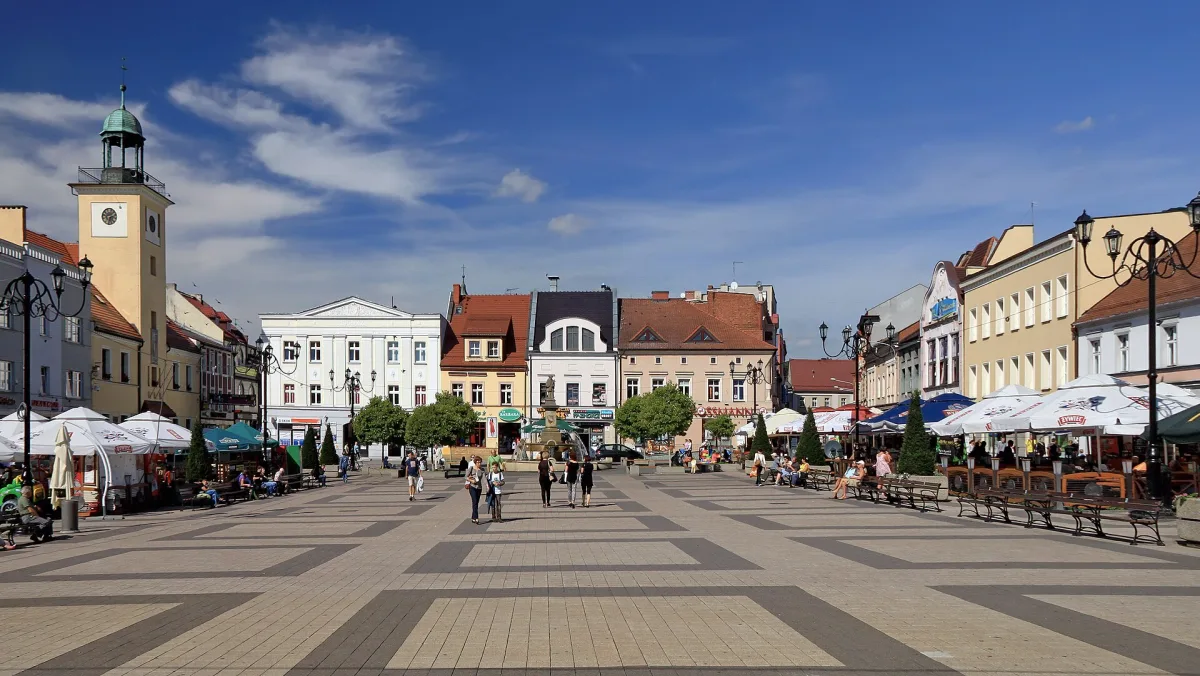
The village became a town at the turn of the 13th and 14th centuries. The first mention of Rybnik as a town (Latin civitas) dates from 1309. The new centre, identical with today's, arose south of the original settlement. The Market Square (Rynek) was laid out on the site of a former pond, and the spindle-shaped layout of the old town is unusual for medieval towns of Upper Silesia. No walls were built, only a moat, and a castle stood on the southern side.
The Rybnik Castle, today the seat of the district court, goes back according to archaeological research to the end of the 13th century, and its first mention dates from 1327. In 14th-century sources the town was most often called "a castle with a small town". At the turn of the 14th and 15th centuries Rybnik had, by estimate, about 300 inhabitants. In 1466-1473 the castle was the main seat of Duke Wenceslas III, who styled himself Duke of Rybnik.
Rybnik long remained a small town of little importance. It obtained its first privileges for a weekly market and fair in 1538, and in 1581 it had 339 inhabitants.
The year 1788 and the beginning of mining history
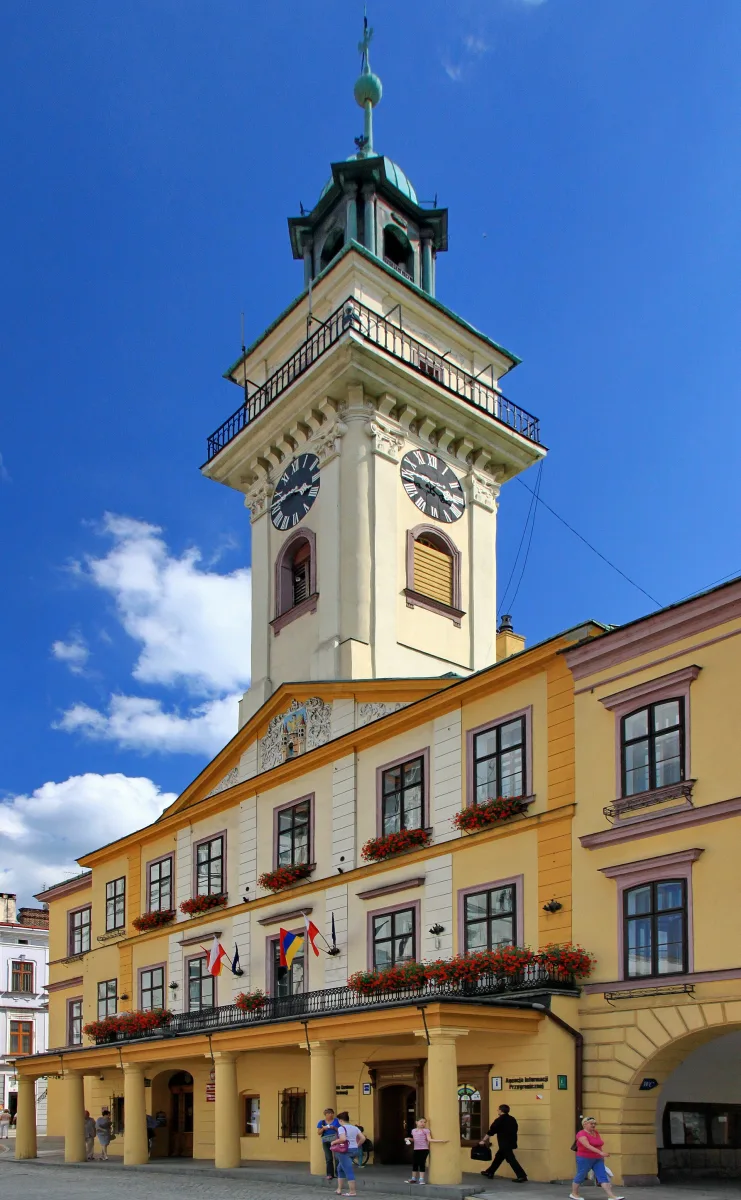
According to the census of 1787, Rybnik was inhabited by 1246 people, including 1152 Christians and 94 Jews. In the town and suburbs stood 202 buildings, of which 194 were roofed with shingles and straw. A year later the owner of the Rybnik estate, Antoni Wengierski, sold it to the Prussian treasury. The castle was rebuilt as an Invalids' Home, and masonry buildings on the market square began to replace the wooden ones. In 1822-1823, on the initiative of mayor Antoni Zelaski, the town hall was built, which survives to this day. The former town hall houses the Museum in Rybnik.
The Prussian state also began mining: in 1792 it founded the Hoym mine in Niewiadom. For the following decades it remained a small enterprise. Its later fate, the steam engines, and how the former works became the Ignacy Historic Mine are told in a separate article about that mine.
The railway, ironworks and a growing town
A branch of industry older than the mines was ironworking, based from the beginning of the 18th century on bog iron ore found along the Ruda and the Bierawka. Forges and finery forges arose, among others, in Paruszowiec and Ligocka Kuźnia, and in 1810 the Royal Ironworks Office was opened in Paruszowiec. The memory of that era is kept by the Trail of the Beginnings of Ironworking, a blue trail from Rybnik through Szczejkowice to Żory, with the ruins of the Waleska ironworks and a furnace tower.
The great change was brought by the railway: in 1856 Rybnik obtained a connection to the Nędza - Orzesze line, later extended to Katowice. The station was built outside the old town, and near it a hospital, a gasworks and the county office grew up. The hospital, in whose former building the Juliusz Educational Centre (Edukatorium Juliusz) now operates, has different dates in the sources: the years 1868-1871 in some and the year 1871 in a study of its originator, the physician Julius Roger. In 1907 the monumental Basilica of St Anthony was completed and connected to the station by a new avenue.
At the turn of the 19th and 20th centuries mining developed. The Römergrube mine in Niedobczyce, founded in 1858, was expanded, and in 1903 and 1913 mines were established in Chwałowice and Boguszowice. In 1845 the town had 2437 inhabitants (another source gives 2263), and in 1895 already 5965. In all the localities that belong to the town today, 20 576 people then lived.
The plebiscite, the border and the war
After the First World War a plebiscite was to decide the allegiance of the region. It took place on 20 March 1921. In Rybnik itself 70.7 per cent of those voting declared for Germany and 29.1 per cent for Poland. In all today's districts together 60.3 per cent voted for Poland, and in the whole Rybnik county 65.3 per cent. After the announcement of the results the Third Silesian Uprising broke out, in which 138 inhabitants of Rybnik were killed. On 22 June 1921 an explosion of wagons with explosives damaged the station and surrounding buildings. Rybnik found itself in Poland, and on 3 July 1922 the town was taken over by the Polish administration.
In 1926 the municipality of Ligota Rybnicka was incorporated into the town, and the population rose in ten years from 13.5 to 25 thousand. In the 1920s the districts of Maroko and Meksyk began to be built as residential colonies for workers and officials.
The Wehrmacht entered the town on the morning of 1 September 1939. At the turn of March and April 1940 the synagogue and the Jewish cemetery, in use from 1815 to 1931, were destroyed. The gravestones were used to harden roads, and the site was turned into a square. The pre-war Jewish community numbered over 300 people. The Jews remaining in the town were imprisoned in the castle as forced labourers, and in 1940 they were deported. The Red Army took Rybnik on 26 March 1945. 18.4 per cent of buildings were destroyed or damaged, much less than in Żory, Wodzisław or Racibórz.
A miners' town
After the war an agglomeration took shape around Rybnik which from 1957 was officially called the Rybnik Coal Area (Rybnicki Okręg Węglowy). In 1950 it was separated as an independent urban county, and in 1973 and 1975 it was enlarged by Chwałowice, Boguszowice and Niedobczyce, formerly separate towns. Further districts joined in 1977.
The Rybnik Reservoir also dates from this period. The reservoir, with an area of 4.5 square kilometres and a volume of 22 million cubic metres, was created at the turn of the 1960s and 1970s to cool the Rybnik Power Station. Its first units were started in 1972-1974.
Be the first! Add a comment.
You need to log in to add a comment.
Log in