
Two mines, two underground worlds, one museum
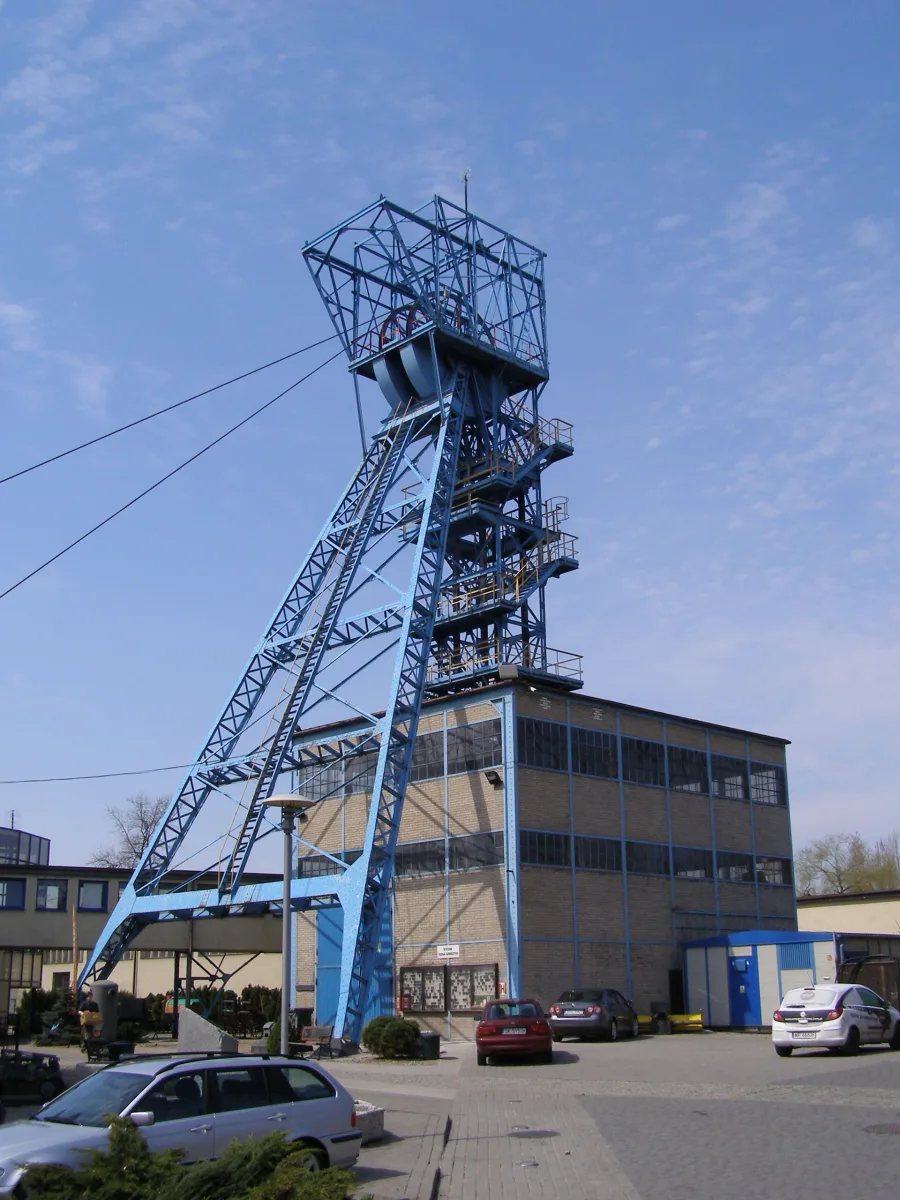
In Zabrze you go underground in two places, about 1.2 km apart. The first is the Guido Mine on 3 Maja Street, where a miners' lift, known as the szola, takes you down to levels at 170 and 320 metres. The second is the Queen Louise Adit on Wolności Street, where the route leads through the workings of the mine and of the former drainage adit, and part of the distance is covered by boat. Both sites belong to the Coal Mining Museum in Zabrze, whose main seat is in the building of the former county office from 1874. In July 2020, by a regulation of the President of Poland, both were recognised as parts of the Monument of History "Zabrze - the complex of historic coal mines".
It is worth putting them side by side, because they tell of different stages of the same history. Guido is the mine of a private magnate, which did not fulfil the hopes placed in it. Queen Louise is a state mine, one of the first in Upper Silesia, and an underground channel that was meant to save it from flooding.
Guido: the mine that was to yield coking coal
The mine was founded by Count Guido Henckel von Donnersmarck. He received the mining grant on 2 October 1855 and named the new works after himself. He was counting on coal with coking properties, similar to that found nearby. The calculation did not work out: the first shaft, Barbara, was abandoned in 1856 after being sunk only 30 metres, because quicksand and a tectonic fault were encountered. Extraction started only in the second shaft, Concordia, later the Guido shaft, which reached 97 metres in 1859. Water-bearing layers and tectonic disturbances halted work several more times.
The mine's record was 313 thousand tonnes of coal in 1885. Just two years later, because of low profitability, the count sold the mine to the Prussian state, which incorporated it into the Queen Louise mine as the South Field. The coal extracted was not suitable for coking, that is, it lacked the quality for which the whole undertaking had been started. In 1901 a steel winding tower was erected over the Kolejowy shaft, and in 1912 Guido was formally incorporated into the nearby Delbrück mine. The Guido shaft then remained the main drainage complex for the whole area.
From an experimental mine to an underground museum
The Guido shaft was put out of service in 1962. Five years later the site was taken over by the Construction and Mechanical Works of the Coal Industry (Zakłady Konstrukcyjno-Mechaniczne Przemysłu Węglowego), which set up the M-300 Experimental Mine here, where new mining machines were tested. Underground activity continued until July 1996. In 1982, under an agreement with the Coal Mining Museum, the Guido Mining Open-Air Museum was created at level 170, later entered in the heritage register.
The fate of the underground route was uncertain for a time. In 2000, during cost-cutting in the coal industry, dismantling began of a mine that could be visited. This was stopped by the involvement of the Zabrze local government, the marshal's office and private individuals. In 2007 the Guido Historic Mine was established as an independent cultural institution, level 170 was again opened to tourists, a year later level 320, and in February 2015 sub-level 355. Since April 2013 the mine has belonged to the Coal Mining Museum.
Underground you will see a working electric winding machine from 1927, underground stables, the chapel of St Barbara 170 metres below the surface, working mining machines and a ride on a suspended electric railway. At level 320 metres there is a pub. According to the museum's website, the route at this level is the lowest-lying tourist route in Europe, and this is the institution's own claim, not the result of an independent comparison. The museum runs several routes of different character, from a two-hour walk through raw workings to which only professional miners previously had access, to a route for adults with simple mining tasks in full gear. Details and entry rules are given on the museum's website.
Queen Louise: a mine named in memory of a queen
The mine was founded in 1791 as the state mine "Królewska" (Royal), and in 1811 it was given the name Königin Luise Grube, that is Queen Louise, in memory of the wife of King Frederick William III, who had died the year before. In 1790 coal seams were discovered in the Czarniawka valley here, which made it possible to found one of the first state coal mines in Upper Silesia. Already in 1816 it produced about a quarter of the coal mined in Upper Silesia, and in 1898, according to the site's page, it extracted 3.3 million tonnes with 8.5 thousand miners. Extraction ended in 1998, after 207 years.
The mine's first years were a fight against water. Water was carried to the surface in buckets and helped along by horse gins. A steam engine was also brought from Tarnowskie Góry, but its upkeep proved very costly. The lead and silver mines in Tarnowskie Góry, from which this engine came, had a similar problem with water, and their underground can be visited in the Silver Mine in Tarnowskie Góry.
The Main Hereditary Key Adit
The solution was to be an underground channel. The initiator and designer was Friedrich Wilhelm von Reden together with John Baildon, and the models were solutions from English and Hungarian mines. Construction began on 23 June 1799 in the Bytomka valley. The adit drained the mines and at the same time served to transport coal by boat: from 1806 a worker standing on a boat pushed it along by hand from wooden pegs in the channel walls. The original plan reached nearly 30 km, but in the end 14,250 metres were built, linking Zabrze with Chorzów, beneath Zabrze, Ruda Śląska, Świętochłowice and Chorzów. It is regarded as one of the longest hydraulic structures in European coal mining.
The sources disagree on the completion dates: some give 1863, others 1800-1869. What is certain is that the undertaking lasted over 60 years and by completion had lost importance, because roads and railways had taken over transport and efficient steam pumps had taken over drainage. The outlet on Miarki Street was walled up in 1953, and for years the channel filled with silt.
Back underground
The first underground tourist route of coal mining in Poland was created here in 1965 in the West Field of the Zabrze mine and operated until 1979. Today's story began after 1999, when the first amateur group went down into the adit. In 2014 the clearing of silt from a 2.5-kilometre section was completed, in which an iron wagon, fragments of wooden troughs and two century-old inspection boats were found. The first workings were opened in June 2016, the next section in September 2017, and the last on 14 September 2018, together with an underground boat ride more than 1,100 metres long. The museum presents it as the longest in Europe, while other sources present it as the longest in Poland.
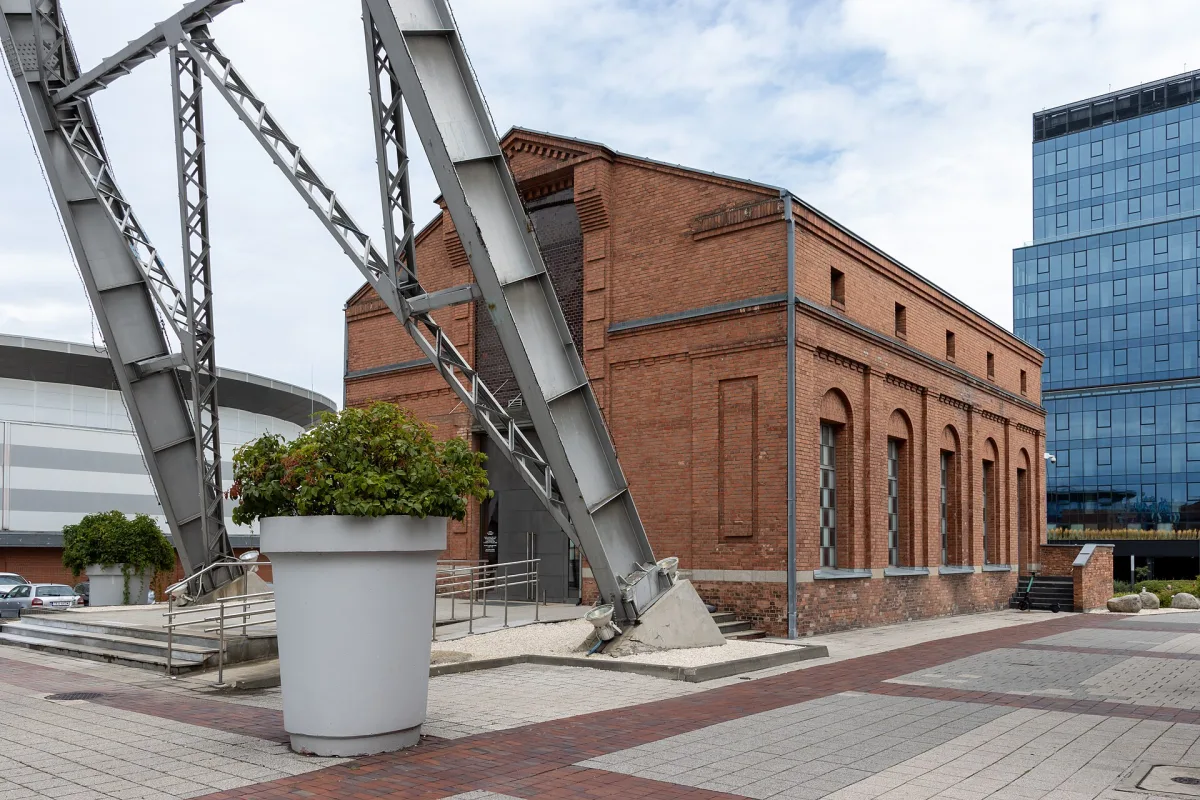
The revitalisation received the Europa Nostra European Heritage Award in 2019. On the surface stands a working steam engine from 1915, which served the Carnall shaft until 1990, a chain bathhouse from 1890 and a winding tower with a viewing platform. The water route combines a walking section with a boat trip, on which one passes figures from Silesian legends, among them Skarbnik and Utopek.
The water tower and how to plan a visit
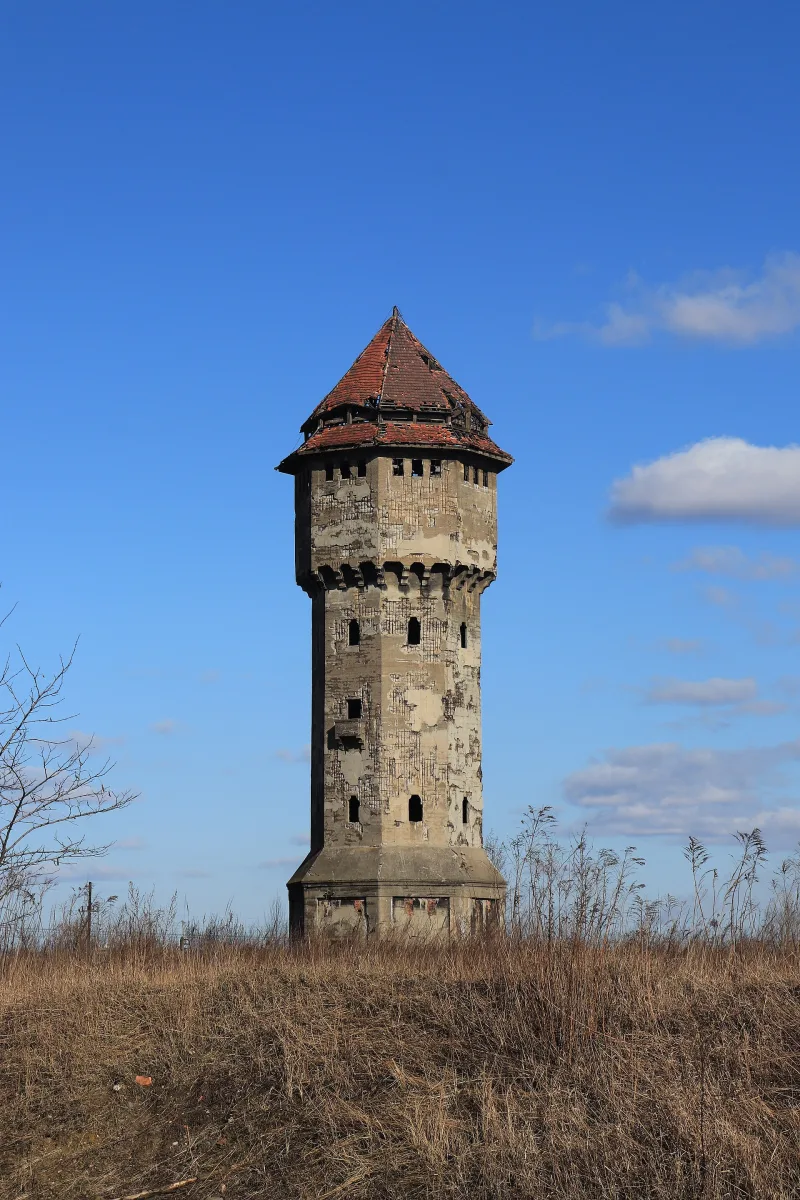
The Water Tower in Zabrze, built in 1907-1909, belongs to the same museum. It houses CARBONEUM, an interactive exhibition about coal, and a viewing platform over the city. For someone who wants to get to know Zabrze mining in one day, the natural order is Guido as the story of a deep mine, Louise as the story of water and engineering, and the tower as a view of the whole from above. The museum runs routes for families with small children mainly in the Queen Louise Adit, not in Guido. Opening hours and the availability of routes change during the year, so they should be checked on the museum's website before a visit.
Be the first! Add a comment.
You need to log in to add a comment.
Log in