
Water that horses could not handle
Ore mining in Upper Silesia was always a fight against water. In Tarnowskie Góry, according to the dzieje.pl portal, several thousand mines operated over the course of a few centuries, and by the same source about 20,000 shafts and more than 150 km of underground workings were created. The deeper the miners went, the more water had to be lifted to the surface. That is why the history of Tarnowskie Góry silver is largely the history of drainage.
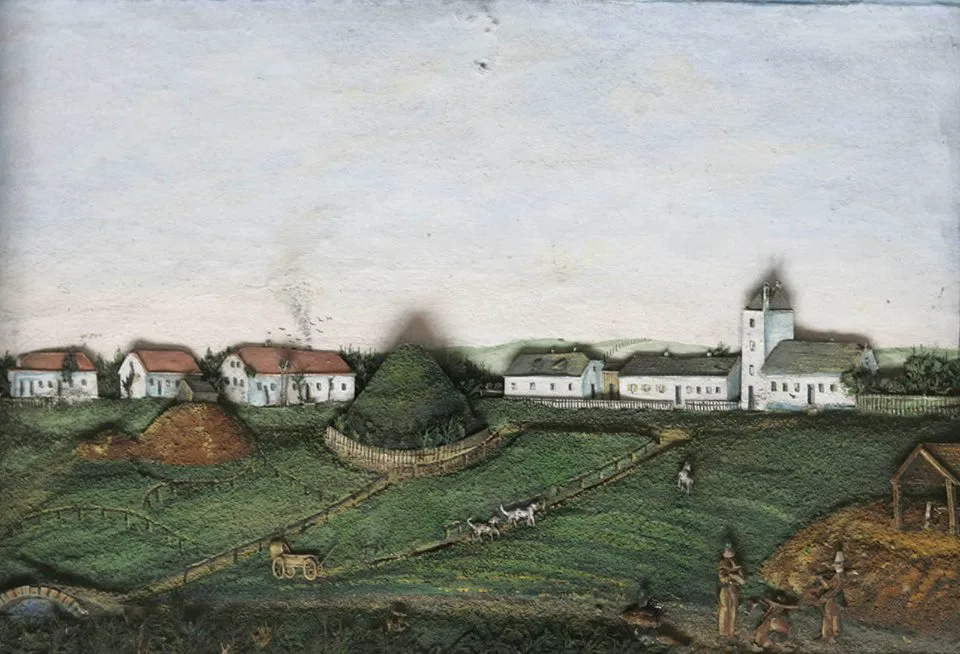
According to dzieje.pl, the largest state-owned ore mine in the history of Tarnowskie Góry mining was the Royal Frederick Mine (Królewska Kopalnia Fryderyk). The first lead ore was found there on 16 July 1784, near the Rudolphine shaft. According to the site's entry, it operated until at least 1911 or 1912, and according to dzieje.pl from 1784 to 1912. The deposits lay almost horizontally, and groundwater flooded the galleries.
The first steam engine in Upper Silesia
In the late 1780s a 32-cylinder steam engine for drainage was installed at the Abraham shaft, on the initiative of Count Reden. According to the sources it was the first such engine in Upper Silesia, and dzieje.pl, citing the authors of the UNESCO nomination, even writes of the first such engine on the European continent. It was brought from Cardiff by ship to Świnoujście, then up the Oder on three boats to Zdzieszowice, and from there to the mine by cart. Further engines were cast in Gliwice in 1790, 1794 or 1795, 1802 and 1804.
The engine worked, but it was expensive to run, and drainage by horse-driven gins was not enough. What was needed was a solution that would not require constantly burning fuel, namely a channel through which the water would flow away by itself.
The Deep Frederick Adit
The design for the new drainage adit was prepared by the mining masters Thürnagel and Eisleben. It was drawn up in November 1820 and approved in December of the same year. Construction was planned to take 15 years, and the gallery, 4,568 metres long, was to reach the existing Adolph shaft, on the site of today's Staszic waterworks station. Work began on 21 April 1821 in Ptakowice.
The gallery was driven from 14 working faces at once, reached through small shafts, known as light shafts, sunk along the line of the adit. Along the route 25 ventilation shafts were sunk, and the Adolph shaft was deepened. Steam engines were installed at two shafts, and two more were used to transport materials and excavated rock. Driving progressed at 3-4 metres per week. The adit was put into service on 15 July 1834, during a ceremony combined with the mine's 50th anniversary.
The outlet of the underground section was framed by a classicist sandstone portal, and after 889 metres of channel, known as the roznos, the adit's waters flow into the Drama river. A drainage ditch dug in parallel protected the roznos from groundwater flowing in from the fields.
According to one description of the mine, the adit made it possible to give up costly steam-engine drainage over a stretch of roughly 5.6 km. The Deep Frederick Adit is regarded as the longest drainage adit in the Tarnowskie Góry area.
A boat trip in Ptakowice
Today a 600-metre section of this adit is open to visitors: the Black Trout Adit (Sztolnia Czarnego Pstrąga). It has been open to visitors since 1957. The route runs between the Ewa and Sylwester shafts. After going down winding stairs to the underground landing stage, visitors board a boat and travel 600 metres by lamplight. The guide pushes the boat off the walls and tells the story of Tarnowskie Góry mining.
The adit lies at a depth of 20-30 metres, is 1.2 to 2.5 metres wide and up to 4 metres high, and the water is 0.7 to 1 metre deep. Around you can see small, recently forming stalactites and original sections of the gallery cut in dolomite. By the Sylwester shaft stands a visitor base opened in 2020, with a visitor service centre, an education room and a viewing terrace over the Drama valley.
The 600 m section was regarded until 2018 as the longest underground boat route in Poland, before a longer one opened in Zabrze. A similar drainage role was played there by the Main Kluczowa Hereditary Adit, known from the Queen Louise Adit.
From historic monument to the UNESCO list
The Black Trout Adit, together with the underground workings of the Silver Mine in Tarnowskie Góry, was recognised as a Historic Monument by a regulation of the President of Poland of 14 April 2004. It also belongs to the Industrial Monuments Route of the Silesian Voivodeship. It was nominated for the UNESCO list by the Ministry of Culture and National Heritage, at the request of the Association of Friends of the Tarnowskie Góry Land. The inscription took place on 9 July 2017 at the 41st session of the World Heritage Committee in Kraków.
The inscription is called Tarnowskie Góry Lead-Silver-Zinc Mine and its Underground Water Management System. It is not a single mine but a set of 28 sites in Tarnowskie Góry, Bytom and Zbrosławice. What they have in common is the underground drainage system, which is exactly the problem with which the story of the adit in Ptakowice began.
The route in the adit involves stairs, and the visit takes place entirely underground, so before visiting it is worth checking the entry conditions and current rules with the operator or at the tourist information office in Tarnowskie Góry.
Be the first! Add a comment.
You need to log in to add a comment.
Log in