
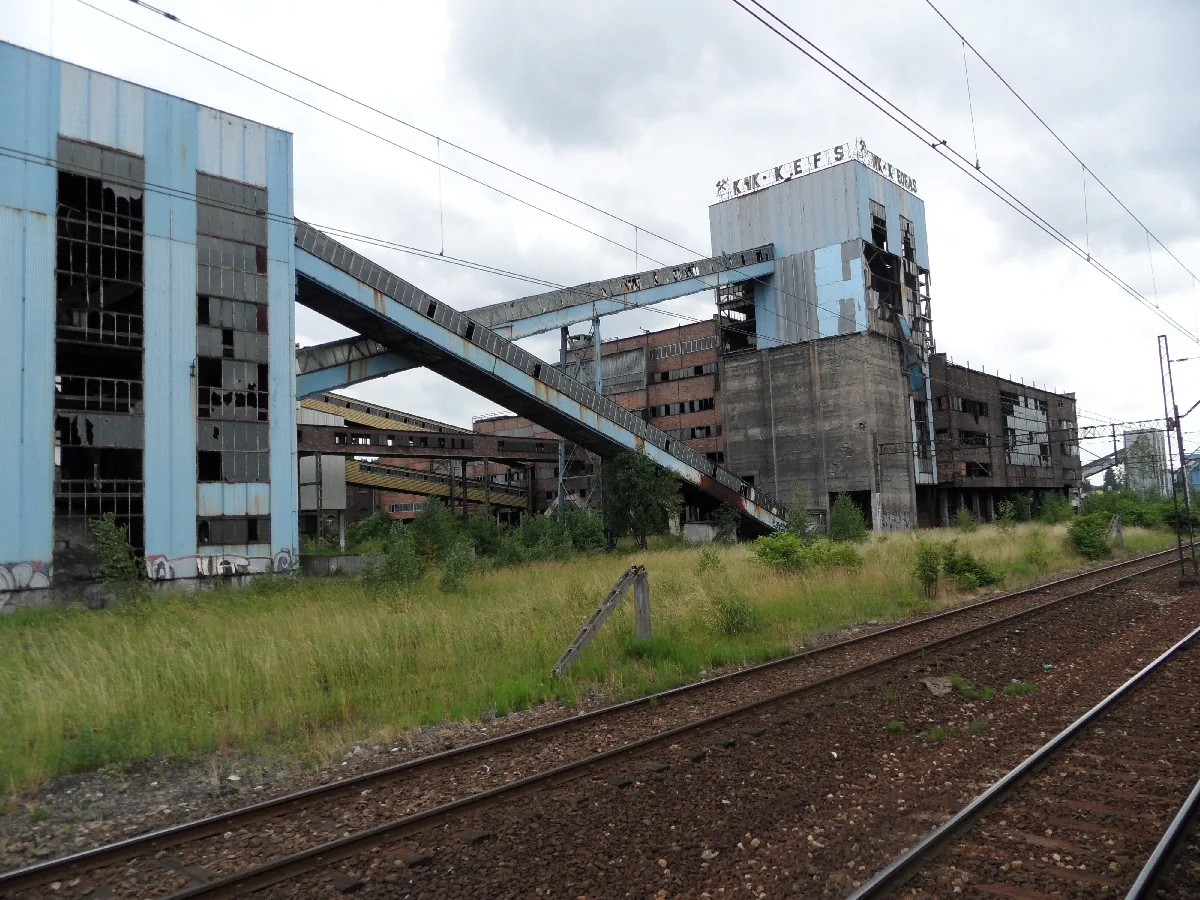
Załęże is today a district of Katowice, but its industrial history began earlier than the history of the city itself. Until the end of the 18th century it was an agricultural village. Then, within a few decades, coal mines, iron and zinc works appeared here, and the settlement turned into a working-class one. Two works marked this development most strongly: the mine we know today as Kleofas, and the Baildon steelworks.
Charlotte, the first mine in Załęże
The oldest coal mine in Załęże was “Charlotte”. It was granted on 16 March 1792, although mining had been carried out there as early as 1789, and then in 1823-1858. It is one of the oldest mines in the area of present-day Katowice. In 1858 it was incorporated into the “Victor” mine, which in 1899 became part of the “Oheim” mine, later the Wujek mine. Its fortunes show how in the 19th century small works passed from hand to hand and merged into larger ones.
Cleophas: from Karol Godula to the Giesche company
A much larger mine was “Cleophas”, later “Kleofas”. It was granted on 15 July 1840 and confirmed a few days later. It was founded by Karol Godula together with Loebel Freund, and from 1845 he was its sole owner. Of the output in 1852, the largest part was taken by the railway, and the name of the mine comes from the name of St Cleopas.
The first period of operation did not last long. The works did not operate in 1862-1886, although the mine was bought as early as 1880 by the company Georg von Giesches Erben, which then began sinking new shafts in Obroki, a hamlet of Załęże. The shafts “Walter” (later “Fortuna II”) and “Recke” (“Fortuna III”) began to be sunk in the first years after the purchase, and coal from them was already being sent out in the 1880s. A third shaft, “Frankenberg” (“Fortuna I”), followed somewhat later.
The Giesche company also had its central administration in Załęże. From 1887 it sat in the palace on Gliwicka Street, built in 1886-1887. The same company later created the garden settlement Giszowiec for its miners.
Electricity and water at the mine
A power plant regarded as the first industrial one in Upper Silesia was built at the mine in 1888. The power-plant building from 1893 and the boiler house from 1895 survive to this day, both in the historicist style. A year earlier, in 1887, a water pipeline was built carrying water from the mine to Katowice, described as the first of its kind in the city. The water network of Załęże was also created thanks to the mine: when sinking a shaft a productive water vein was struck, and Giesche laid a pipeline as compensation for the lowering of the groundwater level.
Housing was built for the workforce. Between Wiśniowa and Bocheńskiego streets, in 1890-1914, the workers' colony of the Kleofas mine was built, in part to designs by Emil and Georg Zillmann. Workers' colonies in Upper Silesia as a phenomenon have a separate article in this section.
The fire of March 1896
In the night of 3 to 4 March 1896 a fire broke out in the mine. 104 miners died. It is regarded as the greatest mining disaster in the history of Załęże. More than three hundred rescuers from several mines took part in the rescue operation, among others from Ferdinand, König, Myslowitz and Giesche. The operation was directed from the palace in Załęże by the company's general director Friedrich Bernhardi.
The funeral took place on 7 March. Father Ludwik Skowronek, parish priest of the parish in Bogucice, then made a vow that a church would be built in Załęże. A parish was established that same year, and the church dedicated to St Joseph was consecrated in 1900. In the church hang plaques commemorating the dead miners, and in the nearby parish cemetery, by the main path, lie the graves of Kleofas miners who died in disasters.
The Baildon steelworks
The second pillar of Załęże was the ironworks. In 1823 the Scottish engineer John Baildon initiated the construction of a puddling works and bar rolling mill on the Rawa, on the site of the former Załęże forge. The sources place the works on the border of Dąb and Załęże, or in the area of Dąb. The date production began is not known: 1828 is accepted, and it is thought to have been then one of the first puddling works in Europe, after the French one of 1818.
After Baildon's death in 1846 the steelworks changed owners. In 1865 it was bought by Wilhelm Hegenscheidt, who gave its products the mark “BHH”. The sources state that the works stood idle in 1863-1864 or 1863-1865. In 1887 the steelworks passed to an iron concern from Gliwice and was expanded with a view to producing special steel. For employees the Hegenscheidt colony was built around 1870 in the area of today's Bogusławskiego Street.
The Baildon steelworks produced high-quality steel, rolled products, drills, electrodes, magnets and cemented carbides, in the whole period of operation more than 12 thousand product types. In 2001 it was declared bankrupt, and in 2016 the company was struck off the business register. A trace of it was also left by the sports club Baildon Katowice, founded in 1945.
The end of the mine and what remains
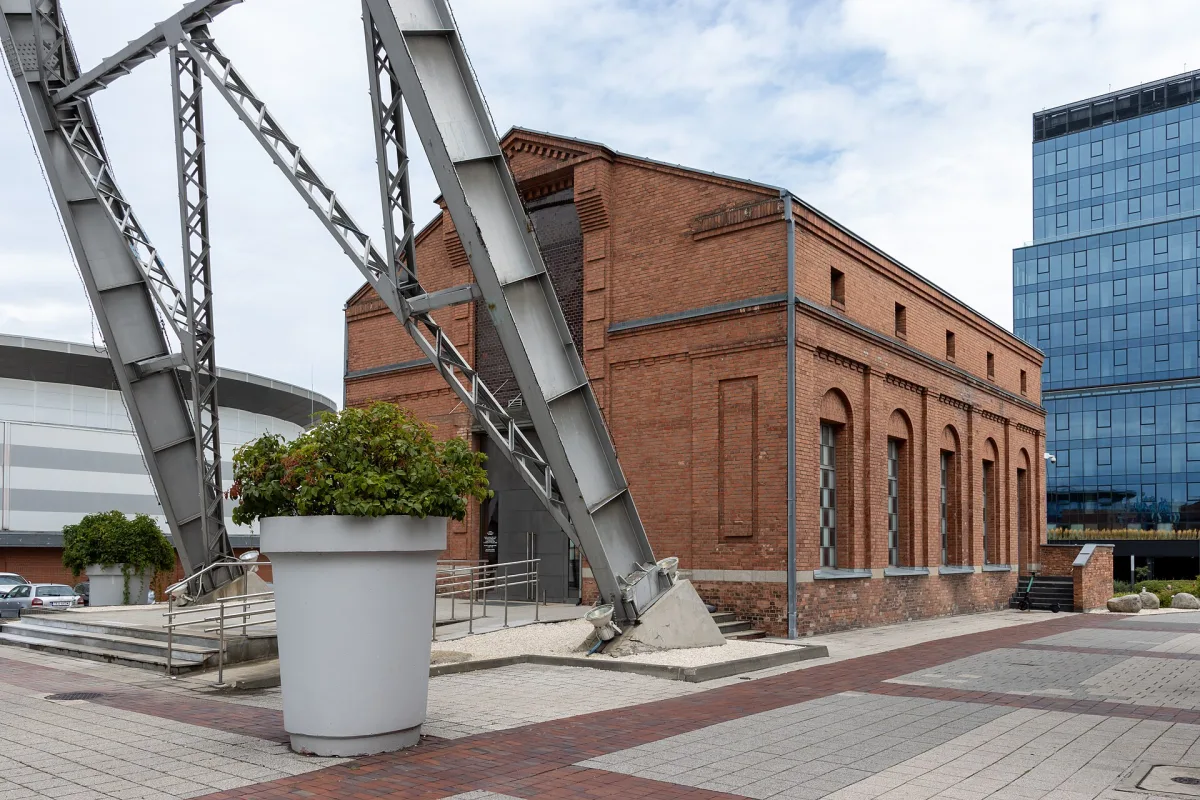
In 1974 Kleofas was merged with the Gottwald mine in Dąb, and in 1996 with the Katowice mine in Bogucice, creating the Katowice-Kleofas works. The decision to close it was taken on 4 March 2004, mainly because of the threat of rockbursts and for economic reasons. Extraction ended in November of that year. The “Fortuna II” shaft kept its role as a deep pumping station, the others were backfilled, and in 2014 most of the buildings were demolished, leaving the historic structures: the “Fortuna III” shaft complex, the power plant, the boiler house and the “Wschodni II” shaft complex from 1913, entered in the heritage register in 2010.
Be the first! Add a comment.
You need to log in to add a comment.
Log in