
How the Habsburgs came to Żywiec
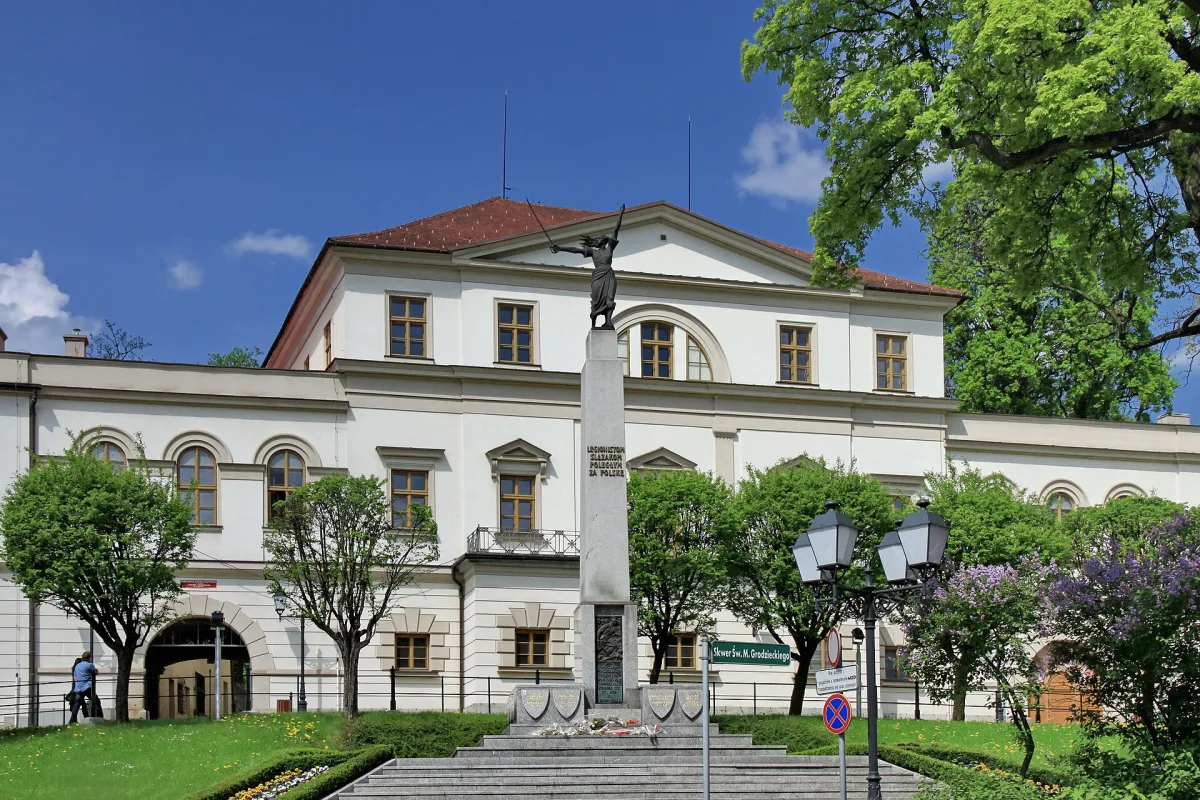
For centuries Żywiec belonged to noble families: first the Komorowskis, then the Wielopolskis. In 1838 Adam Wielopolski, who could not cope with the impoverishment of the estate, put the Żywiec state country up for sale. It was bought by the Duke of Cieszyn, Archduke Charles Louis Habsburg, who incorporated it into the Cieszyn Chamber, the administration of the extensive Habsburg estates in Cieszyn Silesia. In the same year construction began on a summer residence in Cieszyn, today known as the Habsburg Hunting Palace. The Duchy of Cieszyn together with the Galician Żywiec state country was among the most profitable noble estates in Austria.
The Habsburgs left a clear mark on the layout of Żywiec. They rebuilt the castle in the spirit of historicism, and its façade, preserved to this day, was designed by Karol Pietschka. A Neoclassical palace, called the New Castle, was also built on the castle complex, raised in 1893-1895 and extended in 1906-1910. The park was redesigned in the English style. Today the family's former seats are visited in the castle park: the Town Museum has been housed in the Old Castle since 2005, and beside it stands the Miniature Park with models of monuments of the Podbeskidzie region, included in the project From the Komorowskis to the Habsburgs.
An older layer of history is shown by the castle on Grojec. According to Jan Długosz, in 1477 the troops of Casimir IV Jagiellon took the castles of the Komorowskis, and the town developed at the foot of this hill around the chartered market square.
The brewery of 1856
In 1856, on the initiative of Archduke Albrecht Frederick Habsburg, the Archducal Brewery was built on the southern edge of Zabłocie. The location was decided by access to mountain water from beneath the Skrzyczne massif. From the beginning the brewery brewed pale beer by bottom fermentation, modern for its time, unlike the old manorial breweries, which used top fermentation. The brewery museum adds that Albrecht Frederick created the Żywiec Brewing School, employing masters from Cieszyn, Bohemia and Austria, thanks to which at the end of the 19th century lager was brewed here, as well as porter, bock and March beer. In 1881 production of the dark beer Porter began.
After Albrecht's death in 1895 the estate was inherited by Charles Stephen; according to the museum he ran the brewery for 38 years. He bought modern equipment, installed electric lighting and acquired railway wagons. A railway siding, built in 1891, gave the works a direct connection with the European railways. In 1933 the largest part of the estate, together with the brewery and the castle, was inherited by Charles Stephen's son, Charles Albert, who managed the brewery until 1939. The Neo-Renaissance buildings of the brewery, raised at the end of the 19th century, are today counted among the town's monuments.
The war and the end of the Habsburg era
For the Żywiec Habsburgs the war meant the loss of their estate. Charles Albert was a colonel in the Polish Army. On 9 November 1939 he was arrested, and his refusal to sign the German nationality list, the Volksliste, cost the family its property. Under German administration the brewery was called Beskidenbrauerei Saybusch. According to the museum, the Germans did not change the Polish recipes, because they considered them good, and in the spring of 1945 they mined the cellars. Workers are said to have cut the cables connecting the explosive charges and in this way saved the works. According to another version the castle and the palace were also mined then, and the cables were damaged by units of the Home Army resistance. In 1945 the Habsburgs finally lost their estates.
Alicia Habsburg, wife of Charles Albert, came from Sweden and took part in the Polish resistance during the occupation. In 1946 she was awarded the Cross of Valour. In the Castle Park today stands the Alicia Habsburg Bench, a bronze sculpture by Bronisław Krzysztof unveiled in 2012, in which you can sit beside a life-size figure. Charles Stephen Habsburg, her father-in-law, declared the family's Polishness in 1907 and was the first Habsburg to learn Polish, and his candidacy for king of the Kingdom of Poland during the First World War came to nothing. One of Charles Albert's children, Maria Christina, also returned to Żywiec in 2000 and settled in the New Castle.
The museum in the cellars and the dancing couple
The Żywiec Brewery Museum was opened on 9 September 2006 in the maturing cellars hewn in the rock in the oldest part of the brewery, on the occasion of the works' 150th anniversary. The exhibition has 18 rooms on about 1,600 square metres and leads from the ingredients of beer and a model of the brewery, through reconstructions of 19th-century Żywiec (an architectural studio, a cooperage, a printing house and a Galician inn), to an Art Deco hall and the period of socialism. The visit ends in a tasting room. The museum is part of the Industrial Monuments Route of the Silesian Voivodeship, holds the title of Star of Technology and since 2010 has been an anchor point of the European Route of Industrial Heritage. Visiting requires booking a date in advance.
One of the stories in the museum concerns the label with a dancing couple in Kraków costumes. According to the brewery museum, the export beer Żywiec Jasne Pełne was brewed from 1956, and the label was registered in 1959 as the first trademark of Polish brewing after the Second World War. According to other sources production of this beer began in 1955. A legend says that Kraków costumes were expected by an American importer, who associated Poland with Kraków.
Habsburg trails beyond the centre
Traces of the family lead beyond the town centre. In Żywiec the Trail of the Żywiec Habsburgs has been marked out, a loop from the square by the church of St Maximilian Kolbe in Oczków through Stary Groń and Kościelec to Jaworzyna. The Habsburgs were also keen hunters: the Habsburg Hunting Lodge in Wisła is a wooden manor house in the Tyrolean style from 1897-1898, built in the Przysłop clearing beneath Barania Góra. After the First World War it housed a mountain hut, and since 1987 the building, earlier moved to the centre of Wisła, has been the seat of a PTTK branch.
Be the first! Add a comment.
You need to log in to add a comment.
Log in