
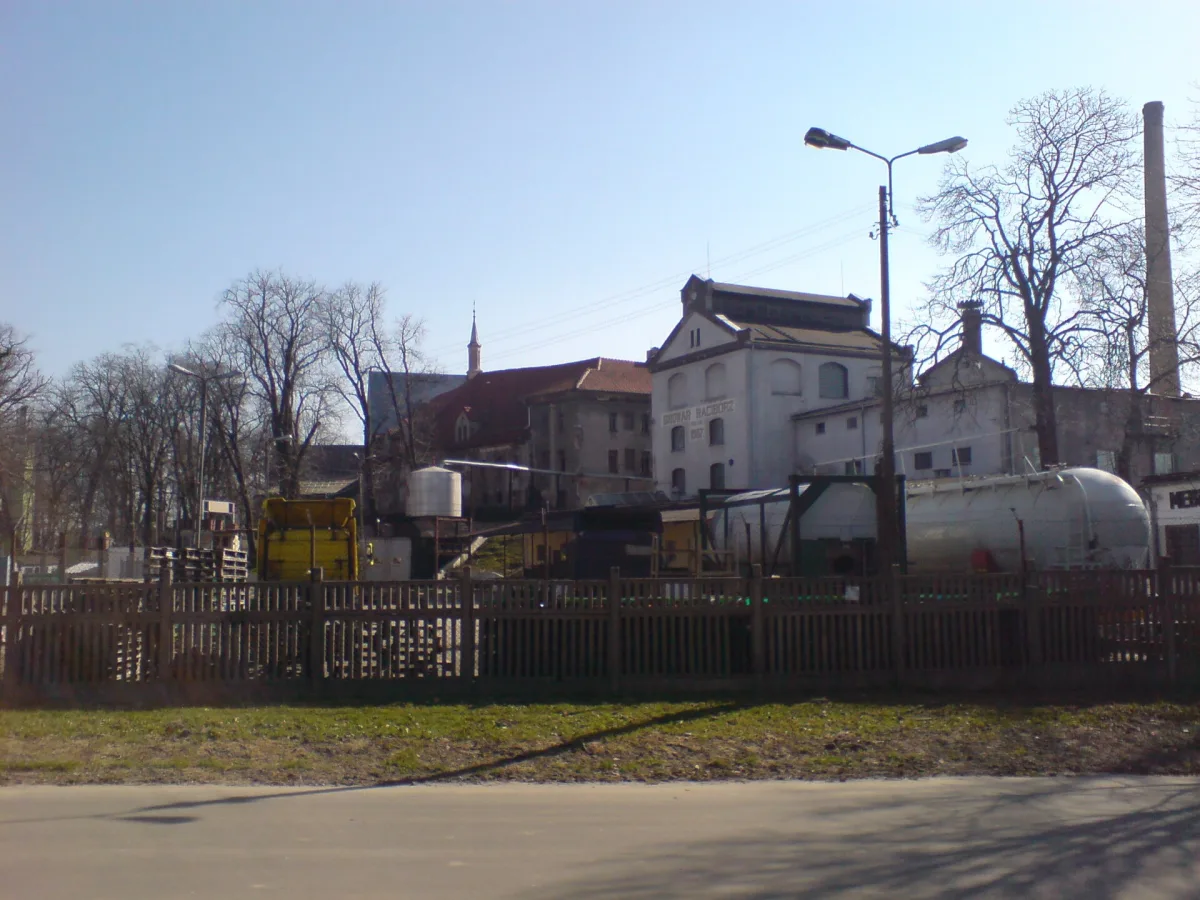
Beer brewed in open vats is associated today with a museum of technology, yet in Silesia it is still sometimes everyday practice. Two breweries in the south of the region, in Racibórz and in Cieszyn, list this method of fermentation among the features that distinguish their beer. Both stand at the foot of former castles, and both have been through a break in operation or a change of owner, so their history is less simple than the advertising slogans suggest.
Racibórz: a brewery in a wing of the castle
The oldest written mentions of brewing in Racibórz come from 1293, from a legal opinion given to the town by a councillor and aldermen from Świdnica. A year later Duke Przemysł granted the town the right of the banmile: within a mile of the walls only the people of Racibórz could brew and sell beer. The card for Racibórz beer on the Ministry of Agriculture's List of Traditional Products says that the townspeople had the brewing privilege as early as the beginning of the 12th century, but other sources indicate that the right of market and tavern trade of the pre-charter settlement is confirmed in the sources only in 1217. It is worth keeping the discrepancy in mind.
The beginning of the ducal brewery by the castle is also not clearly established. The first unambiguous mention comes from the land register of the ducal chamber of 1567, and it is supposed that the plant was established in the early 16th century. In other sources the year 1532 appears, and this date is repeated by the castle card in our portal, so the reader may meet both. It is known that at the turn of the 16th and 17th centuries the brewery had its own hop plantation and two vaulted beer stores in the castle cellars.
A new chapter began on 19 January 1858, when fire from under a brewing pan took hold of the brewery and spread to the castle buildings. The brewery was rebuilt from the ground up on the site of the northern and partly the western wing of the castle, with a steam engine. Today it is part of the complex described in the card for Racibórz Castle. In 1898 the brewer Kaufmann began brewing beer in the Pilsner style. Its success was determined by the brewery's own barley, water from its own springs in Obora, delivered through a wooden pipeline from a distance of six kilometres, hops from Hallertau or Žatec, and three months of secondary fermentation in wooden casks in the cool castle cellars.
What an open vat means
The product card says that the secret of the flavour lies in the traditional method of fermentation in open vats, in which for about 10 days, at the right temperature, the wort turns into young beer. According to the same card, Racibórz is one of the few breweries in the country that still ferment this way. The card also lists the types: classically brewed, fortress-strength (twierdzowe), honey, pils, strong, unfiltered, cut (rżnięte), dark, porter and bock. Racibórz beer was entered on the List of Traditional Products on 8 May 2017.
It is worth remembering, however, that the history of the technology was not a straight line here. After the war, from 1957, the oak casks were replaced with metal tanks, and in 1999, after the bankruptcy of the Upper Silesian Breweries (Browary Górnośląskie), the plant in Racibórz was closed. It was bought in 2003, resumed work in 2004 and, after another break, was reactivated in 2010 as Browar Zamkowy (the Castle Brewery). The details of visiting are described in the card for Browar Racibórz.
Cieszyn: the Habsburg brewery under Castle Hill
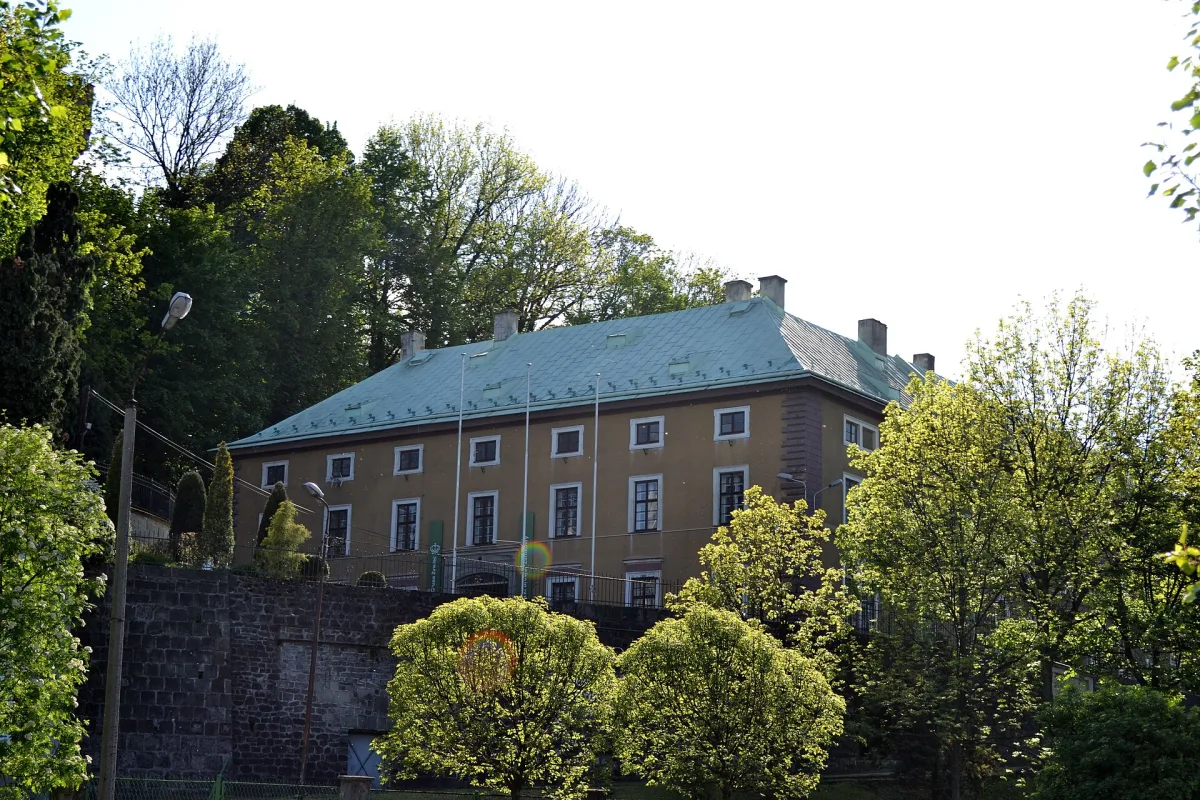
The Cieszyn brewery was built in different circumstances. In 1838 Archduke Charles Louis of Habsburg commissioned the Viennese architect Joseph Kornhäusel to rebuild the Cieszyn residence. The ruins of the Piast castle were demolished, except for the tower and the Romanesque rotunda, and on Castle Hill (Góra Zamkowa) a Classicist palace with a park was built; this residence is described in the card for the Habsburg Hunting Palace. On this occasion the archduke, encouraged by the popularity of Pilsner-type beer, decided to build his own brewery. Work began around 1840 right below the castle and was completed in 1846.
Cieszyn then had long brewing traditions: from the 15th century a burghers' brewery had operated, but it produced small quantities of top-fermented beer and did not belong to the duke. The earliest beginnings of a brewery at the castle go back to 1653, when the regent of the ducal estates Kasper Tłuk started it up in defiance of the banmile privilege belonging to the town. After protests from the townspeople production was temporarily halted, and after it resumed the beer was delivered only outside the area of that mile.
The plant quickly won a market throughout the Habsburg monarchy. Charles Louis's son, Archduke Albrecht Frederick, founded another brewery in 1856 in Pawlusie near Żywiec, and the first Żywiec brewers were said to have come from Cieszyn. The further history of that plant is presented in the card for the Żywiec Brewery Museum.
From the Habsburgs to the state, and back to independence
After the First World War the estate of the dukes of Cieszyn was nationalised. In 1920 the brewery was incorporated into the State Castle Industrial Works (Państwowe Zamkowe Zakłady Przemysłowe), and from 1933 it was subordinate to the Directorate of State Forests. It did not stop work during the Second World War, and after 1945 it became part of successive brewing plants of the region. Later the owners changed, in 2015 the plant gained autonomy, and today it operates under the name Archducal Castle Brewery Cieszyn (Arcyksiążęcy Browar Zamkowy Cieszyn).
How does this plant describe itself? On the brewery's website we read that brewing has been traditional here since 1846, and that fermentation is carried out in open vats. The fermentation room is on the first level of the cellars and has cylindrical and conical open vats for bottom fermentation; there is also a tall cellar - an ice tunnel, dug under the hill almost to the middle of the upper castle courtyard, in which the ice needed in production was stored. Working equipment from the second half of the 19th century and the early 20th century has survived in the plant.
The Cieszyn brewery is sometimes called the longest continuously operating in Poland. This claim is set against another: the Tychy Princely Brewery (Browar Książęcy), according to its own website, has brewed beer since 1629. Both declarations rest on different criteria and cannot be settled on the basis of the declarations alone, which is why in our descriptions we give them together with this caveat. We write about the Tychy plant, together with the museum in a former Protestant church, in the card for the brewery museum in Tychy.
What to look at
The two breweries share a location near former castles and are two different worlds. In Racibórz it is the brick of a castle wing above the Oder, in Cieszyn Classicist and Neo-Gothic buildings on a slope above the Olza, next to the Piast Tower and the rotunda. On the Cieszyn route it is worth starting with the Rotunda of St Nicholas, and returning to Racibórz beer after seeing the castle chapel.
Be the first! Add a comment.
You need to log in to add a comment.
Log in