
Ciulim is a bake of grated potatoes and roast ribs that comes from Lelów, north of Częstochowa. According to the ministry's card for this dish, it originated in a place where a Jewish community had settled since the time of Casimir the Great, and in the second half of the 18th century Lelów became a well-known centre of Hasidism. To this day the name returns in the cuisine of the region as one of the oldest items on the list of traditional products.
What is in the pot
The product card describes ciulim as a uniform mass of potato dough with visible pieces of roast ribs. The colour is light brown, with the natural colour of the roasted meat, and before baking the consistency resembles yeast dough. The shape depends on the vessel: the dish is usually baked in a pot with a capacity of about five litres, and once baked it is spooned out onto a plate.
Time decides the flavour. The card speaks of a characteristic taste obtained through long baking in an oven. The potatoes are grated by hand, on graters, and this custom, as the card states, has survived to this day.
From cholent to ciulim
The ministry's description presents the origin of the dish as follows. The Hasidim living in Lelów could not work during the holiday, so they prepared the dish beforehand and ate it right after the holiday ended. It was a cholent based on beans, buckwheat groats, meat and goose fat, baked in bread ovens for a whole day and night. The Polish inhabitants of Lelów, observing this custom and wishing to abstain from work on Christian holidays, are said to have prepared since time immemorial their own dish, similar in the way it was made, but from pork products.
It is worth stressing that this is the description from the product card, that is a document submitted when applying for entry on the list, and not the result of historical research. Ciulim is described as a dish inspired by Jewish cuisine and the equivalent of cholent, although the two dishes are not identical.
Holidays and the ciulimiorzy
According to the card, ciulim was eaten for breakfast at Christmas and Easter. On the eve of the holiday housewives prepared the pots, counted according to the number of household members and expected guests, and the men lit fires in the ovens with pine wood. In the evening the pots went into the heated ovens and baked overnight. As the card describes, the smell then drifted over the whole area. After returning from the service, the hot dish was taken straight from the oven.
The custom was meant to show the piety of the people of Lelów, because throughout the holidays housewives did not cook any other hot dishes. The inhabitants of the other places in the parish did not eat the dish, which gave rise to a nickname. The people of the surrounding area called the inhabitants of Lelów, somewhat disparagingly, ciulimiorzy.
Today in Lelów, as the card states, traditional wood-fired bread ovens are still built. Owning such an oven is meant to signify attachment to tradition and to attest to a family's Lelów origins. In the past it was permitted to use the neighbours' oven, which according to the description built family and friendly ties. Since 2003 a festival of ciulim and cholent has been held in Lelów in August, where the two dishes can be compared.
First on the list
Ciulim lelowski was entered on the List of Traditional Products on 28 February 2006 in the category of ready meals and dishes for the Silesian Voivodeship. The PAP agency, in a dispatch published on the dzieje.pl portal in 2017, called it the first product from the Silesian Voivodeship registered, in 2006. This is what one source claims, so we write it with reference to that source. The list itself requires a documented method of production going back at least 25 years. What the list is and what else is on it we describe separately in the article on traditional products of the Silesian Voivodeship.
Lelów beyond the kitchen
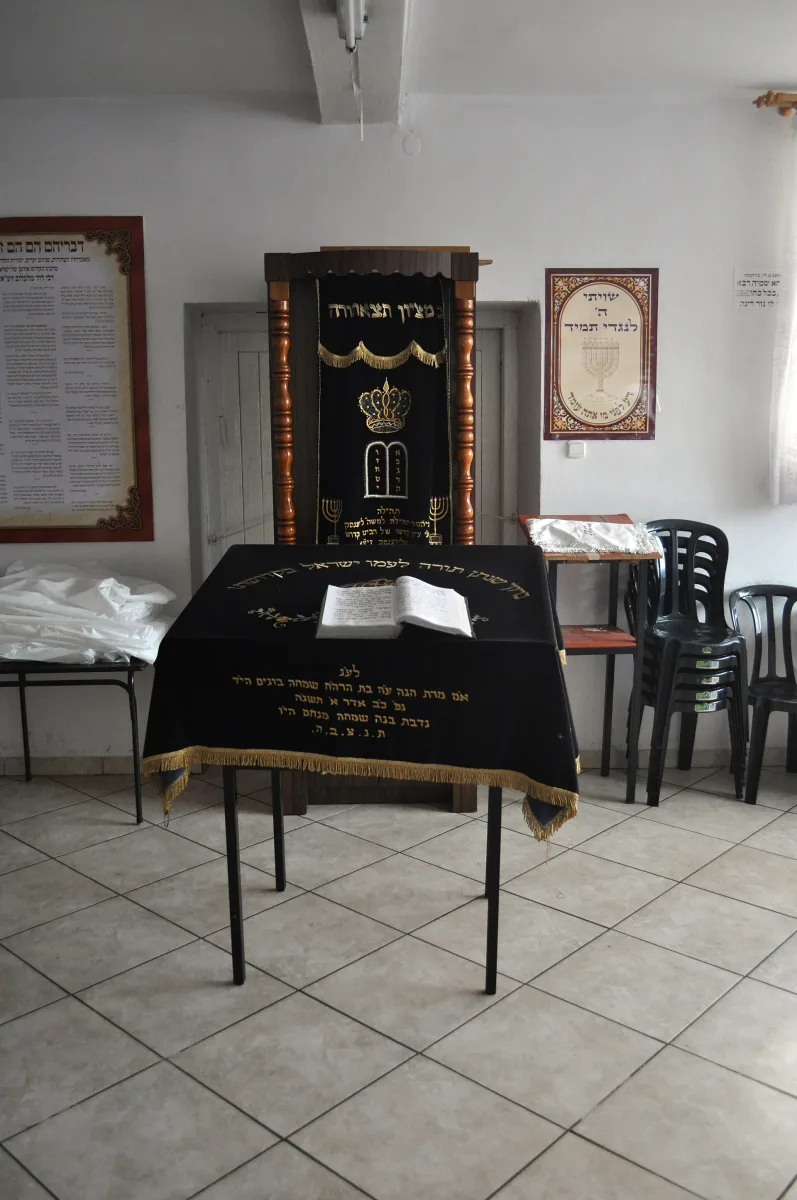
Ciulim is linked with the history of Jewish Lelów, traces of which can be seen on the spot. On Ogrodowa Street stands the Synagogue in Lelów, a house of prayer arranged after 1990 and used during pilgrimages. Opposite lies the Old Jewish Cemetery in Lelów, and on it the Ohel of David Biderman in Lelów, the tomb of the founder of the Lelów Hasidic dynasty. These are places of prayer and remembrance, so restrained behaviour is expected there.
Be the first! Add a comment.
You need to log in to add a comment.
Log in