
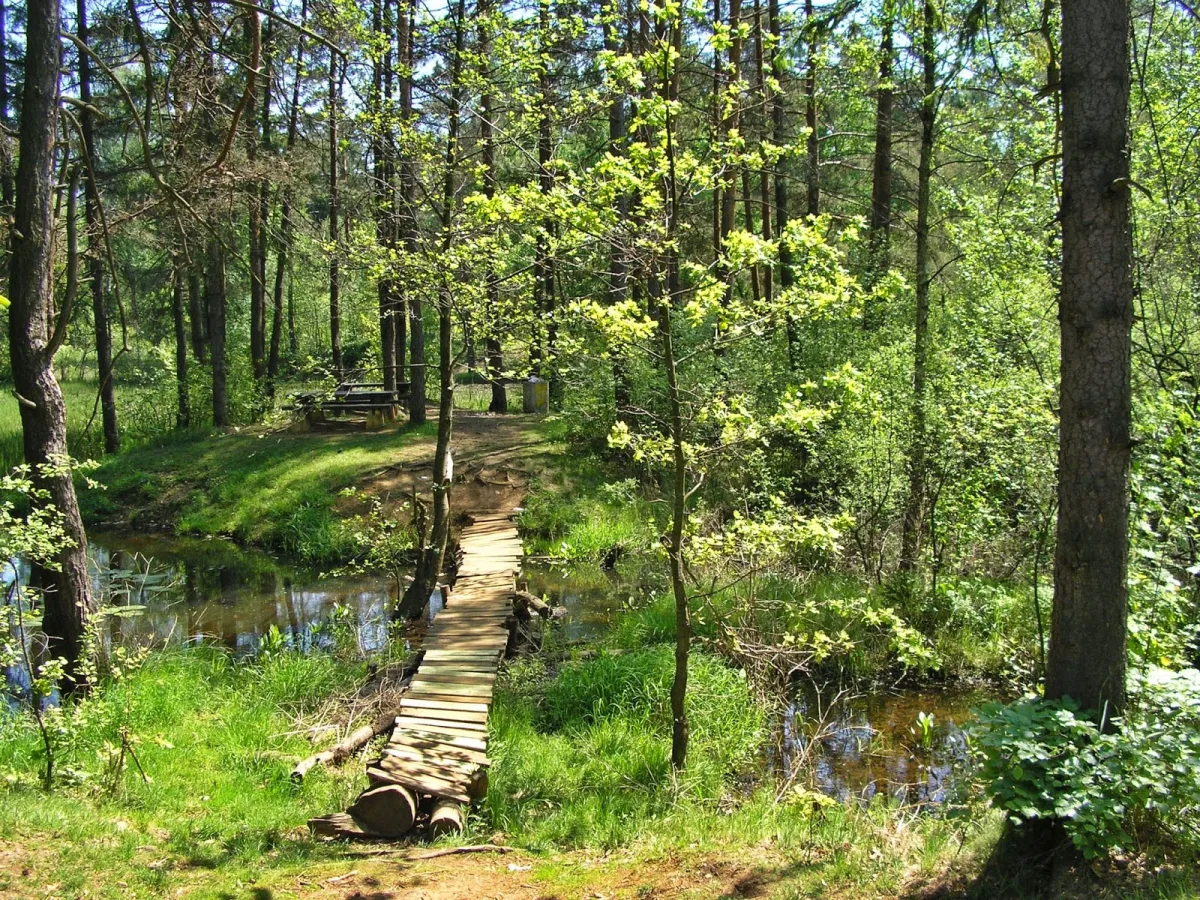
The Upper Silesian conurbation is associated with mines and steelworks, but fragments of the old Silesian Forest, stream valleys and ponds that someone dug out over the decades and that were then flooded remain between the cities. Some of them have the status of a nature reserve, and some are nature and landscape complexes or municipal forests. Below is an overview of twelve places where you can see a beech wood, a peat bog, a gull colony or orchids a few stops from the city centre.
Beech forests on former workings
Segiet Nature Reserve lies on the Tarnowskie Góry Ridge, on the border of Bytom and Tarnowskie Góry, on the summit of Srebrna Góra (347 m above sea level). It protects a beech forest with an admixture of spruce and fir, growing on the site of former mine workings. Efforts to protect it were made as early as 1908, and the reserve was established only by an order of 27 April 1953. The beeches reach 35-40 m in height, and the stand, more than 150 years old, is the result of natural succession on areas heavily transformed by humans. The area of the reserve is 92.29 ha after its enlargement in 2023, while the founding act gave 24.29 ha. Among the orchids grow red helleborine, bird's-nest orchid and lady's slipper. Beneath the forest runs a system of shafts and galleries, regarded as the largest concentration of hibernating bats. The reserve is part of a site inscribed on 9 July 2017 on the UNESCO World Heritage List together with the Tarnowskie Góry lead, silver and zinc ore mines.
In the same area lies the Suchogórski Labirynt Skalny: a nature and landscape complex on the summit and southern slope of Sucha Góra, with an area of nearly 20 ha. Dolomite and limonite were once extracted here, and after the work ended, sinkholes, valleys, steep ridges and gorges were left, which gave the area its name of a labyrinth. On the border of Bytom and Tarnowskie Góry stands a historic triangulation stone from the late 19th century, the zero point of the Prussian "Sucha Góra" coordinate system.
Las Murckowski in Katowice, in the Murcki district, has a completely different character. The reserve was established on 18 December 1953 on 7.04 ha, in 1989 it was enlarged to 100.67 ha, and after the extension of 2022 it has 141.56 ha and three separate parts. The oldest, western part is separated from the middle one by Bielska Street, a four-lane expressway to Bielsko-Biała. Here grows an old beech stand more than 150 years old, with monumental specimens of beech and oak, on the slopes of Wzgórze Wandy (about 350 m above sea level), and in the reserve the springs of the Przyrwa stream rise. Threats to the western part include car traffic, neighbouring industrial areas and the effects of underground coal mining.
In the same complex of the Murcki forests lies Ochojec Nature Reserve in the Piotrowice-Ochojec district, established on 26 March 1982 as the second reserve within the borders of Katowice after Las Murckowski. It protects a site of mountain bearded moss (liczydło górskie), a rare mountain plant, and covers 25.79 ha (the founding act gave 26.77 ha). The area lies at an altitude of 286-300 m above sea level, and the black Ochojec PTTK Trail runs along its southern boundary.
Uroczysko Buczyna is a nature and landscape complex of 65.32 ha on the border of Chorzów and Ruda Śląska. It is part of the protective forest belt of the Upper Silesian Industrial District, that is, the greenery between the cities. It has acidic lowland beech forest, monumental trees and plants rare on a national scale, such as small enchanter's nightshade, as well as bladderwort, a carnivorous plant. The green Twenty-Fifth Anniversary PTTK Trail passes through the area.
Riverside forests, peat bogs and stream valleys
Las Dąbrowa on the western edge of Gliwice (partly in the municipality of Sośnicowice) was created as a reserve in 2008 and covers 76.63 ha. It protects mixed-species oak-hornbeam and riverside forests: alder-ash riparian forest, submontane ash riparian forest and elm-ash riparian forest, as well as patches of rare currant alder carr. A special feature is the white-backed woodpecker. The reserve is open to visitors, but strict protection applies, so you must keep to the path.
In Jaworzno, in the Ciężkowice district, is Dolina Żabnika, a water reserve covering the whole valley of the stream, with an area of 47.99 ha. Protection was introduced in 1991, and in 1996 the Katowice voivode recognised the valley as a partial reserve. 363 species of vascular plants and 105 species of bryophytes have been recorded here, among them round-leaved sundew and bog orchid. The aim of protection is fens and transitional bogs and aquatic biocenoses.
Similar habitats, but in Sosnowiec, are described by the Natura 2000 area Dolina Białej Przemszy. This is the Torfowisko Bory in the Maczki district, entirely covered by mixed forest. Common twayblade, orchids and carnivorous plants grow here, and especially valuable is Loesel's twayblade, whose site lies near the southern limit of the range of this species in Europe. The area is regarded as one of the most valuable in the Upper Silesian agglomeration for its nature. This is a place for people who like to watch wildlife without amenities.
Ponds, forest parks and bunkers in the woods
Szopienice-Borki is a complex of ponds in the north-eastern part of Katowice, created as a complex in 2000, on the border with Sosnowiec and Mysłowice. The ponds Morawa, Borki and Hubertus were formed at places where sand was dredged for mining and in hollows left by underground extraction. The breeding colony of black-headed gulls was regarded as the largest in the Katowice agglomeration: in 1993 it had 350 nests. At Morawa, the largest and youngest pond (about 35 ha, 1960s), a beach and a scout marina have been set up.
The Katowice Forest Park is regarded as the largest area of this type in the city and stretches along the valley of the Leśny Stream. Its northern part is occupied by the Valley of Three Ponds (Dolina Trzech Stawów): 11 ponds with a total area of about 35 ha, which have been formed since the 19th century as a result of mining activity. Today there is an inline skating track in a loop 4 km long, sports pitches, a playground and a marina on the Kajakowy pond. In the park's undergrowth grow wood anemone and white Solomon's seal, and observers have recorded 28 species of dragonflies.
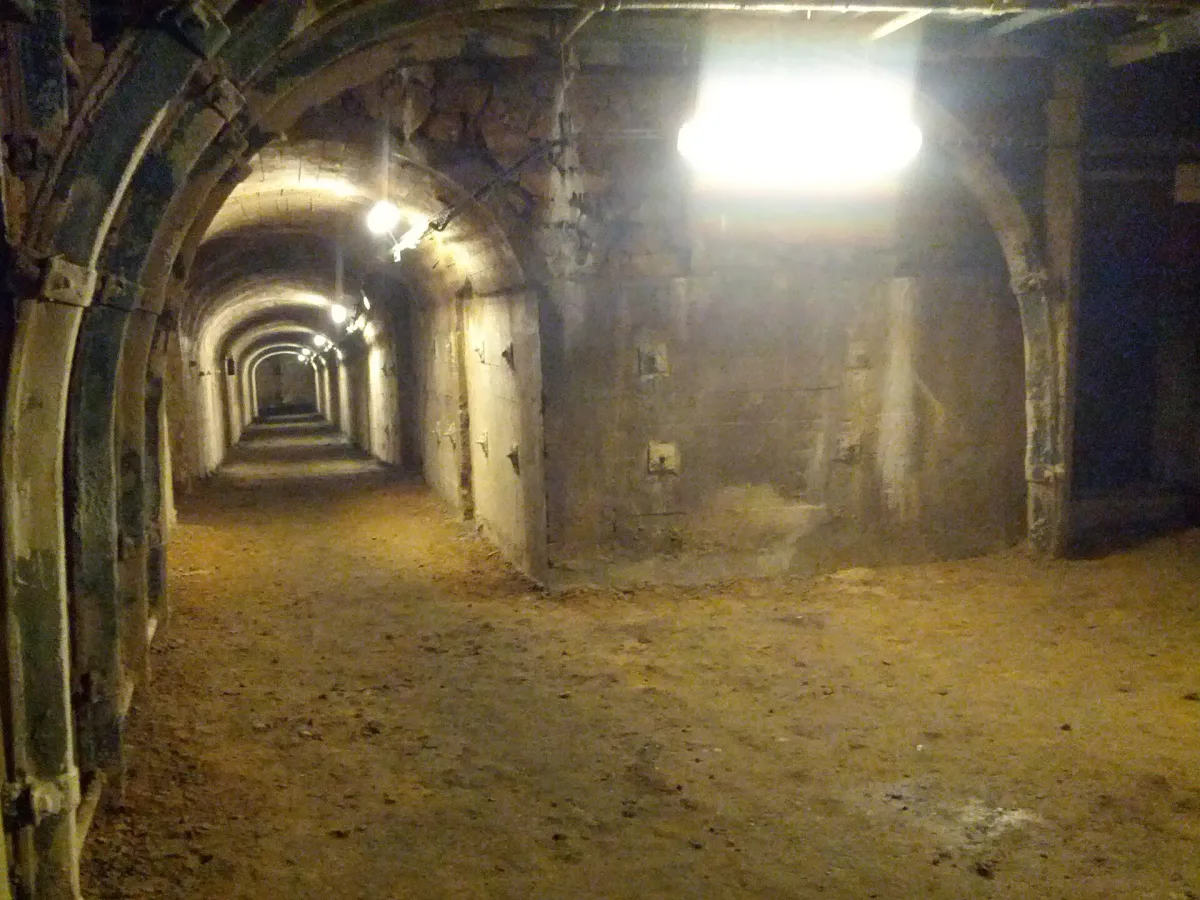
In Sosnowiec the green enclaves are smaller. Park Leśny in the Niwka district covers 3.87 ha, with a nature and education trail and a jump park. A larger complex is Las Zagórski: about 425 ha in the Zagórze and Kazimierz districts, a remnant of the old forest known as Pakosznica. In the forest, bunkers from the German B2 line of fortifications of 1944 have survived, as well as water-filled sinkholes left by closed shafts, and the Las Zagórski Cycle Trail runs through the area.
How to visit without causing harm
The reserves have their own regimes: in Las Dąbrowa you must keep to the path, in Segiet and Las Murckowski the rules of entry are set by the manager, and the bats hibernating in the underground workings of Segiet are not a subject for exploration. Check the rules for moving about with the forest district office, the regional directorate for environmental protection or the city office, because some sources do not give marked routes.

Be the first! Add a comment.
You need to log in to add a comment.
Log in