
The Silesian village is not one style but several. A farmstead near Pszczyna looked different from a highlander cottage in Istebna, and different again from a clothmaker's house in Bielsko. There are quite a few open-air museums and small rural museums in the voivodeship: from the large ethnographic park in Chorzów to family rooms in Beskid hamlets. Below is an overview that helps in choosing a place.
Three park-type open-air museums
The largest is the Upper Silesian Ethnographic Park in Chorzów, set up in the Silesian Park. The museum was established in 1974, and the exhibition was opened to visitors in 1975. There are about 78 items of small and large architecture here from the 17th to 20th centuries, arranged in six geographical sectors and one thematic one. They come from eastern Upper Silesia and from the Dąbrowa Basin. From the Beskid sector it is worth mentioning the farmstead of a wealthy peasant from Istebna with a cottage from 1794, from the Cieszyn Foothills a cottage from Bażanowice dating from 1872, and from the Pszczyna-Rybnik section an inn from Świerczyniec from 1870 and a wooden church from Nieboczowy from 1791, moved to the museum in 1995.
The idea of such an open-air museum is older than the park itself. The first documented plans go back to 1928, when Dr Tadeusz Dobrowolski, the provincial conservator of monuments and director of the Silesian Museum in Katowice, announced the collecting of endangered wooden churches. In the 1930s two buildings were moved to a park in Katowice, but the war halted further work. The Chorzów museum has also appeared in culture: Lech Majewski's film “The Mill and the Cross” was shot here, using among others cottages from Frydek and Istebna, a granary from Simoradz and a windmill from Grzawa.
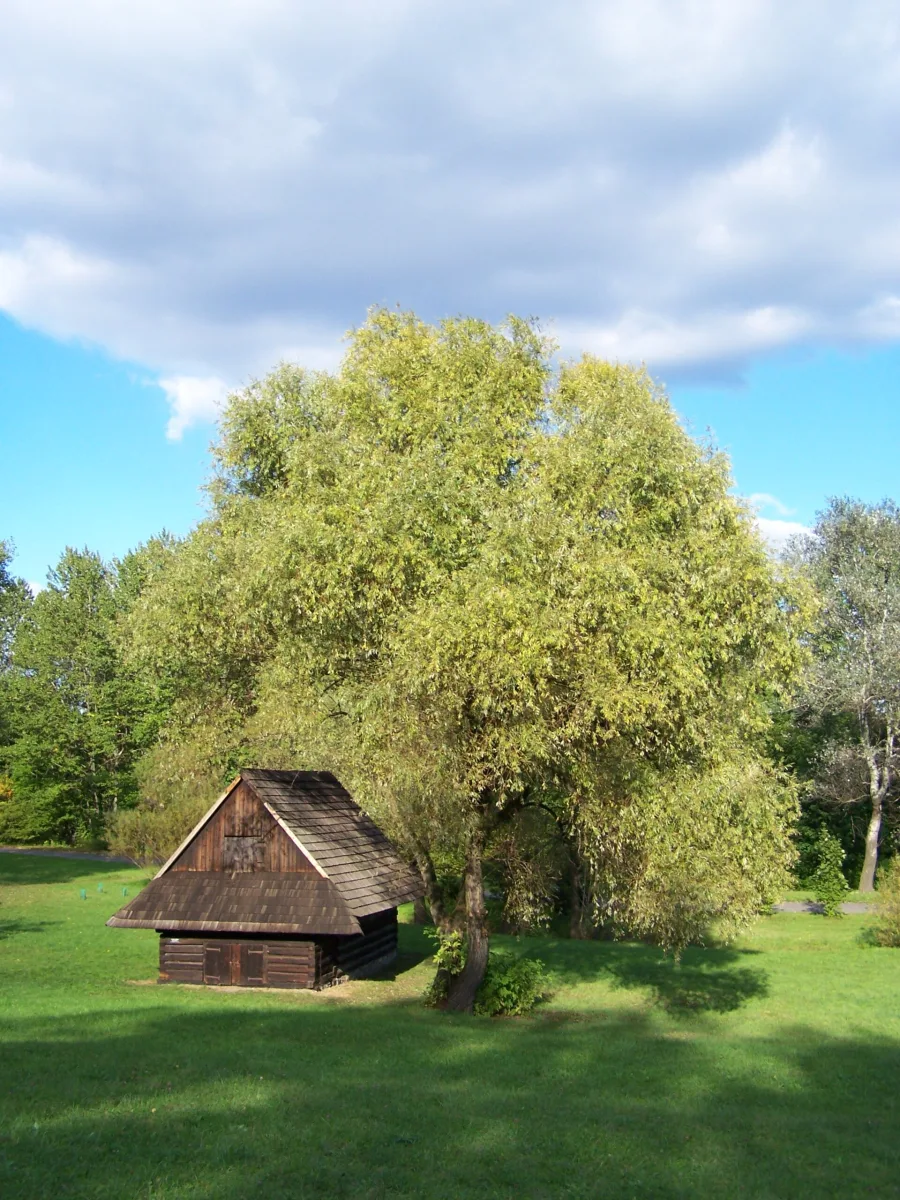
The second open-air museum is in Pszczyna. The Pszczyna Village Farmstead was created in 1975 on about two hectares in the eastern part of the historic Pszczyna park. A dozen or so examples of wooden architecture of the Pszczyna land were gathered here. The oldest is a manorial granary from Czechowice from 1784. Beside it stand an octagonal barn from Kryry from the 18th century, a cottage from Grzawa from 1831, a smithy from Goczałkowice and a water mill from Bojszowy, where exhibition rooms have been arranged. After the extension of 2013 there were added a replica water mill, a building with a ticket office and shop, and a gazebo over the pond. In the cottages authentic equipment is shown: tools, ladder wagons called drabiniaki, freight sledges, carriages and furniture.
The third is the Żywiec Ethnographic Park in Ślemień, opened in August 2012 and managed since January 2013 by a separate open-air museum institution. It covers more than 6 hectares by the road to Kocoń and recreates the layout of a village in the Żywiec Beskids. Seventeen historic buildings were moved here: a school from Rychwałd from 1900, a complete peasant farmstead from Rychwałd, a cottage from Łękawica from 1911, a villa from Skawa in the Zakopane style, and the oldest building in the museum, the herbalist's cottage from Korbielów, built before 1887. Ślemień lies in Żywiec County, that is, in the Silesian Voivodeship, and that is how we treat it.
Highlander cottages and smoke stoves
In the Silesian Beskids and the Żywiec region an open-air museum often fits in a single cottage. One such is Kawulok's Smoke Cottage in Istebna, in the Wojtosze hamlet: a private ethnographic museum in a wooden highlander cottage from 1863, on the Silesian section of the Wooden Architecture Trail. It belonged to the Kawulok family. Its founder was Jan Kawulok, a regional enthusiast, maker of musical instruments and storyteller, and after his death in 1976 the room was run by his daughter Zuzanna. In the black room stands a "kurlawy" or smoke stove (kurny): a stove without a chimney, from which the smoke went straight into the room.
Not far away, in the Gorzołki hamlet in Jaworzynka, is the “Na Grapie” Regional Museum. It was founded in 1993 on the initiative of the writer and poet Jerzy Rucki, in a wooden cottage from 1920 moved here. It shows Istebna costumes, instruments and everyday objects. Here too a smoke stove stands in the room, set on inverted spruce roots and used for drying herbs, and in a barn from the 1930s an exhibition of agricultural machines has been arranged. The museum runs workshops, for example on making butter, bread and curd cheese by traditional methods.
The same area also has a forest theme. The Istebna Spruce Museum in the Wyrch Czadeczka hamlet was established in 2001 at the Regional Gene Bank of the Istebna Spruce. It tells the story of the Beskid spruce stands and of the growth cycle of this variety of Norway spruce, as well as of the wood from which folk instruments are made.
In Ustroń, close to the market square, stands the “Stara Zagroda” Regional Museum. Elements of a cottage that had stood on this spot since 1768 were used in building the wooden structures, and the reconstruction was carried out on site. The buildings are entered in the heritage register under number A-381/80, have belonged to a private owner since 1982, and the museum was opened in December 1998. It shows the culture and daily life of the former inhabitants of Cieszyn Silesia. The museum operates seasonally, during the summer holidays and winter school break.
The oldest in this overview is the house in Milówka: the “Stara Chałupa” Museum was built in 1739. The first owner was the innkeeper Piotr Gorel, so it is supposed that the building originally served as a village inn. In 1760 his son sold the cottage with its land to Sebastian Caputa of Węgierska Górka, whose inscription is carved on the central beam. The house was built of logs joined with corner notches and dovetails, on a stone foundation, under a shingle roof. It has been open to visitors since 1988. Legend has it that King John Casimir and John III Sobieski were guests of the house, but this is only a tale that documents do not confirm.
Crafts and farms outside the mountains
Not everything concerning old ways of life is a peasant cottage. In Bielsko-Biała the Weaver's House is a branch of the museum in a wooden log-built building with a weatherboarded loft, on Sobieskiego Street in the Górne Przedmieście district. It is regarded as a unique example of 18th-century craftsmen's architecture, which vanished in the town's fires of 1808 and 1836. The interior shows the house and workshop of a guild master at the turn of the 19th and 20th centuries: in the workshop stands a large heddle loom from the mid-18th century, and in the kitchen a smaller one, on which weaving is demonstrated. The house was opened to visitors in 1992, after lengthy conservation work.
In Suszec the “Kamojówka” Regional Museum has operated since 2007 on the basis of ethnographic collections gathered since the 1970s by the founder's family. On the grounds stand a smithy and a barn, built in modern times as reconstructions of 19th-century buildings, and visitors can see demonstrations of old crafts: blacksmithing, pottery and weaving. In Ochaby Wielkie near Skoczów is the Traditional Farmstead, known as the Ochaby Open-Air Museum: a stable, coach house, barn, shelter, windmill and cottage, in which farm and craft implements and historic horse-drawn vehicles are shown. According to the voivodeship's tourist guide, demonstrations of old-style ploughing and kite-making workshops take place here.
Farmsteads where the village still works
The last group is places where the village is not an exhibit but a working farm. Sopki Stopki in Cięcina is a natural farm of the Stopek family, where the hosts move old wooden cottages from the area and build a small settlement from them. The word "sopki" means, according to the farm's website, the former small wooden highlander cottages of the Żywiec Beskids. It is a working farm with sheep and cheeses from the shepherd's hut, not a museum with fixed hours, so dates of events and workshops should be asked about on the farm's website.
Educational farmsteads have been created for children. The “U Źródeł” farmstead at the U Gazdy farm stay in Wisła runs workshops about a day on the farm, about water and about processing fruit and vegetables. Rabbits, ponies, sheep, geese, ducks, cats, cows, hens, pheasants and budgerigars live there. Workshops are organised for groups, so the date has to be agreed. Stefanówka in Nowa Szarlejka in the Wręczyca Wielka municipality, about 7 km from the centre of Częstochowa according to the farm's website, follows a similar model. It belongs to the Nationwide Network of Educational Farms and is a co-founder of the Association of Educational Farms of the Silesian Voivodeship. Ponies, Polish ponies, goats, sheep, alpacas and rabbits live there, and the programme is chosen to suit the age of the group.
How to plan a visit
Visiting rules differ from place to place. Small museums in Beskid hamlets often operate seasonally or by arrangement, educational farms mainly receive groups by reservation, and the hours of the large open-air museums depend on the time of year. Before a longer trip it is therefore worth checking current information with the organiser. If mountain scenery matters to you, it is a good idea to combine Istebna with Jaworzynka, because they lie next to each other.

Be the first! Add a comment.
You need to log in to add a comment.
Log in