
The layout of the market square in Skoczów is entered in the heritage register, and in its frontages stand townhouses included in the list of monuments. Among them stand the figure of Jonah and the town hall from the end of the 18th century, that is, from the time when the town was rebuilding after fires.
A town that often burned
The first reliable mention of the little town is the year 1327, when it appears in a document of the Duke of Cieszyn Casimir I as oppidum Scocoviense. An earlier date for town rights, 1267, is sometimes given, but written sources do not confirm it, and the seal on which it was supposedly based dates from 1565 and the year was clumsily engraved on it.
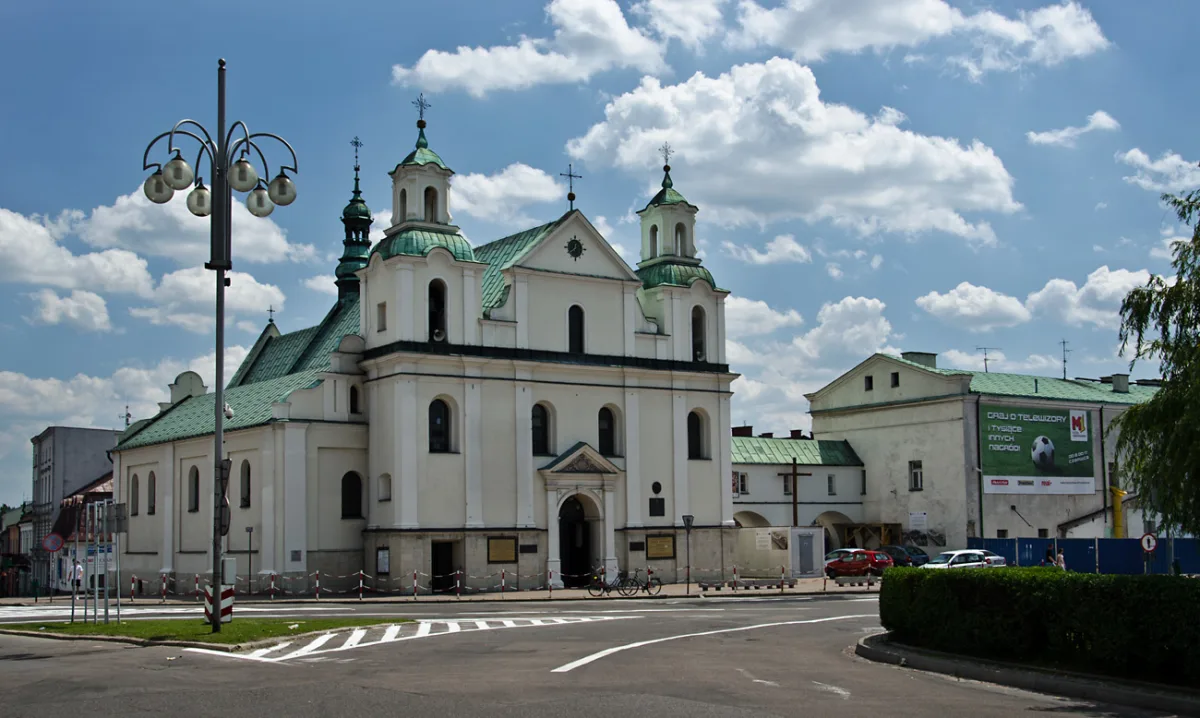
Fires destroyed Skoczów in 1469 or 1470, 1531, 1713 and 1756, in turn. The history of the parish church confirms this sequence: the previous four churches burned down in precisely those years, and the present church was built in 1762 and consecrated in 1767.
The fire of 7 May 1756
The last of the great fires broke out on 7 May 1756 in the buildings of the town brewery, engulfed the whole town and destroyed more than a hundred houses.
The town had its own brewery from the mid-16th century: in 1550 it obtained the right to brew beer and gained a burghers' brewery. After the fire of 1756, as we read, the building of a brick-built Skoczów began, which was possible thanks to help from the empire. The parish church, the castle and buildings in the town centre were rebuilt, and guilds and trade developed. In the 18th century Skoczów was also an important stop: the post station on the route from Kraków through Cieszyn to Opava gained the status of a station in 1750.
Jonah, Triton or Neptune
On the market square stands a late Baroque figure, which in Skoczów is called Jonah or Triton, and in descriptions is sometimes also Neptune with a fish. It was made in 1775, two decades after the fire, and its author is the local sculptor Wacław Donay.
The town hall and townhouses by the square
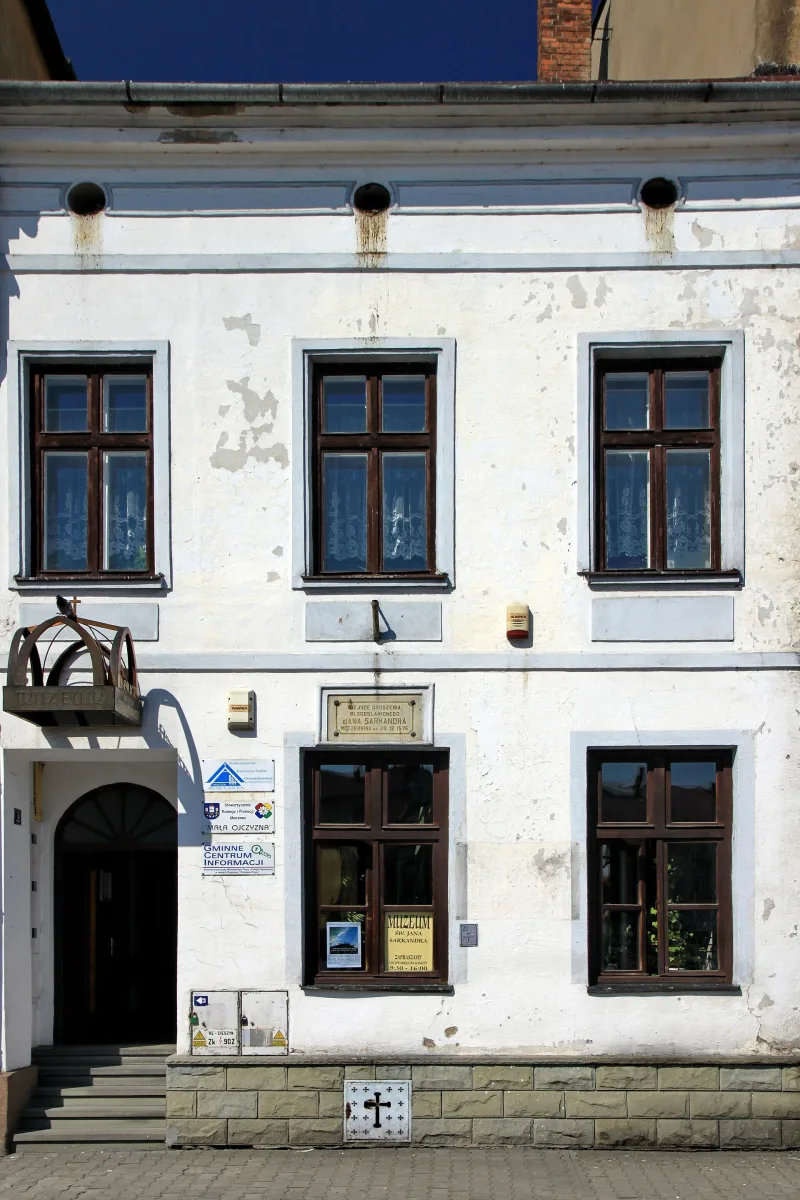
The town hall stands in the western frontage of the square at number 1. It is a late Baroque building erected in 1797, with a tower added in 1801 and a reconstruction in 1934. On the second floor, beside the balcony entrance, are two carved medallions with the coats of arms of Skoczów and of the Duke of Cieszyn and the date 1797, and at the base of the tower an image of St John Sarkander in an oval frame. The town hall has three storeys and was entered in the heritage register on 29 January 1953. The neighbouring townhouse at number 2 houses the museum mentioned below.
In the townhouse adjoining the town hall is the John Sarkander Museum in Skoczów, telling of the life and cult of the saint linked with Skoczów. Also connected with the saint is Kaplicówka, a hill in the town where a chapel of his name stands. In 1995 Pope John Paul II celebrated Mass on Kaplicówka, which an estimated 200,000 people attended.
The story of the town's former inhabitants is completed by the Gustaw Morcinek Museum in Skoczów on Fabryczna Street, in an 18th-century townhouse, with a section on the crafts of Cieszyn Silesia and archaeological collections. For centuries Skoczów was famous for its potters, who made it a centre of original ceramics, known until the early 20th century.

Be the first! Add a comment.
You need to log in to add a comment.
Log in