The oldest cultural institution in the Częstochowa region, with exhibitions in the Town Hall, the Good Art Gallery, the House of Poetry and several other sites.
The Częstochowa Museum is one of the oldest cultural institutions in the Częstochowa region. Until 1995 (from 1976) it was called the District Museum in Częstochowa. It has no single building: the exhibitions are spread across several sites in the city.
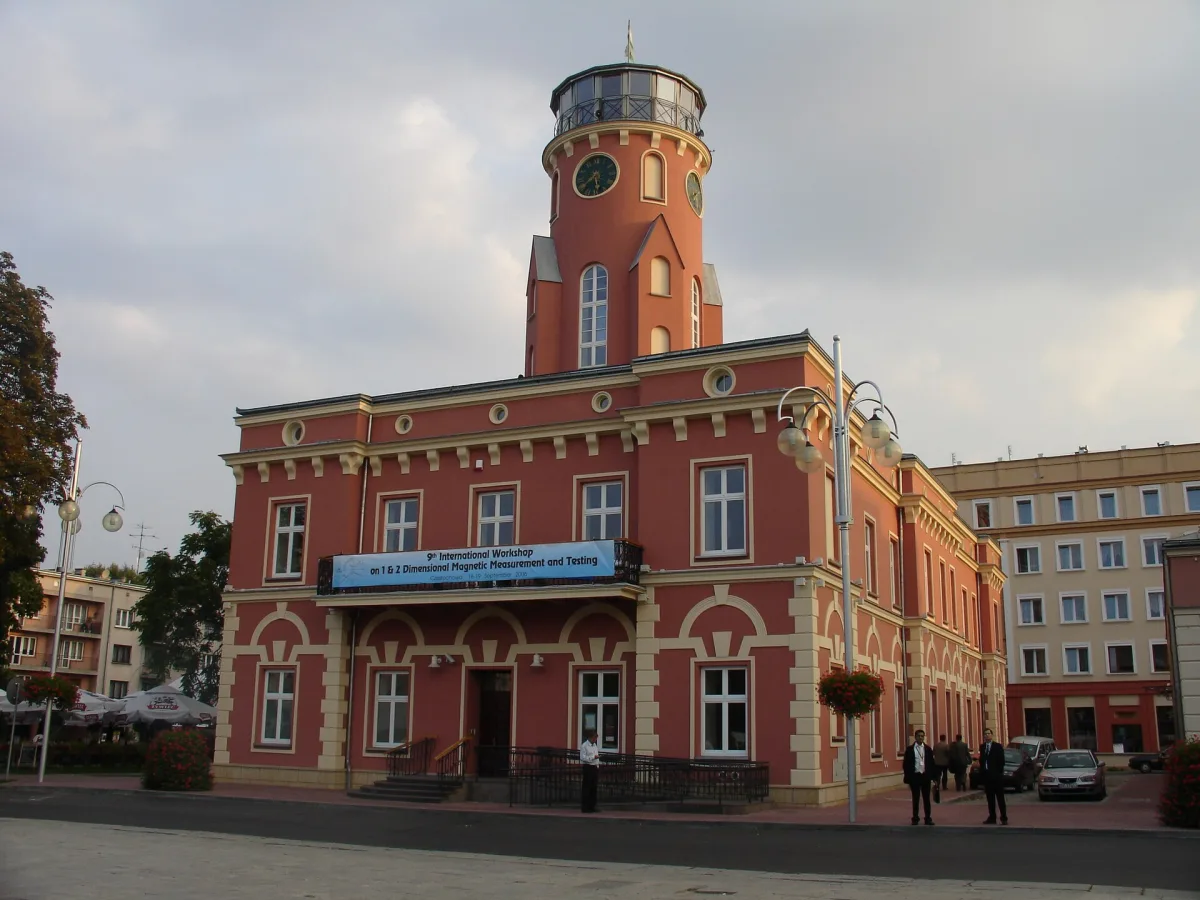
The Town Hall is the museum's most prestigious building and has housed its seat since 1967. It was built in 1828 in the late Neoclassical style, on a square plan, with two side pavilions. This is the Town Hall in Częstochowa.
After renovation in 2006 the building is adapted for people with disabilities and has a lift, as well as a viewing tower with a panorama of the city. The permanent exhibition "The History of the City of Częstochowa" tells the story of the city, and there are also displays from the Cabinet of Distinguished Częstochowa Citizens series and temporary exhibitions.
The Good Art Gallery at Al. Najświętszej Maryi Panny 47 is a townhouse from 1875, called Popówka because it was first home to Orthodox clergy. Since 2013 a permanent exhibition "Polish Art of the 19th and 20th Centuries" has been shown here. See the description of the Good Art Gallery.
The House of Poetry at Jasnogórska 23 is the building where the poet Halina Poświatowska lived with her family after the war. The permanent exhibition on her life and work was opened in 2007. Details are in the entry for the Halina Poświatowska Museum.
The Iron Ore Mining Museum was created in 1974-1976 in underground corridors resembling mine workings. After renovation it was opened to the public again in 2008. The permanent exhibition "The History of Iron Ore Mining" shows the equipment of the region's mines, among them Rudnik, Wręczyca, Barbara and Szczekaczka in Brzeziny, and the site belongs to the Industrial Monuments Route of the Silesian Voivodeship. More in the description of the Iron Ore Mining Museum.
The Exhibition Pavilions in Fr Stanisław Staszic Park were built in 1909 for the National Industry and Agriculture Exhibition. The Exhibition Pavilion houses rooms for temporary exhibitions, and in the Peasant Farmstead from 1908-1909 (designed by Zdzisław Kalinowski and Czesław Przybylski) a model village farmstead is shown. The "Zodiak" Multicentre, in a modernist building on a circular plan designed by Władysław Jabłoński in 1909, has since 2010 been an interactive space for learning and play for children and young people.
In the townhouse at Katedralna 8 the permanent exhibition "Częstochowa Jews" is presented. The Archaeological Reserve at Łukasińskiego 20 in the Raków district protects a fragment of a Lusatian culture cemetery from the period of about 750-550 BC, with 85 exposed burials. The site is also adapted for blind and partially sighted people: there is a tactile model of the cemetery and a guide in Braille.

Be the first! Add a comment.
You need to log in to add a comment.
Log in