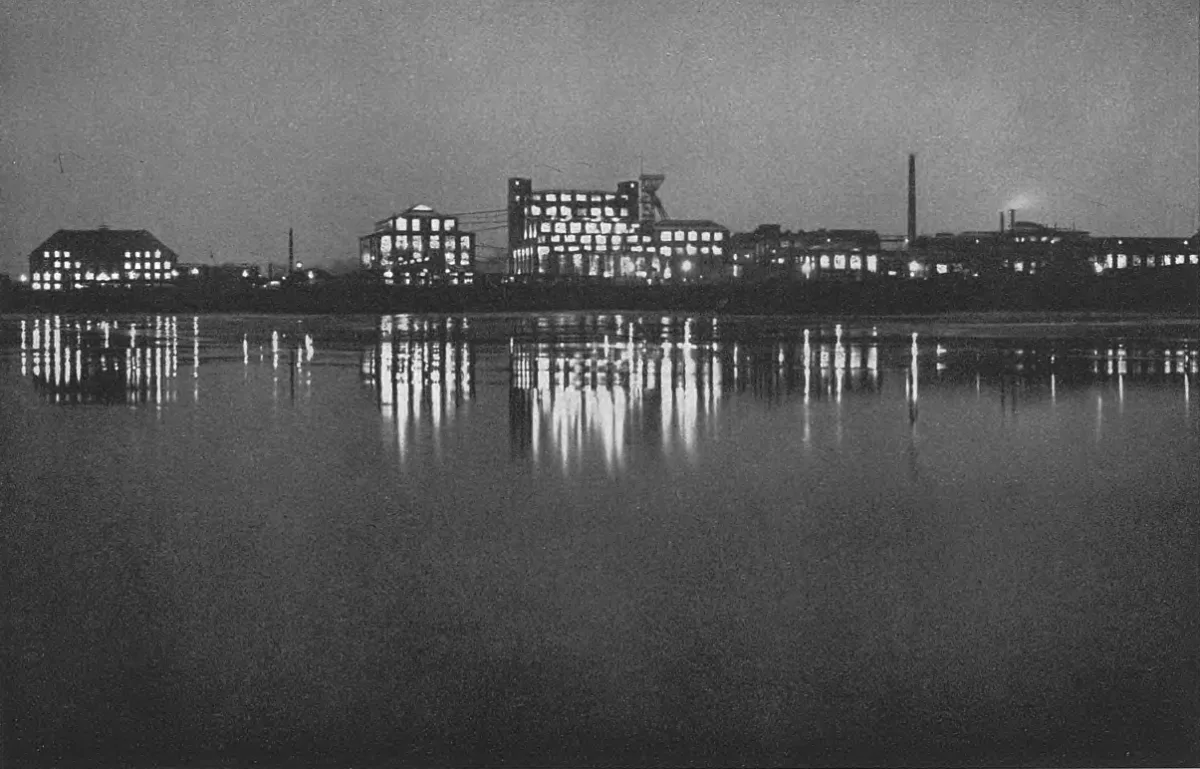
Former zinc and lead ore mine of 1925-1928 in Bytom, whose buildings designed by the Zillmanns survive on ul. Siemianowicka.
The Juliusz Marchlewski Mining Works (Zakłady Górnicze im. Juliana Marchlewskiego) is a former underground zinc and lead ore mine in Bytom. What remains of the mine are buildings at ul. Siemianowicka 98, designed by Emil and Georg Zillmann, but the site is not a museum and there is no permanent visiting route.
After the 1921 plebiscite the border between Germany and Poland cut across the mining area of the former Bleischarley mine. The company Georg von Giesches Erben therefore built a new mine on the German side from 1925 to 1926, as the Deutsch-Bleischarleygrube. At that time it was among the largest and most modern mines of its kind in the world, and the ore-processing plant was completed in 1928. In the same year the mine employed 1,700 people and produced 180 thousand tonnes of ore.
In April 1945 the idle mine was handed over to the Polish authorities, and production resumed in 1946. From 1 October 1950 the works bore the name of Julian Marchlewski, and in 1961 it was incorporated into the Orzeł Biały Mining and Metallurgical Works. Extraction ended in December 1981, although one source gives the year 1985. The mine's shafts adjoined the Żabie Doły, which lie a little over a kilometre away.
The buildings of the laboratory of 1928, the lamp room and bathhouse of 1926, the management building of 1925-1926, workshops, the engine house and switching station and the roasting furnaces were included by Bytom city hall in its list of industrial heritage sites. Around 2010 the former lamp room was renovated and now houses commercial premises, including shops. Spoil heaps containing heavy metals also remain from the mine. The whole post-industrial area of Orzeł Biały covers about 70 hectares and is the largest such area in Bytom.

Be the first! Add a comment.
You need to log in to add a comment.
Log in