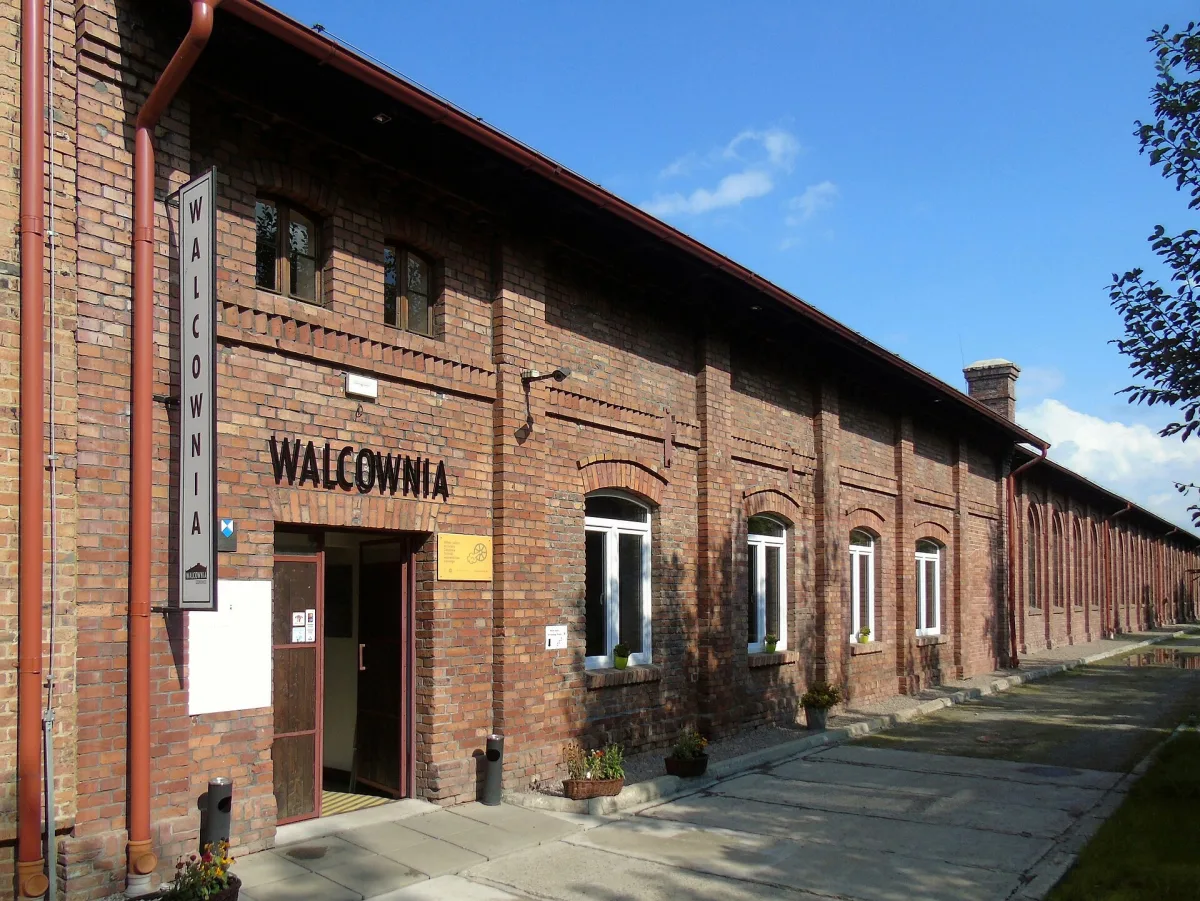
A historic zinc rolling mill from 1904 in Szopienice with a preserved technological line, steam engines and a motorcycle collection.
The Rolling Mill - Museum of Zinc Metallurgy (Walcownia - Muzeum Hutnictwa Cynku) is a former zinc sheet rolling mill from 1903-1904 in Katowice-Szopienice, at ul. 11 Listopada 50. According to the museum, it is the only building of the former Non-Ferrous Metals Works in Szopienice whose original function is clearly preserved, and in the halls you can see the original technological line for producing zinc sheet. Since 2017 it has been part of the Industrial Monuments Route of the Silesian Voivodeship.
Construction began in 1903 as an investment of the Georg von Giesches Erben concern. The concern was among the three largest producers of raw zinc in the world, but it had no department that would process zinc into finished products. The rolling mill was built next to the Bernhardi Ironworks and the railway line, which made it easier to deliver zinc and ship out sheet. In 1904 the plant, with two melting furnaces, two casting carousels and rolling mills driven by four steam engines, began producing zinc sheet.
In 1916-1917 the hall was extended by 91 metres, and an added administrative and social building joined the two wings. The extension made it possible to widen the range to include strip, wire and zinc rails. In the 1970s a modernisation was planned, replacing the steam engines with electric motors, which did not happen, so production was carried on to the end on the original equipment from the early 20th century. In 2002 the works ended production of raw zinc and closed the rolling mill.
The original main hall was 91 m long and 20 m wide, and next to it stood the engine house. The building was made of brick, and the roof rested on steel trusses. The facade is decorated with brick details: lesenes, a frieze under the roof and a cornice of diagonally laid bricks, and the windows have steel frames. The newer part of the hall, from the war years, was probably made of poorer materials and has more modest decoration.
In the hall stands the original equipment forming a complete sheet production line: two melting furnaces with a capacity of 50 tonnes, a heating furnace for slabs, a casting carousel with 24 water-cooled moulds, a roughing mill, three finishing mills and shears for cutting sheet. The heart of the rolling mill is the steam engine hall with four engines of 250 HP each. Some of the machines were restored by former employees of the works, and according to the museum's website they are shown in motion at weekends and on selected holidays.
The museum has more than 5,000 square metres of exhibition space and three permanent exhibitions: the history of metallurgy, stationary engines and motorcycles. The motorcycle collection includes more than 20 historic Harley-Davidson models from 1923-1986, among them the Model F from 1924, the WLA42 from 1942 and the Sportster XLCH from 1968, as well as American Indian motorcycles, pre-war Sokół machines and the post-war Junak.
In 2003 the rolling equipment was entered in the heritage register, and in 2010 the whole building (number A/308/10). The museum in the hall was opened on 11 June 2015, after the roof and windows were repaired by the new owner, linked with the Foundation for the Protection of the Industrial Heritage of Silesia. The interiors were kept as close to their original appearance as possible. From 2014 to 2016 the rolling mill was an affiliated site of the Industrial Monuments Route, and since 1 January 2017 it has been on the route. The museum also organises the lectures “Silesian Contexts”, workshops and classes for schools.

Be the first! Add a comment.
You need to log in to add a comment.
Log in