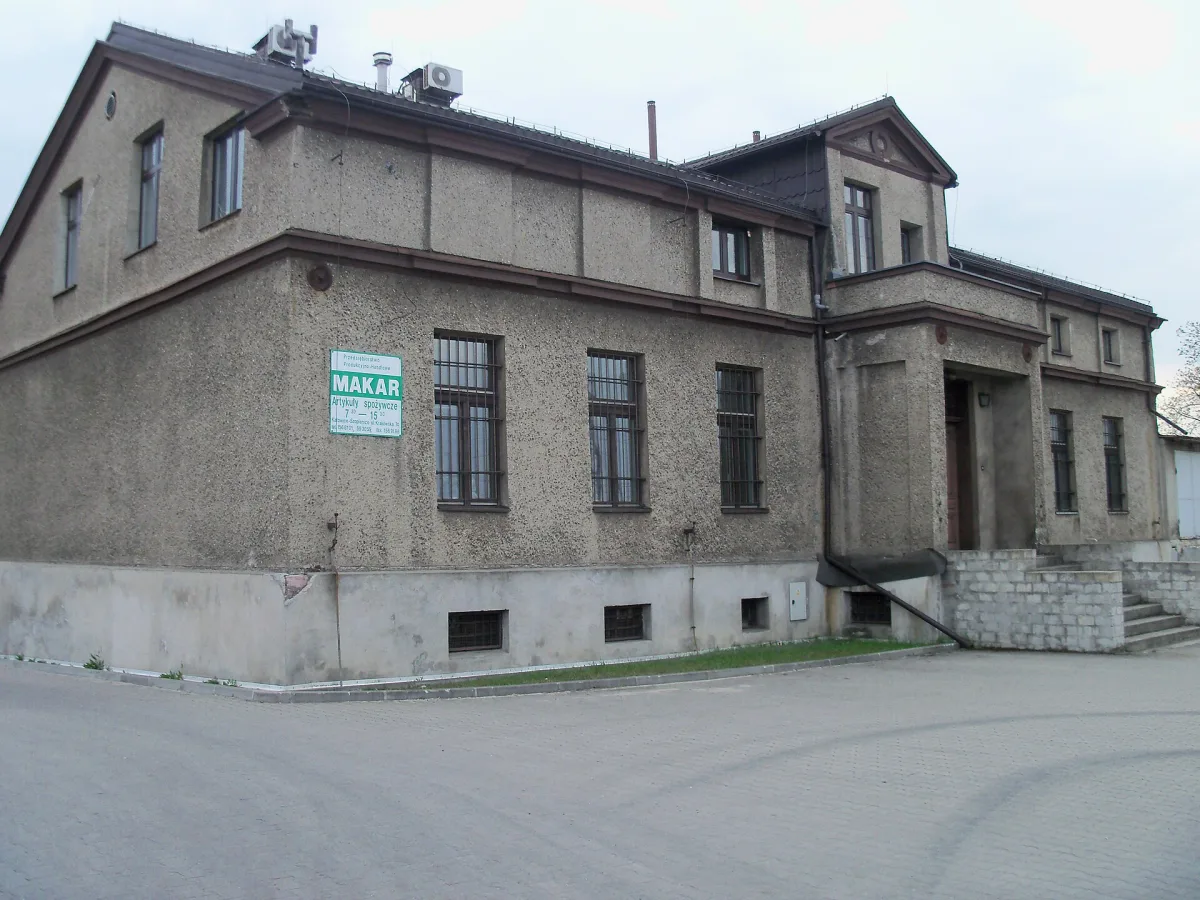
Wilhelmina is a former workers' colony by the zinc works in Katowice's Szopienice-Burowiec, founded from the 1840s, with familoki from the 1870s on Krakowska Street.
Wilhelmina is a part of Katowice's Szopienice-Burowiec that grew up around the zinc works founded in 1834 by the company Georg von Giesches Erben. Workers' houses and a former small palace survive here to this day.
The first buildings of the colony, familoki (workers' family houses) without water or sewage, began to be put up from 1846 on the lands of Roździeń. In 1857 the works employed 272 workers, and in 1872 a Catholic school with about four hundred pupils operated here. In the 1890s Helgoland was built in the northern part of the estate.
In June 1910 the workers of the works began a 49-day strike against working conditions. In 1926 Wilhelmina was incorporated into the Szopienice-Roździeń municipality, and on 31 December 1959 into Katowice.
The oldest surviving buildings date from the 1870s and stand at Krakowska 150a, 152, 152a, 154 and 156a. The Prittwitz small palace from the mid-19th century has also survived, entered in the heritage register in 2020, which probably served as a meeting place for the industrial elite. Nearby is the Rolling Mill, Museum of Zinc Metallurgy, and further on Nikiszowiec.

Be the first! Add a comment.
You need to log in to add a comment.
Log in