A water nature reserve near Racibórz covering 477.38 ha, with eight ponds, old forests and more than 190 species of birds.
Łężczok Nature Reserve is a water reserve in Racibórz County, within the "Cistercian Landscape Compositions of Rudy Wielkie" Landscape Park. It covers 477.38 ha, including eight ponds, and is one of the largest reserves in the Silesian Voivodeship. It has had reserve status since 23 January 1957. More than half of the bird species found in Poland live within its boundaries.
The Łężczok ponds have a medieval origin. The oldest mentions date from the 13th century and speak of pond farming. In the 14th century the land was taken over by the Cistercians of Rudy, who used an oxbow of the Oder and built a system of artificial reservoirs with sluices and dykes.
The reserve contains the ponds Ligotniak, Brzeziniak, Babiczak, Grabowiec, Tatusiak, Markowiak, Salm Duży and Salm Mały. Extensive fish farming is still carried on them today. In 1783 the Cistercians built a hunting lodge between the ponds Grabowiec and Brzeziniak. The building is now a ruin.
In 1683, according to tradition, King John III Sobieski rode through here on the relief of Vienna and probably planted several oaks. A reminder is the red Polish Hussars Trail. In the reserve grows a natural monument known as Sobieski's Oak, a pedunculate oak with a breast-height measurement of 690 cm.
Forests cover 144 ha, and 64 per cent of the stands are over 100 years old. The largest oaks are estimated to be 330-400 years old. The dykes are lined with avenues of lime, oak and hornbeam, which together with the old trees give the reserve an appearance close to the interior of a primeval forest.
More than 190 species of birds live here, 115 of which nest on site. In terms of the number of species the reserve is second in Poland, right after the Milicz Ponds. The red-crested pochard lives here regularly, and among birds of prey you can meet the buzzard, marsh harrier and black kite. Outside the breeding season the white-tailed eagle, osprey and black stork appear.
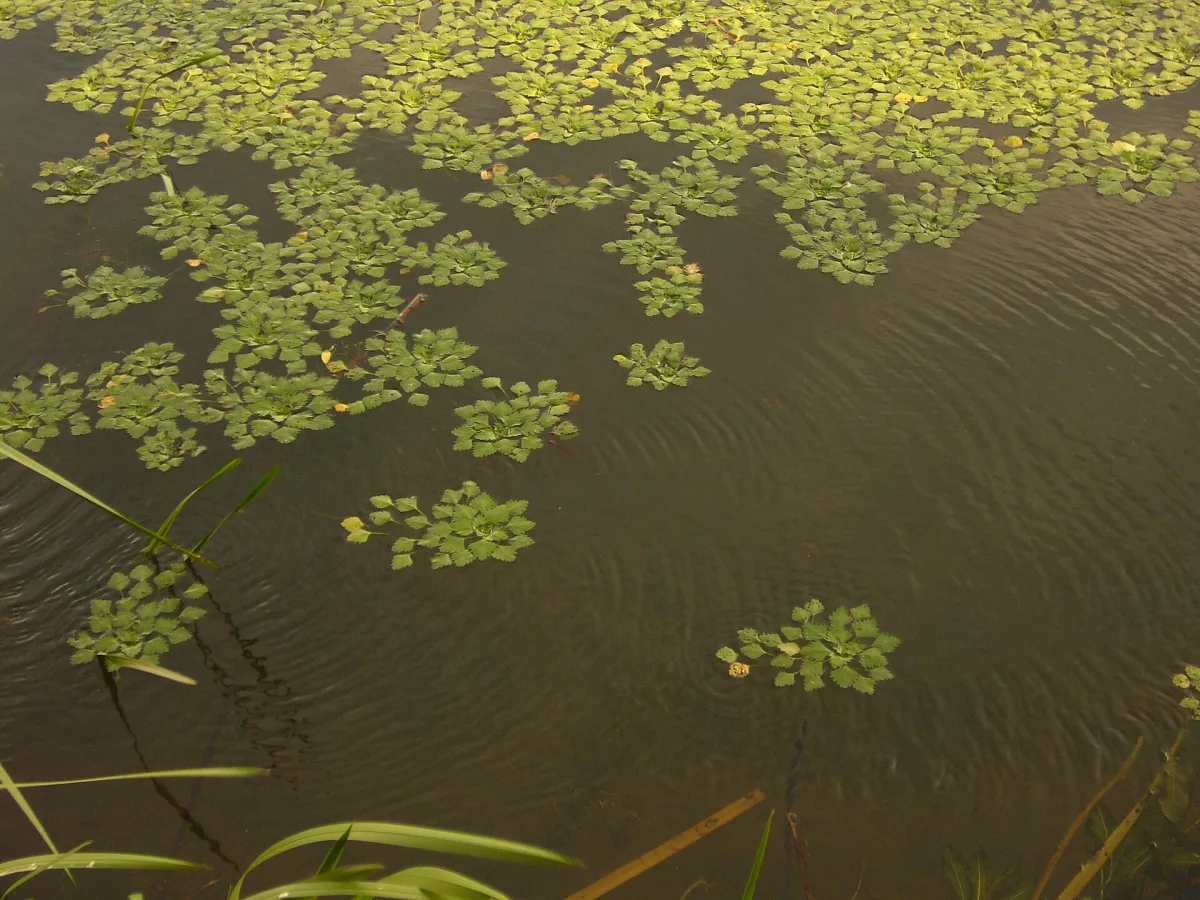
The flora comprises 530 species of vascular plants, 22 of them protected. Among them is the water chestnut, threatened with extinction in Poland. In spring in the western part snowdrop, Siberian squill and wild garlic bloom. Ten species of bats have been recorded in the reserve.
Six educational trails have been marked out in the reserve. They concern the ponds Brzeziniak and Grabowiec with water lilies, an avenue of monumental trees, meadows with autumn crocus, alluvial and hornbeam forest, and the ponds Salm Duży and Babiczak, where the black stork and white-tailed eagle feed. Two walking trails pass through the reserve, the Trail of the Polish Minority Schools and the Polish Hussars Trail, as well as cycle route 344-Z.
In 2009 the reserve was closed because of the poor state of the dykes, and the water was drained from the ponds. After modernisation with EU funds the dyke was repaired and artificial islands were built, and the site was reopened in December 2012. In the area lies the Moravian Gate Arboretum, and in Racibórz the castle.

Be the first! Add a comment.
You need to log in to add a comment.
Log in