Parks and nature in Silesia: Silesian Park in Chorzów, Katowice Forest Park and the Łężczok reserve. Over two hundred places to walk and watch birds.
This is the green map of the Silesian Voivodeship: huge parks laid out on former spoil heaps, historic parks beside industrialists' palaces, nature reserves, botanical gardens and old quarries. It suits a free afternoon, a Sunday stroll or a family outing, because most places lie in the cities of the Katowice conurbation and the Zagłębie region.
Which park in Silesia should you see first?
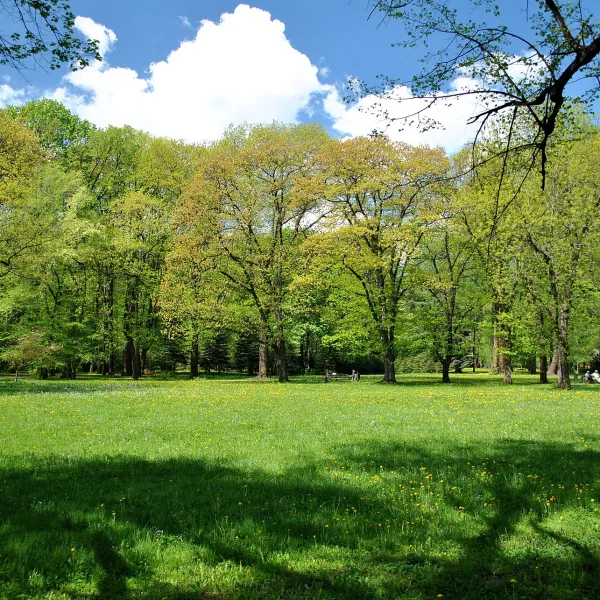
On a first visit, pick Silesian Park in Chorzów, Katowice Forest Park or Tadeusz Kościuszko Park in Katowice. They are the three largest green areas in the heart of the conurbation, and each offers something different.
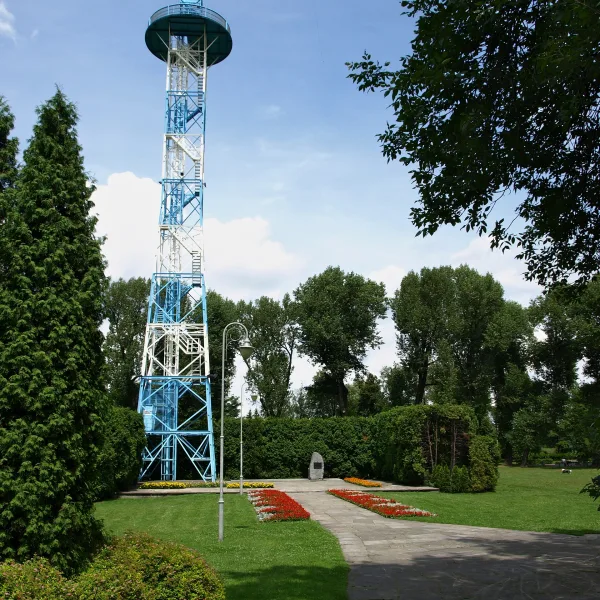
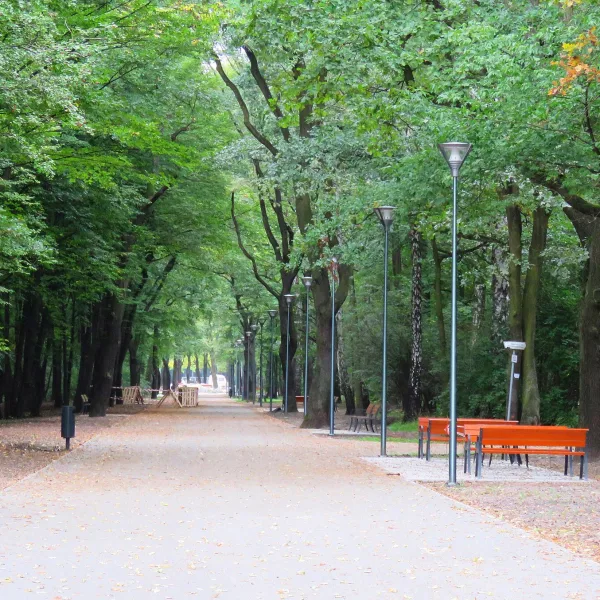
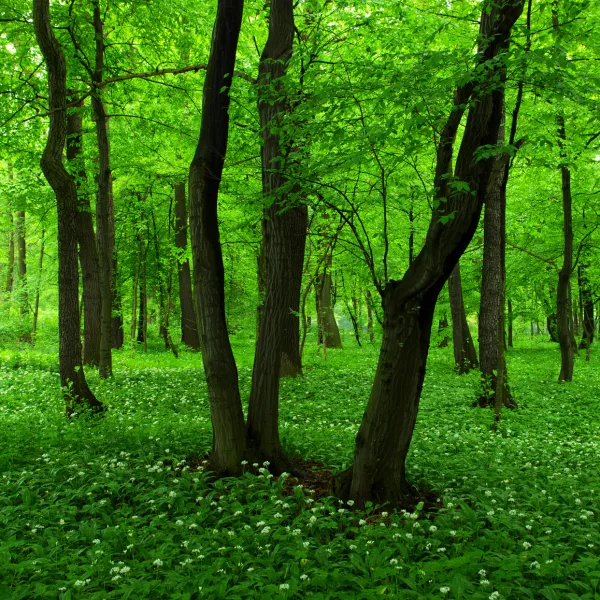
Silesian Park covers about 535 hectares and has been laid out since 1950 on former mining land; today it holds a zoo, a rose garden and a planetarium. If you like forests and long routes, choose Katowice Forest Park, with its Three Ponds Valley and a four-kilometre roller-skating track. Kościuszko Park, founded in 1888 in the Brynów district, follows the English landscape tradition and has a wooden church from around 1510 and a parachute tower.
Beyond these three, the choice depends on what you want. Botanical gardens and palm houses work when the weather turns unreliable. Reserves and nature complexes such as Łężczok or Żabie Doły suit anyone with binoculars. Parks next to palaces in Sosnowiec, Świerklaniec and Żywiec are green fragments of former residences. If you feel like going higher, look at the Mountains category, and for active outings see Sport and recreation.
Which parks lie in Katowice and its districts?
Katowice has several dozen places in this category, from large landscape parks to squares inside workers' housing estates. It is best explored district by district: Brynów, Ligota, Bogucice, Giszowiec and Janów-Nikiszowiec each feel quite different. The whole city is on Parks and nature: Katowice.
In Ligota you will find Zadole Park, 7.76 hectares which has a skateboard track, an amphitheatre, tennis courts and a salt-spray tower. In Bogucice, right beside the Silesian Museum and the NOSPR concert hall, lies Bogucice Park with playgrounds, a dog area and a small amphitheatre. In Janów-Nikiszowiec, next to Giszowiec, Bolina Park sits by the ponds and has sports pitches, chess tables and a playground.
Giszowiec has its own park at the centre of the company estate: Giszowiec Park was laid out in 1907-1910 together with the miners' houses, with old beech trees and a concert shell from around 1910. For the full story of the city's parks, from Kościuszko to Zadole and Bolina, read Parki Katowic jeden po drugim (in Polish).
What is there to see in the parks of Zagłębie: Sosnowiec, Dąbrowa Górnicza, Czeladź?
The Dąbrowa Basin (Zagłębie Dąbrowskie) has a dense network of parks, and Sosnowiec alone has more than twenty. Many are the remains of old manors, factory owners' palaces and river floodplains, now open to walkers.
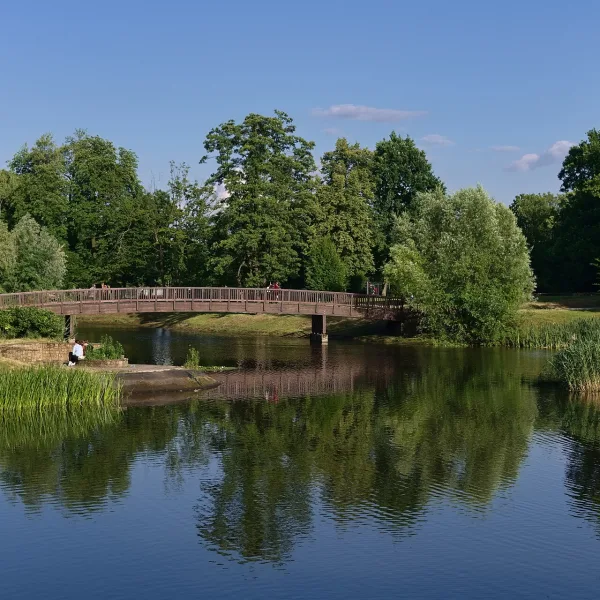
The largest of the city's historic parks is Sielec Park on the Czarna Przemsza river, laid out in the English style beside Sielec Castle, with twelve natural monuments. In the Pogoń district lies Dietl Park from 1901, created beside the palace of the industrialist Henryk Dietl, with a restored gloriette and a small pond. By the river, just behind the flood embankments, is Scout Park, known locally as Koła, with a sensory garden, an orchard and a rose garden. In the north of Kazimierz, the thirty-hectare Jacek Kuroń Park has ponds, an amphitheatre and a skate park. In Klimontów there is the small Wanda Malczewska Park with a tower-shaped chapel from 1746. More than twenty parks of the city are gathered at Parks and nature: Sosnowiec. The article Dietel i Schön (in Polish) tells the story of the industrialists' palaces and mausoleums.
In Dąbrowa Górnicza, Zielona Park covers 67 hectares of a former oak forest and was renovated in 2018. Its eastern part is the start of Uroczysko Zielona, an ecological site with a five-stop educational trail showing the typical forest and water habitats of Zagłębie. In Czeladź, in the Brynica valley, Grabek Park covers about 13 hectares with a pond, an amphitheatre and a historic mulberry garden from 1928.
Where to find green places in Chorzów, Bytom and Siemianowice?
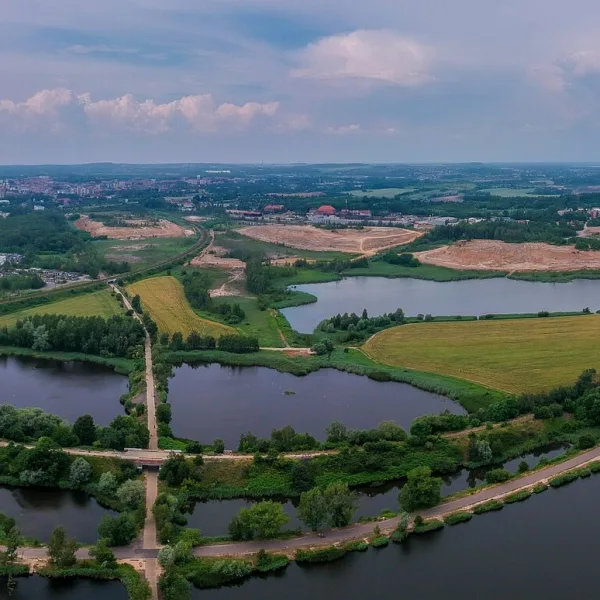
In these cities greenery grew out of an industrial backyard. Silesian Park in Chorzów occupies former mining land, while Żabie Doły on the border of Chorzów, Bytom and Piekary Śląskie formed from flotation settling ponds, subsidence hollows and spoil heaps. This nature and landscape complex covers 226.2 hectares and is a habitat for water birds, so bring binoculars. Parks and nature: Chorzów lists the green places of the city.
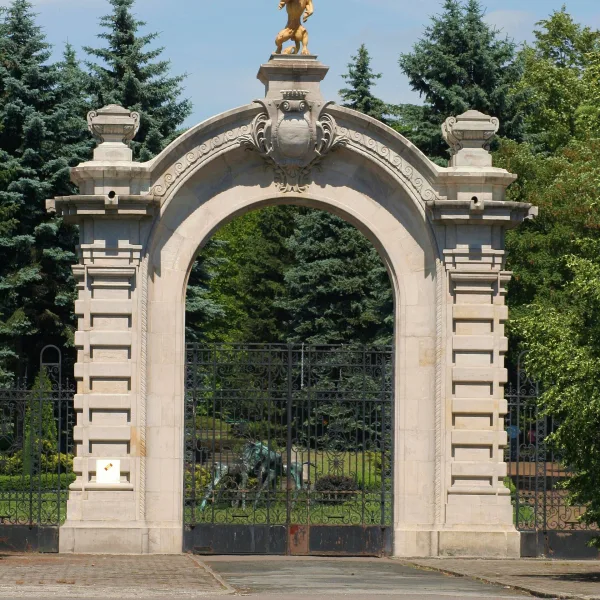
At the main entrance to the Chorzów zoo stands the Gate of the Silesian Zoological Garden, a stone gate with a cast-iron lion. The gate was brought from the palace in Świerklaniec in the 1950s and is one of the few surviving relics of the Donnersmarck estate.
In Bytom the largest is Franciszek Kachel Municipal Park, 43 hectares laid out around 1840, with two ponds, a bathing area from 1934 and traces of a former zoo. Fazaniec Park is a historic landscape park with two V-shaped ravines and oaks, and Adam Mickiewicz Park from the turn of the 1920s and 1930s has a modernist layout and four viewing terraces. More on Parks and nature: Bytom.
In Siemianowice Śląskie three parks have an industrial past. Hutnik Park was laid out in the 1920s beside the bathhouse of the Laura steelworks, and its centre is an oval basin with an illuminated fountain. Górnik Park in Michałkowice has a pond fed by water from a former mine and the Rheinbaben palace complex. Pszczelnik Park covers about 26 hectares and includes a sports centre with a pool and courts. See them all at Parks and nature: Siemianowice Śląskie.
What can you see in Gliwice and Zabrze in one day?
Gliwice has a set of historic parks close to each other, ideal for a full day on foot with a break under a roof. Everything is on Parks and nature: Gliwice.
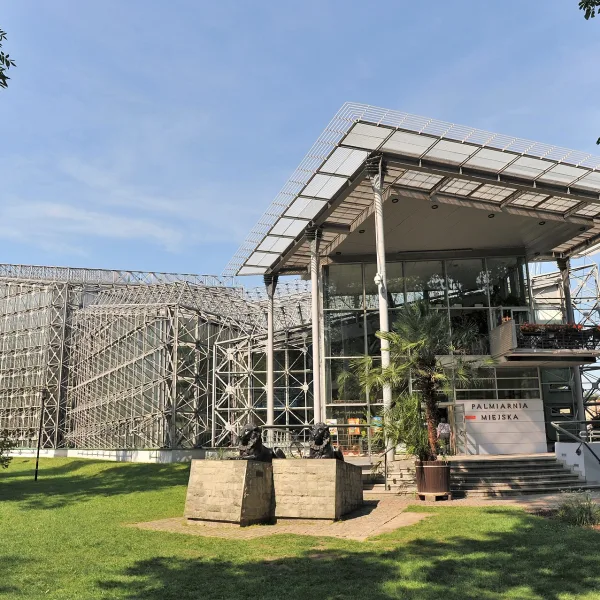
Start at Fryderyk Chopin Park in the centre, founded around 1880 between the Kłodnica river and the Kłodnica Canal, with a natural monument and the Schadow lions. Next door is the Municipal Palm House with five pavilions: useful plants, tropical plants, historic plants, succulents and aquariums. It holds over 5,600 plants, and the oldest are more than 150 years old. The Politechnika district has Bolesław Chrobry Park from 1913-1915, while in eastern Zatorze lies the Park of Culture and Recreation: about 197.6 hectares of natural forest with an educational trail and a brine graduation tower.
In Zabrze visit the Municipal Botanical Garden on Piłsudskiego street. It covers 6.36 hectares, with a French and an English section, a palm house, a rose garden and the National Collection of Heuchera.
Which nature sites lie outside the conurbation?
Outside Katowice and Zagłębie the most interesting are Racibórz, Żywiec, Jaworzno, Tarnowskie Góry and Wodzisław Śląski. These are more of an excursion than a walk around the neighbourhood, but each place has a clear character.
Near Racibórz lies the Łężczok nature reserve: 477.38 hectares with eight ponds, old forests and over 190 bird species. In the town itself is the Morava Gate Arboretum, a botanical garden in the Obora forest with nature trails, a small zoo and a viewing platform, and in the Nowe Zagrody district Roth Town Park with a pond and four natural monuments.
In Żywiec walk through the Castle Park: about 26 hectares beside the Habsburg castle, founded in 1712 as a formal garden, with a Chinese Pavilion on an island. In Jaworzno Gródek Arboretum Park fills former dolomite quarries, with turquoise water and wooden walkways. Despite the name it is a municipal park, not a scientific arboretum. In Tarnowskie Góry the washing plant spoil heap is among the sites on the UNESCO list and has calamine grasslands, while other parks of the town are on Parks and nature: Tarnowskie Góry. In Brynek a school botanical garden keeps a collection of about 400 taxa of trees and shrubs, and in Świerklaniec the southern part of the former Donnersmarck residence is the palace park in the Brynica valley. For a related estate in Repty, read Park w Reptach (in Polish).
Where to go with children, by bike or on roller skates?
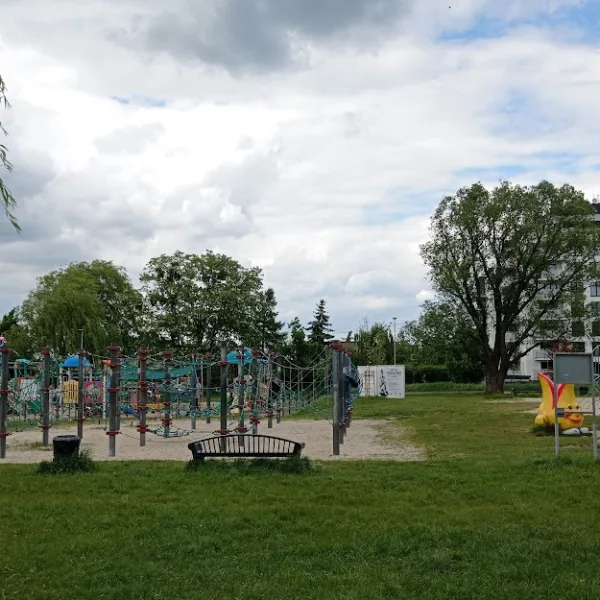
For families the best are parks with playgrounds, tracks and sports facilities. In Wodzisław Śląski Trzy Wzgórza opened in 2015: 24 hectares with a rope park, an amphitheatre, a skate park and biathlon trails. In Żory Cegielnia Park stands on the site of a former brickworks and has a rope park, a children's traffic town, a skate park, a roller track around the grounds and a brine graduation tower.
In the centre of Bielsko-Biała lies Juliusz Słowacki Park with the Music House, an ice rink and Orlik pitches. The Kozie Góry Park in Rybnik has a fitness trail on hilly ground. Places for the youngest are in the For children category, and the article Tężnie solankowe i pijalnie wód na Śląsku (in Polish) covers graduation towers and pump rooms.
Frequently asked questions
Is entry to parks in Silesia paid?
In most parks entry is free: this applies to city parks, reserves and natural areas. Botanical gardens, palm houses and arboretums can differ, so check the conditions of a particular place before you go.
Which park is the largest?
Silesian Park in Chorzów, at about 535 hectares. Katowice Forest Park is also big in terms of woodland, and the largest water area is the Łężczok reserve near Racibórz with 477.38 hectares.
Where can you see birds near Katowice?
The closest is Żabie Doły on the border of Chorzów, Bytom and Piekary Śląskie, a complex with water reservoirs that is a habitat of water birds. Further west lies the Łężczok reserve, home to more than half of the bird species found in Poland.
Where to go on a rainy day?
Look for glasshouses: the palm house in Gliwice and the palm house in the Municipal Botanical Garden in Zabrze. You can combine a short walk with a visit to a nearby museum, listed in the Museums category.
Are there places for roller skating in Silesian parks?
Yes. Katowice Forest Park has a four-kilometre roller track, and in Żory a roller track runs around the whole Cegielnia park. In Sosnowiec a skate park operates in Kuroń Park, and in Katowice a skateboard track is in Zadole.

 Parks and nature