Things to do in Wodzisław Śląski: a classical palace, the market square and a forest tower. Dozens of places for families and history lovers.
Wodzisław Śląski is a town in the far south-west of the region, in Silesia. It has a market square lined with townhouses, a classicist palace and a former Franciscan monastery complex. Beyond the centre, the districts have churches of their own, a large family park and a viewing tower in the woods, along with a few places tied to the town's past that call for a calm, factual approach.
What should you see first in Wodzisław Śląski?
Begin at the market square, because most of the central sights are around it: the Dietrichstein Palace, the church of the Assumption and the Franciscan monastery complex. Together they make a good half-day walk through the old town.
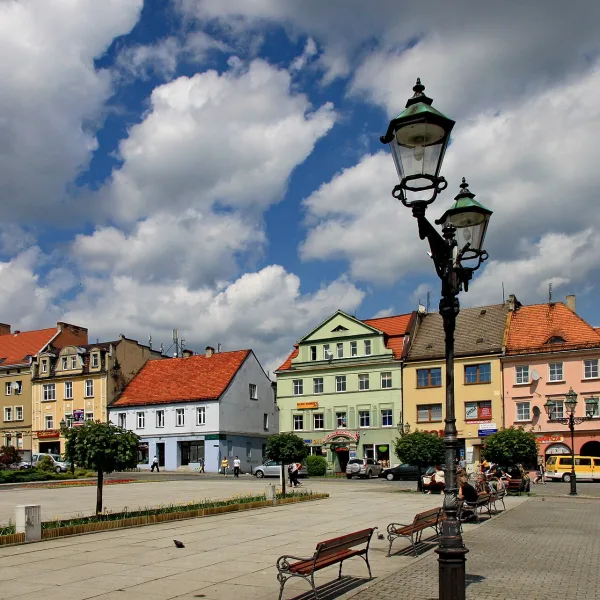
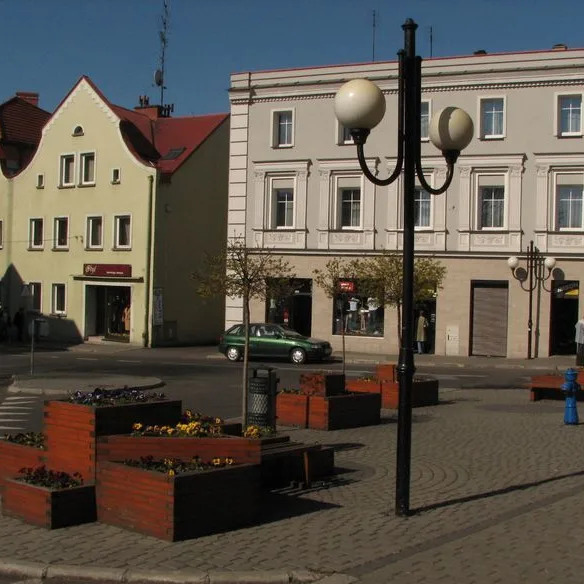
The square is the town's central space, with townhouses from the 19th century. Its southern part is paved, while the northern part is a small park with benches and a fountain. A church stands on a hill above the northern frontage. In the Middle Ages the square had a town hall, a pillory and a deep well, and historic lanes still run out from it.
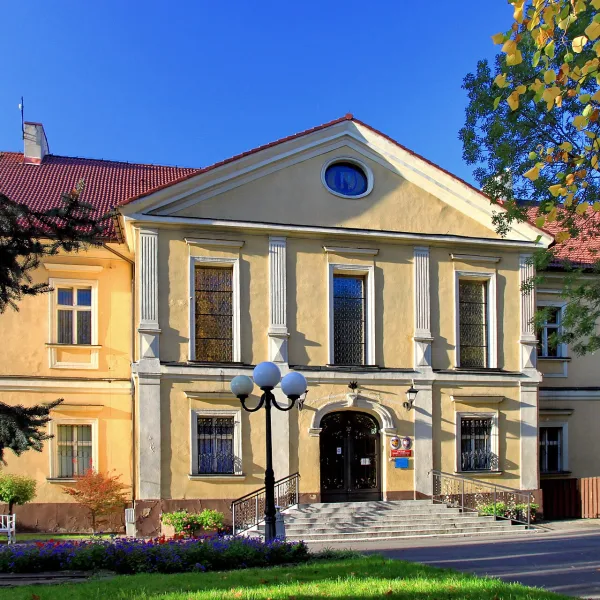
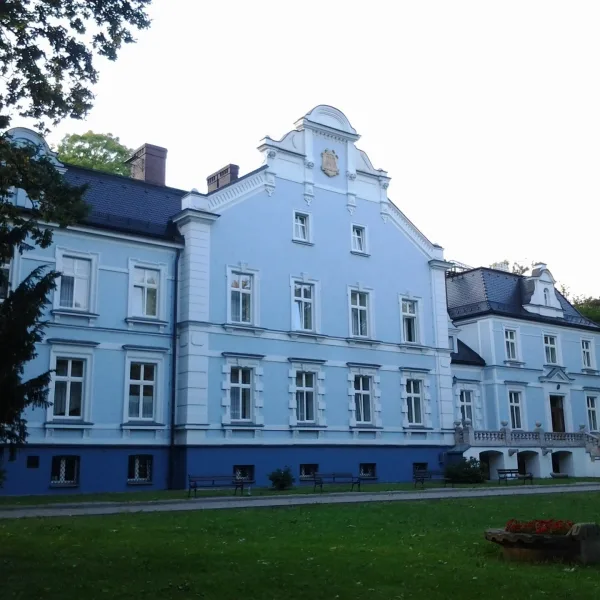
The Dietrichstein Palace, also called the castle, stands next to the square on Kubsza Street. It was built in the first half of the 1740s on the site of a medieval castle, and since 1971 it has housed the town museum. It is a sensible choice for a rainy day. To read more about the town's past, see the article on the palace, the Minorite friars and the square.
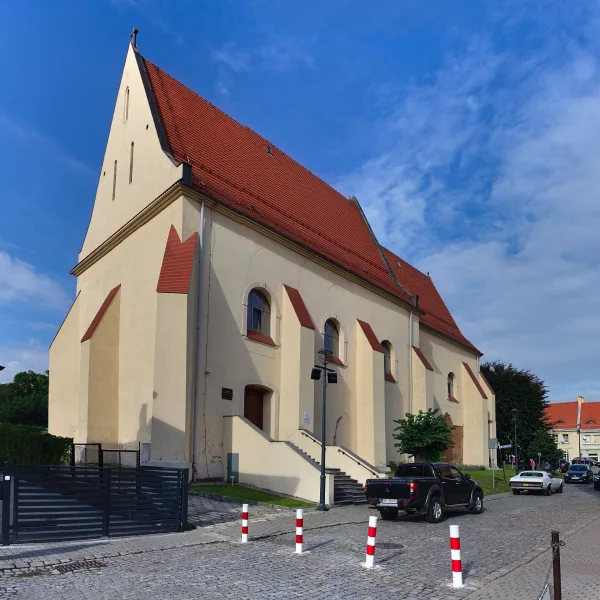
The Franciscan monastery complex on Minorytów Street consists of a Gothic church from the 14th century and a Baroque monastery building from the 17th century. The friary was founded in 1257, together with the town itself. Today the church serves a Protestant parish and the monastery building houses a court, so visiting mostly means admiring the buildings from outside.
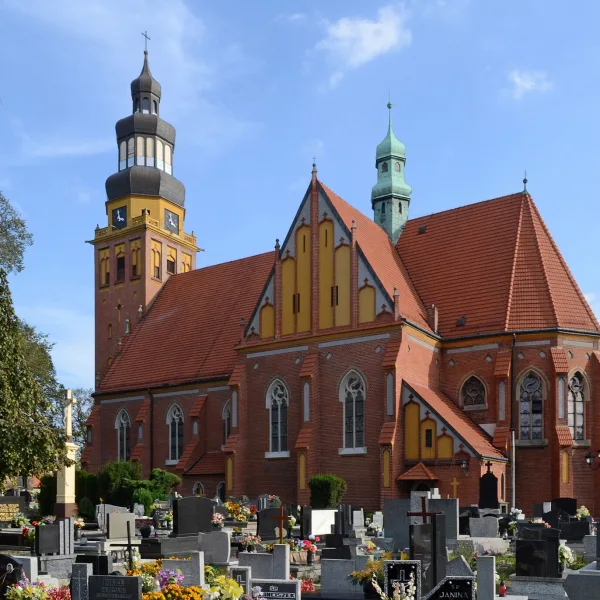
The church of the Assumption of the Blessed Virgin Mary on Kościelna Street is a neo-Gothic brick building from 1909-1911, designed by Ludwig Schneider of Wrocław. The tower rises 40 metres. The church is entered in the register of monuments, and earlier churches stood on the site from the time the town was chartered.
Which churches in Wodzisław Śląski are worth a look?
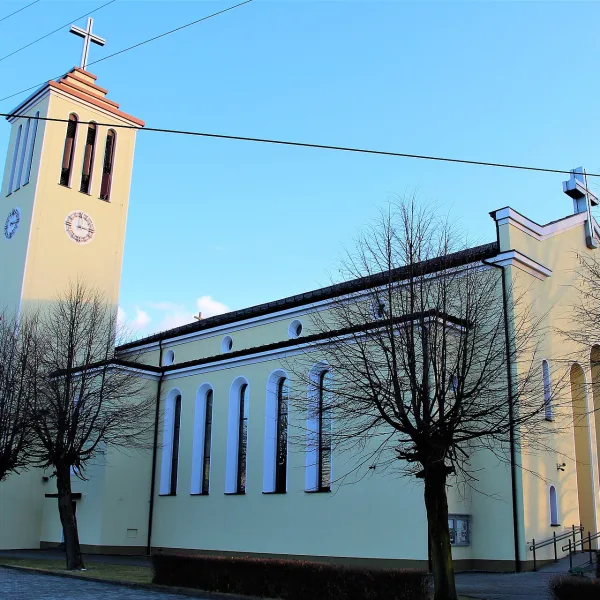
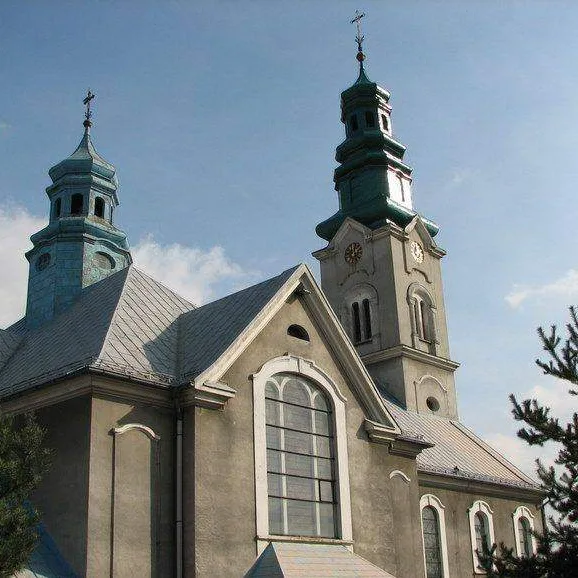
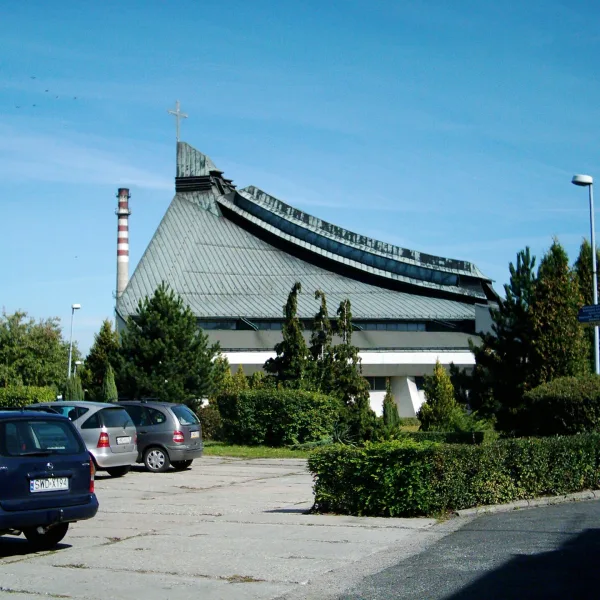
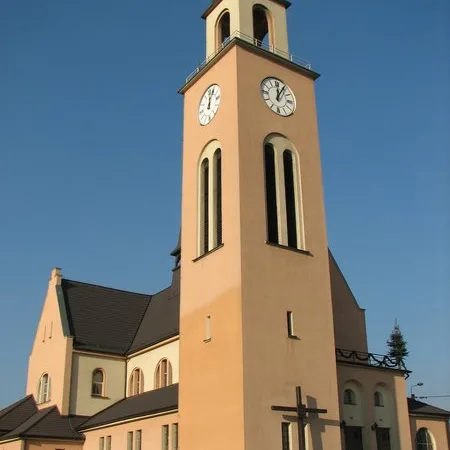
The town has several churches from different eras, scattered across its districts, from a neo-Baroque church of the 1920s to buildings from the communist period. If sacred architecture interests you, plan a drive, because this is not a single walk. All of them are collected under churches and monasteries in Wodzisław Śląski.
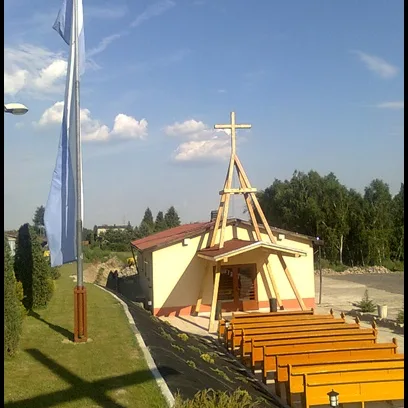
In Radlin II stands the church of St Mary Magdalene, neo-Baroque, built in 1929-1930 to a design by the architect Affa of Racibórz. In Wilchwy there is the church of Our Lady of Częstochowa from 1967-1968, which keeps mementoes of the 1 Maja mine, and the newer church of St Lawrence on the 1 Maja estate, built from 2010 out of a temporary chapel.
In Kokoszyce, residents built the church of the Immaculate Heart of Mary themselves in 1948-1950. Parishioners dug the foundations with shovels and carried sand on trolleys along a track. In Zawada, on a hill, stands the church of the Exaltation of the Holy Cross, laid out as a cross; 22 steps lead up to its main gate from Paderewskiego Street.
The church of St Herbert on Radlińska Street was built in 1983-1990 and consecrated by Bishop Damian Zimoń. It has a three-metre sculpture of its patron. The church of Our Lady Mediatrix of All Graces and St Anthony of Padua, in the Jedłownik parish, was built in 1949-1952 on the site of a wooden church from the 17th century.
Where to go with children, and what to do in the rain?
With children, start at the Trzy Wzgórza park, and on a wet day pick one of two indoor play halls. There is also a list of places for a rainy day.
Trzy Wzgórza is a family recreation park of 24 hectares across the XXX-lecia, Piastów and Dąbrówki estates, opened in 2015. The hills hold a rope course, an open-air stage, a skateboarding area and biathlon trails, plus playgrounds and walking paths. Entry is free.
Xtreme Kids at Kolejowa 28 is an indoor play hall for children from 0 to 12, less than a kilometre from the square. Younger children have a zone with toys, slides and a ball pool; older ones get climbing, obstacles, trampolines and tunnels. Zoolandia at Targowa 5 is a few dozen metres from the square. Inside are a maze on three levels with slides, a separate room for the youngest and a café for parents.
Where to walk and enjoy a view?
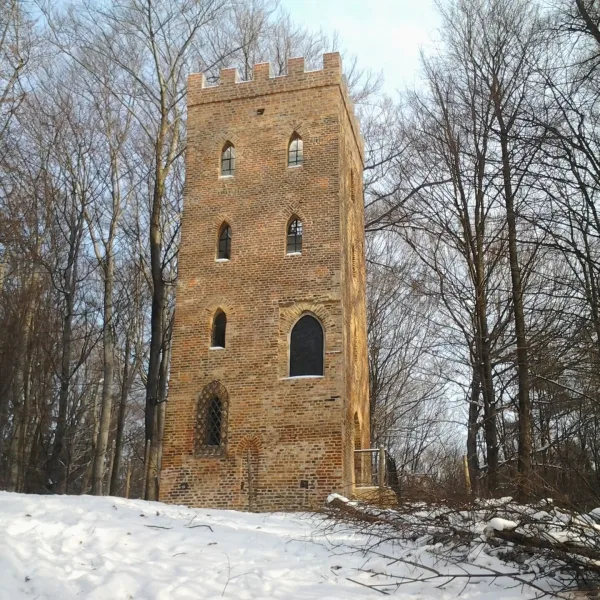
For a view and a bit of exercise, head to Grodzisko. In the forest there stands the Romantic Tower, also known as the Knight's Tower. It is a brick, neo-Gothic viewing tower from 1867-1868, about 20 metres tall, rebuilt after a fire. Visitors have been able to enter since 2021, and entry is free.
For a quiet walk with some history, there are two squares in the old part of town. Wojciech Korfanty Square lies between Sądowa, Kościelna and Wałowa streets, close to the monastery buildings. St Cross Square, in the former Racibórz suburb, takes its name from a wooden church that stood there from 1525 to 1826; today a cross and an obelisk from 2000 mark the spot. See Korfanty Square and St Cross Square.
In Kokoszyce there is a palace and park complex at Pałacowa 53. The palace dates from the early 19th century and stands in a landscape park of about 30 hectares with eight ponds. It houses an archdiocesan retreat house, so the interiors mainly serve its guests and are not open for sightseeing.
Which places are tied to the memory of the town's past?
Wodzisław Śląski has places best seen with respect, as testimony to history rather than as stops on a day out.
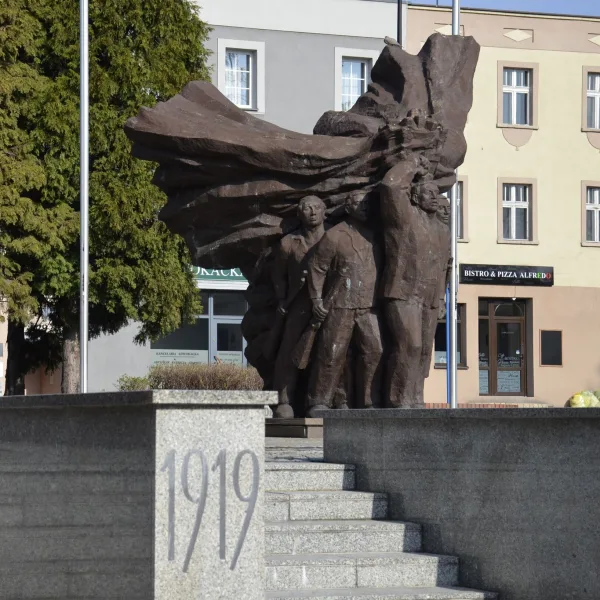
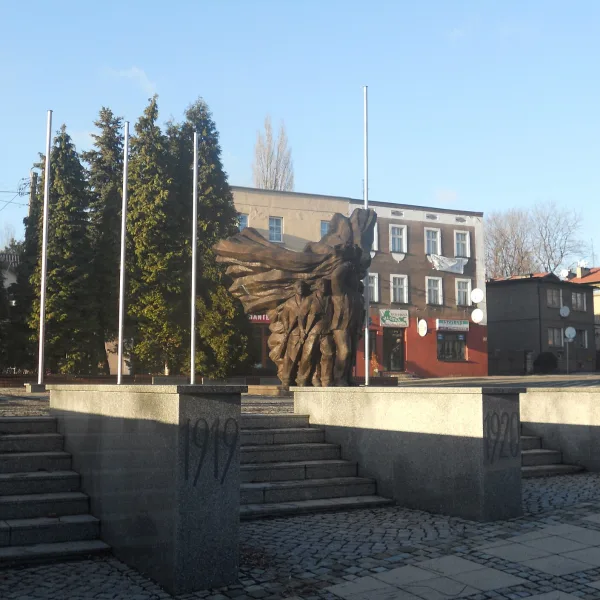
The Silesian Insurgents' Monument from 1975 stands on Korfanty Square, next to the Franciscan monastery. It commemorates the three Silesian uprisings of 1919-1921 and is among the largest uprising monuments in Poland. It was designed by Jerzy Kwiatkowski and is the main site of the town's ceremonies. For monuments across the whole region, read the article on insurgent monuments and Korfanty.
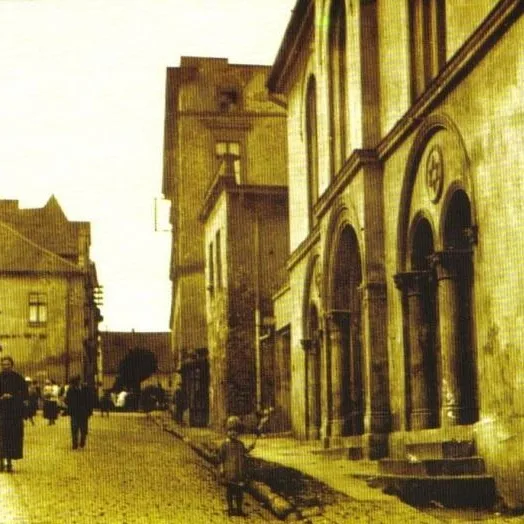
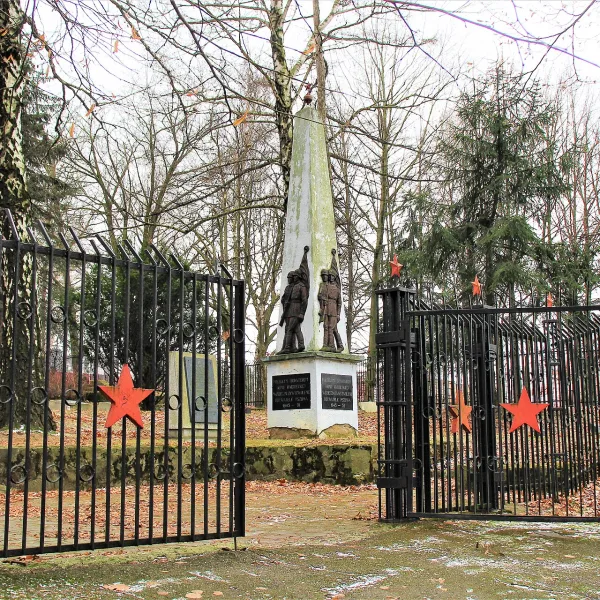
The synagogue of 1826 stands on Targowa Street. The building no longer serves a religious purpose and is not open to visitors, but its form recalls the town's former Jewish community. In 1938 the Union of Silesian Insurgents bought it and converted it into the Insurgents' House. On the same street, on a hill known as Żydowina, lies the Soviet Soldiers' Cemetery. It is a closed war cemetery from 1945, where 5,896 Red Army soldiers are buried, laid out on a former Jewish cemetery.
Frequently asked questions
How much can you see in Wodzisław Śląski in a day?
The market square, the Dietrichstein Palace, the Franciscan monastery complex and the church of the Assumption are all close together. In the afternoon you can add Trzy Wzgórza or the Romantic Tower at Grodzisko.
Where can you go with children in Wodzisław Śląski?
To Trzy Wzgórza, a park with a rope course, an open-air stage and a skateboarding area. When it rains, to the indoor play halls Xtreme Kids and Zoolandia.
Can you go inside the Dietrichstein Palace?
Yes, it has housed the town museum since 1971. Check the museum's own information before you go to see when it is open.
Can you visit the synagogue in Wodzisław Śląski?
No. The building from 1826 is not open to visitors and has no religious function, but you can see it from Targowa Street.
Are there events in Wodzisław Śląski?
Yes, you will find them in the events calendar for Wodzisław Śląski. Pick a day or a category.

 Parks and nature