Things to do in Tarnowskie Góry: an underground silver mine on the UNESCO list, the Market Square, parks and a castle, over fifty places in one town.
Tarnowskie Góry is a mining town in the north of the Silesian Voivodeship, with underground workings inscribed on the World Heritage List. Besides the mines and drainage adits it has an old-town Market Square, several parks laid out on spoil heaps, a Renaissance castle, a few museums and places for a family outing.
What should you see first in Tarnowskie Góry?
Begin with the Historic Silver Mine: an underground route with a stretch by boat and an open-air museum of steam machines. Then walk to the Market Square, see the town hall and Gwarków Square, and finish with a rest in the Municipal Park. That plan takes a day and covers what the town is known for.
The town grew thanks to the mining of lead, silver and zinc ores, and almost everything you see today is tied to it: shafts, spoil heaps, adits, parks on former workings, and even churches funded by landowners and industrialists. It makes sense to read your visit as one story, from the first ore to the last machines. The beginnings of mining are told in the article Chłop Rybka, Roździeński i Ordunek Gorny, and the start of industry in the region in the text Friedrich Wilhelm von Reden.
Why is Tarnowskie Góry on the UNESCO list and what can you see of it?
The 2017 inscription covers twenty-eight places linked to the extraction of lead, silver and zinc, plus an underground drainage system. They lie in Tarnowskie Góry, Bytom and Zbrosławice. In the town itself you can see a mine, an open-air museum, a spoil heap, shafts and adit portals.
The mine and the steam machinery museum
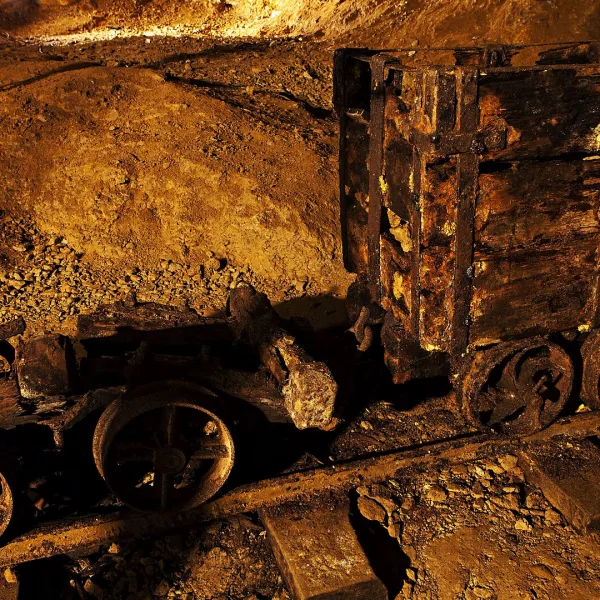
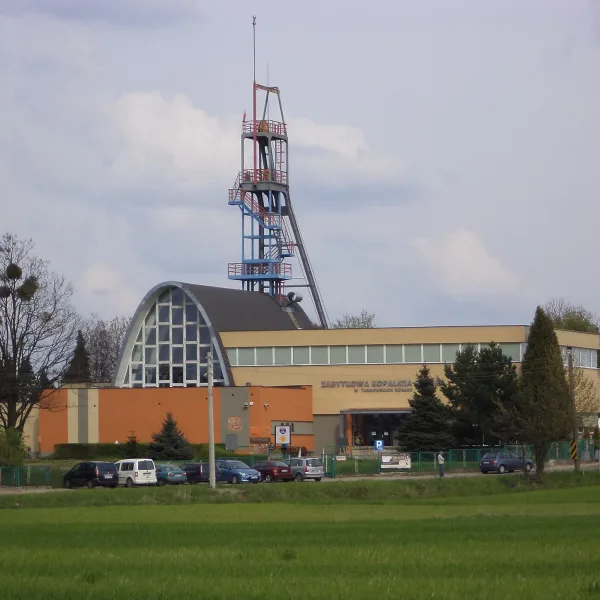
The Royal Fryderyk Mine worked from 1784 until the early twentieth century and produced lead and silver ores. Part of it was opened to tourists as the Historic Silver Mine, and the first lead ore was found on 16 July 1784 near the Rudolphine shaft. The mine counts among the four showpieces of the Route of Industrial Monuments of the region. A full account of the underground trip is in the article Zabytkowa Kopalnia Srebra: wpis UNESCO i trasa pod ziemią.
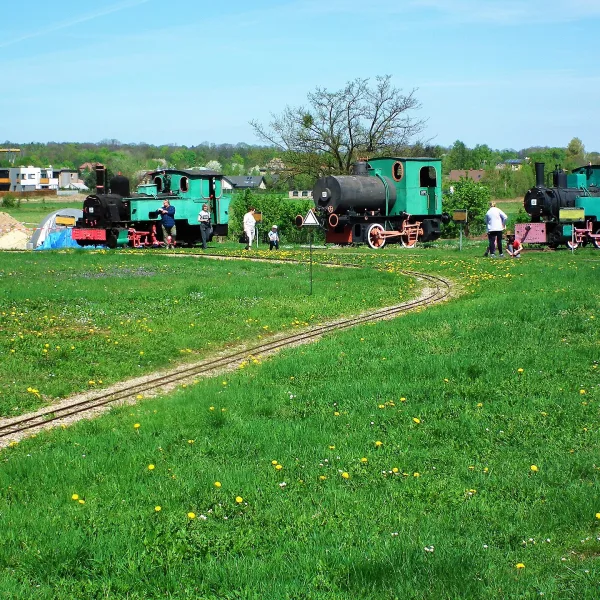
Next door stands the Steam Machinery Open-Air Museum, opened in 1976 and covering about a hectare. It holds steam locomotives, a locomobile, a road roller, a crane, a compressor, pumps and winding engines, and a narrow-gauge railway with a 184 mm gauge runs around the site. It is a good stop for families.
Spoil heaps, shafts and adits
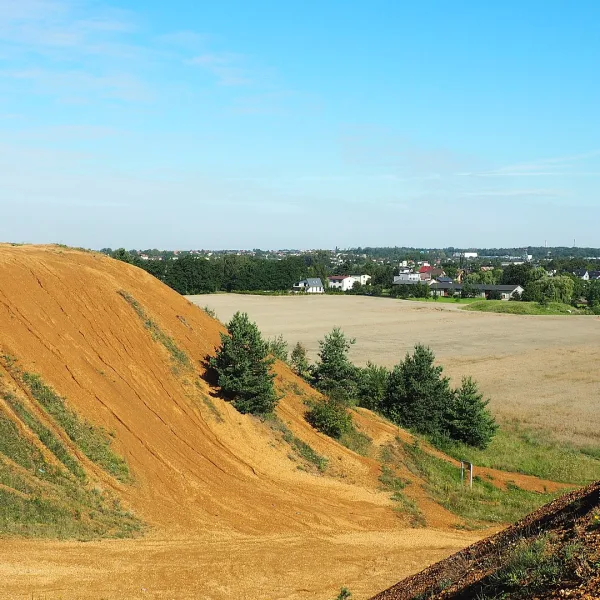
In the south of town lies the washing plant spoil heap, heaped from ore-washing waste, with calamine grasslands and a view of the town. Underground runs the Deep Fryderyk Adit of 1821-1834, seventeen kilometres long; its neoclassical portal stands in Zbrosławice, outside the town limits. In Tarnowskie Góry you can see machine shaft no. 22, known as Karlik, with a stone shaft building from 1824, and the portal of the Boże Wspomóż adit in Strzybnica, on ulica Zawiszy.
The place where the story of the mine began is Kunszt Park in Bobrowniki Śląskie, around the heap of the Rudolphine shaft. A walk among its monumental lime trees is short. The whole scope of the inscription is described on the page for the lead, silver and zinc mine with its underground water system, and the other industrial sites are gathered under industrial monuments in Tarnowskie Góry.
What is there to see on the Market Square and in the centre of Tarnowskie Góry?
In the centre, see the town hall, Gwarków Square, the Sedlaczek House and the Church of the Saviour; all lie around the Market Square. The Market Square and its surroundings show what a mining town looked like.
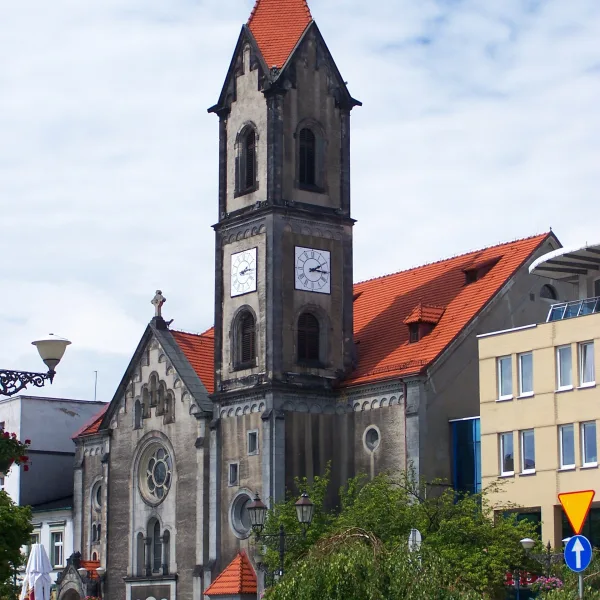
The town hall at Rynek 4 is a Neo-Renaissance building from 1898 with a tower almost forty metres tall and sandstone coats of arms. It is the second town hall in the town's history. At Rynek 1 you will find the Sedlaczek House, a townhouse of the sixteenth century where the starosts of the Bytom land once sat; today it holds a wine bar, with a mining museum upstairs. The house is on the register of monuments. At Rynek 9 stands the brick Church of the Saviour, a Lutheran church from 1780, rebuilt in 1900 in the Neo-Romanesque style.
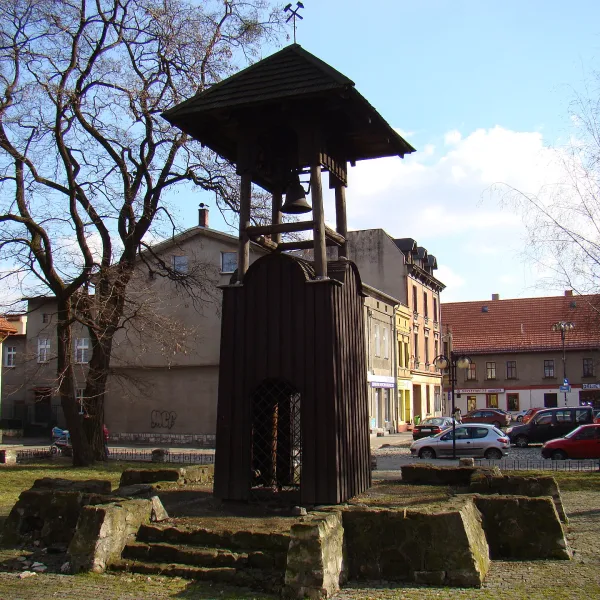
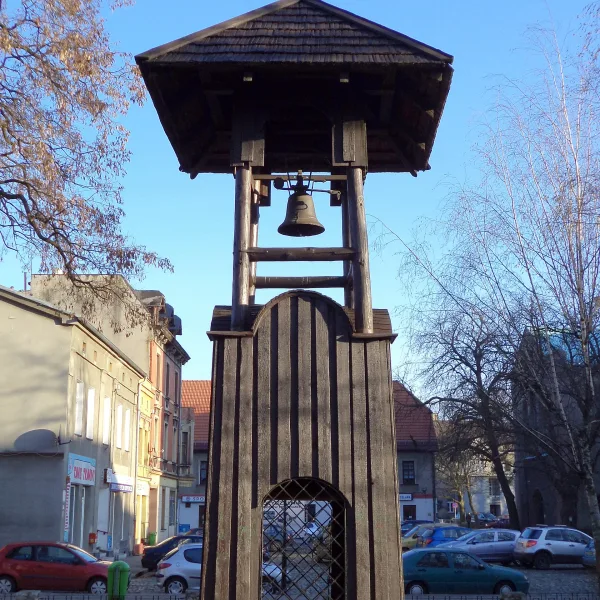
Gwarków Square is the oldest market place of the town, today a small paved square in the heart of the Old Town with the Church of St Peter and St Paul. On it stands the Miners' Bell Tower, moved here from the mine in 1955; the present structure is a replica from the 1980s. At ulica Gliwicka 6 you will find the Florczak House, a corner townhouse with foundations from the early sixteenth century and, according to local tradition, a former mining office and town hall. How the Market Square layout and the mining school came about is told in Tarnowskie Góry: Rynek, szkoła górnicza i święto Gwarków.
Which museums in Tarnowskie Góry are worth visiting?
The town has several museums that present mining, local history and motoring. Each is under a roof, which suits wet weather. The private vehicle collection is the less obvious one.
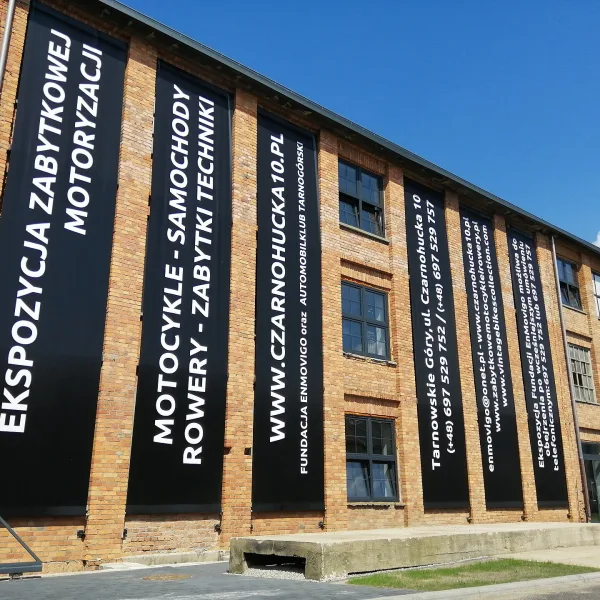
The Museum in Tarnowskie Góry is a municipal regional museum in the historic Sedlaczek townhouse, with collections of history, art and ethnography. Its holdings total nearly ten thousand objects, and it has operated since 1958. The Museum of the Tarnowskie Góry Institute is in a nineteenth-century building at ulica Ligonia 7 and shows, among other things, French Foreign Legion uniforms and ethnography. Vehicles are collected in the Automotive Museum at ulica Czarnohucka 10: motorcycles, bicycles and cars, visited with a guide. Further museums are listed under museums in Tarnowskie Góry.
Which parks and natural areas in Tarnowskie Góry suit a walk?
The easiest start is the Municipal Park in the centre, followed by one of the smaller district green spaces. Several of them were created on post-mining land, so a walk doubles as a history lesson. Most entries are free.
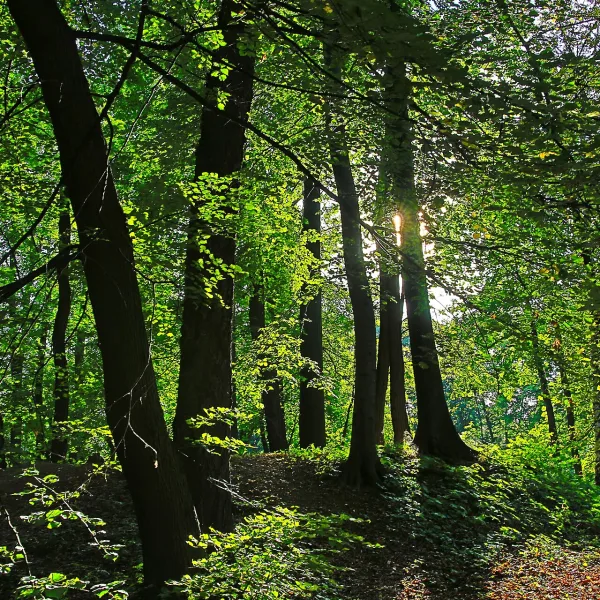
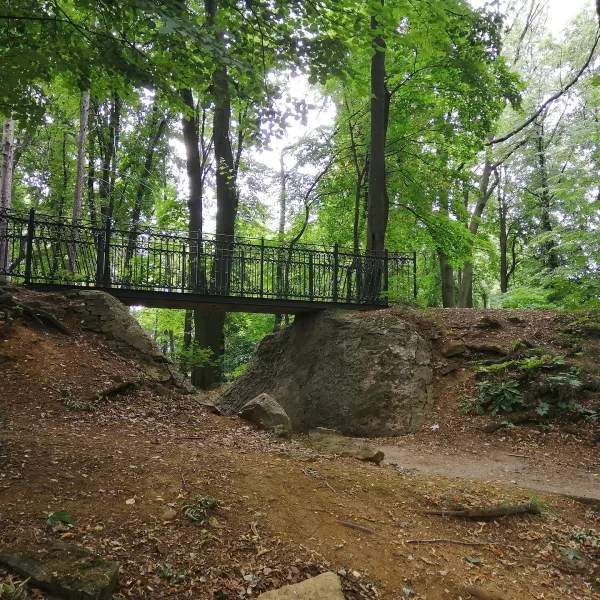
The Municipal Park covers 21.5 ha between ulica Wyszyńskiego and ulica Bałtycka and was laid out in 1903 on the spoil heaps of former ore mines. It has a viewing tower and a pond with a fountain. About five hectares are taken by the Camillian Fathers' Park from 1910, with a Lourdes grotto, a lime avenue and a monastic cemetery, set out on a former gallows hill. District parks are the Hutnik Park in Strzybnica with its amphitheatre and the Piny Park in Osada Jana, created in the mid-1970s on post-mining land. The full list is under parks and nature in Tarnowskie Góry.
Farther from the centre the places are more natural. Doły Piekarskie in Piekary Rudne is a nature and landscape area in Piekary Rudne where an iron ore mine once worked, with a teaching path. Głęboki Dół in the Lubliniec Forests is a small woodland lake of under four hectares. The Boruszowice Oaks are a former reserve in the Woda Graniczna valley where old oaks still stand, and Bobrowniki Quarry is a disused dolomite working with seventy-metre walls.
Which castle, palace and district churches are worth seeing?
Outside the centre, two residences and several churches show the influence of industrial families. Each lies in a different district, so you will need transport.
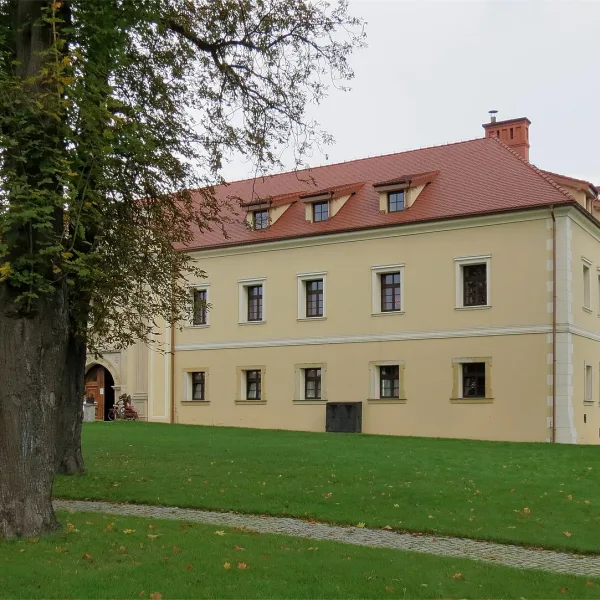
The castle in Stare Tarnowice at ulica Pyskowicka 39 is a sixteenth-century Renaissance building, restored and open to visitors since 2011, with a courtyard, cloisters and a portal dated 1545. It is visited with a guide. The palace in Rybna from 1796 is a late Baroque residence, today a municipal cultural institution that holds concerts and exhibitions.
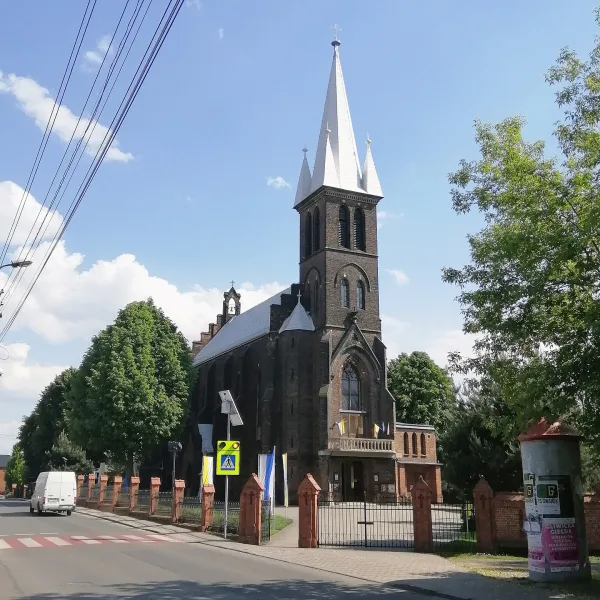
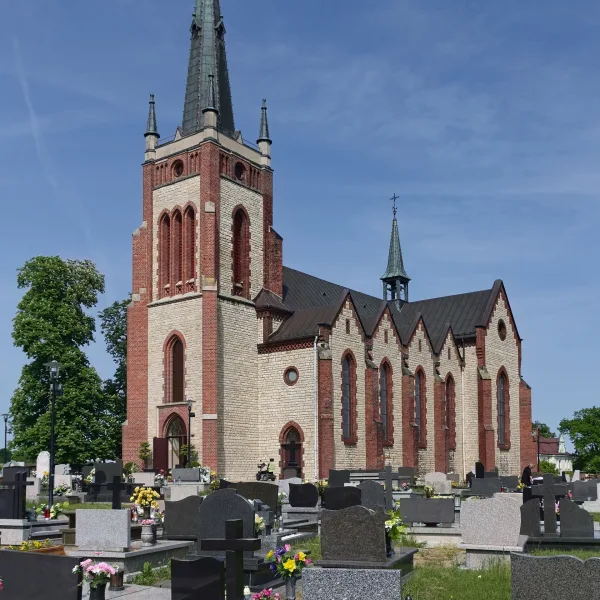
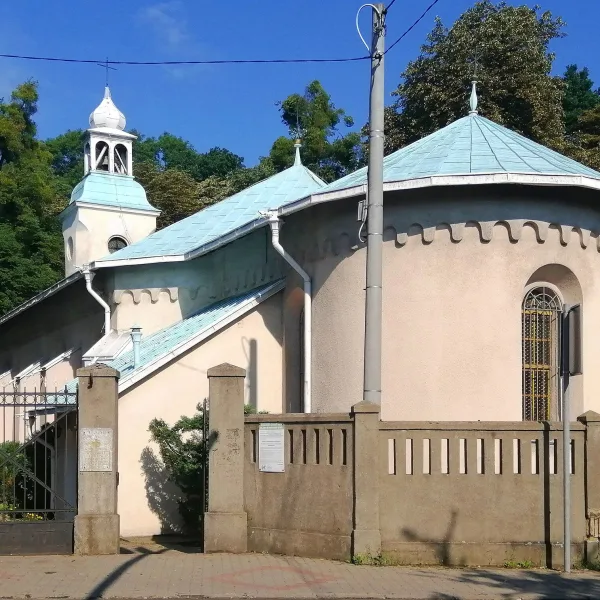
Stare Tarnowice has two churches of St Martin. The St Martin's Church complex from the turn of the fourteenth and fifteenth centuries is the oldest church in the town, with frescoes from 1707. Beside it rose the new St Martin's Church of 1899-1902, Neo-Romanesque and Neo-Gothic, designed by Ludwig Schneider. In Repty Śląskie you will see the Church of St Nicholas of 1867-1871, in Strzybnica the Church of the Most Sacred Heart of Jesus, and in the centre the brick Church of St Anne of 1617-1619, built as a Lutheran church and Catholic since 1653. In Osada Jana stands the Church of St John the Baptist and St Camillus. The complete list of churches is under churches and monasteries in Tarnowskie Góry.
What can you do in Tarnowskie Góry with children or in the rain?
With children the steam machinery museum fits best, and on a rainy day a water park or a trampoline park. All of it lies within the town.
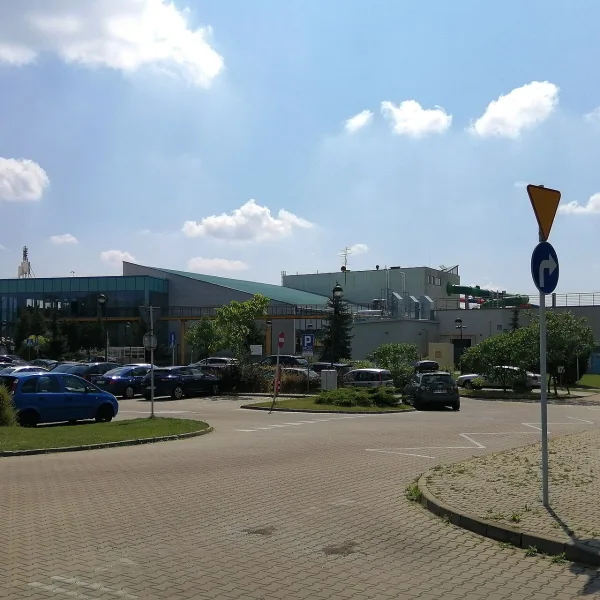
The Water Park at ulica Obwodnica 8 has slides, a wave pool, a sauna zone and a climbing centre in the neighbouring hall. Happy Jumper at ulica Korczaka 21 is a trampoline park with zones for the youngest and children's birthday parties. Both work indoors. On a rainy day you can also choose the museums and the walk through the mine, because the route runs underground. A set of weather-proof ideas is gathered under things to do in Tarnowskie Góry when it rains, and outings with children on the page for places for families.
Where are the memorial sites and burial grounds in Tarnowskie Góry?
Remembering the former Jewish and Lutheran communities calls for quiet. No building remains of the synagogue, and of one cemetery only a green square, so these are places of memory, not leisure.
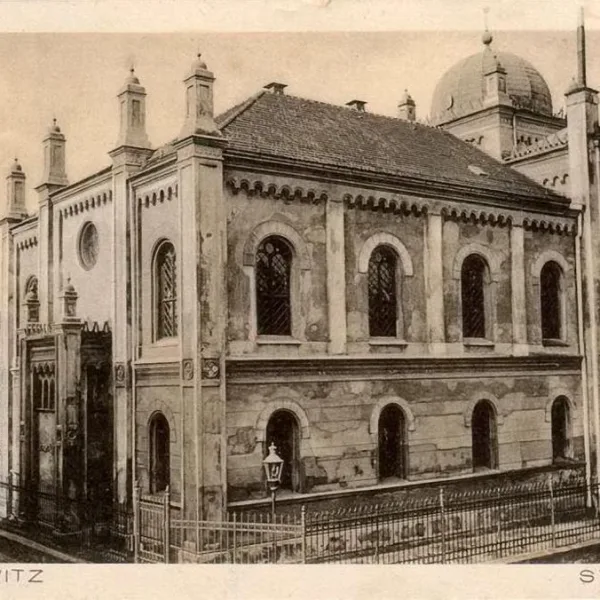
The synagogue in the Moorish style was built in 1864 and burned in 1939, and its ruins were cleared in 1943. Today the site at the junction of ulica Królika and ulica Szymały is marked by a column-shaped monument; the history is told on the page Synagogue in Tarnowskie Góry. The Jewish cemetery at ulica Gliwicka 66 dates from 1822. About four hundred and fifty gravestones survive there, along with a pre-burial house from the late nineteenth century.
The former Lutheran cemetery on ulica Piłsudskiego was founded in 1780 and closed down in 1967. Today there is a green square, old trees and a monument commemorating the necropolis. Other cemeteries and monuments are listed under cemeteries and monuments in Tarnowskie Góry.
Frequently asked questions
Which sights fit into one day in Tarnowskie Góry?
Start with the Historic Silver Mine and the steam machinery museum, then walk to the Market Square, the town hall, the Sedlaczek House and Gwarków Square. End the day in the Municipal Park.
Is Tarnowskie Góry on the UNESCO list?
Yes. In 2017 twenty-eight mining places, together with the drainage system, were added to the World Heritage List. They lie in Tarnowskie Góry, Bytom and Zbrosławice.
What can you do in Tarnowskie Góry when it rains?
Choose the museums, the water park, the trampoline park or the underground route in the silver mine. All of them are under a roof or below ground.
Are there free places to see in Tarnowskie Góry?
Yes, you can see the parks, the spoil heap, Doły Piekarskie, the Głęboki Dół lake, the cemeteries and Gwarków Square without paying. Museum and mine tickets should be checked beforehand.
Is there a castle in Tarnowskie Góry?
Yes, in the Stare Tarnowice district stands a sixteenth-century Renaissance castle that can be visited with a guide. It is worth combining with a visit to the two churches of St Martin.

 Museums