Things to do in Zawiercie: the ruined Bąkowiec castle on Tygrys rock, three parks and a neo-Gothic basilica. Over a dozen stops on the Jura and in the centre.
Zawiercie lies on the northern edge of the Silesian Voivodeship, in the Kraków-Częstochowa Upland. It grew up around the railway and factories, which shows in the brick basilica, the directors' villas and the parks from its industrial heyday. In the districts of Skarżyce and Kromołów, much older traces survive: a ruined castle, a stone church from the late 16th century and one of the oldest Jewish cemeteries in this part of the Jura.
What should you see first in Zawiercie?
The two places that tell the story of the town best are Bąkowiec castle in Skarżyce and the basilica in the centre. The first shows the Middle Ages, the second the 19th century and the start of factory-era Zawiercie. Only then look in at the parks and at Kromołów.
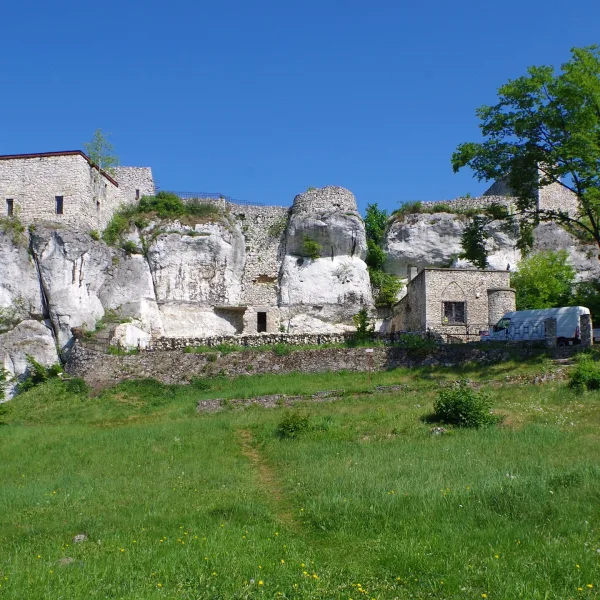
Bąkowiec Castle, also called Morsko Castle, is the ruin of a medieval castle on Tygrys rock in Skarżyce, in the Kraków-Częstochowa Upland. It belongs to the Eagles' Nests and sits on the Eagles' Nests Trail. In the heritage register it appears as Bąkowiec Castle in Morsko, because it had been linked to that village since the Middle Ages. A first wooden stronghold may have been raised in the 14th century, while the village of Morsko appears in records in 1220.
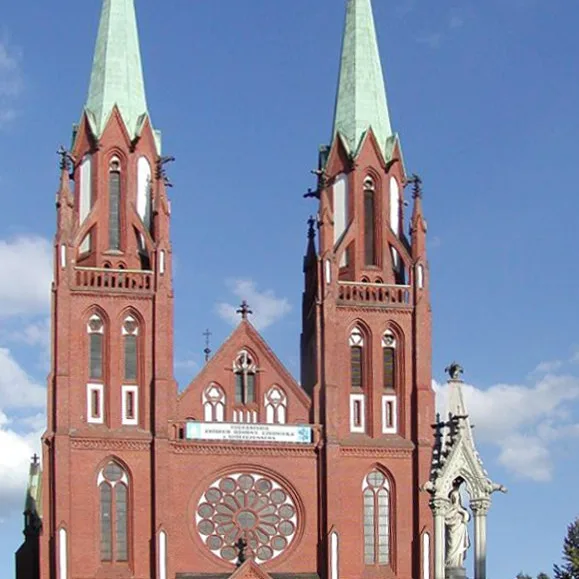
The Collegiate Basilica of the Holy Apostles Peter and Paul at Sienkiewicza 4 is a neo-Gothic church of red brick, built in 1896-1903, with a twin-towered facade and a historic fence. It was designed by the Warsaw architect Hugon Kuder and funded by Adolf and Izydor Ginsberg. It has been a collegiate church since 1992 and a minor basilica since 2009. The building is a listed monument.
For the town's history, read the article on Zawiercie, the town of railways and factories. The first train stopped here in 1847, then came ironworks and factories, and the settlement received a town charter in 1915.
Which buildings from factory-era Zawiercie can you see?
Zawiercie acquired several buildings from the late 19th and early 20th centuries that show how factory owners and directors lived. All are collected under monuments in Zawiercie.
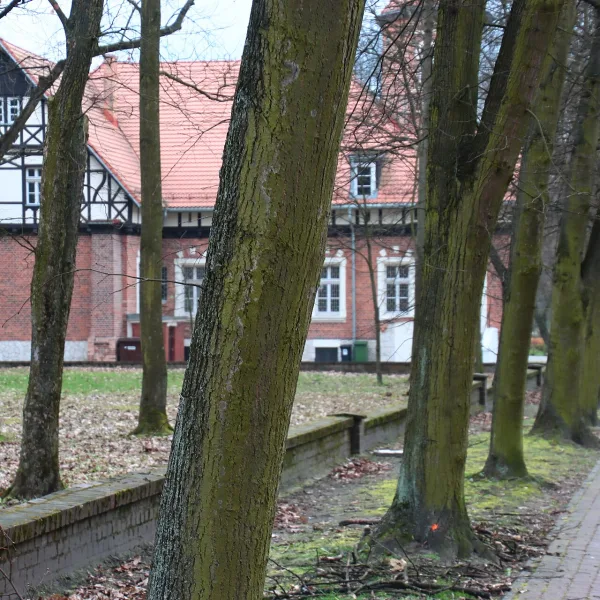
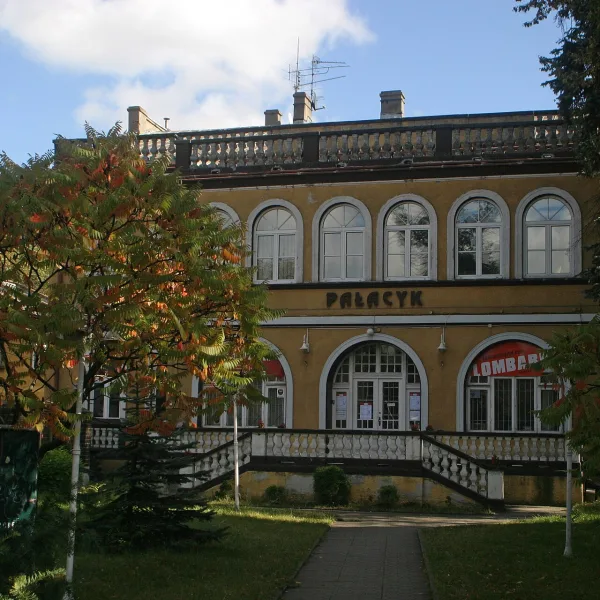
The Director's Villa at Szymańskiego 2, called Szymański's Little Palace, is a brick villa completed in 1897 as the residence of the director of the Zawiercie Joint-Stock Company. It stands in a park near the centre, has a stone plinth and a design by Hugon Kuder, and today houses a library, a memorial room and several cultural institutions.
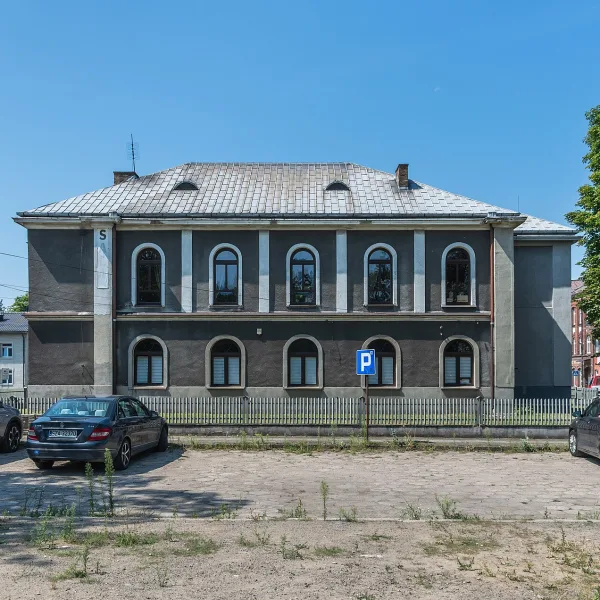
The Holenderski Villa at 3 Maja 25 is an Art Nouveau villa with a garden, built before the First World War and listed as a monument. The first owner was Stanisław Holenderski, who gave it its everyday name. The former Evangelical church at Bohaterów Westerplatte 24, neo-Gothic and brick, has served as the Crafts House since postwar rebuilding. It is hard to recognise as a church today, but the pointed arches give away its original purpose.
Where to walk and relax in Zawiercie?
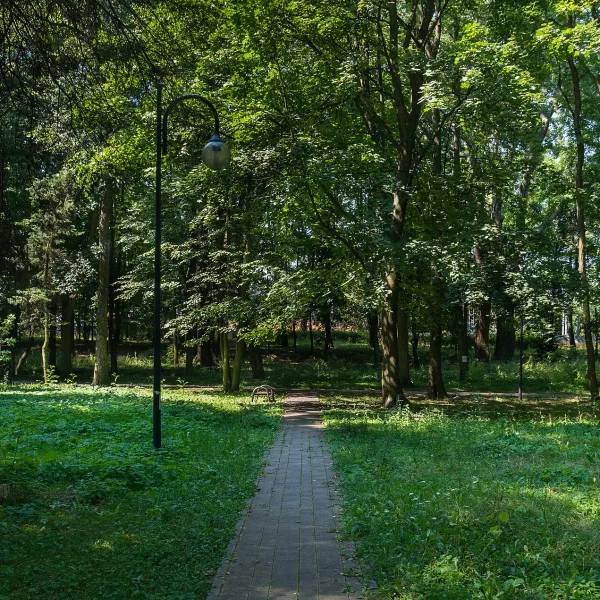
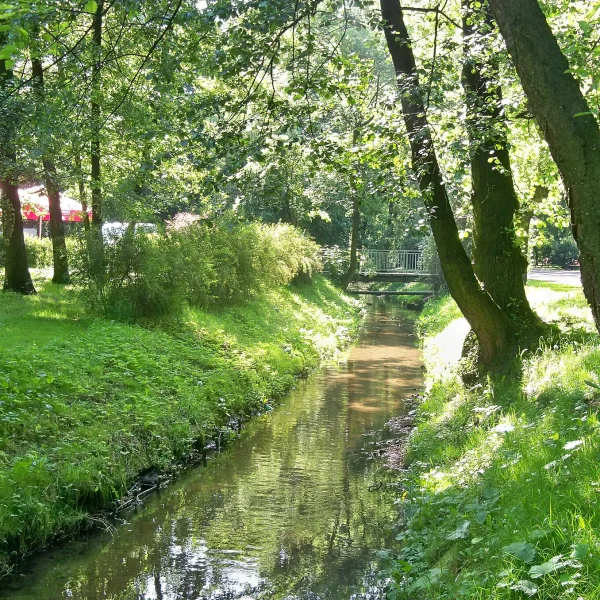
Zawiercie has three municipal parks, each with its own character. They are described together under parks and nature in Zawiercie and parks in town. Entry is free.
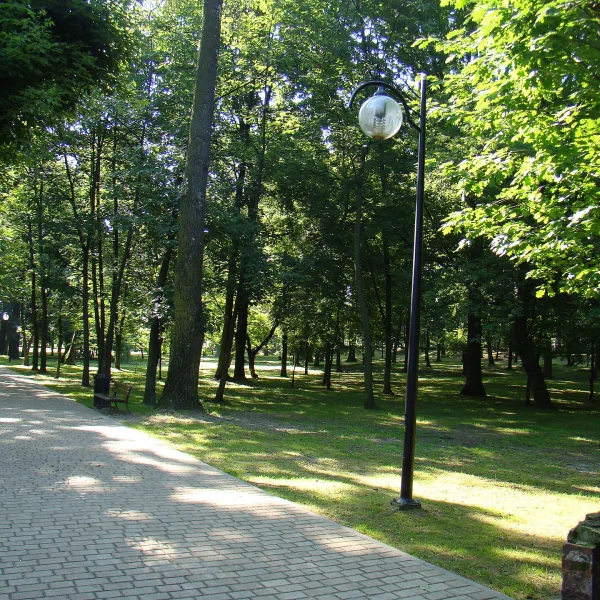
Adam Mickiewicz Park is the largest green space in Zawiercie. It opened on 1 September 1929 where an oak grove once stood, and roughly 1,600 trees stand in it now. Jakub Löwenstein gave the land. The engineer Władysław Petrych built weirs on the Warta, which made a pond with a fountain possible.
Tadeusz Kościuszko Park is smaller, at 4.66 hectares, and dates from the 1930s. Along its paths you can see a replica of the chapel of Our Lady the Spinner. OSiR Park is five hectares of greenery by the Szymański villa, landscaped in the English manner before 1901 to plans by Hugon Kuder, and it figures in the register of monuments.
In the town centre, inside the Sports and Recreation Centre, stands the brine graduation tower, opened on 21 March 2021. It is a wooden structure down which brine trickles, and visitors walk or sit on a bench in the salty air around it. It is close to Kościuszko Park. More brine towers in the region feature in the article on brine towers and spa pump rooms in Silesia.
Which churches in Zawiercie are worth seeing?
Besides the basilica, the town has several churches of very different ages, from the 16th century to the 1990s. See the full list of churches and monasteries in Zawiercie.
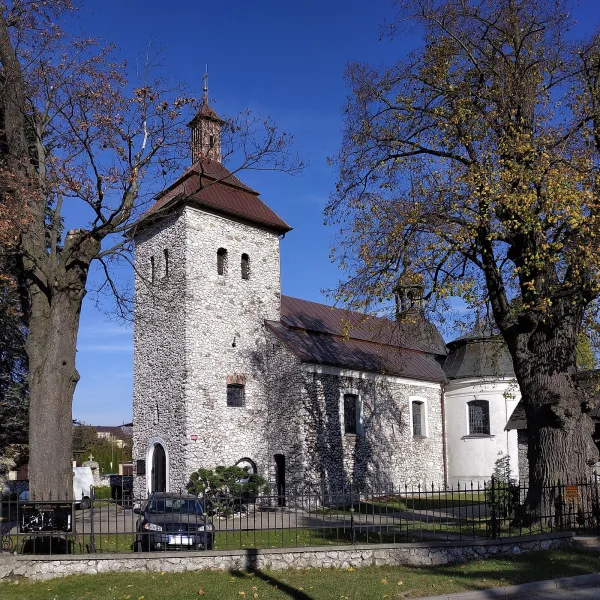
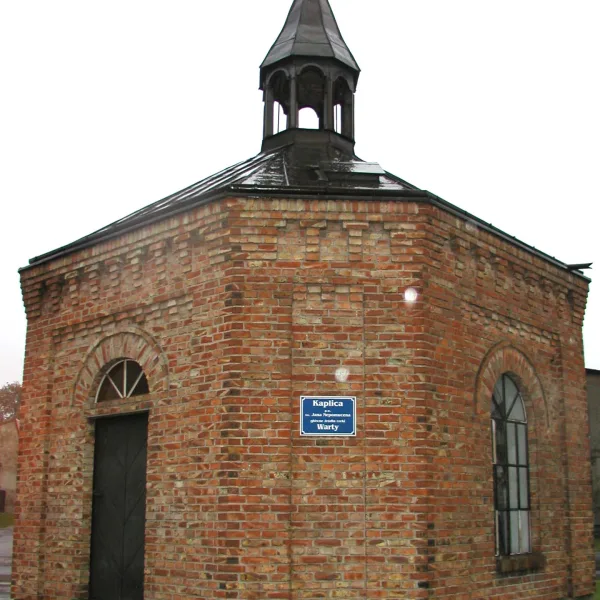
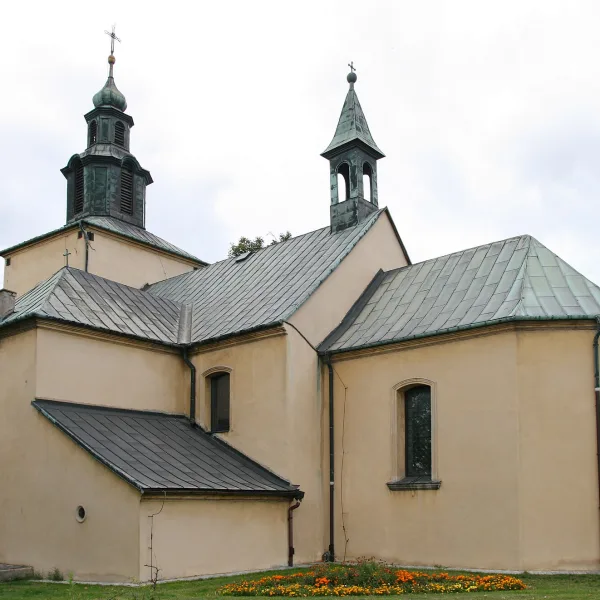
The oldest is the church of St Nicholas in Kromołów, on Jurajska Street: brick, single-nave, regarded as the oldest Catholic church in town, with a bell from 1508. In Skarżyce stands the church of the Holy Trinity and St Florian, built of stone and consecrated in 1598, with three round chapels symbolising the Holy Trinity. It is also a Marian shrine. In Kromołów, above the source of the Warta, you will find the chapel of St John of Nepomuk: octagonal, brick, from 1803, rebuilt in 1988.
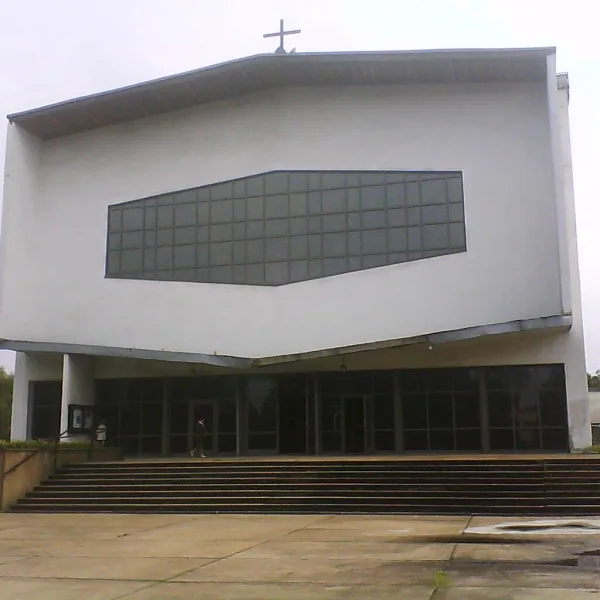
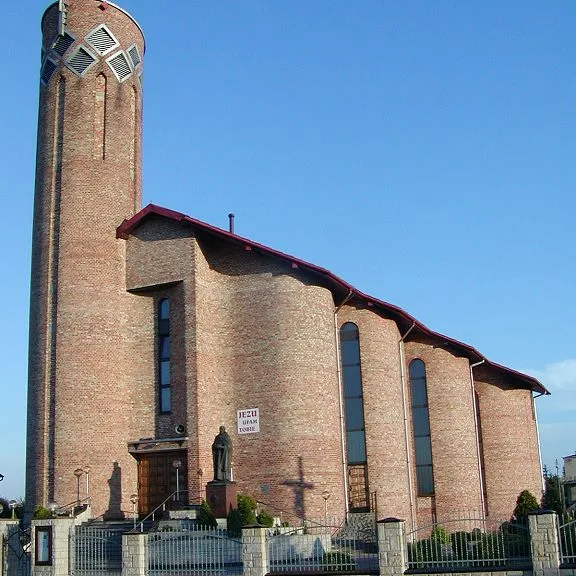
The modern buildings are the church of Our Lady, Queen of Poland of 1974-1980, with stained glass by Prof. Wincenty Kućma and a 51-metre bell tower, and the church of St Brother Albert of 1988-1992, with a bronze statue of its patron by Czesław Dźwigaj.
What traces of the Jewish community and which cemeteries are in Zawiercie?
Zawiercie has three places tied to Jewish history. Visit them quietly and with respect. The community's wartime fate is described in the article on the ghettos in Będzin, Sosnowiec and Zawiercie and their liquidation in 1943.
The synagogue of 1880 stands at Marszałkowska 41. It no longer serves a religious purpose, and the building is heavily altered and needs repair. The Jewish cemetery on Daszyńskiego Street covers about 0.6 hectares. What remains is a ceremonial hall, a mortuary and some two hundred headstones. Its age is given differently: one account says 1911, while a historian points to a possible beginning as early as the 18th century.
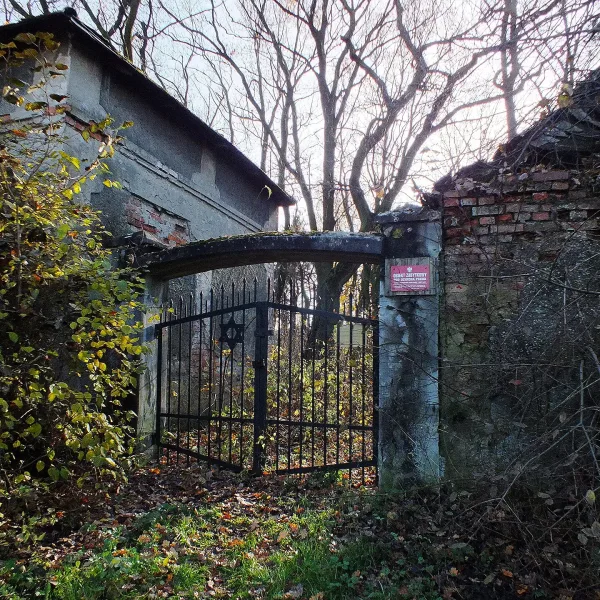
In Kromołów, on Piaskowa Street, lies a second, historic cemetery from the 18th century, counted among the oldest surviving in this part of the Jura. Across about half a hectare stand some 920 matzevot, with inscriptions in Hebrew, Yiddish and Polish. The cemetery is on the register of monuments. The Roman Catholic cemetery on Cmentarna Street, an active parish burial ground, has operated since 1903.
Frequently asked questions
How much of Zawiercie fits into a day?
Bąkowiec castle in Skarżyce in the morning, the basilica, the director's villa and Mickiewicz Park in the afternoon, and the brine tower in the centre to finish.
Is there a castle in Zawiercie?
Yes, the ruin of Bąkowiec Castle on Tygrys rock in Skarżyce. It stands on the Eagles' Nests Trail, in the Kraków-Częstochowa Upland.
What is free in Zawiercie?
You can enter all three parks and the cemeteries without paying. Everything is gathered under free places in Zawiercie.
Where can you relax outdoors in Zawiercie?
In the Mickiewicz, Kościuszko and OSiR parks and by the brine tower in the centre.
Where can you check events in Zawiercie?
Pick a day in the events calendar for Zawiercie, then narrow it to a category.

 Historic sites