Free things to do in Zawiercie: three historic town parks and three cemeteries, two of them Jewish, all open to visit without a ticket.
Zawiercie, a town in the Jura, grew around factories and the railway, and its parks and necropolises preserve traces of that past. Every place described here can be seen without paying. More free ideas from across the region are gathered in free attractions in Silesia, and other spots in town in things to do in Zawiercie.
Which park in Zawiercie to choose for a stroll?
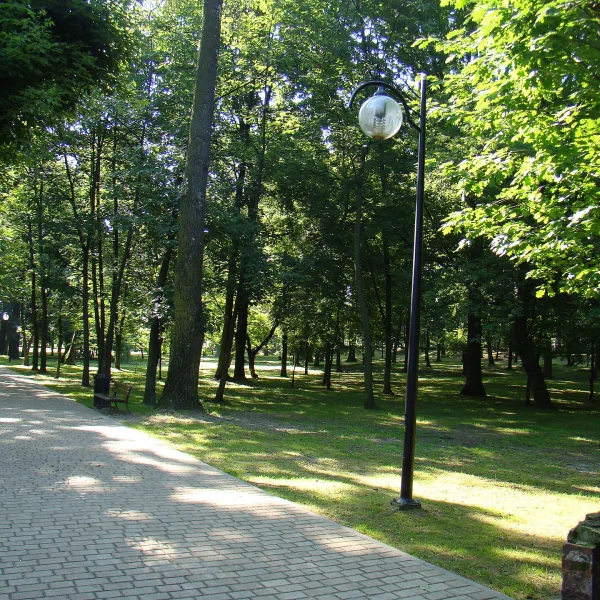
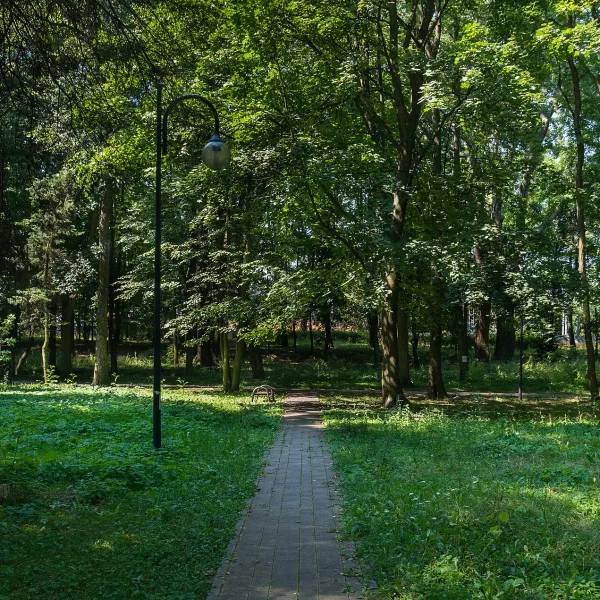
You can pick from three: the largest named after Mickiewicz, the oldest on Szymańskiego Street and the smallest named after Kościuszko. They differ in history and layout, so the choice depends on whether you want the shade of big trees, English-style paths or a city square with a chapel.
The story of Mickiewicz Park starts on the first day of September 1929, when planting began on the site of an old oak wood. About sixteen hundred trees stand here today. Jakub Löwenstein gave the ground, engineer Władysław Petrych shaped the area, and the town bought further plots.
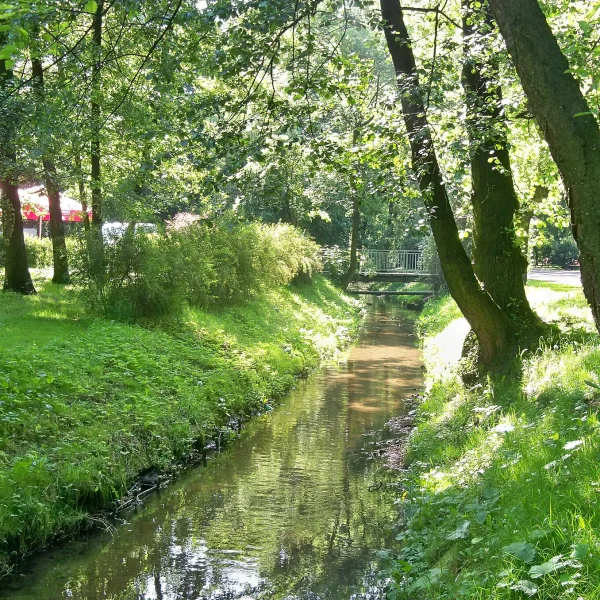
The grounds beside the Szymański villa, the OSiR Park, cover roughly five hectares and are in the monument register. Hugon Kuder designed it in the English manner before 1901, with a double loop of paths, rare plants and ponds. In Kościuszko Park, at 4.66 ha, the main curiosity is a replica of the roadside shrine known as Our Lady of the Spinners. It was laid out in the thirties, and in wartime the occupier closed it to Poles. The town's growth is explained in an article on the first train and the factories.
Which cemeteries in Zawiercie can you visit?
The town has three necropolises: an active Roman Catholic cemetery, a Jewish cemetery on Daszyńskiego Street and an older Jewish one in Kromołów. They are places of remembrance, so they are visited in silence and with respect for the graves.
The parish of Peter and Paul runs the Roman Catholic cemetery on Cmentarna Street, which arose in 1903 together with the building of the local church. You will see a chapel of 1934, a memorial to soldiers killed in fighting and tombs of people who served the town.
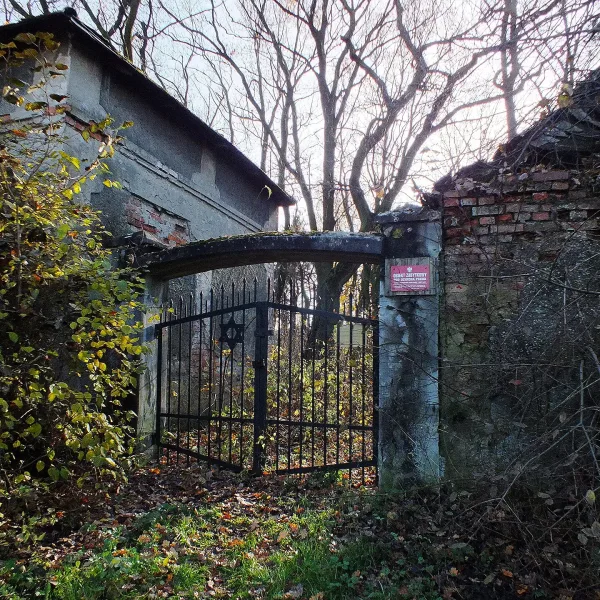
Founded in 1911, the Jewish cemetery on Daszyńskiego Street survives only in part: a pre-burial house, a mortuary and roughly two hundred gravestones remain. The historian Przemysław Burchard allows that its beginnings reach the 18th century. Another Jewish burial ground, a registered monument, spreads in Kromołów along Piaskowa Street: the Kromołów kirkut, with nearly nine hundred and twenty gravestones dating from the mid-1700s onwards. The wartime fate of the local community is told in a text about the ghettos of the Zagłębie towns.
Frequently asked questions
What is the biggest of Zawiercie's parks?
Mickiewicz Park. It appeared in 1929 where an oak wood once grew and has about sixteen hundred trees.
Where in Zawiercie is there an English-style park?
On Szymańskiego Street: the OSiR Park, designed by Hugon Kuder. The monument register has covered it for a long time.
How many Jewish cemeteries does Zawiercie have?
Two: the cemetery on Daszyńskiego Street and an older one in Kromołów. The latter kept far more gravestones.
Is the Roman Catholic cemetery still active?
Yes, it is a parish cemetery from 1903. The parish still runs it, so keep calm and show respect.

 Parks and nature