Things to do in Sosnowiec: the Sielecki Castle, the Schön and Dietel palaces, dozens of parks, ponds, a ski slope and an exotarium.
Sosnowiec lies in the Dąbrowa Basin and is known for its manufacturers' residences, but it also has plenty of greenery: of more than seventy places, every third is a park, forest or nature area. Former slag heaps, pits and open-cast mines have been turned here into slopes, ponds and cycle paths.
Where should you start sightseeing in Sosnowiec?
Start with the Sielecki Castle and the neighbouring park, then go to the centre for the basilica and the Zagłębie Theatre. The Dietel and Schön palaces make a second, separate stop.
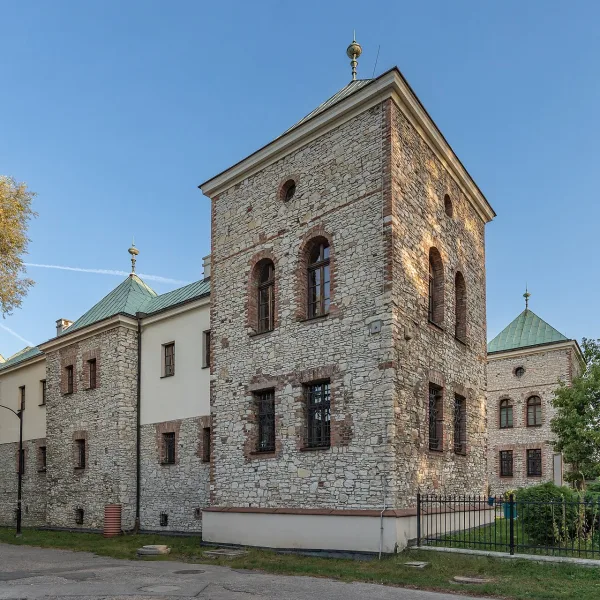
The Sielecki Castle at Zamkowa 2 is the oldest building in the city, on the left bank of the Czarna Przemsza in the Sielec district. The earliest mention of a defensive structure dates from 1403, and of a fortified manor from 1430. The building was rebuilt in 1620 and 1832 and now houses the Sosnowiec Art Centre, with exhibitions and festivals of photography and artists' books. Next to it lies Sielecki Park, the biggest of the city's old parks. It covers 20.24 hectares, was laid out in the English style, is divided by the river into an old and a new part, and has several natural monuments.
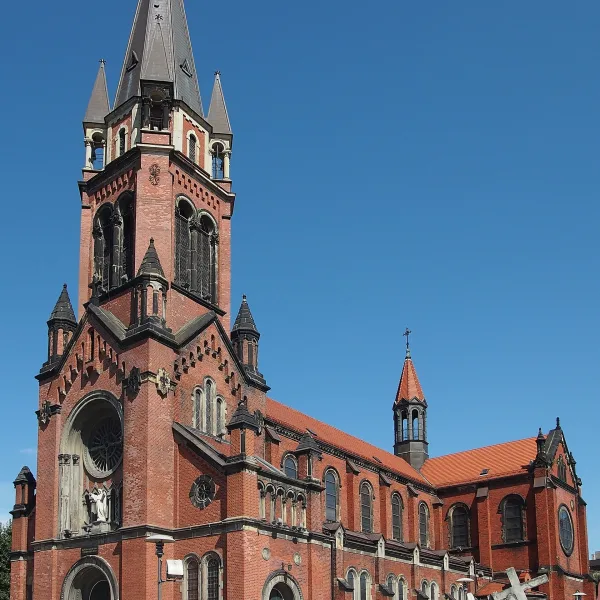
In the centre stands the Cathedral Basilica of the Assumption of the Blessed Virgin Mary of 1893-1899, the main church of the Sosnowiec diocese. Its brick body with a tall tower hides Young Poland polychromes by Włodzimierz Tetmajer and Henryk Uziembło. A few hundred metres away, at Teatralna 4, stands the Zagłębie Theatre. It opened on 6 February 1897 as the Winter Theatre to a design by Karol Steczkowski and is regarded as the sixth permanent stage in the Polish lands. The building, with a tiered auditorium and decoration painted by Rudolf Sarbiewski, is listed in the register of monuments.
On plac Stulecia stands the monument to Jan Kiepura, unveiled on 15 May 2002. The three-metre bronze figure of the singer in a flowing coat and hat weighs over 900 kilograms and is made of nine welded parts.
Where did the border of three empires run?
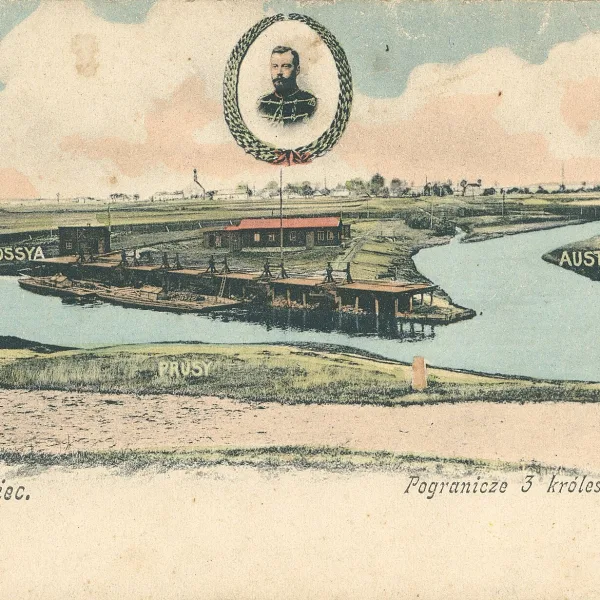
On the boundary between Sosnowiec and Mysłowice, at the point where one Przemsza arm meets the other. From 1846 to 1915 the frontiers of Prussia (later Germany), Austria and Russia came together here.
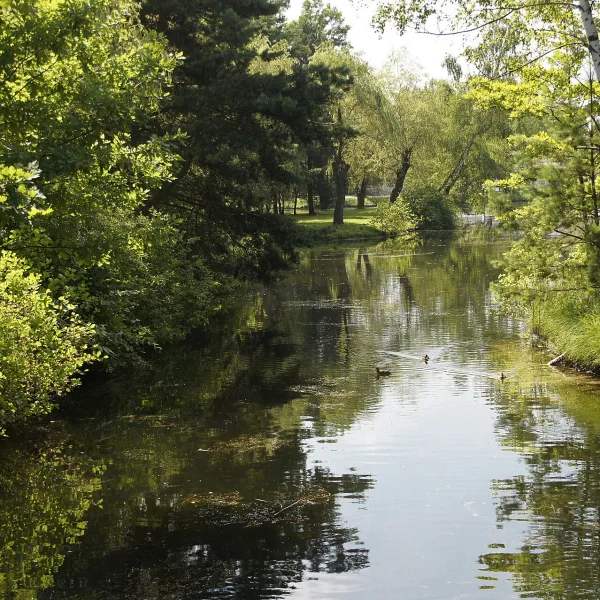
The Triangle of the Three Emperors is the former meeting point of three borders at the confluence, below which the river is called simply the Przemsza. The borders ran along the beds of the Biała Przemsza, the Czarna Przemsza and the Przemsza. On the Prussian, later German, side the border villages were Brzęczkowice and Słupna. The place suits a quiet walk by the water and is a reminder of the time when today's Dąbrowa Basin was divided between three states.
Which palaces and industrialists' residences can you see in Sosnowiec?
Two families of manufacturers built residences here: the Dietels in the Pogoń district and the Schöns in Środula. Each left a palace, a park and a church or museum that you can visit in a single outing.
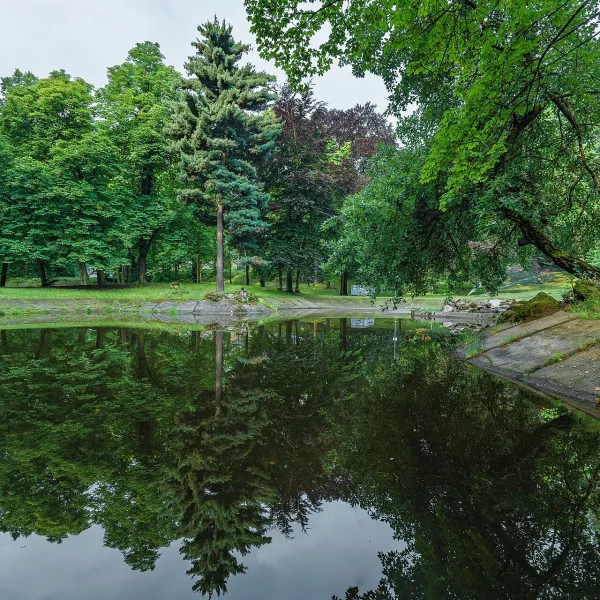
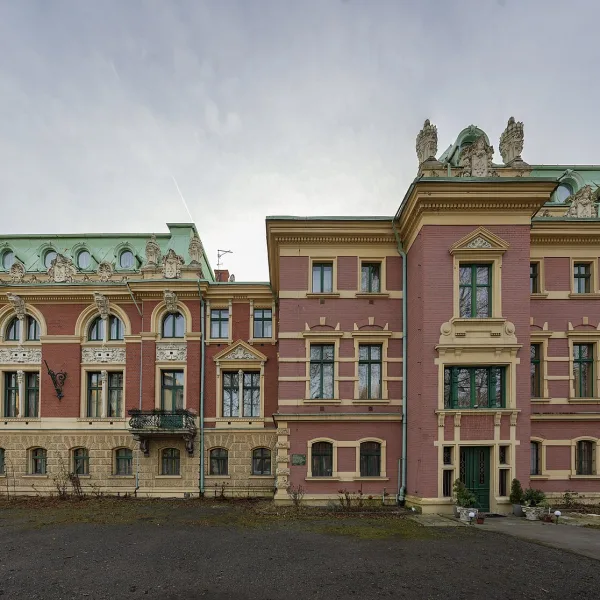
Heinrich Dietel came to Sosnowiec from Saxony in June 1878 and founded a worsted wool spinning mill. Dietel Palace at Żeromskiego 2a is a neo-Baroque residence listed in the register of monuments, and its rooms have kept part of their original furnishings. Beside it spreads Dietel Park of 1901, covering 6.13 hectares, laid out in the neo-Romantic style, with a renovated gloriette and a pond holding a statue of Neptune. Opposite the former palace stands a brick Lutheran church with a clock tower, which grew from the works chapel of the Dietel factory. The family is described in the article on the palaces and mausoleum of the Dietel and Schön families.
The Schöns built the palace and park complex at Chemiczna 12: two palaces, of Ernst and of Wilhelm, and a landscape park, entered in the register of monuments in 1980. Wilhelm's Palace of 1900, designed by Józef Pomian-Pomianowski mainly as a guest palace, has a striking broken roof and a porch supported by two Ionic columns. The Schön palace houses the Museum in Sosnowiec, which permanently displays contemporary Polish glass and the story of the Schön family. At 1 Maja 19 stands Franz Schön's palace of 1900-1903, which in 1919 housed the command of the Silesian Uprising and today is a district court.
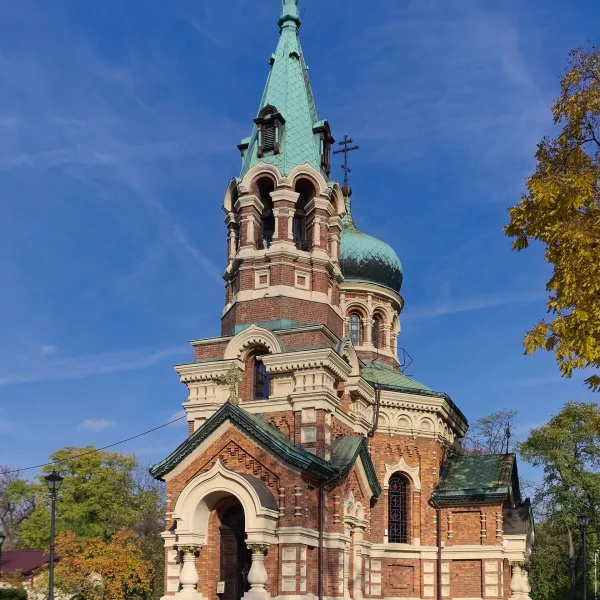
An older era is recalled by the Mieroszewski Manor House in Zagórze: a neoclassical manor on a rise on ulica Szpitalna, designed by Francesco Maria Lanci, with a surviving part of its park. A different story is told by the Orthodox church of Saints Faith, Hope, Love and their Mother Sophia on ulica Kilińskiego. It was built of brick and stone in 1889 and is the only one of three former Orthodox churches of Sosnowiec to survive.
Which parks in Sosnowiec should you choose for a walk?
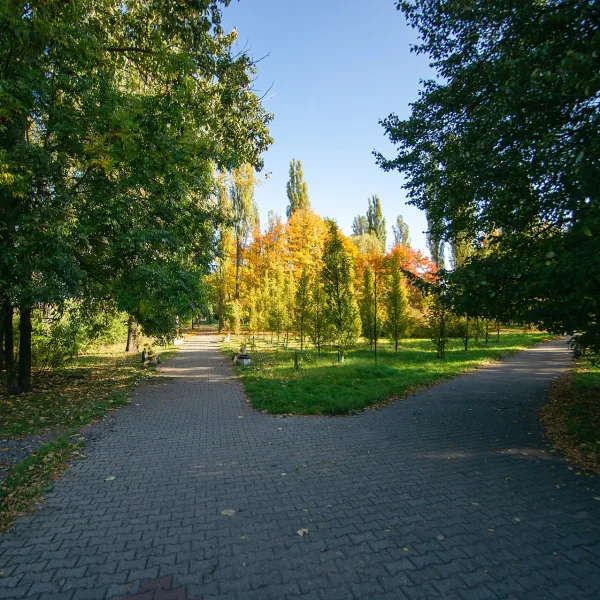
The largest are the Millennium Park and the Jacek Kuroń Park, the most stately Sielecki and Dietel, and for a short stroll the neighbourhood parks will do. None of them charges for entry.
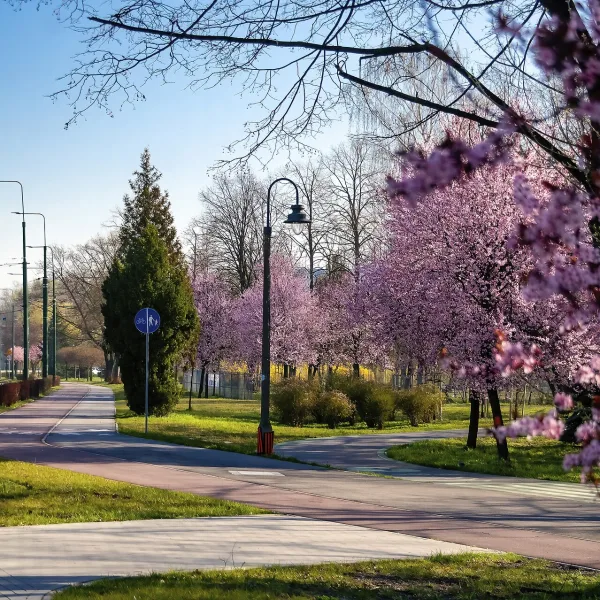
The Millennium Park in Milowice covers 102 hectares and was created on the land of the Saturn colliery. The landscape shows hills left by old slag heaps, ponds and tracks of a sand railway that cyclists now ride. The Jacek Kuroń Park on ulica Anki Kowalskiej covers thirty hectares in Kazimierz and has ponds, an amphitheatre, a skate park, a playground garden and cycle routes. On the north it borders the forests of Dąbrowa Górnicza. The same park holds the Lina Adrena rope park, with courses from four to ten metres above the ground.
Środula Park was begun in 1991 on wasteland left by a closed state farm. The landscaped part covers over ten hectares, and with adjoining woodland the park reaches about forty-five. It contains a ski slope, an outdoor gym and a playground garden. The Scouts' Park, nicknamed Koła ("the Circles"), lies on the Czarna Przemsza and has a multisensory garden, an orchard, a rose garden and green mazes. It took its name from a road-safety town once run by the Polish Scouting Association, which left behind circular paths.
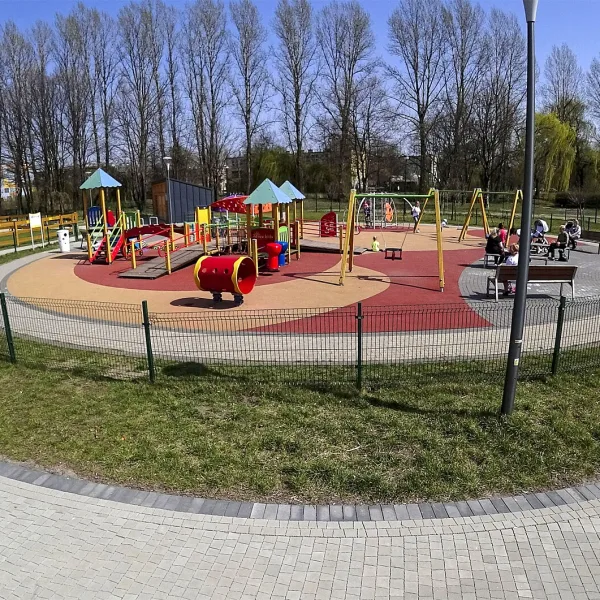
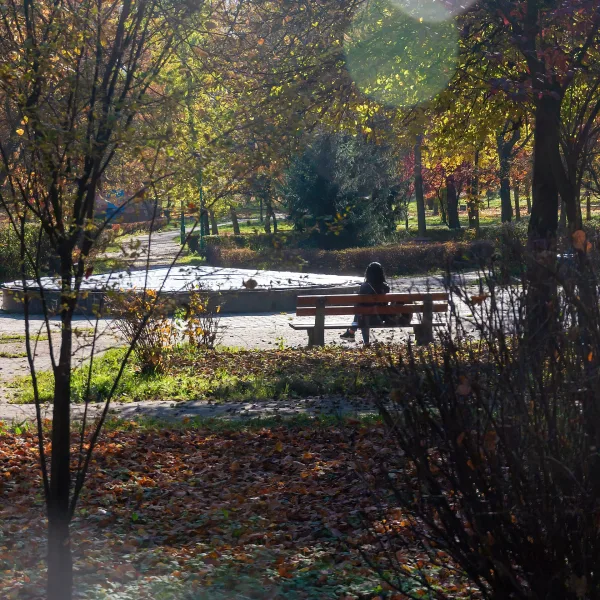
There are over a dozen smaller parks. Niwka Park, of 5.4 hectares, lies in a former coal open-cast pit and has a summer swimming pool and a fitness park. Milowice Park of 1922, called the Park with the Stone, has 1.7 hectares. Kępa Park in Zagórze has a skate park and the start of the Zagórski Forest cycle route. The Wanda Malczewska Park in Klimontów has a chapel of 1746 shaped like a bastion. Wygoda Park, the Włodzimierz Mazur Park and Środula Okrzei Park are neighbourhood greenery for a stroll of a few minutes. Take children to the Baczyński Children's Play Garden in Milowice, renovated in 2020. The full list is under parks of Sosnowiec.
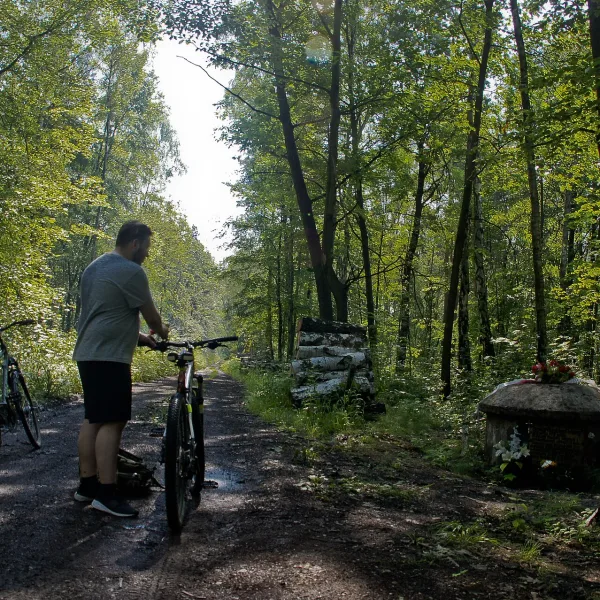
The Zagórski Forest, of about 425 hectares, has kept bunkers from 1944 that belonged to the German defensive line B2, and water-filled hollows left by old mining. A cycle route leads through the forest to the Kuroń Park. The Bory Peat Bog in Maczki is a Natura 2000 area protecting transitional peat bogs. Nature inside the conurbation is the subject of the article on reserves and green enclaves of the conurbation.
Where can you swim and play sport in Sosnowiec?
For water go to Stawiki or Balaton, for skiing to Środula, and for adrenaline to the rope park, the karting track or wakeboarding. All of these are former industrial land.
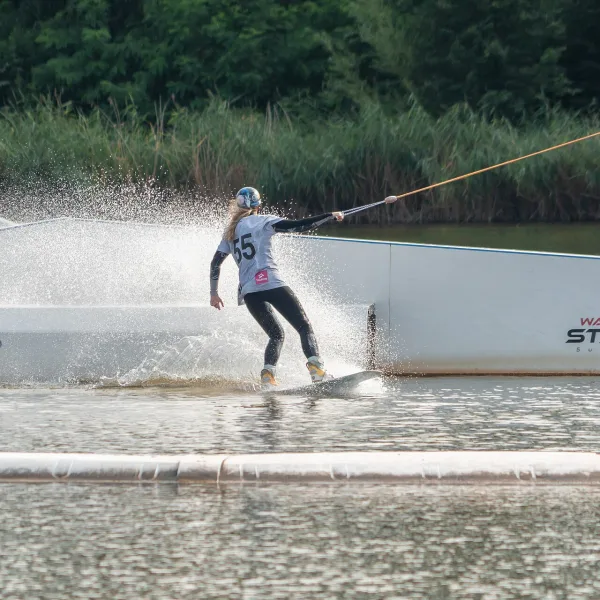
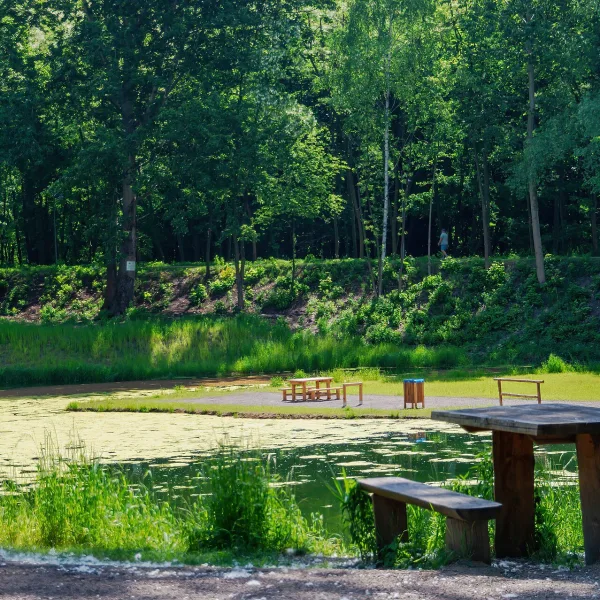
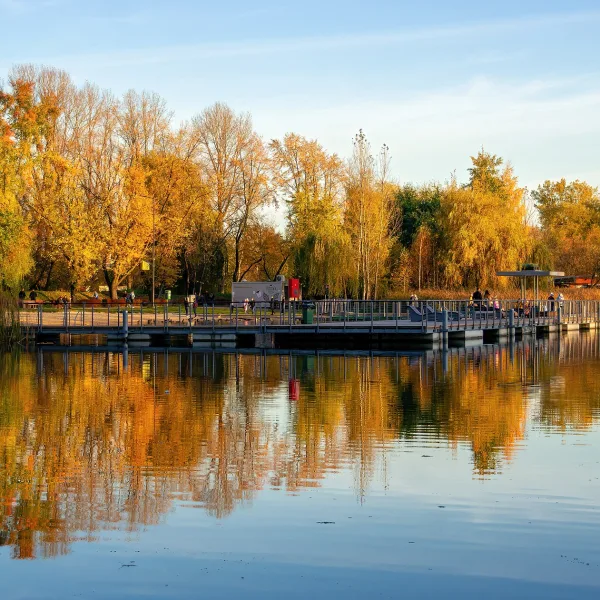
Stawiki is a lake in a former sand pit, near the border with Katowice. The water surface covers 7.8 hectares, the average depth is three metres, and around it there is a bathing beach, a water sports centre and an educational trail 732 metres long. Next to it is Wake Zone Stawiki, a place where wakeboarders are pulled by cable tows, with a school for children and a club. Balaton in Porąbka is a lake left after clay extraction, about 9.7 hectares in area, and since the 1970s a place for relaxing by the water.
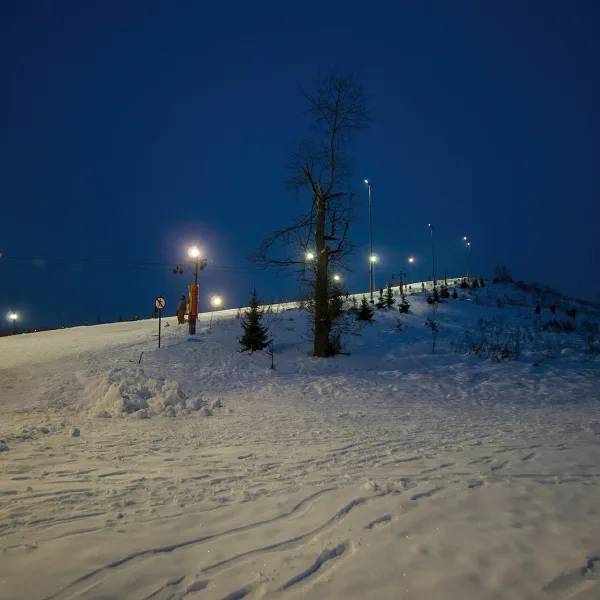
The Środula ski slope was heaped up in 2002-2005 from the material of a slag heap of the Sosnowiec colliery, using about a million cubic metres of earth. Skiers get three runs, three drag lifts and floodlights, and the summit offers a view across most of the city. In the rope park the hardest course is called Generał, with twenty obstacles at ten metres, for people from 150 cm tall. The Kapral course, with eighteen obstacles, hangs at about four metres and is for children from 120 cm.
For rain or the evening there are the Autodrom karting track at Stawowa 4, an indoor track for people who want to race, and Pit Stop Bowling in the same complex, with lanes adapted for children and a ramp for disabled visitors.
Where can you go in Sosnowiec when it rains, or with a child?
For rain the best are the museums and the exotarium, and with children also the rope park and the play garden. The city has four museums, each with a different profile.
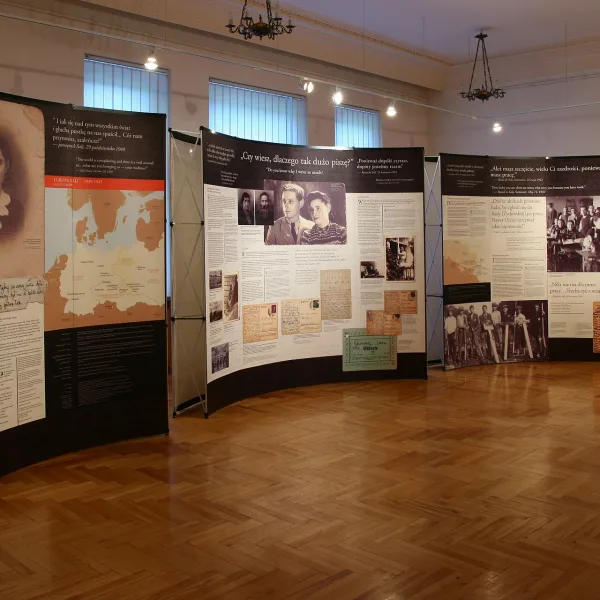
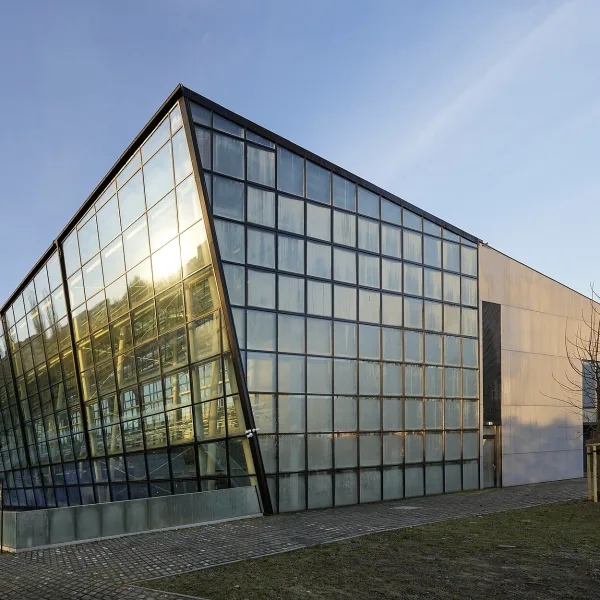
The Exotarium at Piłsudskiego 116 is a glasshouse of palms, aquariums and terrariums in the Jan Fusiński park. A new building opened on 2 December 2023 on the site of the old exotarium of 1954-1956. The Museum of Medicine and Pharmacy at Ostrogórska 30 opened on 12 December 2018, and eight rooms show the old equipment of pharmacies, surgeries and operating theatres. The Earth Sciences Museum at Będzińska 60 is in a building known as the Żyleta ("the Razor Blade") and holds about four thousand rocks, minerals, fossils and meteorites. The list of all museums is under museums in Sosnowiec.
What is on at the stages and clubs you can check in the calendar of events in Sosnowiec. Places for bad weather are gathered under rainy-day places.
Which places of remembrance and cemeteries are in Sosnowiec?
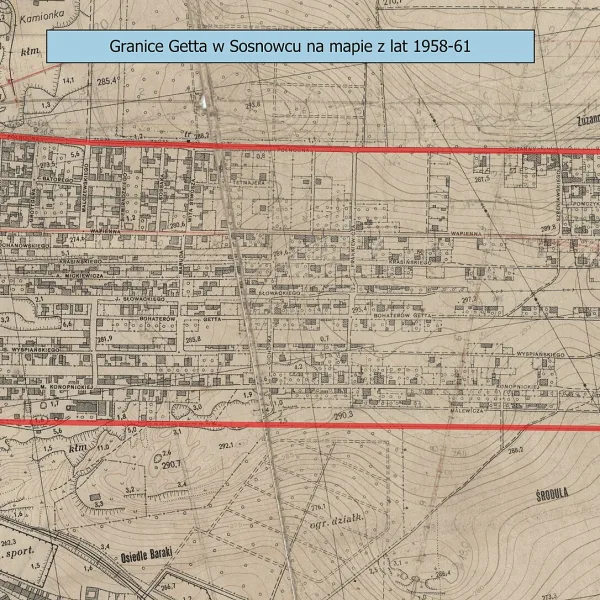
The most important place of remembrance is the site of the former ghetto in Środula. Next to it stand the city's cemeteries, which have a section of their own.
The Środula ghetto was the part of Sosnowiec to which the German occupation authorities moved the Jewish inhabitants of the city and its surroundings. It was created in 1942-1943, and the main liquidation took place in August 1943 and ended with deportations to the Auschwitz-Birkenau camp. The site now has a memorial and a commemorative slab. Details are given on the entry for the ghetto in Sosnowiec. The fate of the three ghettos of the Dąbrowa Basin is discussed in the article on the ghettos in Będzin, Sosnowiec and Zawiercie. The city's necropolises are gathered under cemeteries and monuments.
Frequently asked questions
How much of Sosnowiec can you cover in a day?
The Sielecki Castle with its park, the cathedral basilica, the Zagłębie Theatre and the Dietel palace with its park. If time remains, add the Museum in Sosnowiec in the Schön palace in Środula.
Which park in Sosnowiec is the largest?
The Millennium Park in Milowice, with 102 hectares, is the largest. The largest of the historic city parks is Sielecki Park, with 20.24 hectares.
Where can you ski in Sosnowiec?
On the Środula ski slope in Środula Park. It offers three runs with drag lifts and lighting, and the hill itself was heaped up on an old slag heap.
Where can you swim in Sosnowiec?
At Stawiki, which has a bathing beach, a water sports centre and an educational trail. Balaton in Porąbka is used for seasonal relaxation by the water.
What is the Triangle of the Three Emperors?
It is the former meeting point of the borders of Prussia, Austria and Russia at the confluence of the Biała and Czarna Przemsza, on the boundary of Mysłowice and Sosnowiec. The borders met here between 1846 and 1915.

 Places with character