Things to do in Częstochowa beyond the pilgrimage: Jasna Góra, the archcathedral, museums, parks and more than sixty places to see.
Częstochowa is known for pilgrims, but the city in the north of Silesia also has a philharmonic hall, a theatre, technology museums, historic cemeteries and a former steelworks district in Raków. There are places for a solo walk, an outing with children, a couple's evening and a rainy day, as well as a factual account of the city's Jewish past.
What should you see first in Częstochowa?
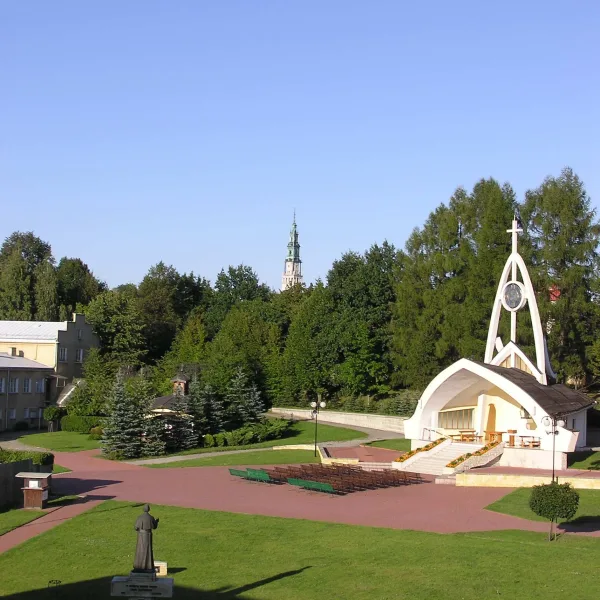
Start with Jasna Góra (the Pauline monastery on the hill), then walk down the Aleje Najświętszej Maryi Panny towards the centre, passing parks, the town hall, churches and squares. Beyond the hill, add the archcathedral, one museum and the Old Market Square. A single full day easily fits a handful of stops along that route.
The layout of the city helps. Jasna Góra stands on a hill, and the avenues running from its foot lead past the parks below the monastery, Biegański Square, the town hall that houses the Częstochowa Museum, two churches and two bronze benches. Further on, towards the railway station, stands the Archcathedral of the Holy Family, and just beyond it an abandoned brewery. If you only have a few hours, stay on that side of town.
A few places need a separate trip: Raków with the Hantke villa and the archaeological reserve, the Jewish cemetery in Dąbie, and Parkitka park in the north. Plan them separately.
Which churches and monasteries in Częstochowa are worth visiting?
Jasna Góra is the main draw, but the city has more than twenty churches and monasteries from very different periods. The oldest is the Gothic church of St Sigismund, while the youngest date from the second half of the twentieth century. Your choice depends on whether you care more about architecture or about the history of pilgrimage.
Jasna Góra and its closest neighbours
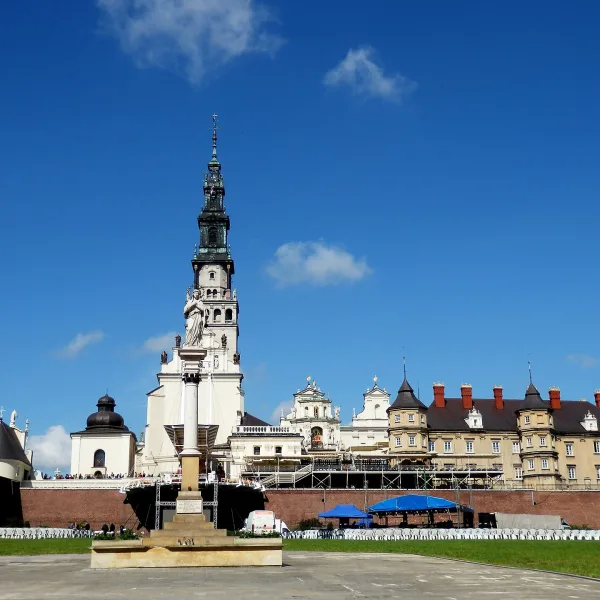
Jasna Góra is a shrine and a monastery of the Pauline order that holds the image of Our Lady of Częstochowa. The Paulines arrived from Hungary in 1382. The hill also has seventeenth-century fortifications, a treasury and a viewing tower, and since 1994 the whole complex has held the status of a Monument of History. The walls and the siege are described in the article Jasna Góra as a fortress.
Below the hill, about six hundred metres from the monastery, stands the Baroque Church of St Barbara from the seventeenth century, tied to the tradition of the Marian image. On the western slopes you will find the Valley of Mercy, a Pallottine shrine built on the site of a former brickworks, with a church decorated with mosaics.
Churches in the centre and the Old Town
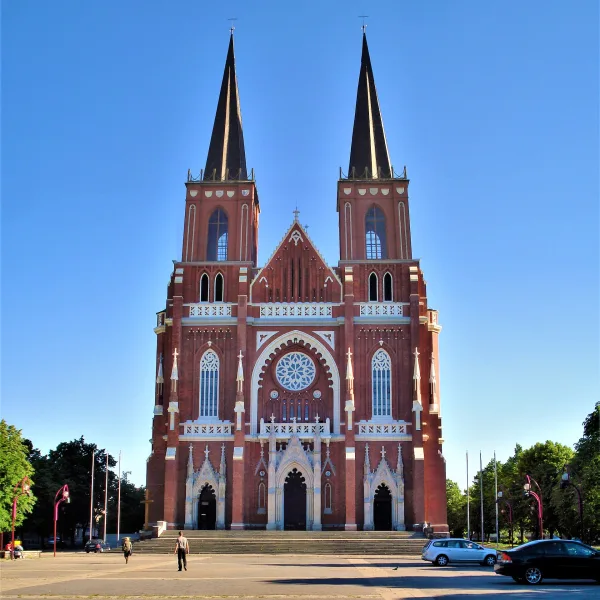
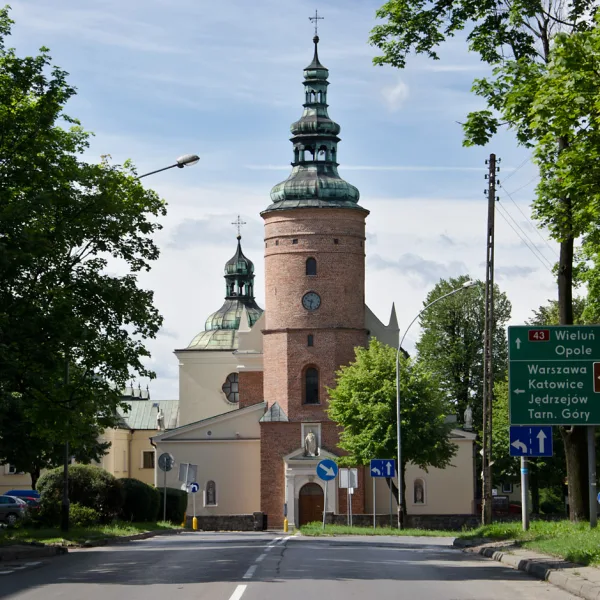
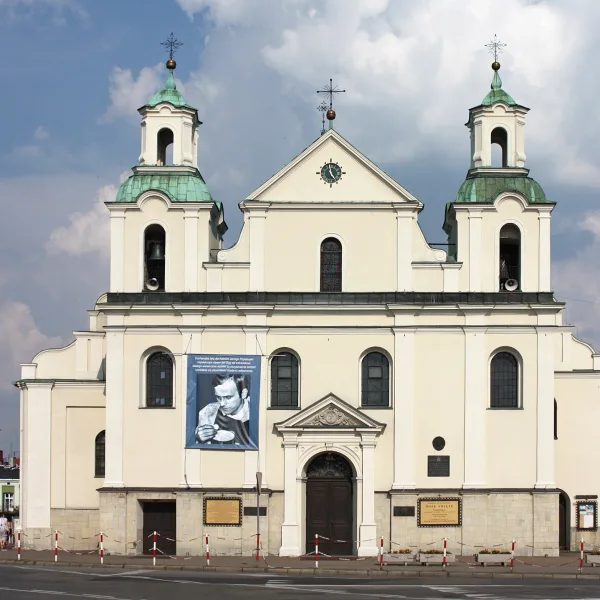
The largest church is the archcathedral on ulica Krakowska: Neo-Gothic, with three naves, built of brick between 1901 and 1927 to a design by Konstanty Wojciechowski on the site of a former cemetery. It has an organ of one hundred and one stops and a crypt of the bishops of Częstochowa, and John Paul II Square opens in front of its facade.
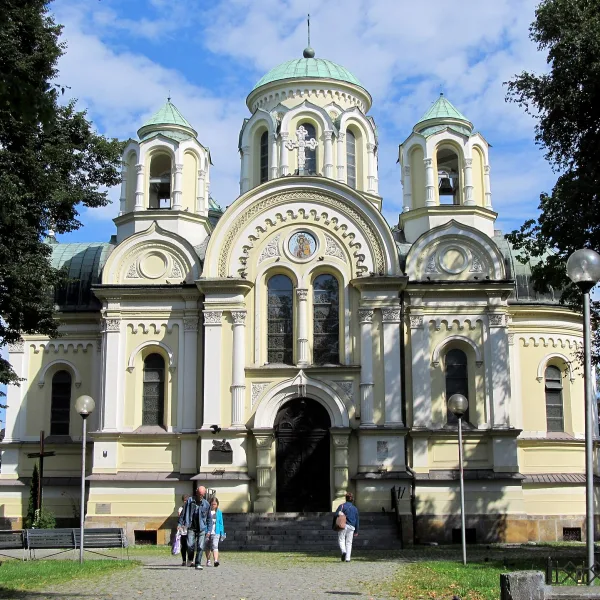
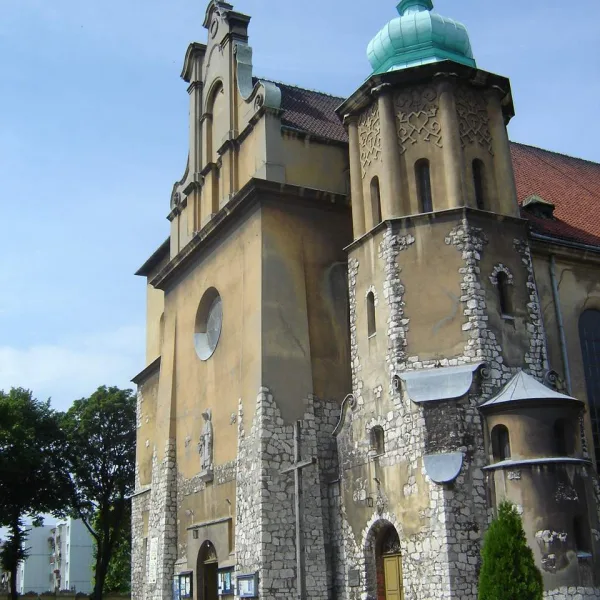
The oldest church in the city is St Sigismund's on plac Daszyńskiego: brick, Gothic, mentioned in documents in 1474, with a twin-tower facade from 1783. A few hundred metres away, on Biegański Square, stands St James's Church. It was built in 1870-1872 as an Orthodox church, which is why it still shows Neo-Byzantine features.
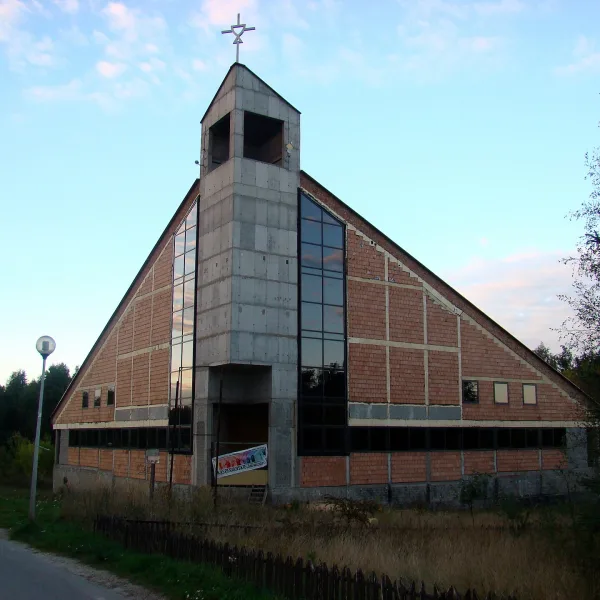
Along the avenues stands the Neo-Gothic Church of the Most Holy Name of Mary from 1859-1862, formerly a convent church, with modernist paintings and an organ from 1936. On ulica Jasnogórska you will find the cathedral of the Polish Catholic Church, built in 1979-1985 on a rotunda plan.
The Orthodox church, the Bernardines and parish churches in the districts
The Orthodox side of the city is shown by the Orthodox Church of Our Lady of Częstochowa at the junction of ulica Kopernika and ulica Śląska. It is a modern building designed by Michał Bałasz of Białystok, with a new iconostasis. The districts have, among others, the Sanctuary of St Joseph in Raków, the Bernardine monastery and the Church of the Exaltation of the Holy Cross in Częstochówka-Parkitka. A fuller list of churches is on the page for churches and monasteries in Częstochowa.
Which museums in Częstochowa are worth a visit?
Nearly ten museums operate in the city, and most are branches of one institution. The most interesting are those linked to local industry: matches, railways and iron ore mining. All of them offer shelter from the rain.
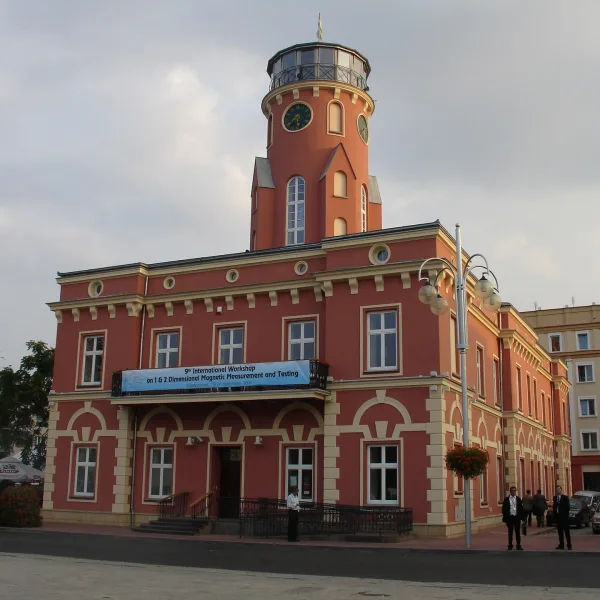
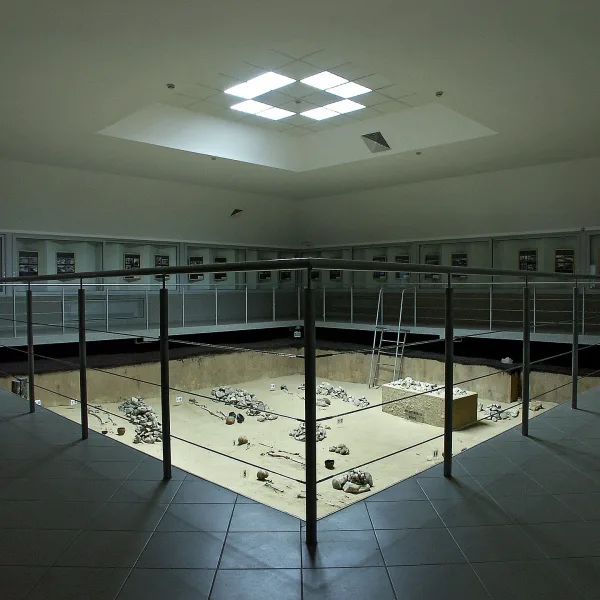
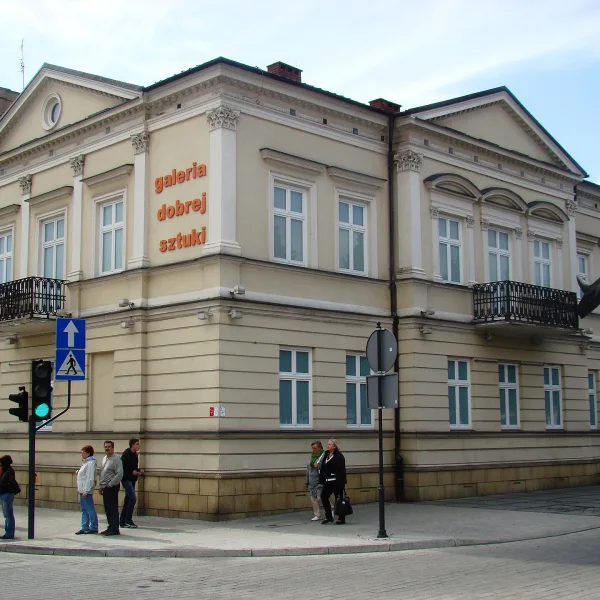
The Częstochowa Museum has no single building. Its main seat is in the town hall from 1828, and its exhibitions are spread across several buildings. Its branches include the Good Art Gallery in a former presbytery from 1875, the House of Poetry with the Halina Poświatowska Museum at ulica Jasnogórska 23, and the Lusatian culture archaeological reserve in Raków, where a cemetery more than two and a half thousand years old is preserved under a pavilion. The reserve also features in the article Częstochowa beyond the pilgrimage.
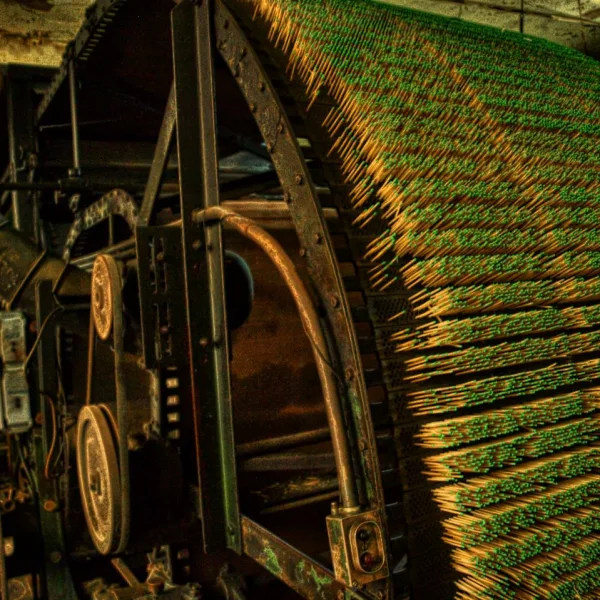
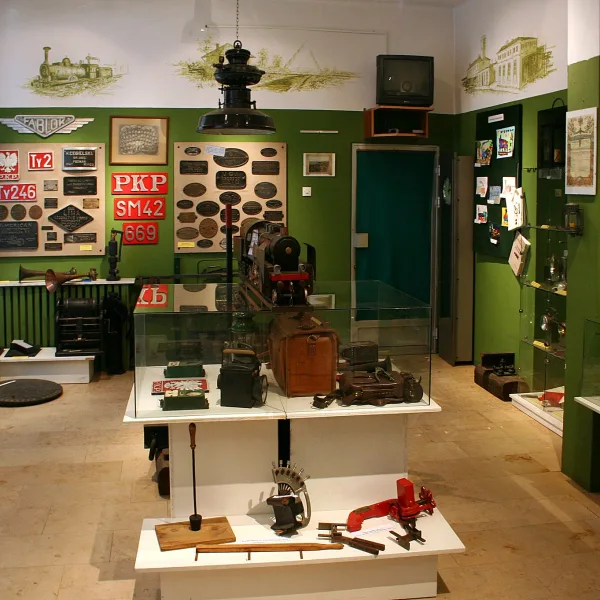
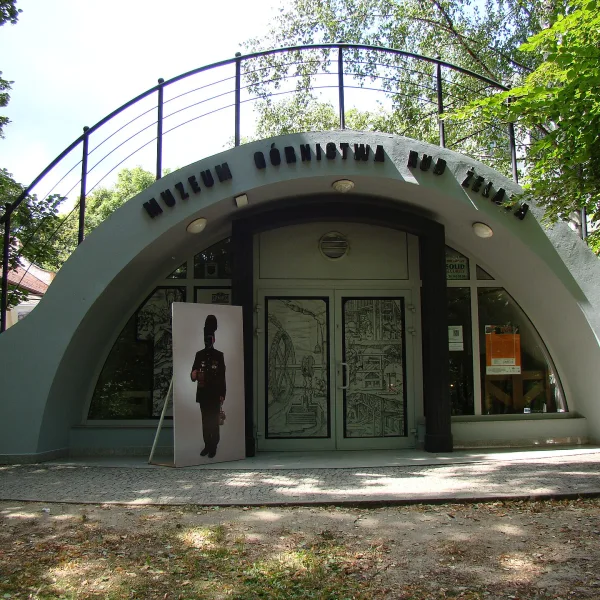
Three places show technology. The Iron Ore Mining Museum is an underground exhibition in corridors dug in 1974-1976 in Staszic Park. The Railway History Museum is housed in the Stradom station building and has two historic steam locomotives. The Match Production Museum occupies a former factory from 1881 with a production line from the 1930s; check before you go whether visiting is possible, because the museum is being rebuilt.
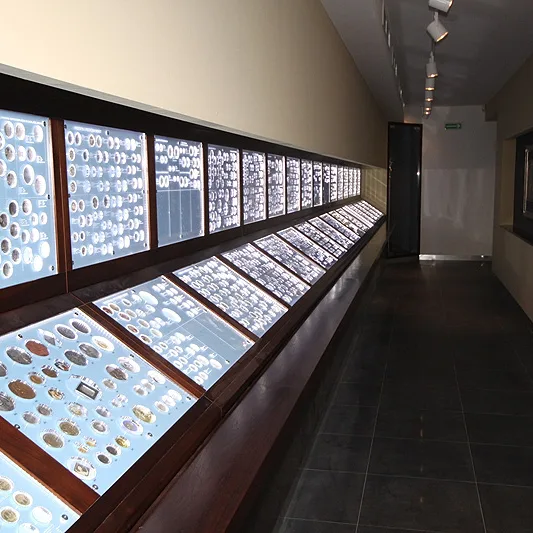
For admirers of Pope John Paul II there is the museum of coins and medals with more than eleven thousand items. All the museums are gathered on the page for museums in Częstochowa.
What is there to see in Częstochowa besides churches and museums?
Beyond the sacred route, head for the philharmonic hall, the theatre, Raków and the abandoned brewery. The city has plenty of nineteenth- and twentieth-century architecture that you can admire from the street.
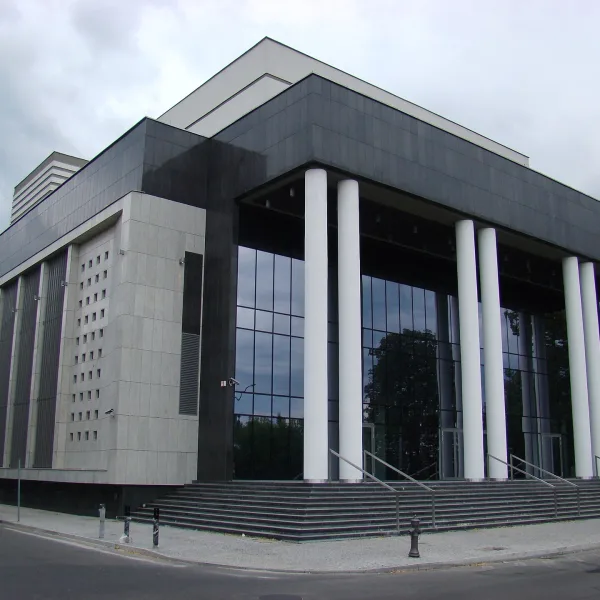
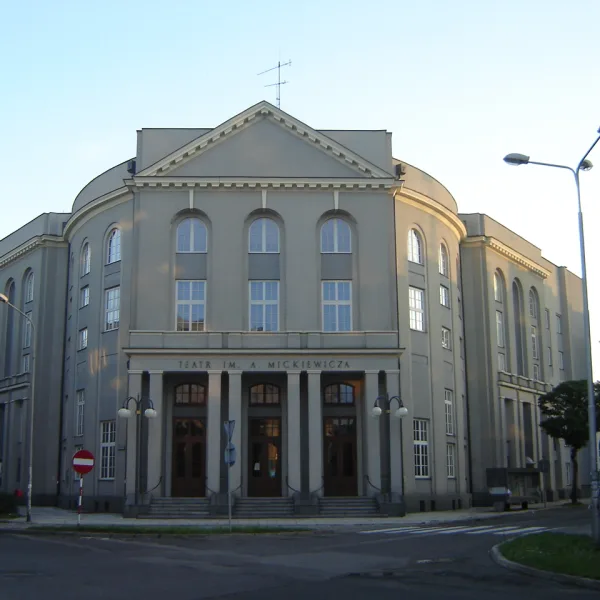
The Bronisław Huberman Częstochowa Philharmonic is at ulica Wilsona 16, in a modernist building from 1955-1965 raised on the site of the burnt New Synagogue. It has two concert halls, and the main hall is well regarded for its acoustics. Concert dates are in the calendar of events in Częstochowa. The Adam Mickiewicz Theatre occupies a brick building from 1928-1931 at ulica Kilińskiego 15. No other publicly funded theatre in town keeps its own permanent ensemble.
In Raków stands the Hantke Villa, a Neo-Baroque residence built in 1900-1903 for the owner of the steelworks, today a cultural centre with a park. The story of the works is told in Huta Częstochowa. In the centre, next to the cathedral and the station, stands the Kmicic Brewery from 1840, idle since 2004. You can view it from the street, but not go inside.
Where can you stroll in Częstochowa: parks, squares and monuments?
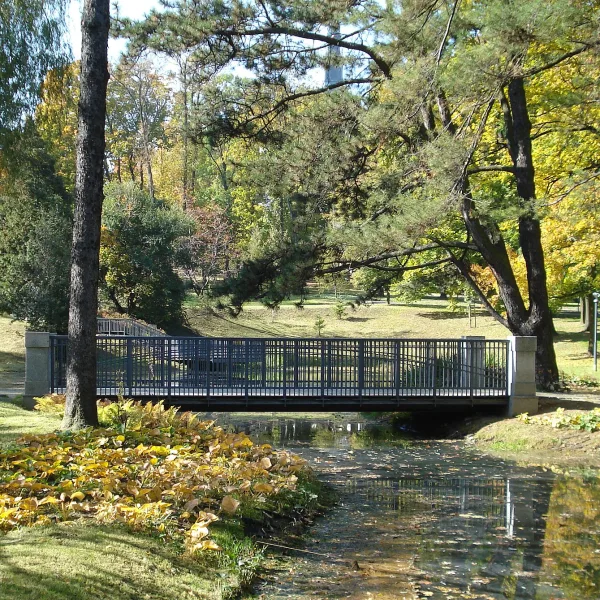
For a quiet walk the best choice is the parks below Jasna Góra: two city parks, Staszic Park and 3 Maja Park, covering 11.8 ha in total, with pavilions from the 1909 exhibition. Together with the monastery they hold the status of a Monument of History. More greenery is gathered on the page for parks and nature in Częstochowa. In the north lies the small Parkitka Park from 2002, planted on land set aside for a housing estate.
Biegański Square lies on the pilgrims' route, beside the town hall built in 1828-1836 and St James's Church; the monument to Józef Piłsudski from 1997 stands here too. The Old Market Square behind St Sigismund's measures about a hundred by sixty-six metres, has historic townhouses, and marks the end of the Eagles' Nests Trail. On the avenue, not far from the Pilgrimage Museum, two figures sit in bronze: the poet on the Halina Poświatowska bench and the actor on the Marek Perepeczko bench.
What can you do in Częstochowa with children or in the rain?
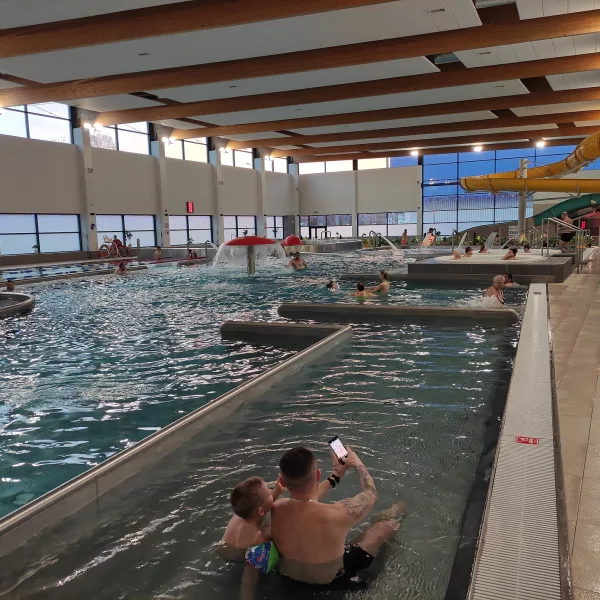
Three places suit an outing with children. Fabryka Uśmiechu is a play centre for children aged two to eleven at ulica św. Rocha 241, with trampolines, slides and a cafe for parents. Częstochowa Water Park at ulica Dekabrystów 45 has a recreational pool, slides and a sauna zone, and an outdoor summer pool next door. For older groups there is the bowling alley in Złote Arkady with four lanes.
Most museums, the philharmonic hall and the theatre work well in wet weather. A full list of indoor places is on the page for things to do in Częstochowa when it rains, and free entries, such as parks and benches, on the page for free places.
Where can you find memorial sites and cemeteries in Częstochowa?
Before 1939 Częstochowa had a large Jewish community, and what remains are places that call for silence and reflection. They are not places of entertainment but important testimony to the city's history.
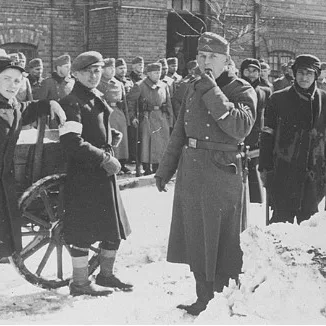
The Częstochowa Ghetto was established on 9 April 1941 and liquidated in September and October 1942; a small ghetto existed until June 1943. It covered the eastern part of the centre, largely the former Jewish quarter. The German occupation authorities deported residents from here to Treblinka. The place of deportation is commemorated by the Monument to the Victims of the Częstochowa Ghetto on ulica Strażacka, on the former railway ramp, designed by Samuel Willenberg. The history of the ghetto and the HASAG factories is described in Getto w Częstochowie i zakłady HASAG.
The Jewish cemetery at ulica Złota 245 has an area of roughly 8.5 hectares, which makes it one of the biggest Jewish burial grounds in Poland. Today it is an overgrown wood with thousands of gravestones, and in several places there are mass graves from 1943. The other necropolises are Kule Cemetery, founded in 1882, with burial chapels and soldiers' plots, and St Roch's Cemetery, where the first burials took place in 1641. Both are in use, so keep quiet and show respect. The full set of necropolises is on the page for cemeteries and monuments.
Those who fell in wars are commemorated by the Monument to Those Who Fell in Defence of the Homeland on plac Pamięci Narodowej, unveiled in 1985 and made of two granite columns and more than a hundred sculptures.
Frequently asked questions
What is there to see in Częstochowa besides Jasna Góra?
See the Archcathedral of the Holy Family, St Sigismund's Church, the Częstochowa Museum in the town hall, the parks below Jasna Góra and the Old Market Square. If you like technology, add the Iron Ore Mining Museum and the match museum.
What can you do in Częstochowa on a rainy day?
Choose the museums, the philharmonic hall, the theatre or the water park. Over a dozen places in the city work well in bad weather, and children can spend time in the play centre on ulica św. Rocha.
Are there free places to see in Częstochowa?
Yes, you can see the parks below Jasna Góra, the Poświatowska and Perepeczko benches, monuments and cemeteries without paying. Check entry rules for museums and exhibitions before you go.
Does Częstochowa have anything for children?
Yes. Children will find a play centre with trampolines, a water park with slides and a bowling alley, and older ones may enjoy the underground mining museum and the railway museum with its locomotives.
What should you see in Raków in Częstochowa?
Raków has the Hantke Villa, the Lusatian culture archaeological reserve and the Sanctuary of St Joseph. All three lie in the same district, and the story of the villa and the sanctuary is tied to the local steelworks.

 Churches and monasteries