Things to do in Bielsko-Biała: the Sułkowski Castle, the Old Town square, fairy-tale statues, museums and the cable car to Szyndzielnia.
Bielsko-Biała has almost eighty places worth a stop and joins two former towns, Bielsko and Biała, each of which left its own street plan, churches and townhouses. The city lies at the foot of the Silesian Beskids, so besides the Old Town and the museums it has ski slopes, a gondola lift and mountain huts inside its administrative limits.
Where should you start sightseeing in Bielsko-Biała?
Start in the Old Town: the Market Square, the Castle of the Sułkowski Princes, St Nicholas Cathedral and the Polish Theatre. They all lie in a small area, and the walk from the square to the castle takes a few minutes.
The Market Square is a rectangle of about 80 by 60 metres on the Town Hill. Its shape has not changed since the town was chartered at the start of the 14th century, and most buildings around it are townhouses from the 18th and 19th centuries. Two streets leave from each corner, a Neptune fountain stands in the middle, and exposed archaeological remains recall the older buildings of the square.
The Castle of the Sułkowski Princes is the oldest and largest historic building of old Bielsko. It stands on the site of a wooden stronghold from the 13th century, while the present building dates from the 14th century and was reworked in the 19th. Since 1945 it has housed the Historical Museum, whose displays range from the archaeology of the town to the contemporary art of the region. The story of the castle is told in the article on the Sułkowski Castle, from stronghold to museum.
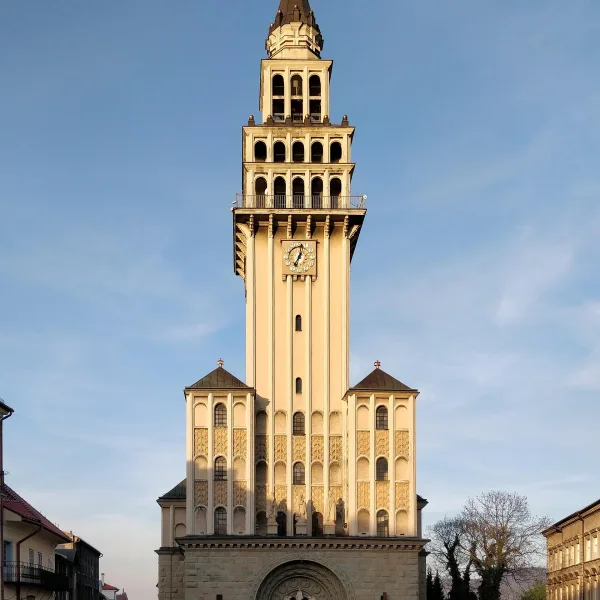
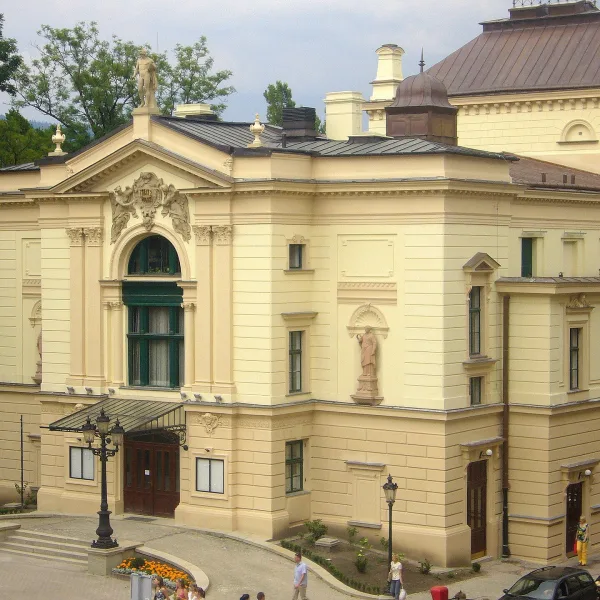
St Nicholas Cathedral is the cathedral of the Bielsko-Żywiec diocese. The first church was built in 1443-1447 with funds from Wenceslaus I, Duke of Cieszyn, and the present look, with a 61-metre tower modelled on a Venetian campanile, comes from the rebuilding carried out in 1909-1912 by Leopold Bauer. Right beside the castle, on ulica 1 Maja, stands the Polish Theatre of 1888-1890, designed by the Viennese architect Emil von Förster, its facade adorned with figures of Apollo and the Muses.
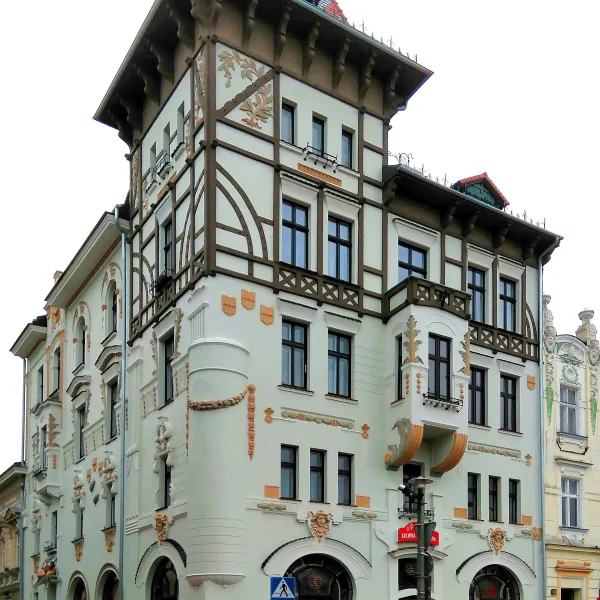
On the way, look in at plac Wojska Polskiego, where Targowa 2 is home to the Pod Żabami Tenement House. This Art Nouveau house of 1903, opposite the Martin Luther church, has a facade imitating half-timbering and a doorway with two frogs in tailcoats. It was designed by the local architect Emanuel Rost junior, and the house once held a wine bar.
Which museums in Bielsko-Biała should you choose?
The city has over a dozen museums and galleries, so the choice depends on your interests: history and crafts, industry, motoring, animation or contemporary art. Most are small places that take an hour or two to see.
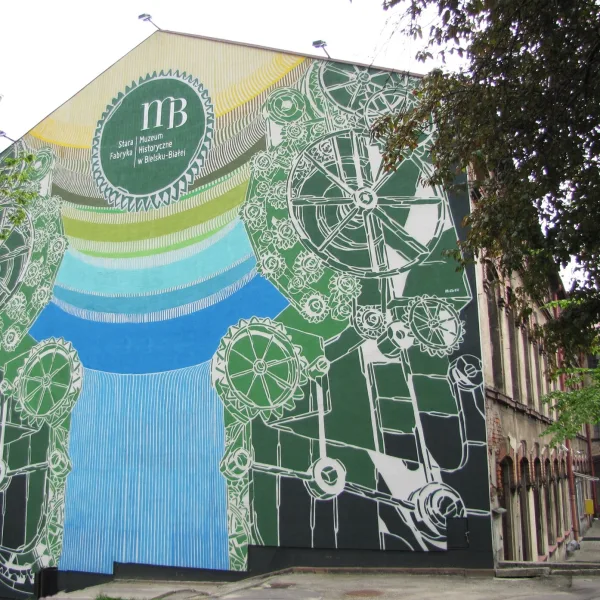
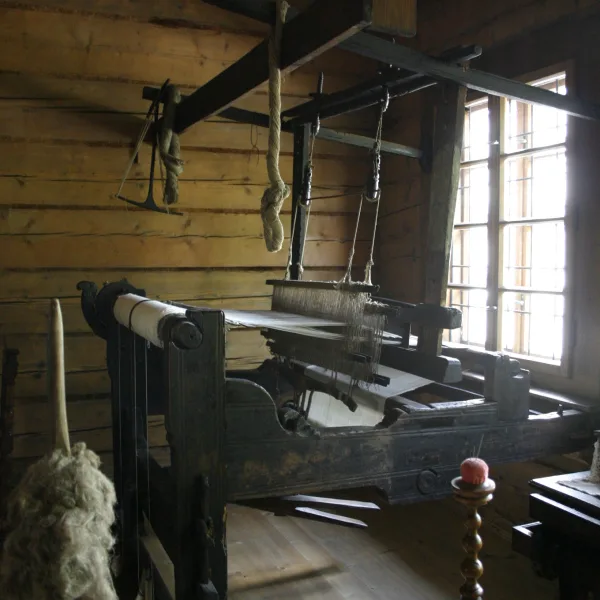
Two sites cover the history of crafts. The Weaver's House at Sobieskiego 51 is a branch of the Museum in Bielsko-Biała, in a wooden house of the 18th century, with a reconstructed cloth-maker's workshop and an exhibition of folk costume. Stara Fabryka on plac Żwirki i Wigury 8 occupies the former textile factory of the Büttner brothers, founded in 1887, and displays historic machines. The museum opened in 1979 as the Museum of Textile Technology and has had its present name since 2013.
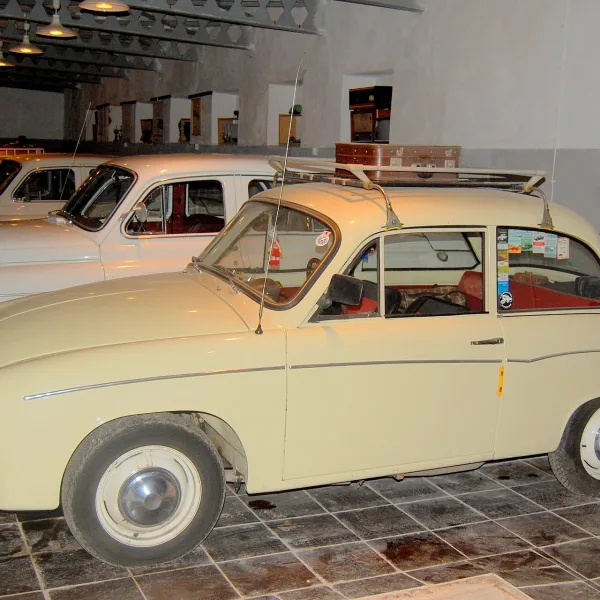
Motoring fans have two addresses. The Automotive Museum at Kazimierza Wielkiego 1 has been run since 2006 by the Beskid Automobile Club, and its nine vehicles stand in the halls of a former fruit-processing plant. The Fiat 126p Museum at Karpacka 44 is a private museum devoted to the little Polish Fiat, which was built in Bielsko-Biała under an Italian licence at the Small-Car Factory opened in 1971.
For families with children there are newer places. The OKO Centre of Fairy Tale and Animation works in the buildings of the former Studio of Animated Films at Cieszyńska 24. The permanent exhibition fills two floors and shows how animated films are made, and the centre also has a cinema and runs educational classes. The Museum of the 90s at Damrota 10 is devoted to Poland in the 1990s: the display has nine parts, from fashion and electronics to retro games and a fully furnished flat of that decade. The Treasures of the Earth Mineral Museum is a small private collection of about 800 specimens, with a microscope room and a cabinet of minerals that glow under ultraviolet light.
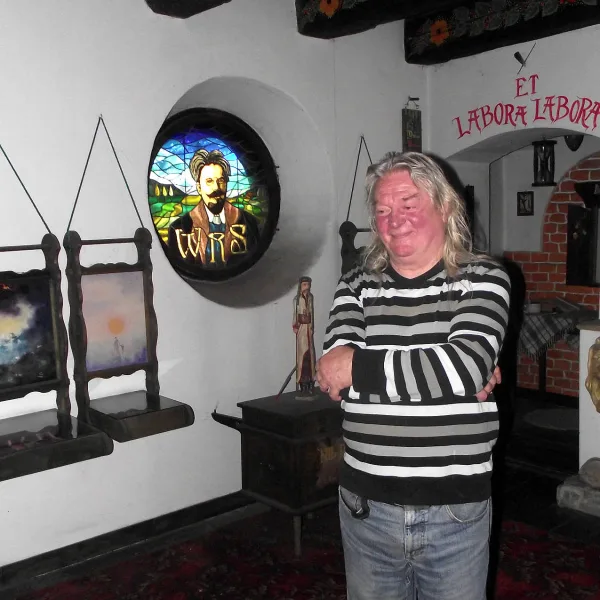
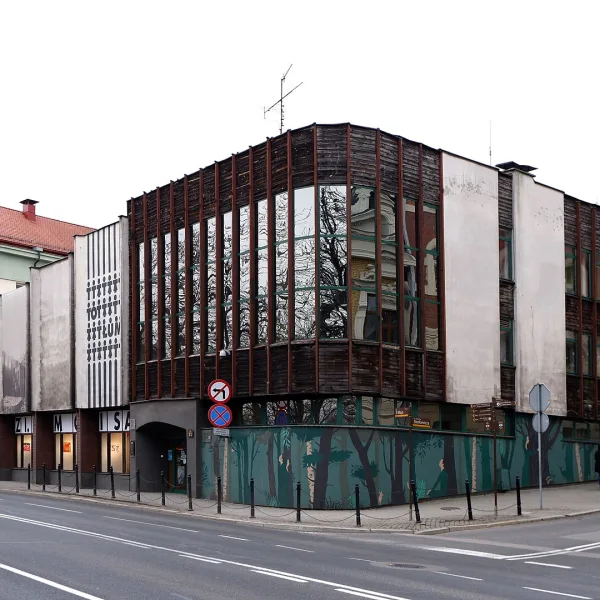
For contemporary art go to the Bielska BWA Gallery at 3 Maja 11. Its building of 1960 stands on the site of the destroyed Bielsko synagogue, and since 2020 the gallery has also used the Theodor Sixt villa at Mickiewicza 24. The Wzgórze Gallery is a private gallery with a café and a stage in a townhouse in the Old Town, open since 1987. The Władysław Reymont Museum of Literature at Pankiewicza 1, founded in 1989 by a self-taught enthusiast who copied the classics by hand, is not working at the moment, so leave it out of your plan. The other sites are gathered under museums in Bielsko-Biała.
Where can you meet fairy-tale characters in Bielsko-Biała?
Polish animated cartoons were made in Bielsko-Biała, so the heroes of Bolek and Lolek and of Reksio stand here in the streets. It is easiest to walk to the statues first and then visit the OKO centre or the puppet theatre.
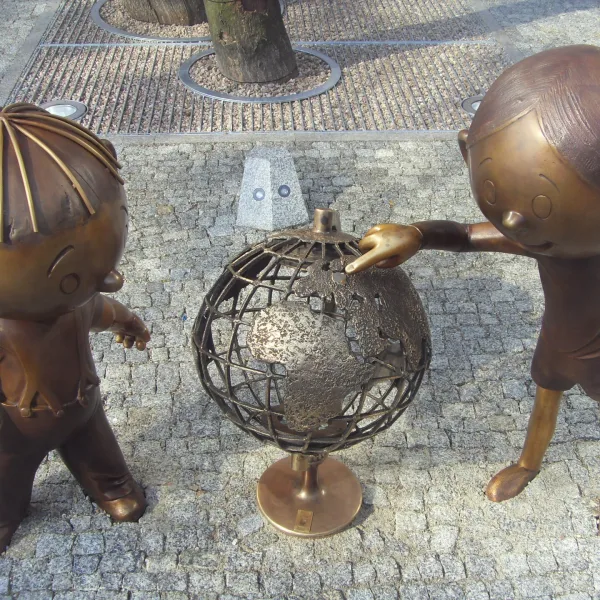
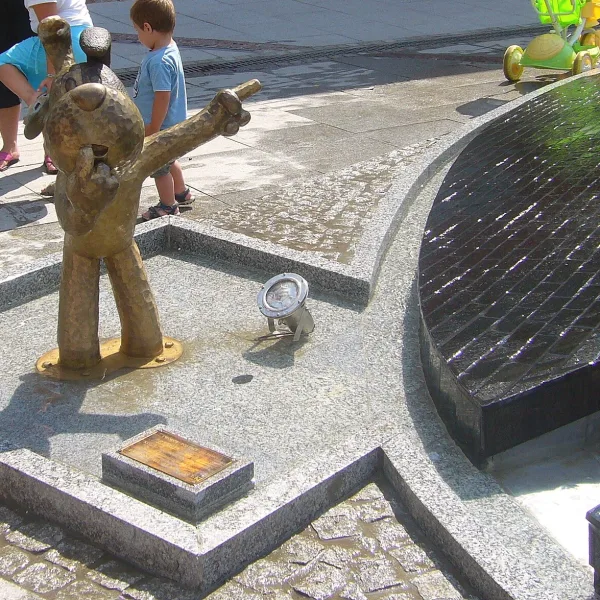
The Bolek and Lolek Monument was unveiled in the centre on 19 May 2011. It stands in a courtyard on ulica Mostowa, beside the southern building of the Sfera gallery. The two boys point at a globe on which Bielsko-Biała is marked. The Reksio Monument of 2009 is a bronze fountain on the Biała river, on the square between ulica 11 Listopada and ulica Stojałowskiego. It belongs to the Fairy-Tale Bielsko-Biała trail.
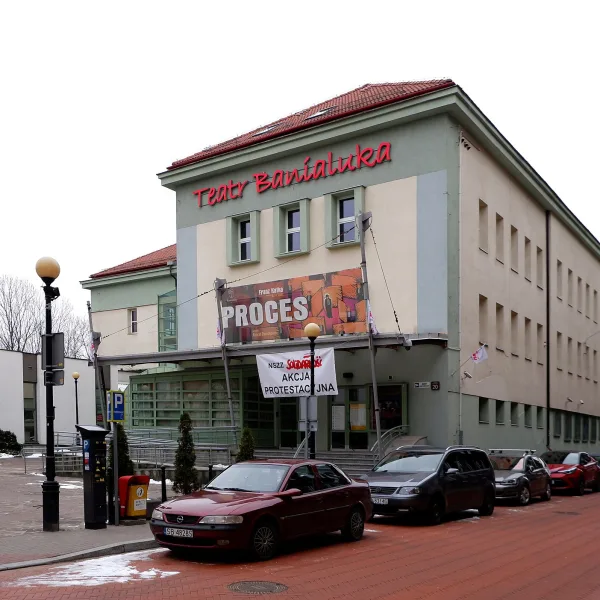
The Banialuka Puppet Theatre was founded in 1947 by the artists Jerzy Zitzman and Zenobiusz Zwolski. It is housed in a building of 1934 at Mickiewicza 20, stages performances for children and young people, and since 1966 has organised the International Puppetry Arts Festival. You can read more about the fairy-tale tradition of the city in the article Bielsko-Biała as a city of fairy tales.
What can you do in the mountains and on skis within the city limits?
The Silesian Beskids begin inside the city limits. In summer you can reach Szyndzielnia and the mountain hut on Kozia Góra, in winter the Dębowiec slope and the ski jumps.
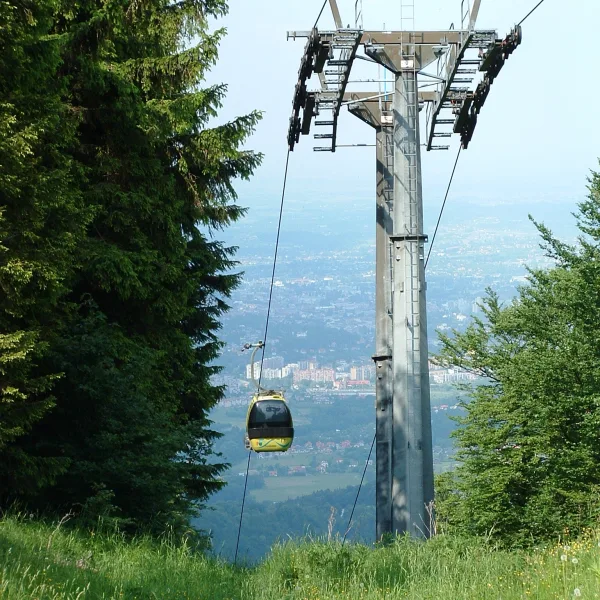
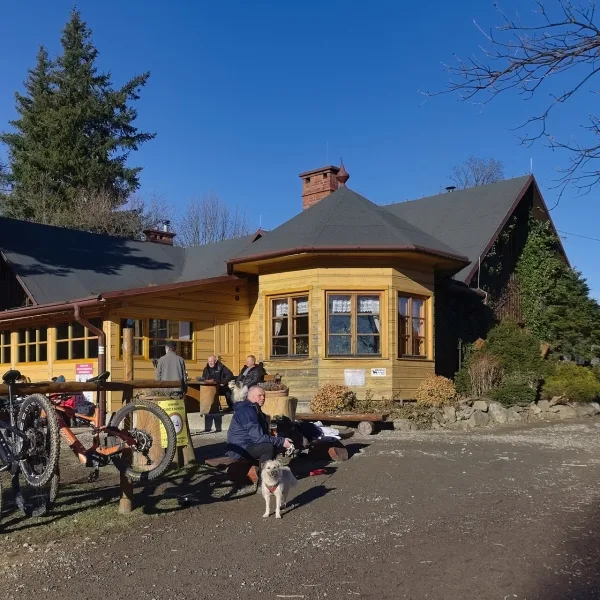
The Szyndzielnia gondola lift was the first gondola lift in Poland and the first cable car opened after the Second World War. The lower station is in Olszówka at 509.72 metres, and the upper one on the summit at 958.85 metres. The lift started on 21 December 1953 and on its first day carried about two thousand passengers to the top. The mountain hut on Kozia Góra, known as Stefanka, stands at 676 metres not far from Szyndzielnia. The building dates from 1912 and still serves meals and offers beds.
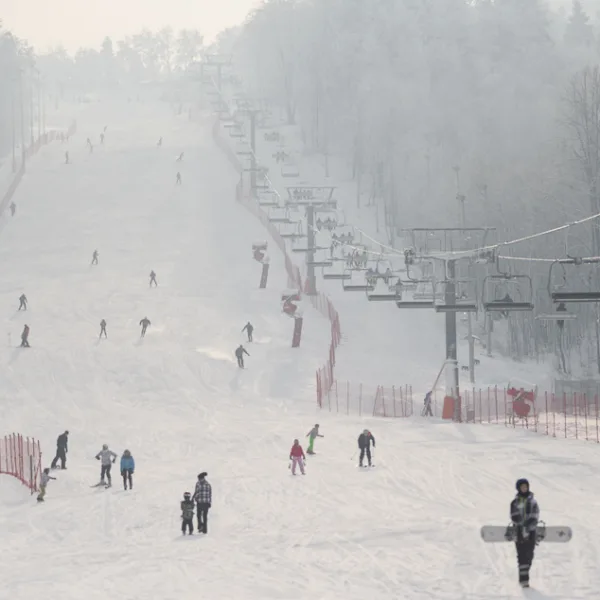
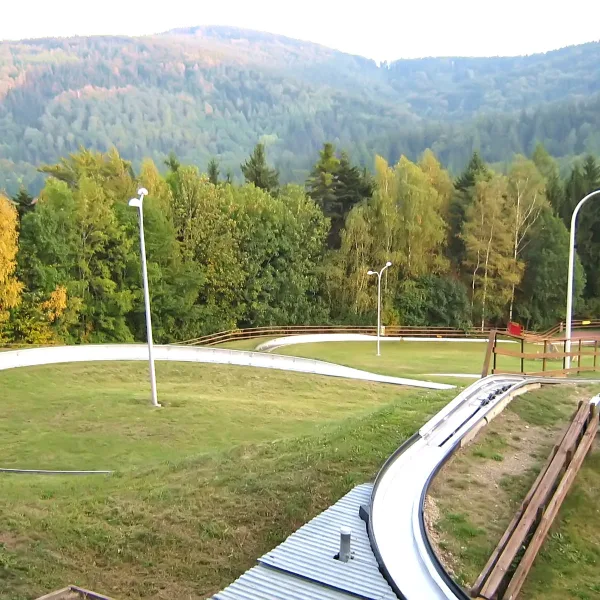
On Dębowiec there is a municipal ski centre opened on 18 January 2013, with a four-seat chairlift, a snow park and a rope park. The run is 610 metres long with a vertical drop of 105.5 metres. Next to it runs a dry toboggan run 410 metres long, with three tunnels, three full bends and a 115-metre lift, lit after dark. The LKS Klimczok ski jump complex consists of two plastic-surfaced hills, HS-31 and HS-19, which can be used outside winter too. For an overview of slopes in the region, see the article on skiing in Szczyrk, the Żywiec region and Bielsko-Biała.
Which churches are worth seeing in Bielsko-Biała?
The Gothic church of St Stanislaus in Stare Bielsko is the oldest, and the most unusual are the wooden church in Mikuszowice and the late modernist church on concrete pillars. The city has eighteen churches and monasteries worth attention.
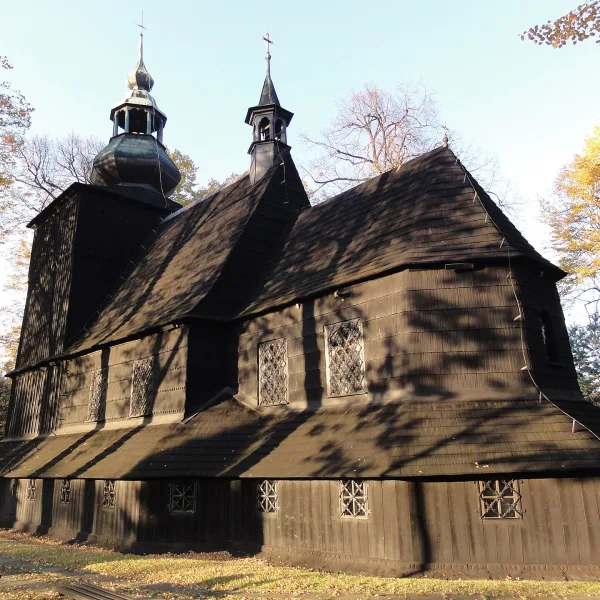
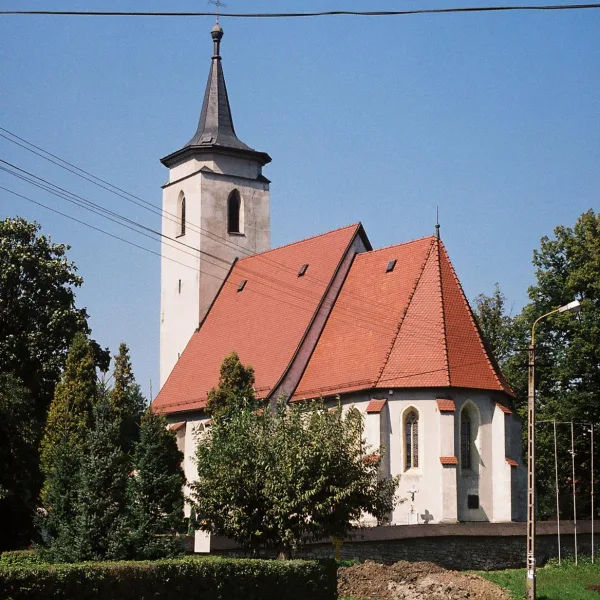
The Church of St Stanislaus at Sobieskiego 176A is the oldest religious building in the city, dating from around 1380 and founded by Przemysław I Noszak, Duke of Cieszyn. It stands inside an old cemetery with a stone wall from the 15th century. The Church of St Barbara in Mikuszowice Krakowskie is a wooden church of 1690, with polychromes by Johann Mentil of 1723, which belongs to the region's wooden architecture route.
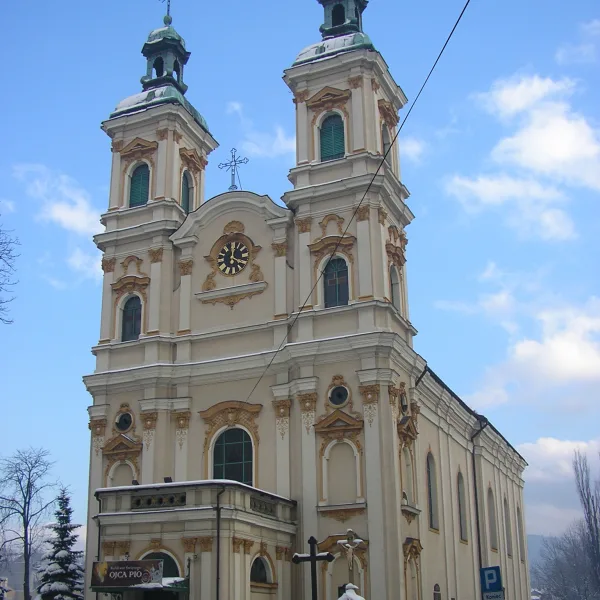
In Biała Krakowska stands the late Baroque Church of Divine Providence of 1760-1769, with a Rococo pulpit and an organ of forty stops. In Hałcnów you will see the Basilica of the Visitation of the Blessed Virgin Mary, a Baroque shrine of Our Lady of Sorrows built in 1777-1784 and a minor basilica since 2016. In Komorowice stands the brick, neo-Gothic Church of St John the Baptist, begun in 1921 to a design by Emanuel Rost junior and modelled on St Nicholas Cathedral.
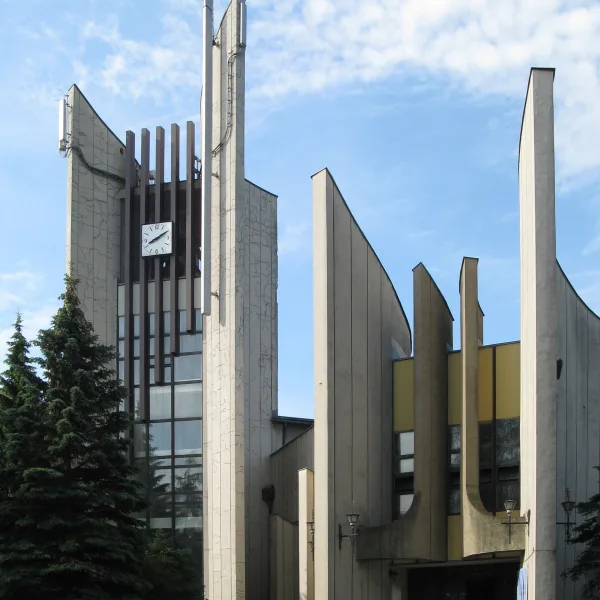
The Church of the Most Sacred Heart of Jesus at Traugutta 13 has a quite different form: the late modernist church of 1981-1986 rests on 82 concrete pillars, and inside it holds metalwork by Bronisław Chromy. A separate theme is the Bielski Syjon around plac Marcina Lutra, where the Protestant community gathered from 1782: a church, schools, a cemetery and a monument to Luther. The whole area is a listed monument, and its beginnings are linked with the Patent of Toleration issued by Emperor Joseph II in October 1781. The full list is under churches and monasteries in Bielsko-Biała.
What architecture, parks and old sites can you see?
Besides the Old Town, look for three buildings from different eras: a neo-Renaissance villa, an Art Nouveau hotel and a house in the Zakopane style. Two city parks and a medieval hillfort add to the list.
The Theodor Sixt villa at Mickiewicza 24 dates from 1883. Carl Korn, the leading local architect of the time, designed it in the neo-Renaissance style for the entrepreneur and philanthropist. Sixt died childless in 1897 and left the villa to the city on condition that it was never sold and always bore the name of Sixt's villa. Hotel Pod Orłem at 11 Listopada 60 was completed in 1905 to a design by Alexander Neumann, commissioned by the manufacturer Jakub Gross. Today it houses offices and a shopping arcade. The Soldiers' House at Broniewskiego 25, of 1924-1928, was designed in the Zakopane style by Leopold Landau, and is a rare example of that style in the city.
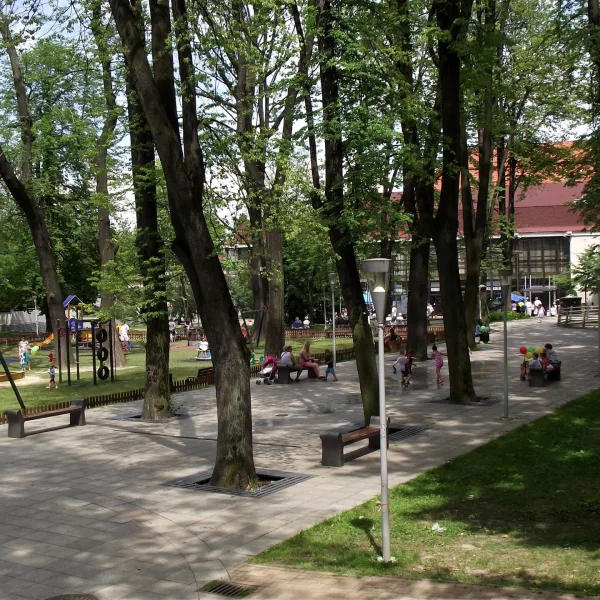
Juliusz Słowacki Park was laid out in 1898 on the site of a former cholera cemetery. Today it holds the House of Music, an ice rink, Orlik pitches and two fountains. Włókniarzy Park of 1899 in the Żywiec suburb was once called Planty Blichowe and has natural monuments and a monument to Mickiewicz. The hillfort in Stare Bielsko is what remains of a medieval stronghold with two rings of ramparts and a moat, in use from the end of the 12th to the end of the 14th century, about 1.6 kilometres north-west of the Market Square. At Słowackiego 17a stands the modernist building of the Książnica Beskidzka of 1973, the seat of the city library. Further buildings are described under architecture in Bielsko-Biała and historic buildings.
Where are the Jewish cemeteries and other places of remembrance?
The city has two Jewish cemeteries founded in 1849: one still in use in Aleksandrowice and one closed and commemorated by a monument. Beside them lies the largest municipal necropolis. These are places of quiet.
The Jewish cemetery at Cieszyńska 92 in Aleksandrowice covers 2.39 hectares, is entered in the register of monuments and still serves the Jewish community. During the German occupation more than half of the gravestones were stolen or destroyed. The second cemetery, on ulica Wyzwolenia, was closed in 1966, and today a monument of 1996 recalls it. Both are described in the article on the Jewish cemeteries of Bielsko-Biała and Cieszyn.
The Municipal Cemetery in Kamienica, at Karpacka 162, was founded in 1978, covers about twenty hectares and is the largest necropolis in the city. It has two monuments: to the victims of the Second World War and to people deported to Siberia. The cemetery is in use, so quiet is expected. The other necropolises are gathered under cemeteries and monuments.
Where can you go in Bielsko-Biała when it rains, or for free?
There are over a dozen indoor places for rainy weather: museums, galleries, theatres and a library. Entry to roughly as many places is free, mostly parks, monuments and cemeteries.
In the evening check what is on at the Polish Theatre and at the puppet theatre. The current calendar is in the section on events in Bielsko-Biała, and lists of places are under rainy-day places and places for couples.
Frequently asked questions
What can you see in Bielsko-Biała in one day?
The Old Town is enough: the Market Square, the Castle of the Sułkowski Princes, St Nicholas Cathedral and the Polish Theatre. Add the Reksio monument on the Biała river and the Pod Żabami house. With more time, take the gondola lift to Szyndzielnia.
Where can you see Bolek and Lolek and Reksio in Bielsko-Biała?
The Bolek and Lolek monument stands in a courtyard on ulica Mostowa, beside the Sfera gallery. The Reksio monument, a bronze fountain, is by the Biała river on the square between ulica 11 Listopada and ulica Stojałowskiego.
Is the Szyndzielnia cable car within Bielsko-Biała?
Yes. The lower station is in Olszówka, a district of the city, at 509.72 metres. The upper station is on the summit of Szyndzielnia at 958.85 metres.
Which museums in Bielsko-Biała suit children?
For younger children the best is the OKO Centre of Fairy Tale and Animation, with its exhibition on how animated films are made, and the Banialuka puppet theatre. Older children often enjoy the Museum of the 90s or the Fiat 126p Museum.
Is the Reymont museum in Bielsko-Biała open?
No. The Władysław Reymont Museum of Literature at Pankiewicza 1 is not working, so it is better to choose another museum from this list.

 Theatre and opera