Historic sites in Bielsko-Biała: the Art Nouveau Pod Żabami house, a town hall with a 52-metre tower and manufacturers' villas. Start here.
The dozen or so places are mostly architecture from 1883-1905, often designed by Emanuel Rost junior and Carl Korn. There are older traces too: a medieval hillfort and manors that became convents. Sułkowski Castle has its own article on its history: from stronghold to museum.
What should you see first in the centre of Bielsko-Biała?
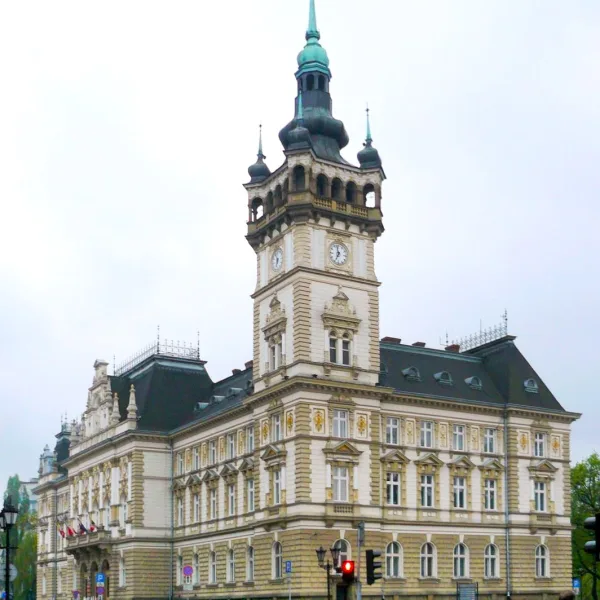
Begin with the town hall and the Pod Żabami house. Emanuel Rost junior designed both, and their façades are the easiest to recognise in the city. Then walk on to the hotels from the late 19th and early 20th century and to the small palace on 3 Maja Street.
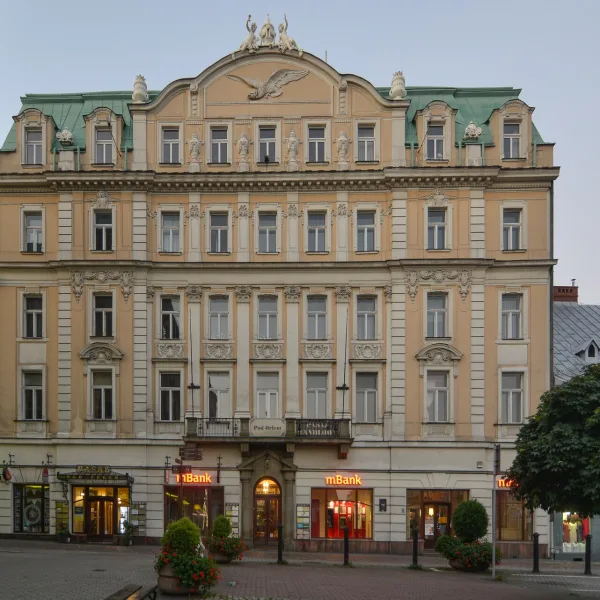
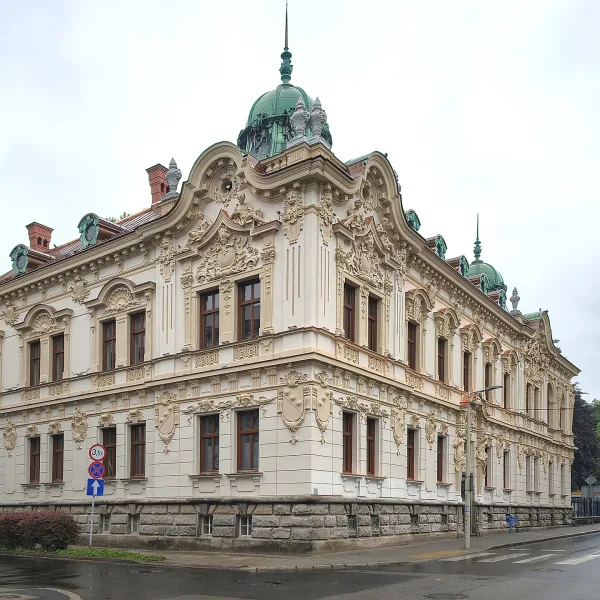
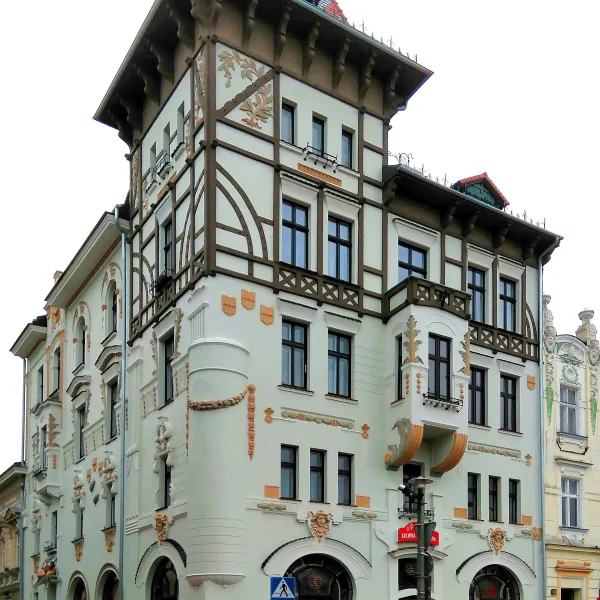
The Town Hall in Bielsko-Biała is a neo-Renaissance building from 1895-1897 and still seats the city authorities. It has a square tower 52 metres high with an onion-shaped helmet. The Pod Żabami Tenement House from 1903 stands at Targowa 2, opposite the Martin Luther church. Its portal with two frogs in tailcoats stops passers-by, and the building once housed a wine bar.
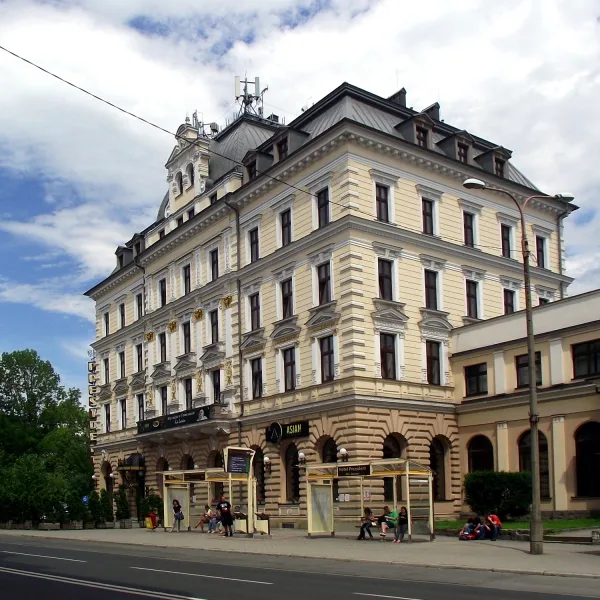
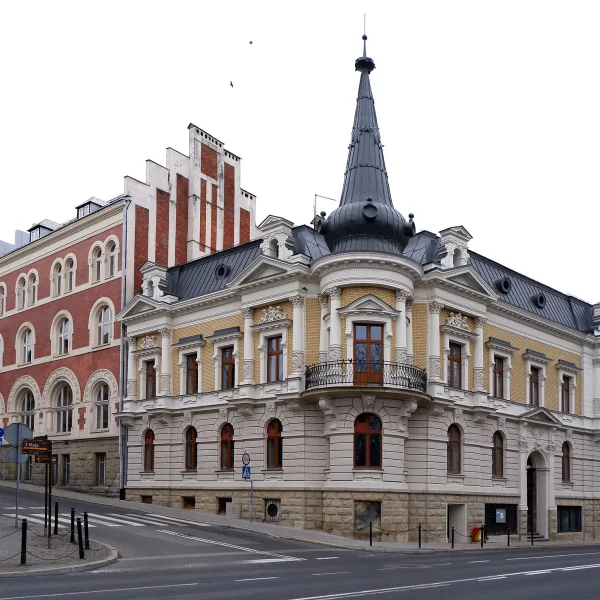
Hotel Pod Orłem is a four-storey building from 1905 on 11 Listopada Street, number 60. Offices and a shopping arcade fill it now instead of guests, so treat it as a building to admire from the street. Two buildings stand side by side on 3 Maja Street: the neo-Renaissance President Hotel at number 12, built in 1892-1893 and formerly the Kaiserhof, and Alfred Michl's Small Palace at number 13, with a corner turret and a mansard roof.
Which villas and small palaces are worth a look?
Four buildings described as palaces or villas suit anyone who enjoys façade detail: neo-Renaissance, a French mansard roof and Art Nouveau. They stand far apart, so pair each with another stop on your route.
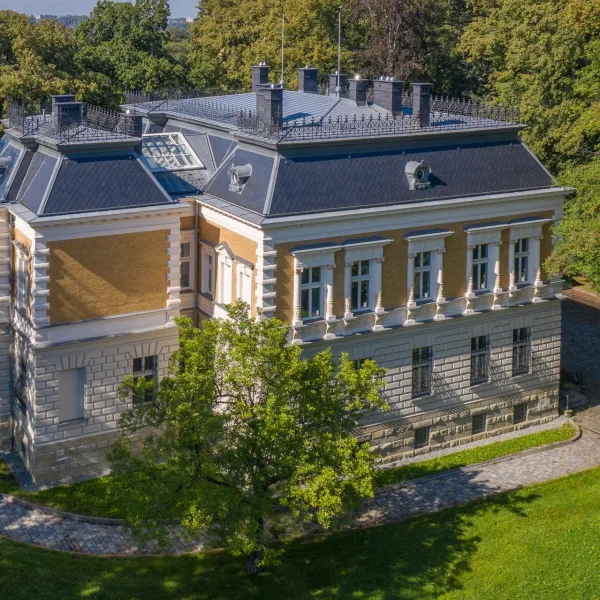
The Theodor Sixt Villa Complex at Mickiewicza 24 in the Dolne Przedmieście district dates from 1883 and was designed by Carl Korn. An art gallery works there today. The Zipser Palace is in fact a manufacturer's villa from 1890 in Mikuszowice, at Bystrzańska 52, with a tall mansard roof. Architect Emanuel Rost built Emanuel Rost's Small Palace at Komorowicka 48 in 1903 as his own home, and a library occupies it today.
Which older sites lie outside the strict centre?
Beyond the centre you will find a hillfort, two former manors and a garrison building in the Zakopane style. Two of them are convents today, so you look at them from outside and in silence.
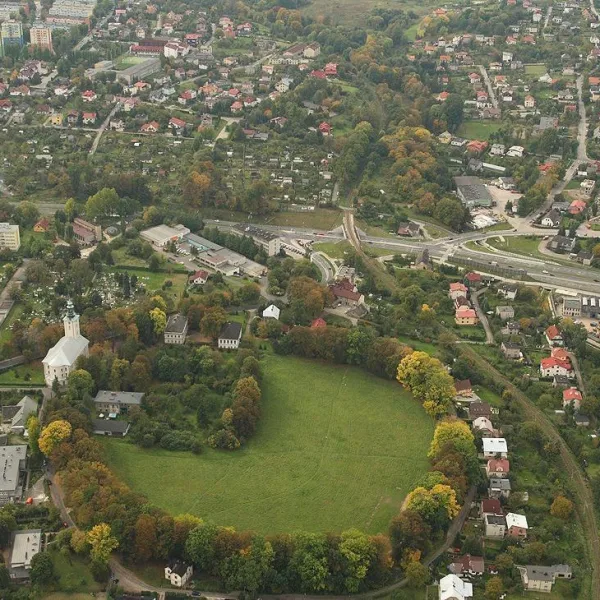
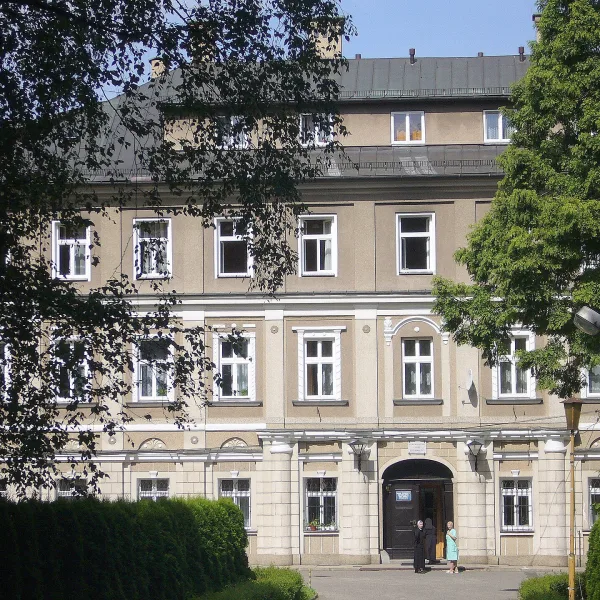
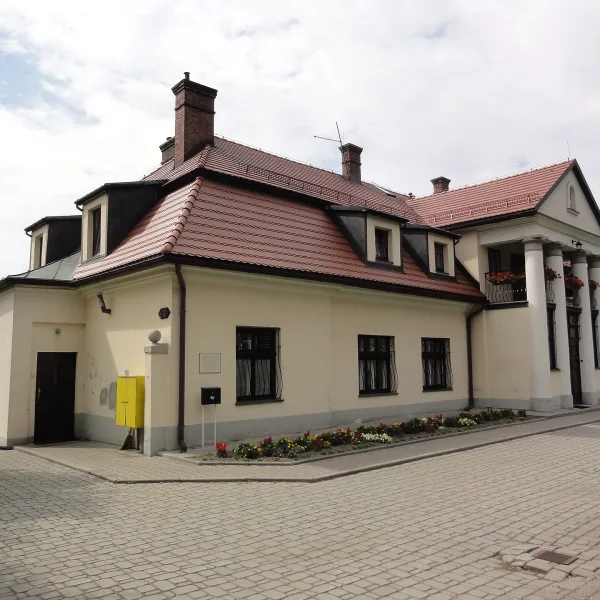
The Hillfort in Stare Bielsko preserves the outline of a medieval stronghold roughly 1.6 km north-west of the Market Square. Two rings of ramparts with a moat between them surround it, and people lived and defended themselves there between the late 12th and late 14th centuries. Lipnik Manor at Żywiecka 20 was built in 1596 as a castle of the royal governors and is now a working convent. Pruszyński Manor in Hałcnów is a neoclassical residence from the end of the 18th century, occupied by Seraphic sisters since 1891. Leopold Landau is the author of the Soldiers' House, built in 1924-1928 at Broniewskiego 25.
If you have a whole day, also look at the churches and monasteries of Bielsko-Biała and the museums. For the wider picture of the city, see things to do in Bielsko-Biała.
Frequently asked questions
Which historic sites in Bielsko-Biała are easiest to see in one day?
The easiest way is a loop around the centre: the town hall, the Pod Żabami house, Hotel Pod Orłem and the buildings on 3 Maja Street. Leave the villas in Mikuszowice and Dolne Przedmieście for a separate part of the day.
Can you go inside the manors in Lipnik and Hałcnów?
No. Both buildings are convents today, so you see them from outside. Lipnik Manor belongs to the Daughters of Divine Love, and Pruszyński Manor to the Seraphic sisters.
Which architects designed most of the buildings here?
Two names return most often: Emanuel Rost junior (the town hall, the Pod Żabami house, his own small palace) and Carl Korn (the Sixt villa, President Hotel, Michl's small palace).
Where is the building in the Zakopane style?
It is the Soldiers' House at Broniewskiego 25, a listed monument. It is one of the rare examples of this style in the city.

 Historic sites