What to see in Bielsko-Biała on your own: Sułkowski Castle, the Bielski Syjon, textile and fairy-tale museums and the cable car up Szyndzielnia.
This is a selection for anyone who explores at their own rhythm. The town has two historic centres, old Bielsko and Biała Krakowska, with a dozen museums and galleries and almost twenty places of worship around them. Ideas for solo travellers from across the voivodeship are listed under solo in Silesia, and the full range of the town sits in things to do in Bielsko-Biała.
Where should I begin exploring Bielsko-Biała by myself?
Start in the eastern part of the Old Town, where the castle, cathedral, town hall and two galleries lie close together. You can cover it all on foot in a single morning.
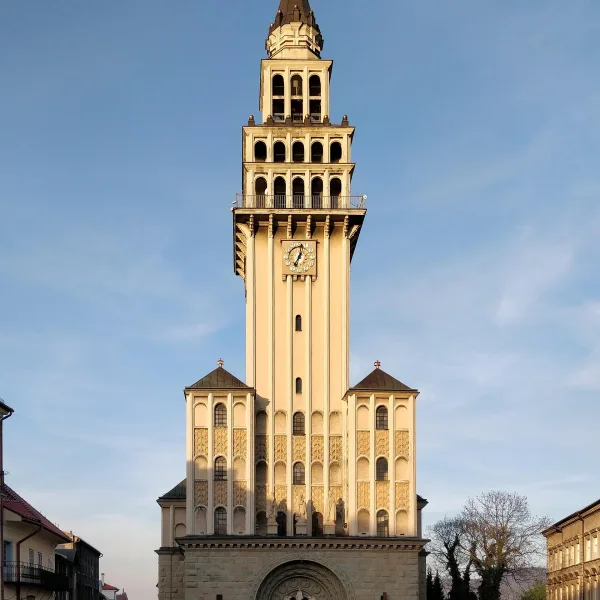
The Castle of the Sułkowski Princes at Wzgórze 16 is the oldest surviving structure in town. It was built in the fourteenth century and rebuilt in the nineteenth, while from 1945 onwards it has belonged to the Historical Museum, whose displays deal with the town and with art. How the fortress developed is explained in an article about the Sułkowski seat, from fortified settlement to museum. Nearby rises St Nicholas Cathedral on the square of the same name. Originally a fifteenth-century Gothic church, it was remodelled between 1909 and 1912 following plans by Leopold Bauer. The spire reaches sixty-one metres. Plac Ratuszowy is occupied by the town hall, a neo-Renaissance seat of government put up in 1895-1897 by Emanuel Rost junior. Its four-sided tower, fifty-two metres tall, ends in a bulb-shaped helmet.
Where can I see contemporary art and small stages?
Two galleries sit near each other around ulica 3 Maja and ulica Wzgórze. One is run by the city and the other is private, so they differ in character.
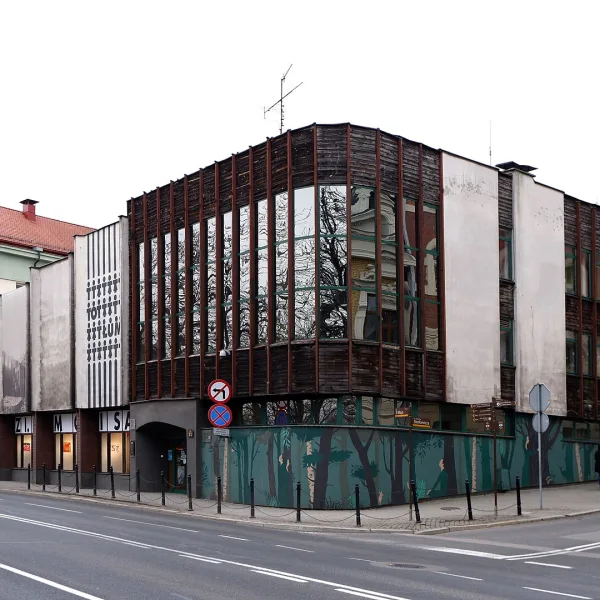
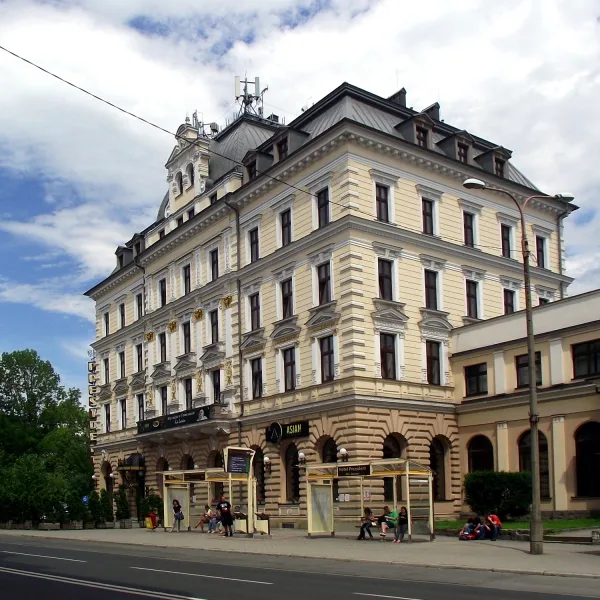
The Bielska BWA Gallery presents contemporary art. The core building, from 1960, is at 3 Maja 11, and the Sixt villa with its garden was added to the gallery's premises in 2020. A club-café keeps visitors company. The private Wzgórze Gallery has occupied a two-storey house at Wzgórze 4 since 16 April 1987. Beside art shows there are a café, a live-music stage and an independent film room. Next door to the BWA, at number 12 on the same street, the neo-Renaissance President Hotel was raised in 1892-1893 under the name Kaiserhof. Carl Korn drew the plans, and the building was listed as a monument in 1986.
Which Bielsko-Biała museums suit a solo visit?
Subjects range widely, from textiles through motoring to the 1990s. That suits someone on their own, because the venues are small and can be mixed and matched to your mood.
Town history and crafts
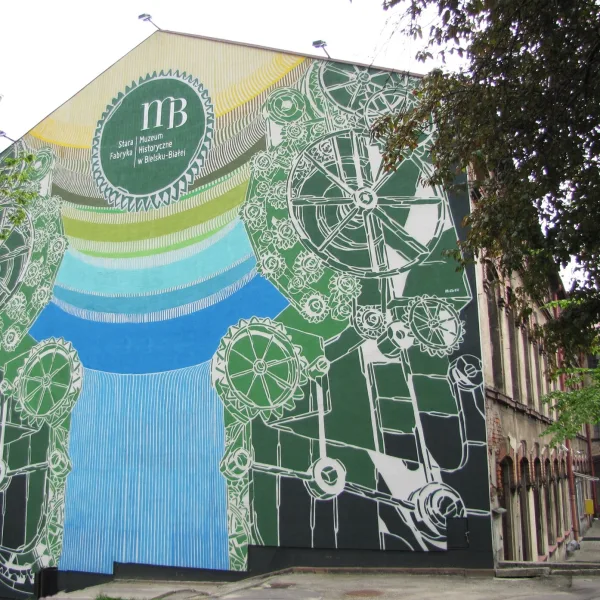
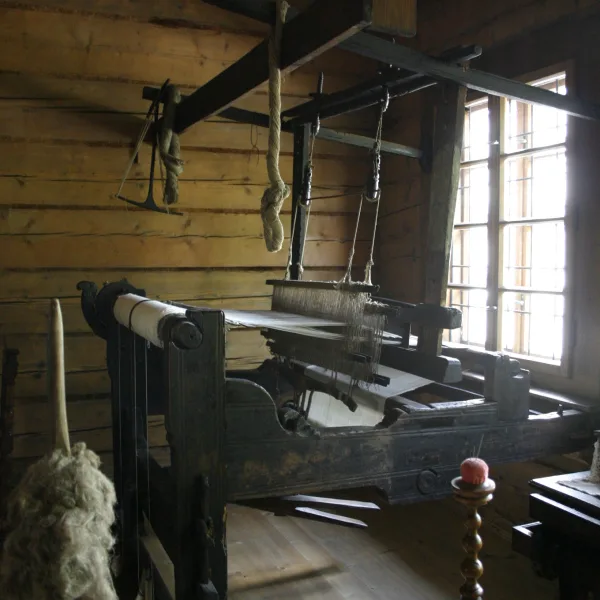
The Weaver's House is an outpost of the town museum, installed in an eighteenth-century timber cottage at Sobieskiego 51. Inside, a draper's workroom has been recreated and regional dress is on show. Industry is the topic at the Old Factory, housed in a former Büttner family cloth works at plac Żwirki i Wigury 8, where old looms and other textile machines are gathered.
Fairy tales, motoring and the nineties
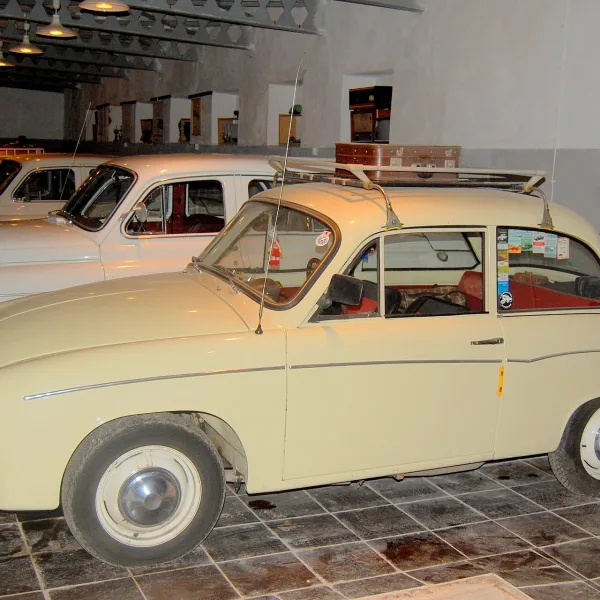
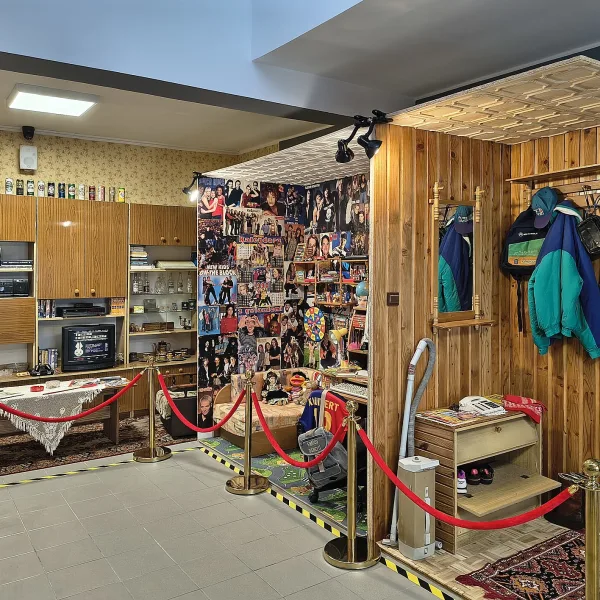
At Cieszyńska 24, in the old Cartoon Film Studio, you will find the OKO centre devoted to fairy tales and animation. It welcomed its first guests in May 2024 and pairs a show about the making of cartoons with the Kreska cinema. For the background, see the piece headed Bielsko-Biała, town of cartoons. Since 2006 the Beskid Automobile Club has looked after the motoring museum in the sheds of an old fruit factory. Veteran cars and motorbikes are lined up at Kazimierza Wielkiego 1. Devotees of a single car will head for the Fiat 126p Museum on Karpacka 44, a private venture begun in 2013 and officially registered three years later. A nostalgic trip awaits at the Museum of the 90s (Damrota 10): nine sections recreate the last decade of the century, among them a period flat and a room of old video games.
Minerals and militaria
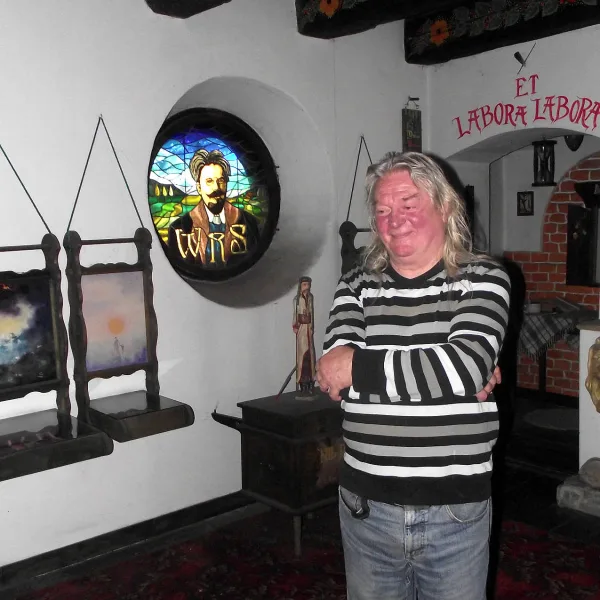
A small private stone gallery, Treasures of the Earth, opened in December 2016. It exhibits about eight hundred specimens, a laboratory with microscopes and a cabinet where rocks fluoresce under UV light. Military vehicles and guns fill a private collection on Pasterska 18 whose seed was planted in 1988. The Reymont literature museum at Pankiewicza 1 grew from the effort of a self-taught weaver who in 1989 began to share books he had copied out by hand. It has paused its work, so leave it out of your plan.
What is the Bielski Syjon and how do I visit it?
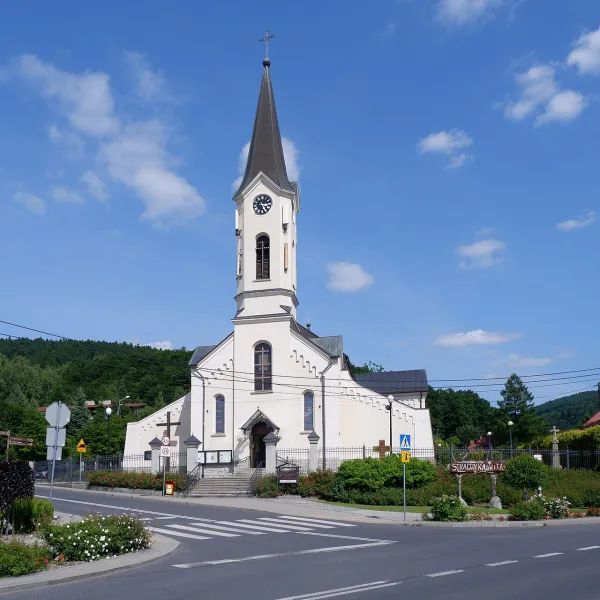
The Bielski Syjon, a listed group of buildings around Marcin Luther Square, became the centre of the town's Protestants in 1782.
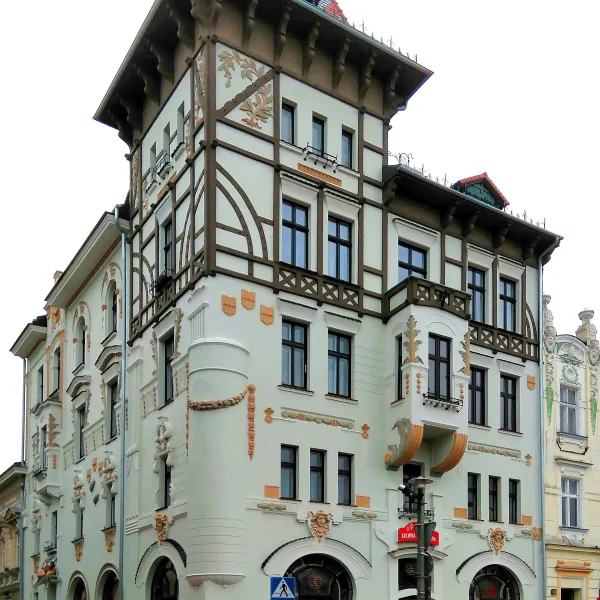
The quarter owes its existence to the edict of toleration that Emperor Joseph II issued in October 1781, allowing Lutherans to worship freely and put up churches. The square is dominated by the Saviour church (1782-1790), later given neo-Gothic features and a spire of roughly sixty-eight metres; it serves as the diocese's bishop's church. A neighbour, the classicist Luther church of 1788, is said to be the first Protestant house of worship in Galicia and keeps old organs. The Luther monument completes it, and the whole layout also includes schools and a cemetery. Across the way, at plac Wojska Polskiego, look for the house Under the Frogs: a Secession-style block of 1903 whose front mimics timber framing and whose doorway is decorated with two frogs dressed in tailcoats.
Which Catholic and timber churches are worth seeing?
The oldest is St Stanislaus in Stare Bielsko, a Gothic church from the close of the fourteenth century. Only the hillfort in the same district rivals it in age.
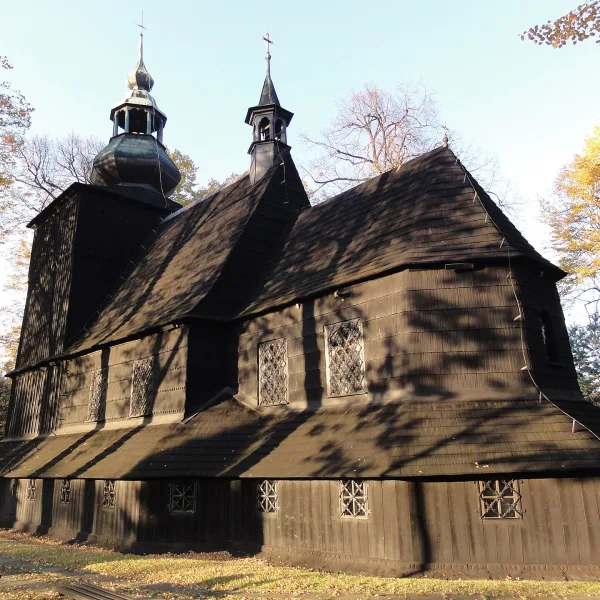
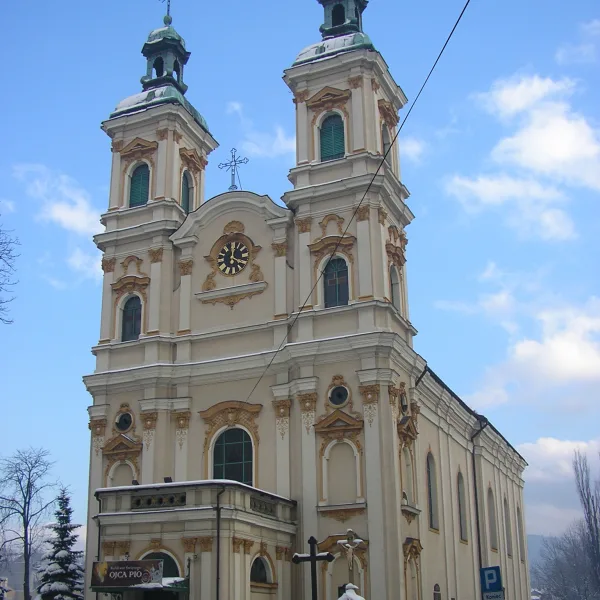
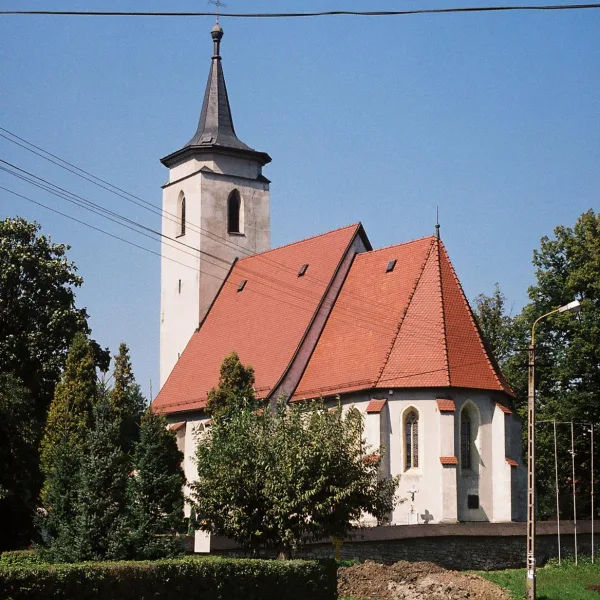
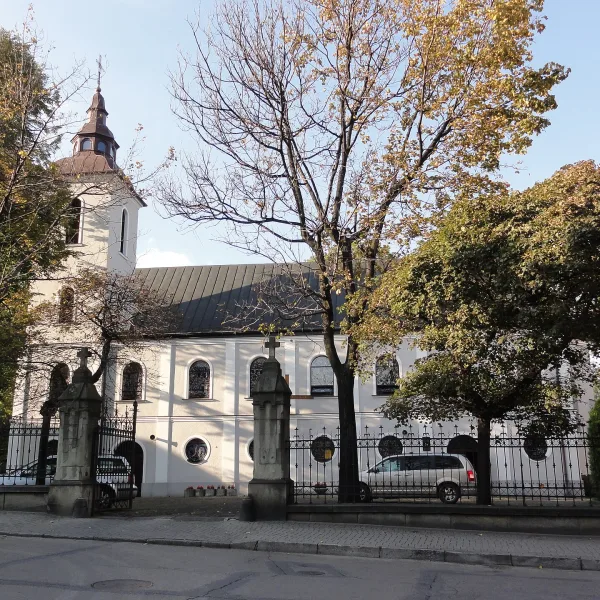
St Stanislaus's at Sobieskiego 176A passes for the town's oldest religious building. Its feel is that of a rural chapel, with one nave, an east-facing altar end and rough stone walls. On the Upper Suburb stands the late Gothic Holy Trinity church of 1604-1608, built to commemorate victims of the plague and a garrison church until 2014. In Hałcnów at Wyzwolenia 332 you find the Basilica of the Visitation, a Baroque building of 1777-1784 and shrine of Our Lady of Sorrows. Rome granted it the rank of minor basilica in 2016. The timber church of St Barbara in Mikuszowice Krakowskie dates from 1690. Johann Mentil painted its interior in 1723, and a replica of a triptych from about 1470 hangs there.
Which nineteenth- and twentieth-century churches deserve attention?
Biała Krakowska holds the late Baroque church of Divine Providence, built between 1760 and 1769. A rococo pulpit adorns the nave, and the organ has forty stops. The newest buildings surprise with their form.
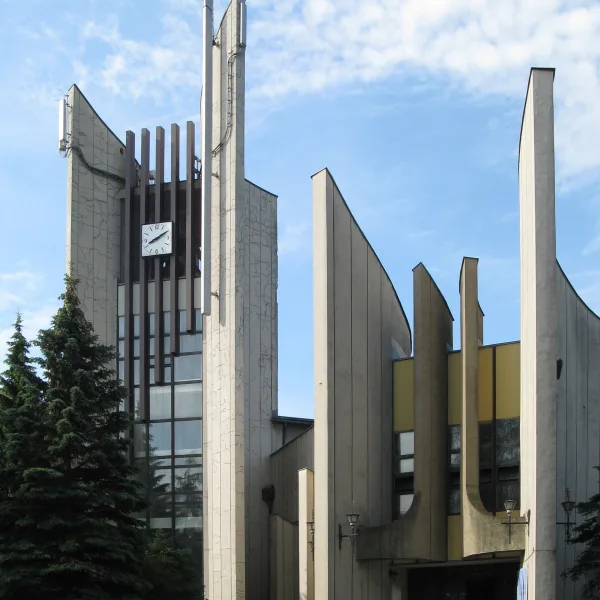
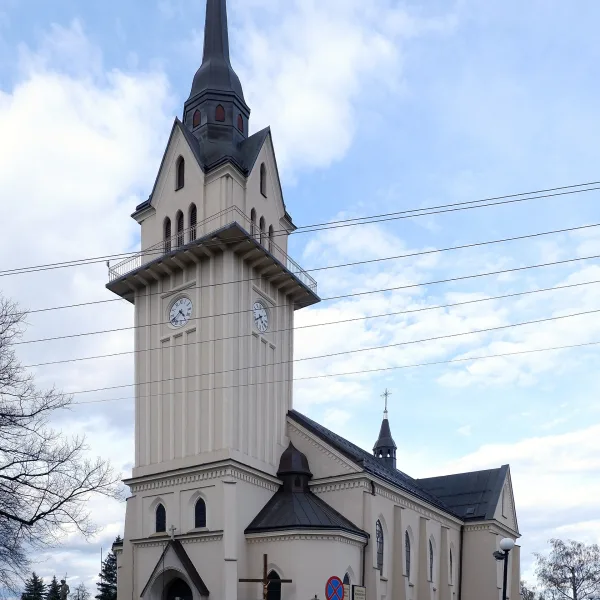
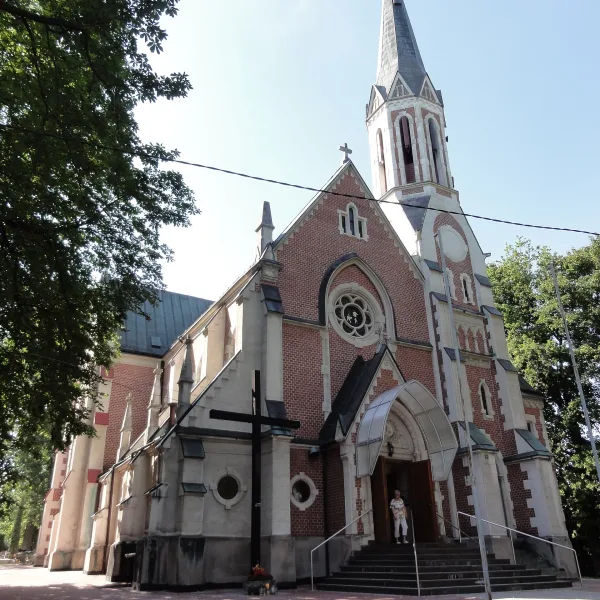
The Sacred Heart church at Traugutta 13 went up in the years 1981-1986 and rests on eighty-two concrete columns. Bronisław Chromy contributed decorative metalwork. Komorowice has a brick church of St John the Baptist, neo-Gothic in spirit, begun in 1921 from Rost junior's drawings. In Kamienica on Karpacka stands the brick church of St Margaret of 1897-1899, on a cruciform plan, by the Viennese architect Carl Steinhofer. Straconka offers the neo-Gothic church of Our Lady of Consolation with a Madonna carved at the turn of the Gothic age and the sixteenth century, and in Wapienica the church of St Francis of Assisi, which grew out of a chapel consecrated in 1931. To this group belongs the classicist Evangelical church of John the Baptist of 1818-1827, set in Stare Bielsko on the former hillfort.
Where can I see villas, palaces and old hotels?
The wealthy entrepreneurs of the nineteenth century are recalled by villas on ulica Mickiewicza, Bystrzańska and Komorowicka. Public buildings and hotels add to them.
At Mickiewicza 24 lies the Sixt villa group. Its owner left the neo-Renaissance house, drawn by Carl Korn in 1883, to the town, and an art gallery now works there. The Zipser Palace at Bystrzańska 52 is really a manufacturer's villa of 1890 under a French mansard roof. In 1903 the architect Emanuel Rost built himself a little palace at Komorowicka 48; its style blends neo-rococo with Secession, and a library works inside. By plac Wolności stands the Pod Orłem hotel, four floors dating from 1905, now occupied by offices and an arcade of shops. The Soldiers' House at Broniewskiego 25 draws on the architecture of Zakopane (1924-1928, by Leopold Landau), and the Książnica Beskidzka public library has its seat in a modernist building of 1973 at Słowackiego 17a.
How do I get up into the hills above the town?
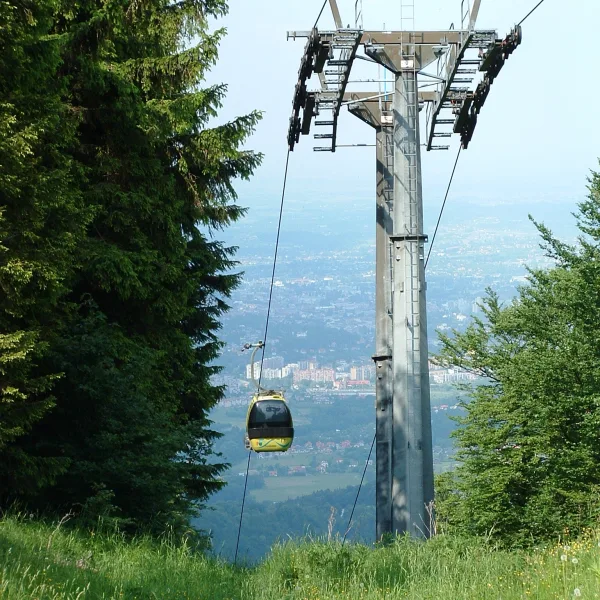
The easiest way is the gondola lift linking Olszówka with the summit of Szyndzielnia. Opened in 1953, it was the country's first gondola lift and its first cable railway after the Second World War.
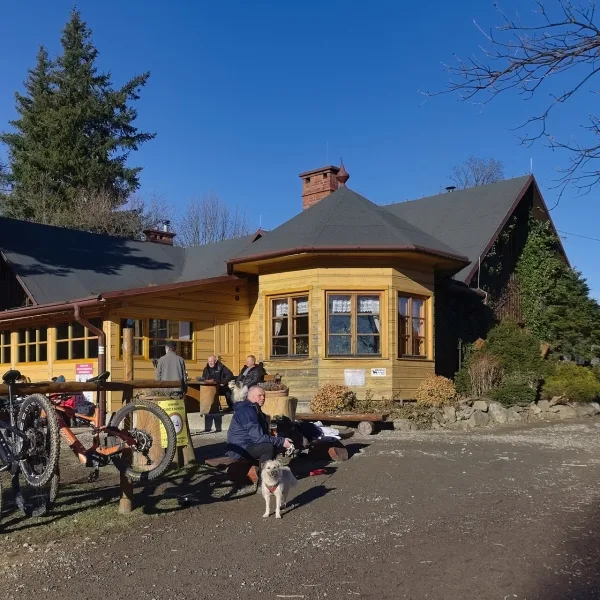
The Szyndzielnia cable car departs from Aleja Armii Krajowej 366, and its lower station lies at 509.72 metres. By the upper station stands an eighteen-metre viewing tower, opened on 14 August 2015. Not far away, in the Silesian Beskids at 676 metres, lies the Kozia Góra hut, known as Stefanka, dating from 1912. Official registers have called it a tourist facility since 2023, yet meals and beds are still available. For the ski season nearby, read the text on the slopes of Szczyrk and Bielsko-Biała.
Is there a hillfort in Bielsko-Biała?
Yes, in the Stare Bielsko district. The hillfort sits a little under two kilometres north-west of the Market Square, 340-350 metres above sea level. The stronghold was in use from the end of the twelfth to the end of the fourteenth century.
The layout was close to a circle measuring about 205 by 215 metres, covering around 3.2 hectares. Two rings of ramparts with a ditch between them surrounded it, and on the south side the ramparts were levelled in the sixteenth century. For a solo visitor it is a quiet place for a stroll, easily combined with the nearby church of St Stanislaus.
Frequently asked questions
Is one day enough for Bielsko-Biała on a solo trip?
Half a day is enough for the Old Town with the castle, cathedral, town hall and galleries. Another day will go on museums and the trip up Szyndzielnia.
What should I choose on a rainy day?
Twelve museums and galleries operate indoors. They include the Sułkowski castle, the Weaver's House, the Old Factory, OKO and several small private venues.
Are the churches open to visitors?
They are working places of worship, so visit outside services and check when they are accessible. The interiors of several, such as Divine Providence or St Barbara, hold valuable furnishings.
Does the Reymont Museum of Literature receive guests?
No, its activity is suspended. In a plan it is better to replace it with one of the other museums.
Where can I eat and stay overnight on Kozia Góra?
Stefanka, as the hut is known, provides meals and beds, although on paper it is a tourist facility.

 Mountains