Free things to do in Bielsko-Biała include monuments to cartoon heroes, historic parks, a nature reserve in the Beskids and old cemeteries.
None of these places charges an entrance fee. They lie either in the town centre or on its edge, at the foot of the Silesian Beskids. Cemeteries of various faiths dominate the selection, together with parks, sculptures in public space and one viewing point. Free places from across the voivodeship are gathered on free things to do in Silesia, while the rest of the town is in things to do in Bielsko-Biała.
Which free sights are there in the middle of Bielsko-Biała?
In the centre you can see the Bolek and Lolek monument, the Acrobat sculpture, the Mermaid fountain, the Martin Luther monument and two squares without a ticket. Everything is within walking distance and fits into one long morning.
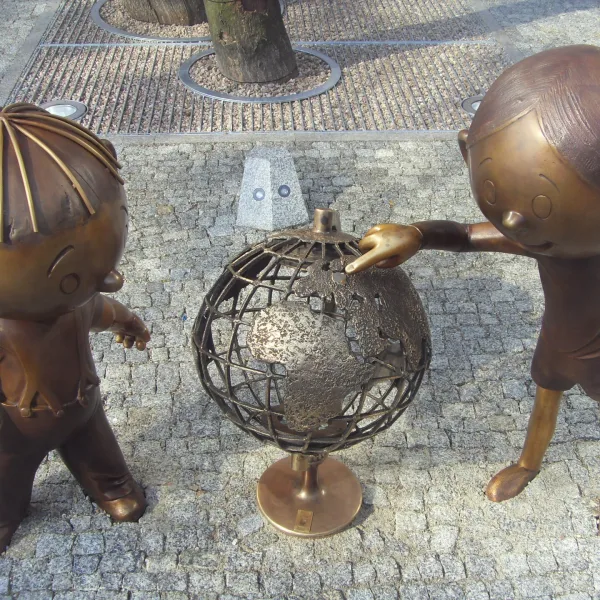
The Bolek and Lolek monument is a bronze sculpture of the heroes of a popular cartoon, unveiled in May 2011. It is in the centre, in a courtyard reached from Mostowa Street, beside the Sfera gallery. Why the town has so many cartoon characters is explained in Bielsko-Biała as a town of cartoons: Bolek and Lolek, Reksio, Banialuka.
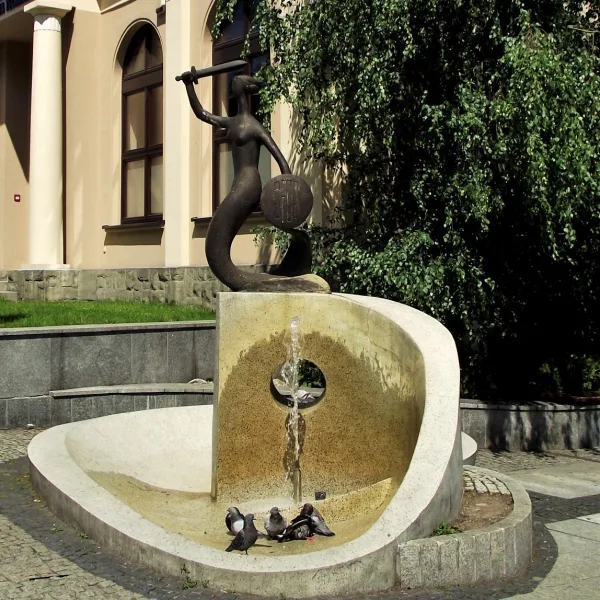
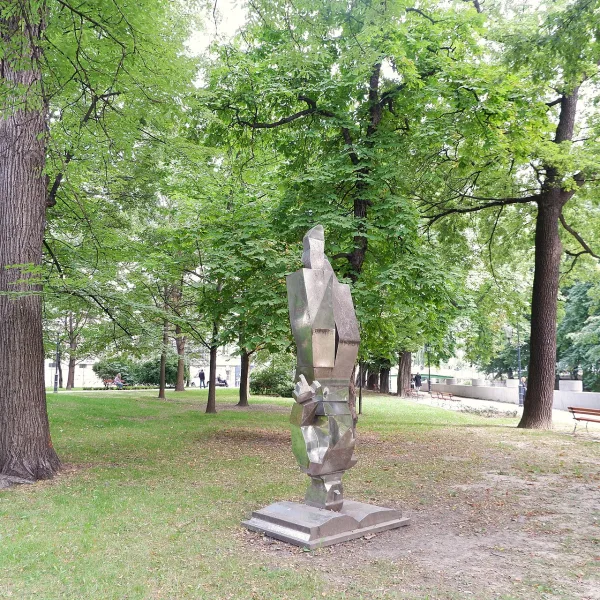
The Acrobat is a four-metre steel sculpture in the park by the town hall. The sculptor Dariusz Fodczuk shows a man balancing upside down on an open book; the work was unveiled in 2009. The Mermaid Monument is a fountain with a mermaid from 1954, by Ryszard Sroczyński, modelled on the Warsaw one. It stands on a square by 3 Maja Street, near the Stairs Passage and the House of Technology.
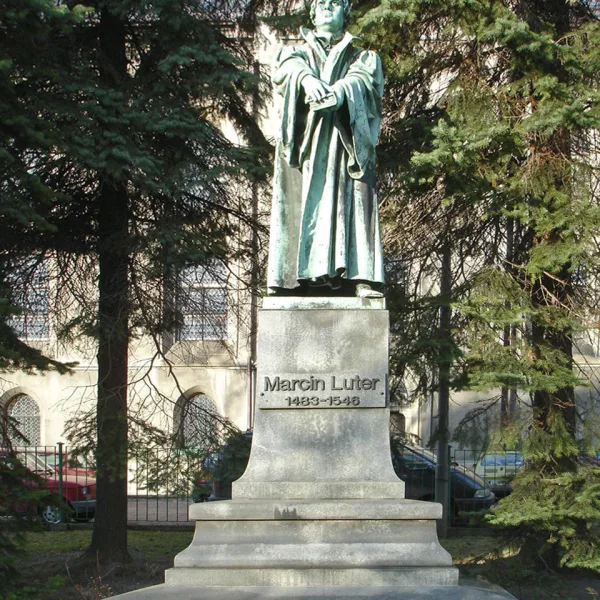
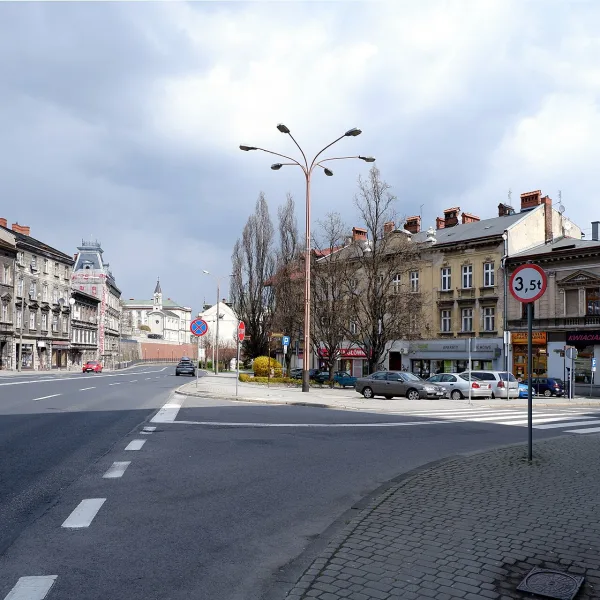
The Martin Luther monument stands on the square named after him next to the Lutheran Church of the Saviour. The metal figure from 1900, by Franz Vogl, has no equivalent in Poland, since no other monument to the reformer exists here, and it is a listed monument. Żwirki i Wigury Square is a downtown square lined with townhouses built around 1900, with a monument to the two airmen. Today the layout combines a green strip, a car park and a road.
How to plan a free walk around central Bielsko-Biała?
The simplest way is to link places by suburb. Włókniarzy Park and Żwirki i Wigury Square both lie on the Żywiec Suburb, so you can see them in one go. Juliusz Słowacki Park is on the Lower Suburb, while the Bolek and Lolek, Acrobat and Mermaid monuments stand in the town centre. The Luther monument by the Church of the Saviour closes such a walk well.
Which parks in Bielsko-Biała are worth visiting?
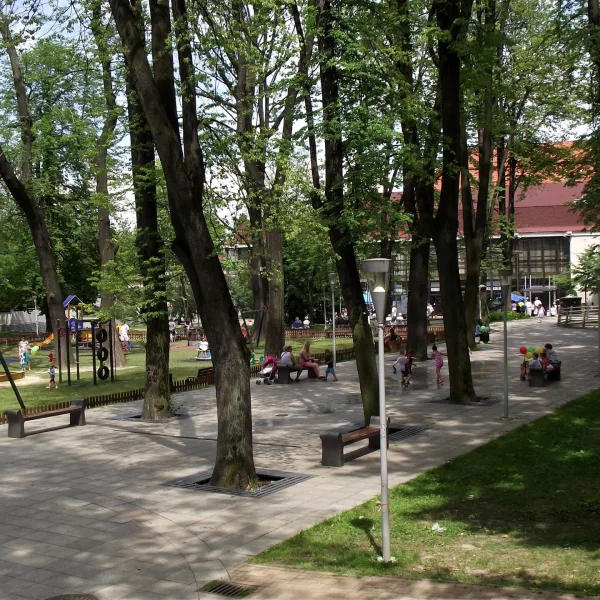
Two large parks in the centre, Juliusz Słowacki Park and Włókniarzy Park, date from the late 19th century. Both suit a quiet walk in the middle of town.
Juliusz Słowacki Park was laid out in 1898 on the Lower Suburb, between Słowackiego, Chopina, Lubertowicza and Piastowska streets. On its grounds are the House of Music, a skating rink and Orlik sports pitches, and two fountains decorate it.
Włókniarzy Park lies on the Żywiec Suburb, between Partyzantów, 1 Maja and Leszczyńska streets and the Biała river. It was laid out in 1899 as the Blich Promenade. Trees protected as natural monuments grow there, and a monument to Mickiewicz stands in it.
Where can you find nature and views in Bielsko-Biała?
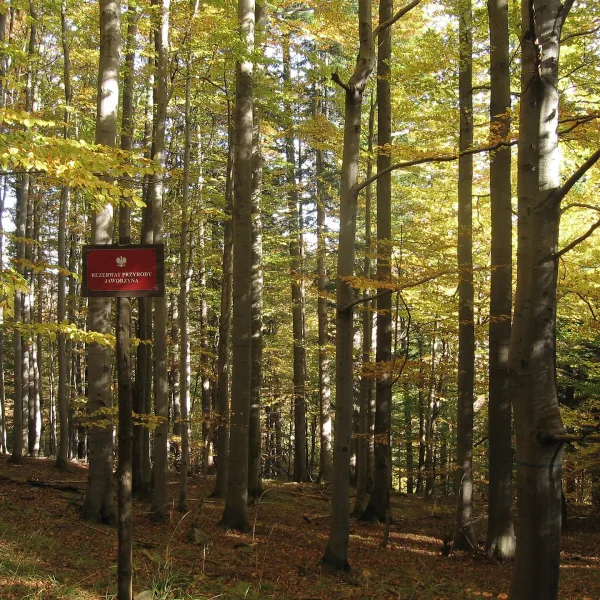
Two places with a Beskid character are the Jaworzyna reserve in Wapienica and the viewing tower by the top station of the Szyndzielnia cable car. One is a quiet forest, the other a panorama from height.
The Jaworzyna Nature Reserve was established on 25 August 2003. It covers 40.03 hectares of forest on the slopes above Lake Wapienica, in the Silesian Beskids. The viewing tower at the Szyndzielnia cable car is 18 metres tall and opened on 14 August 2015. It offers a panoramic view of the area around the summit. Winter slopes in the region are covered in Skiing in Szczyrk, the Żywiec area and Bielsko-Biała.
Which cemeteries in Bielsko-Biała can you visit?
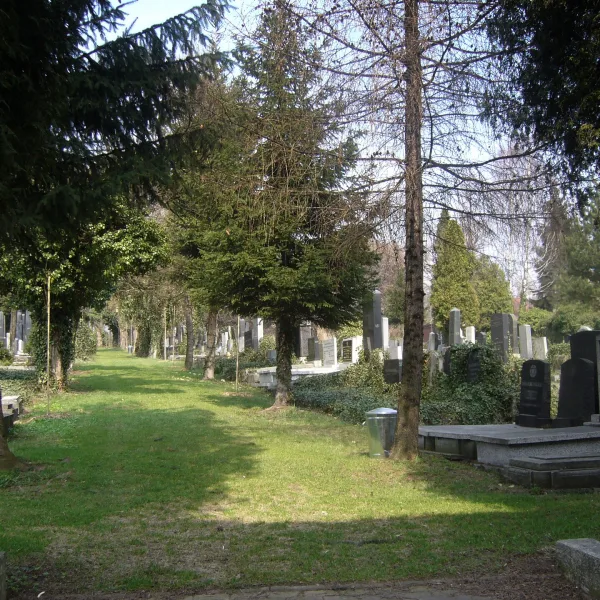
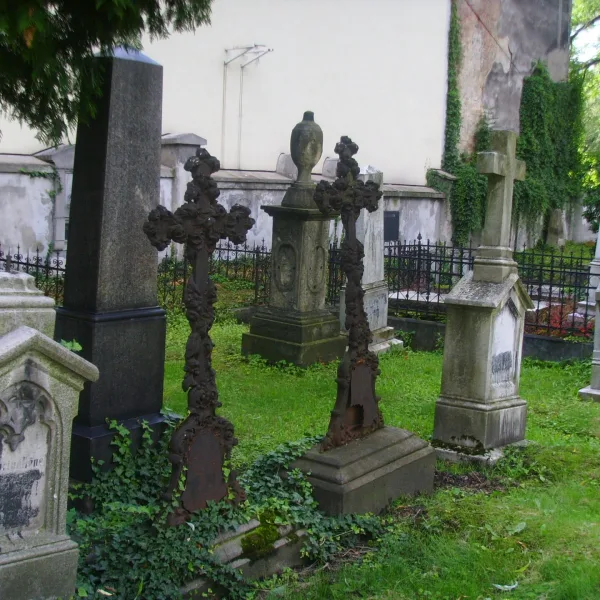
Bielsko-Biała has several old cemeteries of different faiths. Some are in use, others closed, but each says something about the history of the town. They are places of remembrance, so visitors should be quiet and unhurried.
Lutheran cemeteries
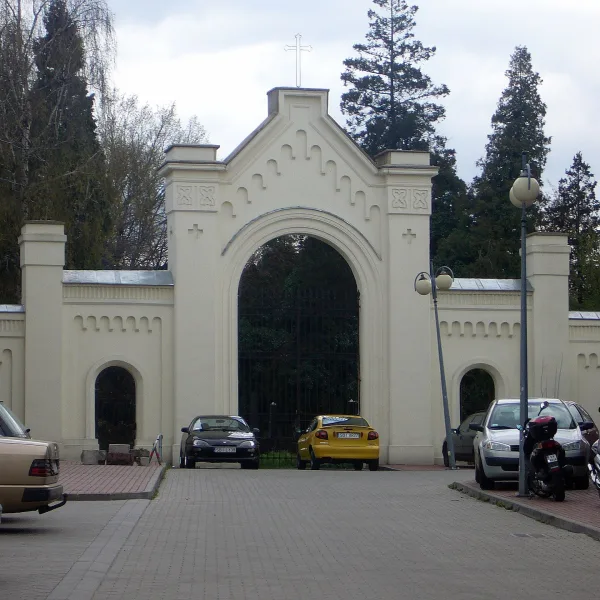
The Lutheran cemetery on Piłsudskiego Street was consecrated on 26 June 1783 and is still used for burials. It lies in the centre. Factory owners and former mayors are buried there, along with the painter Peter Michal Bohúň. The Old Lutheran Cemetery, founded in 1833 on the so-called Bielsko Zion by Frycza-Modrzewskiego Street, no longer takes burials. A Neo-Gothic gate and the Avenue of the Distinguished remain.
The New Lutheran Cemetery was founded in 1911 on Listopadowa Street to a design by Hans Mayr. It is in use, listed as a monument, and holds the graves of local manufacturers.
Jewish and Catholic cemeteries
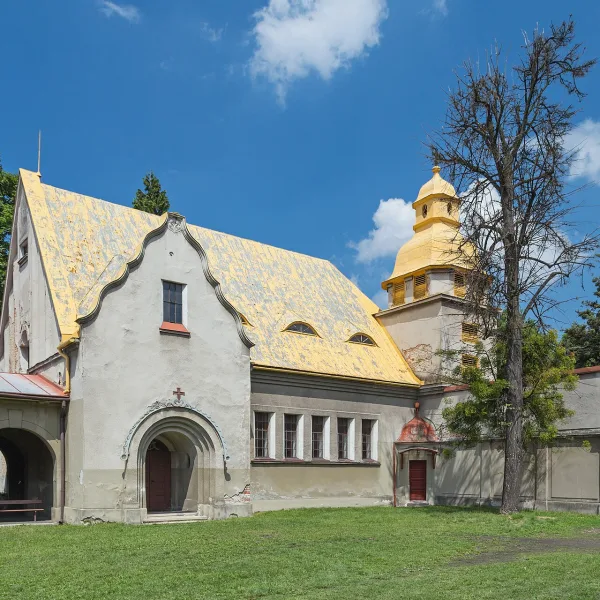
The Jewish cemetery at Cieszyńska 92 in Aleksandrowice was founded in 1849 during a cholera epidemic and still serves the Jewish community. It covers 2.39 hectares, has a pre-burial house with polychromes and is in the register of monuments. Jewish cemeteries in the region are discussed in Jewish cemeteries of Bielsko-Biała and Cieszyn.
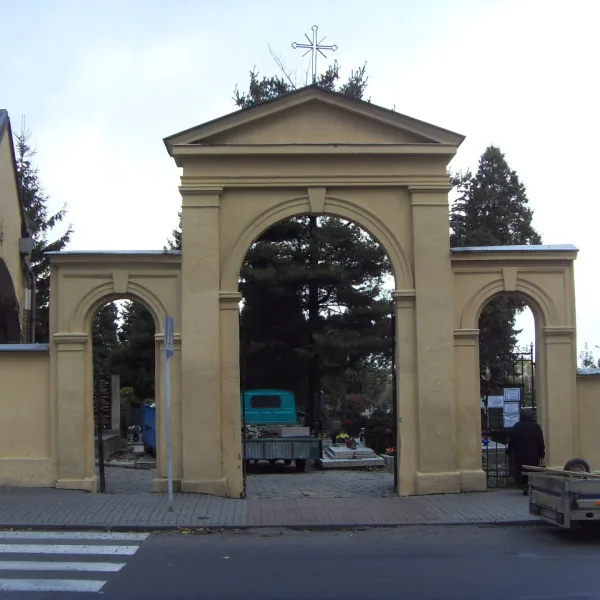
The Roman Catholic cemetery on Grunwaldzka Street belongs to the parish of St Nicholas. The first burials took place on 3 June 1884, because space at the church had run out. The Municipal Cemetery in Kamienica is the largest in town. It opened in 1978 and spreads over roughly 20 hectares. It holds around 20,000 graves, including monuments to victims of war and deportees.
Military cemeteries
The military cemetery at Saperów 24 dates from 1921 and is closed, because the last burial took place in 1945. Soldiers from 1921-1945 rest there, and three monuments stand on the grounds. The Soviet Soldiers' Cemetery on Lwowska Street contains graves of Red Army soldiers killed in 1945 and belongs to the history of the town after liberation.
Frequently asked questions
What can I see for free in Bielsko-Biała?
Monuments in the centre such as Bolek and Lolek, the Acrobat and the Mermaid, parks, the Jaworzyna reserve, the viewing tower near Szyndzielnia and several old cemeteries. Entry is free everywhere.
How do I find the Bolek and Lolek figures?
In a courtyard on Mostowa Street, next to the southern building of the Sfera gallery in the centre. It was unveiled in 2011.
Which cemetery in Bielsko-Biała is the oldest?
The Lutheran cemetery on Piłsudskiego Street, consecrated in 1783. It is still used for burials.
Is there a nature reserve in Bielsko-Biała?
Yes. The Jaworzyna reserve in the Wapienica district protects sycamore and beech woods of the Silesian Beskids over about 40 hectares.
What is special about the Luther monument in Bielsko-Biała?
The metal figure, made in 1900 by Franz Vogl, stands beside the Church of the Saviour. No other monument to Luther exists in Poland.

 Cemeteries and monuments