Things to do in Sławków: the ruins of the Kraków bishops' castle, a wooden inn by the square, the town hall and a former zinc rolling mill in the Dąbrowa Basin.
Sławków is a small town with a preserved medieval layout, where most monuments lie within a walk of the market square. Besides two churches and three chapels, it has remains of the zinc industry and a former synagogue.
What to see in Sławków on the market square?
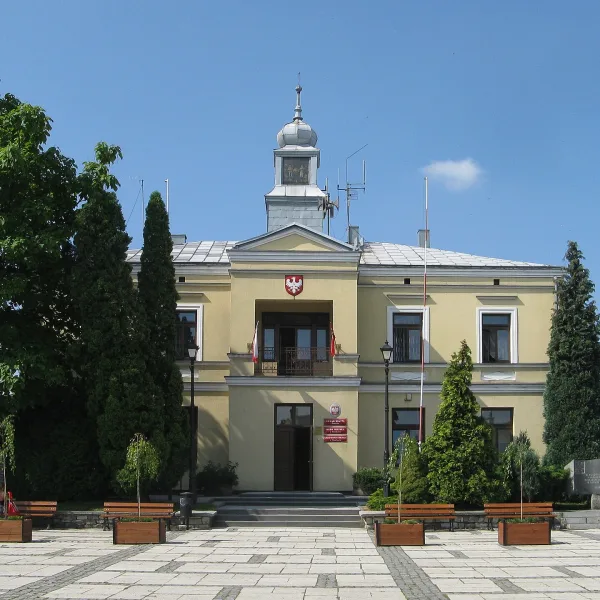
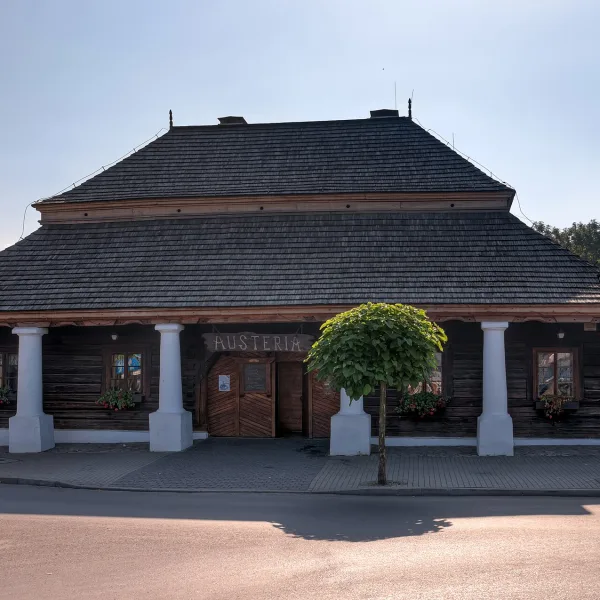
The buildings of the little town cluster around the square. In the middle stands the town hall, built in the second half of the 18th century and thoroughly rebuilt in 1905, still the seat of the town authorities. At Rynek 2 stands the Sławków Inn, a wooden tavern with arcades resting on six round stone columns. The building took its present shape in the 18th century, the register of monuments gives 1771, and today it houses a restaurant. The inn belongs to the Wooden Architecture Trail of the voivodeship.
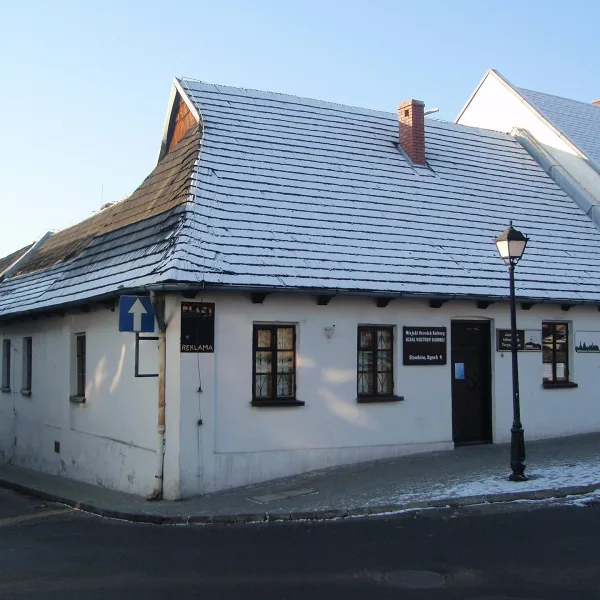
At Rynek 9 is the Regional Museum in a merchant's house of 1870. It collects souvenirs from the history of the town and its surroundings: archaeological and mining items and mementos of the Jewish community. A tourist information point also works there. The museum works well as a rainy-day stop. Browse historic monuments in Sławków and architecture in Sławków for the full lists.
Which churches and chapels will you find in Sławków?
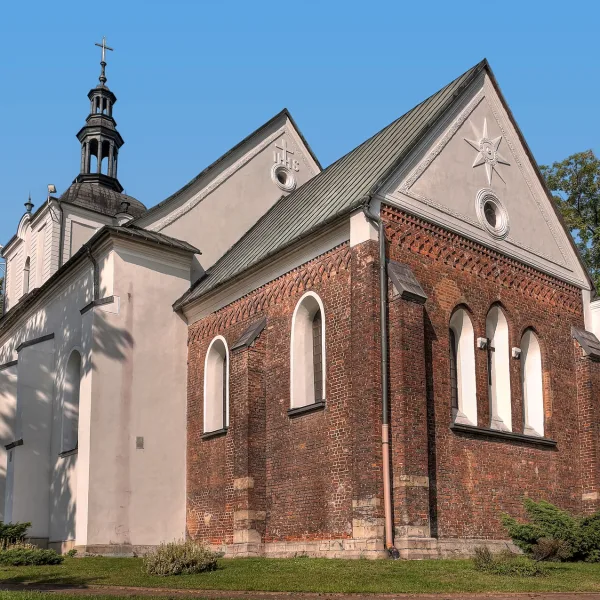
The Church of the Exaltation of the Cross and St Nicholas on Kościelna street is one of the oldest buildings in town. It dates from 1255-1265, and the brick chancel in a style between Romanesque and Gothic survives from that time, with an arcade frieze and medieval paintings in the nave.
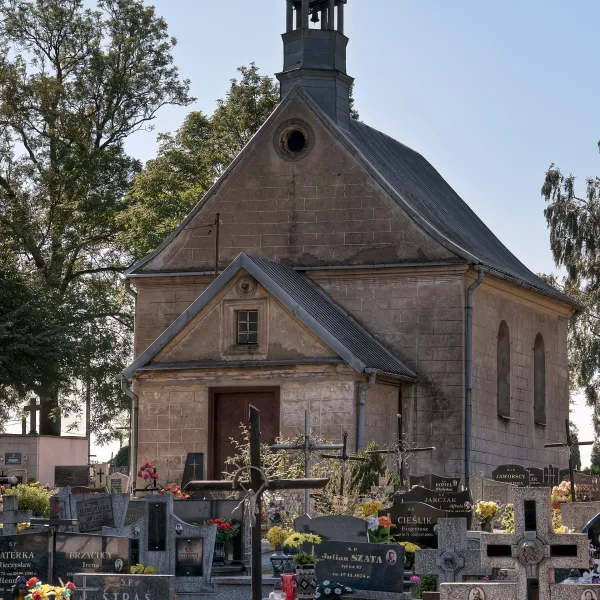
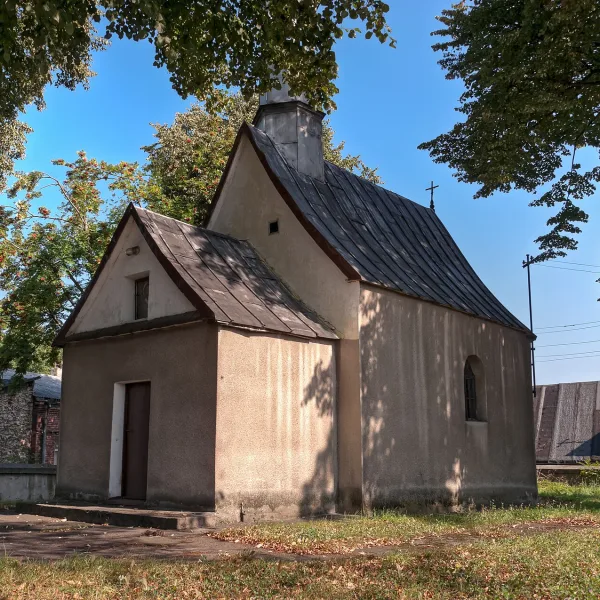
The Chapel of St James from 1827 stands where for centuries there were no buildings. Earlier the church of St John and a monastery of the Order of the Holy Spirit stood here, founded in 1298 and destroyed in 1455. The chapel has a crypt and a Neo-Gothic altar. The cemetery chapel of St Mark is a Classicist building from the early 19th century, with an altar of 1632 and illusionistic polychrome painting. Together with the charnel houses of 1839 built into the cemetery wall it is in the register of monuments. The other churches are listed under churches and monasteries in Sławków.
What remains of the zinc industry and the Jewish community?
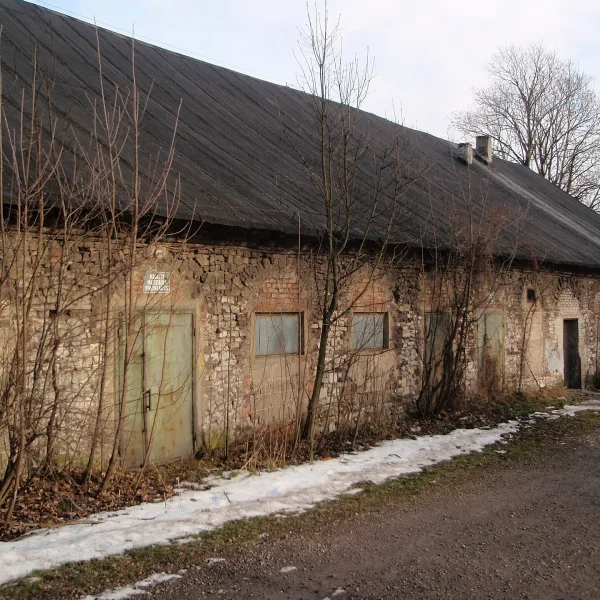
The Sławków rolling mill was a rolling and casting works on the Biała Przemsza, active in 1826-1888. It was built as a government investment and was the second factory of its kind in the Kingdom of Poland after Białogon. The surviving buildings are in the register of monuments. For the beginnings of zinc in the region, read the article Zinc in Upper Silesia: from Ruhberg's smelting in 1792 to the rolling mill in Szopienice.
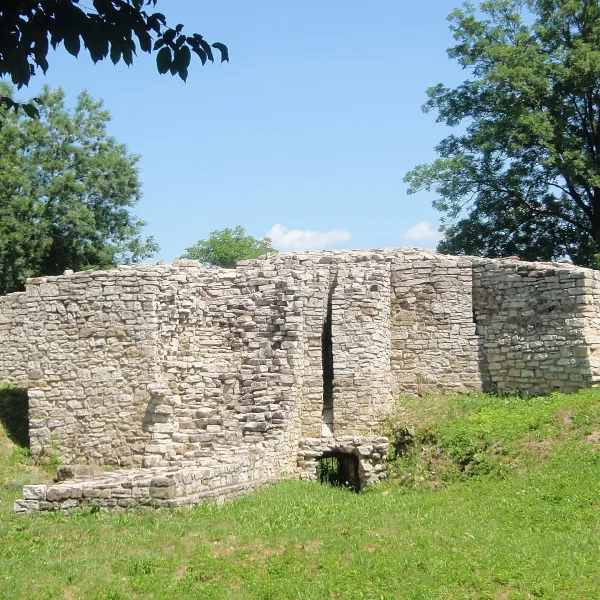
The castle ruins of the Kraków bishops from the late 13th century are today mainly fragments of walls and a tower, in the register of monuments. Construction began before 1283 on the initiative of Bishop Paweł of Przemankowo. They are not for visiting interiors, because the castle as a whole no longer exists.
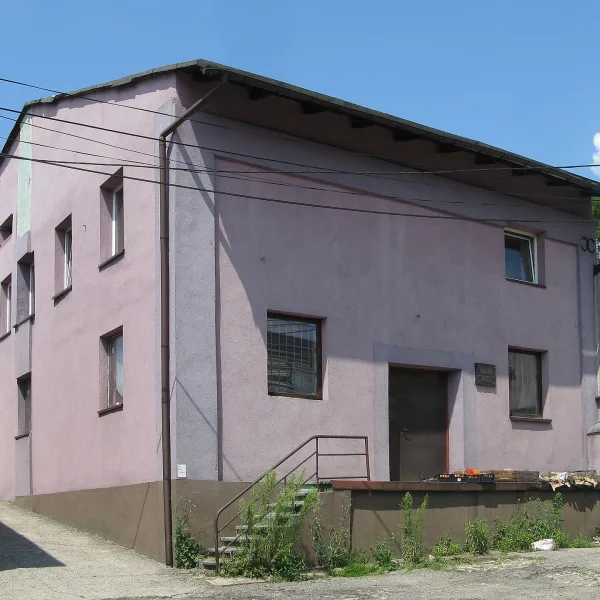
The synagogue at Biskupia 10 is a brick building of 1896 built in the Orthodox tradition. During the German occupation it was devastated and used as a warehouse, after the war it housed a cultural centre, and today it is a warehouse. A commemorative plaque hangs on the building.
Frequently asked questions
What to see in Sławków in a few hours?
The square with the town hall, the Sławków Inn and the regional museum are enough, followed by the Church of the Exaltation of the Cross and St Nicholas.
Does a castle survive in Sławków?
Ruins survive: fragments of walls and a tower from the late 13th century. The castle was built on the initiative of the Kraków bishops.
What is the Sławków Inn?
It is a wooden tavern of the 18th century with arcades on columns, now a restaurant. It stands at Rynek 2.
What was the rolling mill in Sławków for?
It was a rolling and casting works active in 1826-1888, where zinc was turned into sheet. It stands on the Biała Przemsza.

 Historic sites